
🛒 Best Price Today on Amazon
Prime members get fast, free shipping on everything above, plus member-only deals. New members get a 30-day free trial — cancel anytime.
A generator that lives in a shed or under a cover still gathers an oily film. Mist from the breather, drips from the fuel line and dust blown in by the cooling fan mix into a gritty coat that packs around the fins and hides small leaks. A clean engine sheds heat the way it should, shows a fresh weep of oil early, and is far less grim to service.


Degreasers for this job fall into three camps: foaming aerosols that cling, ready-to-use pump sprays, and concentrates you dilute in your own bottle. Some lean on petroleum solvents, others on citrus oils or water-based detergents. The five picks below cover each style, and all demand the same ground rules: a cool engine, covered electrics, and a gentle rinse.
As an Amazon Associate, we earn from qualifying purchases.
Quick answer
For thick, baked-on grime, the foaming aerosol from Gunk clings to upright shrouds and does the heavy lifting during its dwell. If you want a bottle that is ready the moment you grab it, the Zep citrus spray needs no mixing. For repeat cleaning of a whole standby unit, a gallon concentrate such as Oil Eater Original or Simple Green Pro HD stretches much further. The Chemical Guys orange concentrate suits anyone who wants citrus strength in a small bottle.
1. Gunk FEB1 Foamy Engine Brite
This is the classic foaming aerosol, built around a petroleum solvent blend that lifts oil and road film on contact. The foam expands over the block and hangs on upright surfaces instead of running straight off, which matters on a generator shroud where most faces are vertical. Give it the full dwell the label asks for, then rinse with a fine stream.
Gunk aims this formula at engines with plastic covers, and it is safe on under-hood rubber, plastic and paint when used as directed. On a small engine, work in short bursts so foam does not pool inside the recoil housing, and brush the worst fins before rinsing.
Specs
- Format: aerosol foam, ready to use
- Size: 17 oz can
- Base: petroleum solvent blend
- Dwell time: 10 to 15 minutes
- Model: FEB1
- Best for: thick grime on blocks and shrouds
2. Zep Heavy-Duty Citrus Degreaser
Zep’s trigger spray uses d-limonene, the solvent drawn from citrus peel, so it cuts grease with a strong orange scent instead of a harsh chemical smell. It comes ready to use, with no dilution step, which makes it handy for a quick wipe-down of a portable unit before storage or for spot work around a leaky valve cover.
The label lists engines, tools, concrete, fiberglass, aluminum and stainless steel as fair game. Keep it off glass, plastics, auto paint, leather and natural stone, so mask painted tinwork on older sets and test a hidden patch first. Spray, let it sit a few minutes, brush, and rinse clean.
Specs
- Format: trigger spray, ready to use
- Size: 32 fl oz
- Active solvent: d-limonene (citrus)
- Model: ZUCIT32
- Scent: orange citrus
- Best for: quick jobs with no mixing
3. Chemical Guys Signature Series Orange Degreaser
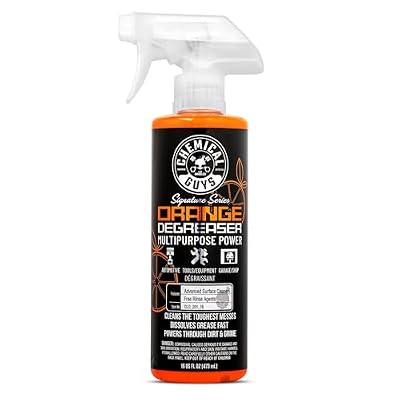
This small bottle holds a concentrated citrus formula you dilute to match the mess. The maker’s guidance runs from six parts water to one part degreaser for extreme cleaning, through ten to fifteen parts water for medium work, up to forty parts water for light film. You supply the spray bottle, so mark the mix ratio on it with tape.
Full strength is serious stuff, and the label warns it can irritate skin and eyes, so gloves and glasses are part of the deal. Diluted mid-range, it handles the oily halo around a crankcase breather and the grime under a fuel tank well. Rinse fully, since citrus residue left behind can stay tacky and pull in dust.
Specs
- Format: liquid concentrate
- Size: 16 fl oz
- Dilution: 6:1 to 40:1 with water
- Base: citrus cleaning agents
- Model: CLD_201_16
- Best for: tuning strength to the mess
4. Oil Eater Original Cleaner and Degreaser

Oil Eater takes the water-based route: no acids, no abrasives and no petroleum solvents, in a biodegradable formula the maker notes is USDA accepted for non-food surfaces. The gallon jug carries a dilution chart, and you pick the mix for the soil level, from heavy engine grime down to light shop film.
Because it is milder than a solvent foam, plan on more brush work for baked deposits. The payoff is a cleaner that is easier on skin, on painted covers and on the ground under your wash spot. The maker still insists on two habits that suit generator work: use it only on a cool surface, and spot test a hidden area first.
Specs
- Format: liquid concentrate
- Size: 1 gallon (128 fl oz)
- Base: water-based detergent blend
- Model: AOD1G35437
- Scent: fresh lemon
- Best for: gentler repeat cleaning
5. Simple Green Pro HD Heavy Duty Cleaner

Pro HD is the professional line from Simple Green: a water-based concentrate that is non-corrosive and safe on metals, including aluminum, when mixed as directed. That matters on small engines, where the block, fins and fasteners are often bare alloy a caustic cleaner can dull or stain.
For heavy cleaning the label mix is one cup of concentrate to three cups of water, with lighter mixes for upkeep work. It has no bleach and no strong fumes, so it suits a standby generator in an attached garage where you would rather not fill the space with solvent smell. Give it dwell time, brush the fins, and rinse with low pressure only.
Specs
- Format: liquid concentrate
- Size: 1 gallon (128 fl oz)
- Dilution: heavy mix 1:3, lighter for upkeep
- Base: water-based, non-corrosive
- Model: 2110000413421
- Best for: alloy engines and indoor sets
How to choose
Pick the format first. Foaming aerosol wins on vertical, heavily fouled surfaces because it stays put. Pump sprays win on speed. Concentrates win when you clean often, since one jug mixes many bottles and lets you set the strength.
Then pick a base. Solvent and strong citrus blends bite into baked oil fastest, but demand care around paint, decals and some plastics. Water-based formulas are kinder to alloy, skin and the wash area, and trade a little bite for more brush work.
Whatever you choose, prep decides the outcome. Work only on an engine that is cool to the touch, with the spark plug lead pulled off. Bag the ignition coil, plug boot, carb intake and air filter box with plastic, and seal the edges with tape. Keep spray out of the recoil housing and muffler outlet. Let the product dwell for the minutes the label gives, brush with nylon rather than wire, and rinse with a gentle stream, never a pressure jet near bearings, seals or the carb. Dry the engine fully, then run it long enough to cook off the last moisture.
Be honest about runoff, too. Degreasing washes oil into the water that leaves your driveway. Work over a drip tray or gravel you can rake out, soak up the puddle with absorbent pads, and keep the rinse out of storm drains.
FAQ
Can I use a pressure washer to rinse a generator engine?
No. A pressure jet forces water past seals, into bearings and inside the carb and ignition parts. A garden hose with a soft spray, or a pump bottle of clean water for tight spots, is plenty once the degreaser has done its dwell.
Will degreaser hurt labels, cords or the pull rope?
Strong solvent and citrus blends can soften decals and dry out rubber if left sitting. Cover data plates, keep dwell times honest, rinse fully, and wipe cords dry. Water-based picks are safer when the engine carries a lot of plastic and print.
How often should a standby generator be degreased?
Once or twice a year suits most home sets, timed with an oil change so you can spot fresh leaks on clean metal. A portable unit that lives outdoors may need a lighter clean each season.
What should I do with the oily rinse water?
Catch what you can in a tray, mop the rest with absorbent pads, and let pads dry before binning them where local rules allow. Never hose oily water into a storm drain or onto bare soil near a well.
Verdict
For the worst grime, reach for the Gunk foam and let dwell time do the work. For grab-and-go cleaning, the Zep citrus spray is hard to beat. If you clean a standby set on a routine, Oil Eater Original or Simple Green Pro HD in a labeled bottle will serve you for years, and the Chemical Guys concentrate is the pick when shelf space is tight but the mess is not.

Write Your Review
No reviews yet. Be the first to share your experience!