
Our Short List of 3

- Best for: Owners who want one bottle that conditions every tank in a daily-driven diesel.
- Brand: Hot Shot’s Secret
- Model: HSSEDT16ZS
- Volume: 16 fl oz squeeze bottle
- Treats: up to 400 gallons at the standard dose

- Best for: A diesel that has lost response or run on neglected fuel and needs a one-time deep clean.
- Brand: Hot Shot’s Secret
- Model: P040432Z
- Volume: 32 fl oz
- Treats: 80 gallons per bottle

- Best for: Cold-climate owners who need conditioning and anti-gel protection in one bottle.
- Brand: Howes
- Model: 103060
- Volume: 64 fl oz
- Type: diesel anti-gel and fuel conditioner per the listing title
All 4 Picks at a Glance
| Product | Specs | Action |
|---|---|---|
| Hot Shot’s Secret Everyday Diesel Treatment, 16 oz |
| Check price on Amazon |
| Hot Shot’s Secret Diesel Extreme, 32 oz |
| Check price on Amazon |
| Howes Diesel Treat, 64 oz |
| Check price on Amazon |
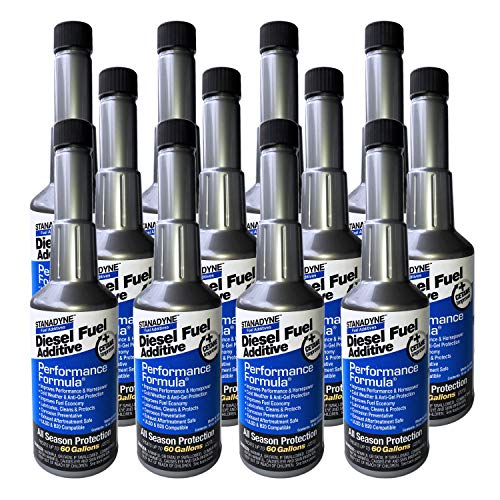 Stanadyne Performance Formula, Case of 12 (16 oz) |
| Check price on Amazon |
🛒 Best Price Today on Amazon
Prime members get fast, free shipping on everything above, plus member-only deals. New members get a 30-day free trial — cancel anytime.
The real decision with a diesel fuel conditioner is not which brand name you recognize. It is which job the bottle has to do. A conditioner you add at every fill-up to replace the lubricity that ultra-low-sulfur diesel lost is a different product from a concentrated cleaner meant to strip injector deposits a few times a year, and both are different again from an anti-gel conditioner that keeps fuel flowing when temperatures drop. Buying the wrong type leaves the actual problem untouched, no matter how good the formula is.
This guide is for diesel generator owners who store fuel between outages, pickup and SUV drivers who fuel up every week, and equipment operators running several diesel machines. Each pick below was chosen from its Amazon product title and listing details, and the four options are split by job: everyday conditioning, periodic deep cleaning, cold-weather anti-gel protection, and a bulk case for people who treat a lot of fuel.
Quick Picks
As an Amazon Associate we earn from qualifying purchases.
| Product | Best for | Key spec from title |
|---|---|---|
| Hot Shot’s Secret Everyday Diesel Treatment, 16 oz | Conditioning at every fill-up | Treats up to 400 gallons |
| Hot Shot’s Secret Diesel Extreme, 32 oz | A periodic deep clean of a neglected fuel system | Concentrated formula treats 80 gallons |
| Howes Diesel Treat, 64 oz | Anti-gel conditioning in cold weather | 64 oz anti-gel conditioner and fuel lubricator |
| Stanadyne Performance Formula, Case of 12 (16 oz) | Fleets and cold climates buying in bulk | Each bottle treats up to 60 gallons |
How to Choose
Match the formula to the job, not the brand
Conditioners fall into three working groups. Everyday treatments are dosed in small amounts at each fill-up and focus on lubricity, mild detergency, and fuel stability. Concentrated cleaners use a much stronger detergent dose, are added only at long intervals, and target deposits that have already formed inside injectors. Anti-gel conditioners add cold-flow chemistry that changes how wax crystals form as diesel cools. A bottle from one group will not do the work of another, so start by naming your problem: prevention, cleanup, or winter operation. The four picks in this guide cover each group deliberately rather than ranking four near-identical bottles.
Do the treat-rate math before you buy
Bottle size alone tells you very little. What matters is how many gallons the bottle treats and how that compares with your tank. A 16 oz everyday treatment that doses one ounce per 25 gallons can cover a pickup for months, while a 32 oz cleaner that treats 80 gallons may be gone in two doses on a large transfer tank. Check the treat rate printed in the listing, divide it by your typical fill size, and you get the real number of treatments per bottle. Generator owners should also count stored fuel: a standby tank that sits for months needs stabilizer coverage for the full volume, not just the next fill.
Look for lubricity and water handling with ULSD
Ultra-low-sulfur diesel is the standard fuel at most pumps, and the refining that removed the sulfur also removed much of the fuel’s natural lubricity. Pumps and injectors depend on the fuel itself for lubrication, so a conditioner that adds a lubricity improver is doing structural work, not marketing work. Water is the second quiet threat, especially in stored generator fuel and equipment tanks that breathe humid air. Formulas handle water differently: demulsifiers push water out of suspension so the filter and separator can remove it, while dispersants carry small amounts through. For stored fuel, the demulsifier approach pairs better with a separator, and it is the approach most of the picks here use.
Check biodiesel and aftertreatment compatibility
Many diesel owners run blends rather than straight petroleum diesel, and not every additive is rated for the same blends. Stanadyne’s formula below is documented for biodiesel up to B20, for example, while other listings stay silent on blends, which is itself information worth weighing. Modern diesels with particulate filters and selective catalytic reduction systems also narrow the field: the listing should state the formula is safe for aftertreatment systems and will not harm exhaust components. Alcohol content matters too, because alcohol-based anti-gels can accelerate wear in some fuel systems; several established conditioners advertise that they contain no alcohol, and that line is worth finding before you pour.
The 4 Best Options
Hot Shot’s Secret Everyday Diesel Treatment, 16 oz
- Best for: Owners who want one bottle that conditions every tank in a daily-driven diesel.
- Brand: Hot Shot’s Secret
- Model: HSSEDT16ZS
- Volume: 16 fl oz squeeze bottle
- Treats: up to 400 gallons at the standard dose
Owners who want one bottle that conditions every tank in a daily-driven diesel.
The small dose means sloppy measuring changes the treatment strength; use the bottle’s measuring chamber rather than guessing, and note that the performance dose halves the gallons each bottle covers.
This is the conditioner for a diesel that is running fine and needs to stay that way. Everyday Diesel Treatment is built around a small dose at every fill-up: one ounce per 25 gallons for maintenance, or two ounces when you want the stronger cetane and lubricity effect. The listing describes a 6-in-1 formula that cleans internal and external injector deposits, boosts cetane by up to seven points, adds lubricity for the pump and injectors, demulsifies moisture, and stabilizes fuel against oxidation. For a daily-driven truck or a generator that gets exercised regularly, that combination covers the routine threats in a single squeeze bottle with a measuring neck.
Watch out for: The small dose means sloppy measuring changes the treatment strength; use the bottle’s measuring chamber rather than guessing, and note that the performance dose halves the gallons each bottle covers.
Hot Shot’s Secret Diesel Extreme, 32 oz
- Best for: A diesel that has lost response or run on neglected fuel and needs a one-time deep clean.
- Brand: Hot Shot’s Secret
- Model: P040432Z
- Volume: 32 fl oz
- Treats: 80 gallons per bottle
A diesel that has lost response or run on neglected fuel and needs a one-time deep clean.
This is not an anti-gel and not an every-fill product; overdosing it on a maintenance schedule wastes the bottle, and severely contaminated tanks may need a filter change after the cleaning dose loosens deposits.
Diesel Extreme is the same brand’s answer to a different problem: a fuel system that has already built up deposits. It is a concentrated cleaner dosed a full quart at a time and intended for use every 6,000 miles rather than at every fill. The manufacturer describes detergents aimed at internal diesel injector deposits, including the waxy and polymeric deposits that everyday treatments are not strong enough to remove, plus a cetane improver rated at up to seven points, a lubricity enhancer, a water dispersant, rust and corrosion inhibitors, and a fuel stabilizer. If a truck feels down on power or a generator engine has been running on old fuel, this is the cleanup step before switching to a maintenance conditioner.
Watch out for: This is not an anti-gel and not an every-fill product; overdosing it on a maintenance schedule wastes the bottle, and severely contaminated tanks may need a filter change after the cleaning dose loosens deposits.
Howes Diesel Treat, 64 oz
- Best for: Cold-climate owners who need conditioning and anti-gel protection in one bottle.
- Brand: Howes
- Model: 103060
- Volume: 64 fl oz
- Type: diesel anti-gel and fuel conditioner per the listing title
Cold-climate owners who need conditioning and anti-gel protection in one bottle.
Anti-gel chemistry prevents wax crystals from locking together; it cannot rescue fuel that has already gelled in the tank, so timing matters, and you should confirm the treat ratio on the bottle for your tank size before the first cold snap.
Howes sells Diesel Treat with the words “Diesel Fuel Conditioner and Anti-Gel” on the bottle, and that pairing is exactly its role here. The formula conditions fuel while adding the cold-flow protection that the two Hot Shot’s Secret picks above do not claim: it is positioned as an anti-gel and fuel lubricator that prevents deposits and removes water from the fuel system. The 64 oz bottle suits owners who treat larger tanks or several machines through a winter season, such as a farm diesel, a plow truck, or a standby generator that must start in January. It has been a long-running staple in the trucking world, and the listing keeps the focus on prevention: dose the fuel before the cold arrives.
Watch out for: Anti-gel chemistry prevents wax crystals from locking together; it cannot rescue fuel that has already gelled in the tank, so timing matters, and you should confirm the treat ratio on the bottle for your tank size before the first cold snap.
Stanadyne Performance Formula, Case of 12 (16 oz)
- Best for: Owners of several diesel vehicles or machines who want one all-season conditioner bought by the case.
- Brand: Stanadyne
- Model: 38565C
- Volume: 12 bottles of 16 fl oz
- Treats: up to 60 gallons per bottle, 720 gallons per case
Owners of several diesel vehicles or machines who want one all-season conditioner bought by the case.
This listing is the full case, so confirm you want twelve bottles before ordering, and check the listing carefully because Stanadyne sells the same formula in several bottle sizes and pack counts under different listings.
Stanadyne comes from the fuel-injection side of the industry, and its Performance Formula is the all-season conditioner in this group with the most documented cold-weather numbers. Retailer-published specs credit it with lowering diesel pour point by up to 40 degrees and cold filter plug point by up to 25 degrees, alongside a cetane gain of up to five points, detergent cleaning, and lubricity improvers for ultra-low-sulfur fuel. It is formulated for ULSD and for biodiesel up to B20, demulsifies water so separators can remove it, and contains no alcohol. The Amazon listing here is a case of twelve 16 oz bottles, each treating up to 60 gallons, which suits a household or small fleet treating several diesels year-round.
Watch out for: This listing is the full case, so confirm you want twelve bottles before ordering, and check the listing carefully because Stanadyne sells the same formula in several bottle sizes and pack counts under different listings.
Which One Fits Your Situation
You drive one diesel pickup every day
Choose the Everyday Diesel Treatment. Your threat is slow deposit buildup and dry ULSD wearing the pump and injectors over years, not a single bad tank. A one-ounce dose at each fill-up is cheap insurance in effort terms, the bottle lasts through many tanks at that rate, and the stabilizer in the formula helps if the truck sits between trips. Skip the concentrated cleaner unless the truck starts feeling sluggish.
Your diesel sat for months or feels down on power
Start with Diesel Extreme. A stored generator, a truck that sat over winter, or an engine running on aging fuel needs deposits removed before a maintenance product can help. Run one concentrated treatment through the system, change the fuel filter if the engine has been running poorly, and then move to an everyday conditioner to keep the cleaned system from fouling again.
Your equipment has to start in deep winter
Choose Howes Diesel Treat, and get it into the tank before the temperature falls. Anti-gel protection only works as prevention, and the conditioner side of the formula covers lubricity and water removal at the same time. This is the pick for plow trucks, farm equipment, and standby generators in northern climates where a no-start is more than an inconvenience.
You maintain several diesels or a small fleet
The Stanadyne case makes the most sense. Twelve bottles remove the reorder cycle, each bottle is a self-contained 60-gallon treatment that drivers can dose without measuring cups, and the documented cold-flow and B20 ratings simplify life when vehicles run different fuels. It is also the natural choice if your fuel comes from biodiesel blends part of the year.
Common Mistakes
- Using a summer cleaner as winter protection. A concentrated injector cleaner like Diesel Extreme has no anti-gel chemistry, so it does nothing for wax crystals in cold fuel.
- Adding anti-gel after the fuel has already gelled. Conditioners prevent gelling; once fuel gels, the fix is warmth and a filter change, not another bottle.
- Overdosing because more feels safer. Treat rates are printed for a reason, and doubling a maintenance dose mostly doubles your cost per tank.
- Expecting an additive to repair a failing injector. Conditioners clean deposits and protect healthy parts; a mechanically worn injector needs a shop, not a stronger dose.
- Pouring a gasoline fuel treatment into a diesel tank. The formulas solve different problems, and gasoline products do not provide the lubricity diesel injection parts depend on.
Frequently Asked Questions
How often should I use a diesel fuel conditioner?
It depends on the type. Everyday conditioners such as the Hot Shot’s Secret treatment here are designed for every fill-up at a small dose. Concentrated cleaners are interval products; Diesel Extreme is specified at every 6,000 miles. Anti-gel conditioners are seasonal and should be in the tank before cold weather, not added after problems start.
Can a fuel conditioner fix diesel that has already gelled?
No. Anti-gel conditioners work by changing how wax crystals form as fuel cools, which only helps if the additive is mixed in before the temperature drops. Gelled fuel needs the vehicle or tank warmed and usually a fresh fuel filter. After the fuel is flowing again, a conditioner dosed into the next tank helps prevent a repeat.
Are these conditioners safe for biodiesel blends and modern emissions systems?
Some are documented for blends and some are not, which is why the listing matters. Stanadyne rates its formula for biodiesel up to B20 and for ultra-low-sulfur diesel, and the established brands here state their products will not harm exhaust aftertreatment systems. If a listing is silent about your fuel blend, treat that silence as a reason to pick a formula that states its compatibility plainly.
What is the difference between an everyday treatment and a concentrated cleaner?
Dose and intent. An everyday treatment goes in at roughly an ounce per tank to maintain lubricity, stability, and light detergency continuously. A concentrated cleaner is a quart-sized dose used a few times a year to remove deposits that have already formed. Many owners use both: the cleaner occasionally to reset the system, and the everyday treatment to keep it clean between doses.







Write Your Review
No reviews yet. Be the first to share your experience!