
Our Short List of 3

- Best for: A standard single-battery 850VA installation wanting sealed, maintenance-free operation at 100Ah.
- Brand: Renogy
- Battery Capacity: 100 Amp Hours
- Voltage: 12 Volts
- Battery Cell Composition: Lead-Acid, AGM

- Best for: Replacing an existing Group 31 battery or wanting the highest stated surge figure at 100Ah.
- Brand: WEIZE
- Battery Capacity: 100Ah, from the product name
- Voltage: 12 Volt
- Type: Deep Cycle AGM
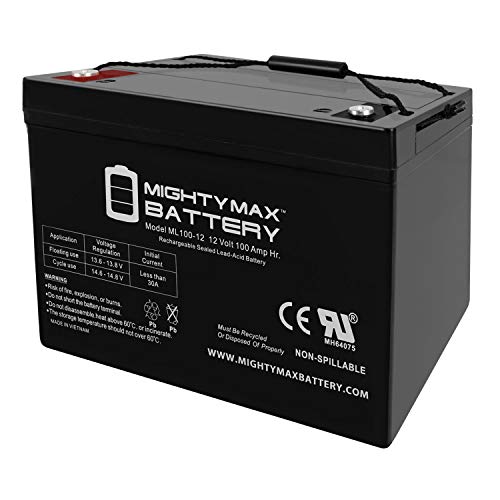
- Best for: Installations where a Group 27 footprint fits the available space better than a larger case.
- Brand: Mighty Max Battery
- Model: ML100-12
- Voltage: 12 Volt
- Capacity: 100 AH
All 4 Picks at a Glance
| Product | Specs | Action |
|---|---|---|
| Renogy Deep Cycle AGM 12 Volt 100Ah Battery |
| Check price on Amazon |
| WEIZE Deep Cycle AGM 12 Volt 100Ah Battery |
| Check price on Amazon |
| Mighty Max Battery ML100-12 12 Volt 100 AH SLA Battery |
| Check price on Amazon |
 Renogy Deep Cycle AGM Battery 12 Volt 200Ah |
| Check price on Amazon |
🛒 Best Price Today on Amazon
Prime members get fast, free shipping on everything above, plus member-only deals. New members get a 30-day free trial — cancel anytime.
An 850VA inverter runs on a single 12-volt battery, so the battery is not an accessory to the purchase. It is the purchase. The real decision is how much backup time you need from that one battery, and whether you want it in a sealed case you can install and largely leave alone. A small battery that is cheap to buy will run the same lights and fans as a large one, just for a fraction of the time, and it will be worked deeper on every outage, which shortens its life. Sizing honestly at the start is what separates a system that lasts for years from one that disappoints in the first long power cut.
This guide is for households and small offices pairing a battery with an 850VA-class inverter that takes one 12V battery, typically for fans, lights, a television, a router and similar modest loads. Every option below is a 12V deep cycle battery in a capacity range suited to that single-battery setup, and every specification is taken from the name and product information on its Amazon listing. Nothing here is a complete UPS unit or an inverter itself; those are different products with a different job.
Quick Picks
As an Amazon Associate we earn from qualifying purchases
| Product | Best for | Key spec from title |
|---|---|---|
| Renogy Deep Cycle AGM 12 Volt 100Ah Battery | A sealed, maintenance-free standard size | 100Ah, 1100A max discharge current |
| WEIZE Deep Cycle AGM 12 Volt 100Ah Battery | High stated discharge current in a Group 31 case | 100Ah, 1150A max discharge current |
| Mighty Max Battery ML100-12 12 Volt 100 AH SLA Battery | A compact Group 27 footprint | 100 AH, internal thread terminal |
| Renogy Deep Cycle AGM Battery 12 Volt 200Ah | The longest backup from a single battery | 200Ah, 2000A max discharge current |
How to Choose
Work Out Capacity From the Backup Time You Need
Capacity in amp hours is the whole game for a single-battery inverter. As a plain illustration, a load of a few fans and lights drawing steadily will empty a 100Ah battery far sooner than the headline number suggests, because a lead-acid battery should not be drained completely and the inverter itself uses some energy in conversion. A 200Ah battery roughly doubles the stored energy of a 100Ah unit in the same system. List the appliances you genuinely need during an outage, add up their draw honestly, and then choose the capacity that covers your typical outage length with room to spare. Buying one size up is usually better value than replacing an undersized battery early after a year of deep, damaging discharges.
Confirm Your Inverter Accepts the Battery
An 850VA inverter expects one 12V battery, but its charger was designed with a capacity range in mind. A battery far above that range can take a very long time to recharge between outages, which matters where cuts are frequent and close together. Check the inverter maker’s stated battery range before choosing the 200Ah option in this guide, and confirm the charging profile suits sealed AGM batteries if that is what you buy. Also confirm the physical fit: these batteries are heavy, the largest here well over one hundred pounds, and the battery needs a stable, ventilated place to sit with cables that reach without strain. Measure the space first, including headroom for the terminals and cables.
Sealed AGM Means No Watering, Not No Care
Every battery in this guide is a sealed lead-acid AGM design, so there is no electrolyte to top up and no caps to open. That is a real convenience advantage over flooded batteries in a home setting. Sealed does not mean care-free, though. The battery still needs to be kept charged, because a lead-acid battery left sitting discharged loses capacity permanently. It still ages faster in a hot room than a cool one. And its terminals still need to stay clean and tight, because a loose connection on an inverter battery carries serious current and can heat up under load. Plan a simple routine: keep the system plugged in and charging, glance at the terminals occasionally, and note the install date.
Read the Discharge and Self-Discharge Figures Carefully
Two numbers on these listings are easy to misread. The maximum discharge current, stated in hundreds or thousands of amps, is a short-duration figure measured in seconds; it tells you the battery can deliver a brief surge, not that it can run a huge load continuously. Your inverter’s own rating limits continuous output long before the battery does. The self-discharge rate, around three percent per month in these listings, tells you how fast a stored battery loses charge on the shelf, which matters for a spare battery or a system in a holiday home. Judge a battery mainly on capacity, size, weight and terminal type for your installation, and treat the surge figure as a supporting detail.
Electrical Safety Notes
A 12V battery looks harmless and can still deliver enough current to weld a spanner to its terminals. Work through these checks before and during installation. Disconnect the inverter from the mains and switch it off before touching battery cables. Connect the positive terminal first and the negative last when installing, and reverse that order when removing, so a tool that slips is less likely to short the battery. Keep the terminal connections tight and covered where covers are provided, and never place metal tools across the top of the battery. Fit the fuse or breaker the inverter maker specifies on the battery lead, as close to the battery as directed, rather than relying on the inverter alone. Give the battery ventilation even though it is sealed, keep it away from sparks and open flames, and keep it out of a sealed box in a hot room. If a battery case swells, cracks or smells strongly, take it out of service and have it checked rather than continuing to charge it. Finally, arrange proper recycling for the old battery when you replace it; lead-acid batteries should never go in household waste.
The 4 Best Options
Renogy Deep Cycle AGM 12 Volt 100Ah Battery
- Best for: A standard single-battery 850VA installation wanting sealed, maintenance-free operation at 100Ah.
- Brand: Renogy
- Battery Capacity: 100 Amp Hours
- Voltage: 12 Volts
- Battery Cell Composition: Lead-Acid, AGM
A standard single-battery 850VA installation wanting sealed, maintenance-free operation at 100Ah.
At 63.9 pounds it is a two-hand lift, and the maker’s guidance is to avoid deep discharge, so size your loads so the battery is not emptied on every outage.
This is the default recommendation for a standard 850VA setup. The 100Ah capacity sits in the middle of the range these inverters are usually paired with, the sealed AGM construction removes any watering routine, and the listing gives a full set of working figures, including its self-discharge rate and temperature ranges, so you can plan storage and placement properly. Its stated maximum discharge current is ample for the surge an 850VA inverter can request. For a household that wants a fit-and-monitor battery from a maker with a broad solar and off-grid range, this is the balanced choice in the group.
WEIZE Deep Cycle AGM 12 Volt 100Ah Battery
- Best for: Replacing an existing Group 31 battery or wanting the highest stated surge figure at 100Ah.
- Brand: WEIZE
- Battery Capacity: 100Ah, from the product name
- Voltage: 12 Volt
- Type: Deep Cycle AGM
Replacing an existing Group 31 battery or wanting the highest stated surge figure at 100Ah.
The listing notes that returns for battery products are handled by the seller rather than Amazon, so check the seller’s support arrangements before ordering.
The WEIZE battery offers the same 100Ah capacity in a Group 31 case, with the highest stated maximum discharge current of the three 100Ah options here. That figure is a seconds-long surge rating rather than a continuous one, so its practical value is headroom when a load starts, but buyers comparing like for like will note it. The case dimensions differ slightly from the Renogy unit, which is exactly why measuring your battery space matters even within the same capacity class. For an installer replacing an existing Group 31 battery, matching the footprint can make this the simplest swap in the guide.
Mighty Max Battery ML100-12 12 Volt 100 AH SLA Battery
- Best for: Installations where a Group 27 footprint fits the available space better than a larger case.
- Brand: Mighty Max Battery
- Model: ML100-12
- Voltage: 12 Volt
- Capacity: 100 AH
Installations where a Group 27 footprint fits the available space better than a larger case.
The listing is for the battery and screws only, with no wire harness or mounting accessories included, so budget for the correct inverter cables and fuse if you do not already have them.
The Mighty Max ML100-12 is the compact-footprint option, built in a Group 27 case that is a little smaller than the Group 31 WEIZE. In a tight battery corner, a smaller case with the same 100Ah capacity can be the difference between a tidy installation and cables strained at an angle. Its internal thread terminals suit bolted cable lugs, which is how inverter leads are normally attached, giving a secure, low-resistance connection when tightened properly. This is a long-running model in the sealed lead-acid market, and for a straightforward 850VA pairing where space is the constraint, it earns its place here on fit rather than on any headline figure.
Renogy Deep Cycle AGM Battery 12 Volt 200Ah
- Best for: Long or frequent outages where a single battery must store as much energy as possible.
- Brand: Renogy
- Battery Capacity: 200 Amp Hours
- Voltage: 12 Volts
- Battery Cell Composition: Lead-Acid, AGM
Long or frequent outages where a single battery must store as much energy as possible.
Confirm your 850VA inverter’s charger is rated for a battery of this capacity before buying, and plan the lift and the floor space, since this unit is large and heavy.
This is the long-backup option: double the capacity of the 100Ah batteries in a single 12V unit, for homes where outages regularly run long and the load list cannot be trimmed further. The listing publishes its capacity at several discharge rates, which is genuinely useful, because it shows the amp hours falling as the draw increases, a reality every large battery shares. The trade-offs are size, weight and recharge time. At well over one hundred pounds it needs a planned position and help to move, and your inverter’s charger will take considerably longer to refill it after a deep outage, so confirm the pairing with the inverter maker first.
Which One Fits Your Situation
Your Outages Are Short and Your Loads Are Modest
Any of the three 100Ah batteries will serve you, so choose on fit and terminal style. The Renogy 100Ah is the balanced default, the WEIZE matches a Group 31 space, and the Mighty Max suits a Group 27 corner. With short outages the battery stays shallowly discharged, which is the kindest pattern for lead-acid life, so capacity is not your constraint.
Your Outages Regularly Run for Hours
Choose the Renogy 200Ah, after confirming your inverter’s charger supports that capacity. Doubling stored energy is the only honest way to double backup time at the same load, and a larger battery also works less hard per outage, which helps its lifespan. If the charger check fails, the better answer is trimming the load list, not forcing the pairing.
You Are Replacing a Battery in an Existing Setup
Match the old battery’s case group and terminal type first, then capacity. The WEIZE and Mighty Max options exist in this guide largely for that reason: a replacement that drops into the same space with the same cable reach avoids reworking the installation. Take the old battery for recycling when the new one goes in, and note the new install date.
The Battery Sits in a Room People Live In
Choose a sealed AGM model, which all four options are, and still follow the safety notes above: ventilation, tight covered terminals, the specified fuse, and no charging in a sealed hot enclosure. Sealed construction removes the watering routine and greatly reduces spill risk, which is why this chemistry suits indoor inverter corners, but it does not remove the need for sensible placement away from heat and sparks.
Common Mistakes
- Buying capacity by guesswork, then running a small battery flat on every outage and shortening its life.
- Pairing a very large battery with an inverter charger that cannot refill it properly between frequent outages.
- Ignoring the physical size and weight, then finding the battery does not fit the space or cannot be moved safely.
- Leaving terminal connections loose or uncovered, which causes heating under load and unreliable backup.
- Skipping the fuse the inverter maker specifies on the battery lead to save a few minutes during installation.
Frequently Asked Questions
How long will a 100Ah battery run an 850VA inverter?
It depends entirely on the load. A small load of lights, fans and a router can run for hours, while a load near the inverter’s limit drains the same battery far faster, and a lead-acid battery should not be emptied completely. Work out your actual appliance draw, expect to use only part of the stated capacity in normal service, and choose 200Ah if your honest estimate leaves no margin.
Can I use two batteries with an 850VA inverter?
Most 850VA models are designed for a single 12V battery. Connecting a second battery in parallel changes the charging load and is only sensible if the inverter maker explicitly allows it and the wiring, fuse and charger are sized for it. Do not improvise a parallel bank around a single-battery inverter; if you need more backup, the supported route is one larger battery within the maker’s stated range.
Does an AGM battery need ventilation?
Yes, modest ventilation is still the right practice. Sealed AGM batteries do not vent routinely the way flooded batteries can, but they are still lead-acid batteries that should not be charged in a sealed, hot enclosure. A normal room or a ventilated battery space is fine. Keep the battery away from sparks and open flames, and follow the inverter maker’s placement guidance.
When should the battery be replaced?
When backup time has clearly fallen compared with when the battery was new, when the case shows swelling or damage, or when the inverter reports charging faults with the battery connected. Test by timing a known load rather than guessing. Replace with the same voltage and a capacity your charger supports, and recycle the old battery through a proper collection route rather than household waste.



Write Your Review
No reviews yet. Be the first to share your experience!