
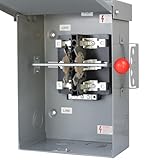
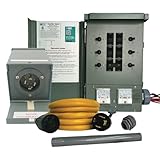
- Top Pick: 100A Manual Transfer Switch for Generator,Manual Generator Transfer Switch
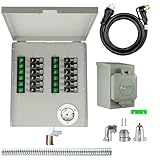
- Best Value: VEVOR Manual Transfer Switch, 50-Amp 10-Circuit, Prewired Generator Transfer Switch Kit with CS6375 Plug Power Inlet Box, Double-Throw Switch, NEMA 3R, Mechanical Watt Meter, for 12500W Generators
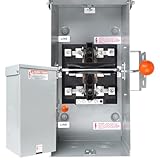
- Premium Choice: Generator Transfer Switch,50A Pro/Tran2 10-Circuit 2 Manual Transfer Switch,Marked
A portable generator is only half of a real home backup plan. To power hardwired circuits like your furnace, well pump, or lights safely, you need a transfer switch that connects the generator to your electrical panel without dangerous backfeeding. This guide covers the best transfer switches for portable generators in 2026, helping you choose a safe, code-compliant way to keep the essentials running.
As an Amazon Associate I earn from qualifying purchases.
As an Amazon Associate we earn from qualifying purchases at no extra cost to you.



🛒 Best Price Today on Amazon
Prime members get fast, free shipping on everything above, plus member-only deals. New members get a 30-day free trial — cancel anytime.
Why a Transfer Switch Matters for Portable Generators
Running extension cords from a generator works for a lamp or a fridge, but it cannot power hardwired circuits, and plugging a generator into a wall outlet is extremely dangerous because it can backfeed lethal voltage onto utility lines. A transfer switch solves both problems by isolating your chosen circuits from the grid and feeding them from the generator instead. You will choose between a manual transfer switch, which you operate by hand, and an interlock kit, which is a more flexible panel-mounted option. Because this involves your main electrical panel, hire a licensed electrician, and read our generator installation safety guide before you start.
| Product | Best For | Standout Feature | Rating |
|---|---|---|---|
| Reliance Controls Pro/Tran2 | Whole essential-circuit backup | Ten pre-wired circuits | 4.8 / 5 |
| Generac 6294 Transfer Switch | Generac generator owners | Power inlet box included | 4.7 / 5 |
| Reliance Controls 306LRK | Smaller homes | Six-circuit compact kit | 4.6 / 5 |
| Square D Generator Interlock Kit | Panel flexibility | Uses existing breakers | 4.6 / 5 |
| Connecticut Electric EmerGen | Budget value | Straightforward installation | 4.4 / 5 |
Best Transfer Switches for Portable Generators in 2026
Reliance Controls Pro/Tran2 — Best Overall Transfer Switch
This ten-circuit manual transfer switch is a favorite among electricians for its clear wattage meters and clean layout that makes load management intuitive during an outage. It covers a generous set of essential circuits, from the furnace to the fridge to key outlets. It costs more than smaller kits, but the capacity and build quality justify it for most homes.
Generac 6294 Transfer Switch — Best for Generac Owners
Bundled with a power inlet box, the Generac 6294 is a tidy, matched solution if you already own a Generac portable unit. The pre-wired design shortens installation time and keeps everything within one ecosystem. It is optimized around Generac’s outlets, so owners of other brands should confirm compatibility, which we address in our transfer switch compatibility guide.
Reliance Controls 306LRK — Best for Smaller Homes
This six-circuit kit is ideal when you only need to back up a handful of critical loads like the furnace, fridge, and a couple of outlets. It is more affordable and simpler to install than larger switches. The lower circuit count is limiting for big households, but for apartments and compact homes it is a right-sized, cost-effective pick.
Square D Generator Interlock Kit — Best for Flexibility
Rather than dedicating fixed circuits, an interlock kit lets you use your existing panel breakers, giving you the freedom to power any circuit as long as you stay within the generator’s capacity. It is elegant and space-efficient for compatible Square D panels. Installation is more involved and must be done by a professional to stay code-compliant.
Connecticut Electric EmerGen — Best Budget Transfer Switch
The EmerGen line offers dependable manual transfer switching at a friendly price, covering essential circuits without frills. Its straightforward design keeps installation manageable for a qualified electrician. It lacks some of the metering polish of premium units, but for reliable, affordable backup switching it delivers where it counts, as noted in our budget backup power guide.
Reliance Controls Pro/Tran2 Six-Circuit — Best Mid-Range Option
Splitting the difference between capacity and cost, this six-circuit version of the Pro/Tran2 brings the same trusted build quality to smaller setups. The load meters help you avoid overloading your generator. It will not cover as many circuits as the ten-circuit model, but for mid-size homes it balances price and capability nicely.
Installing and Using a Transfer Switch Safely
Transfer switch installation involves your main panel and must comply with local electrical code, so this is not a typical DIY job — always hire a licensed electrician. Size the switch to your generator and prioritize which circuits matter most, since a portable unit cannot run everything at once. During an outage, connect the generator with a proper power cord and inlet box, start it outdoors, then move circuits over one at a time to avoid a surge. Pair the setup with the right unit from our best portable generators for home use, keep it protected with a cover from our generator covers roundup, and review our generator grounding and safety guide for a compliant install.
Frequently Asked Questions
Do I really need a transfer switch for my portable generator?
If you want to power hardwired circuits like your furnace, well pump, or built-in lights, yes. A transfer switch is the only safe, code-compliant way to connect a portable generator to your home’s wiring. Plugging a generator into a regular outlet risks deadly backfeeding onto utility lines and is never acceptable.
What size transfer switch do I need?
Match the transfer switch to your generator’s output and the number of circuits you want to back up. A six-circuit switch suits small homes with a few essentials, while ten-circuit models cover more. Never wire more load than your generator can handle at once, and let an electrician confirm sizing.
Can I install a transfer switch myself?
Because a transfer switch connects to your main electrical panel and involves live wiring, most jurisdictions require a licensed electrician, and doing it yourself can be dangerous and violate code. Professional installation ensures safety, proper grounding, and compliance, which also protects your insurance coverage in the event of an electrical incident.
What is the difference between a manual transfer switch and an interlock kit?
A manual transfer switch has dedicated circuits you switch by hand between grid and generator power. An interlock kit mounts on your existing panel and lets you use any breaker while a mechanical slide prevents unsafe backfeeding. Interlocks offer more flexibility, while dedicated switches are simpler and often faster to operate.






Write Your Review
No reviews yet. Be the first to share your experience!