
🛒 Best Price Today on Amazon
Prime members get fast, free shipping on everything above, plus member-only deals. New members get a 30-day free trial — cancel anytime.
- Top Pick: Westinghouse WGen11500TFc
- Runner-up: Champion 201161 15,000-Watt Tri-Fuel
- Also consider: DuroMax XP13000HXT
A tri-fuel portable generator runs on three fuels out of the box: gasoline, propane from a tank, and natural gas from your home gas line. Gasoline gives the highest output, propane stores well, and natural gas can keep a generator running for days during a long outage without refilling anything. For homeowners who already have a gas line, tri-fuel is the closest a portable generator gets to set-and-forget backup power.
As an Amazon Associate, we earn from qualifying purchases.
Black Friday is when the big-output tri-fuel models earn their place on a shortlist. These are heavy machines that people research for weeks, and the shortlist work matters more than the shopping day itself: know your loads, fuel plan, and hookup method before any offer appears. Black Friday offers change quickly, so check the Amazon product page for the current price and any live offers on the exact model you pick. The five models below are grouped by output class, so you can start from the size of your problem, not a headline wattage number.
This article contains affiliate links, and we may earn a commission if you buy through them, at no extra cost to you.
Quick Answer
Shortlist the Westinghouse WGen11500TFc first: 9,500 running watts on natural gas, remote start, and a transfer-ready panel. Size on the fuel you will actually burn: add the running watts of everything you want at once, plus the starting surge of the biggest motor, and check that total against the natural gas column, not the gasoline headline.
The Three Fuels, Honestly
Every tri-fuel generator makes less power as you move from gasoline to propane to natural gas, and the makers publish the drop in watts: a machine rated at 11,500 running watts on gasoline might be rated at 10,500 on propane and 9,500 on natural gas. That reflects the energy in each fuel. The mistake is planning your backup around the gasoline number when you intend to run on the gas line. Always size from the column for the fuel you will use most.
Gasoline stores the worst: it goes stale in months, and a big generator drinks it fast enough that a long outage turns into repeated can runs. Propane sits in a sealed tank for years without degrading, making it the best stored fuel, but the tank is the limit: a grill tank runs a large generator for only a few hours at half load, so serious propane use means a 40-pound tank or larger. Natural gas removes the storage problem entirely; while the utility supply holds, runtime is effectively unlimited. The trade-off is the lowest output of the three fuels and a real installation step.
That hookup deserves plain words. You need a suitable gas outlet or a new tap near where the generator will sit, the correct hose in the correct length and diameter for the flow the engine demands, and in many places a licensed plumber for the gas connection and an electrician for the inlet box and transfer equipment. Big engines are thirsty: the DuroMax below needs 225,000 BTU per hour at full load, so your meter and line sizing must support that on top of your furnace and water heater. Settle the plumbing and electrical work before Black Friday, not after the box arrives.
Whole-Home Class
Westinghouse WGen11500TFc

The WGen11500TFc is the balanced pick of this class: output stays high on every fuel, it starts from a key fob, and its panel is built for a transfer switch or inlet box.
Specs
- Gasoline: 14,500 starting watts, 11,500 running watts
- Propane: 13,500 starting watts, 10,500 running watts
- Natural gas: 12,000 starting watts, 9,500 running watts
- Engine: 550cc Westinghouse OHV, cast iron sleeve
- Fuel tank: 9.5 gallons; up to 19 hours on gasoline and up to 7 hours on a 20-pound propane tank, as the maker states
- Outlets: 50-amp 14-50R, 30-amp L14-30R, GFCI household outlets; transfer switch ready
- Start: remote electric start with key fob, plus push-button start
- Safety: CO sensor, low-oil shutdown
- Weight: 230 pounds
See the Westinghouse WGen11500TFc on Amazon
On natural gas, 9,500 running watts covers a furnace blower, refrigerator, well or sump pump, lights, and a mid-size central air conditioner with careful load management.
Champion 201161 15,000-Watt Tri-Fuel

The Champion 201161 is the output ceiling of this list, with the highest numbers here on all three fuels and both gas hoses in the box.
Specs
- Gasoline: 15,000 starting watts, 12,000 running watts
- Propane: 13,750 starting watts, 11,000 running watts
- Natural gas: 12,500 starting watts, 10,000 running watts
- Engine: 717cc Milwaukee Series V-twin
- Fuel tank: 11 gallons; up to 9 hours on gasoline as the maker states
- Outlets: 120/240V panel for high-amp transfer-switch connection; individual outlets not stated
- Start: electric start, battery included
- Included: propane hose and natural gas hose, CO Shield carbon monoxide auto shutoff
- Weight: 331 pounds as listed
See the Champion 201161 on Amazon
The honest cost is size: at 331 pounds this machine lives where it lands, so decide its parking spot before ordering.
DuroMax XP13000HXT
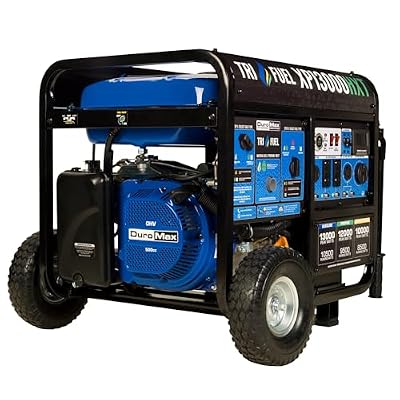
The XP13000HXT is the natural-gas planner’s pick: DuroMax publishes the pressure range and full-load gas demand a hookup depends on.
Specs
- Gasoline: 13,000 starting watts, 10,500 running watts; 8.5 hours at half load, 17 hours at quarter load
- Propane: 12,500 starting watts, 10,000 running watts; 6.5 hours at half load, with a 40-pound tank as the maker’s suggested minimum
- Natural gas: 11,250 starting watts, 9,000 running watts; needs 6.0 to 9.0 inches of water column pressure and 225,000 BTU per hour at full load
- Engine: 500cc DuroMax OHV
- Fuel tank: 8.3 gallons
- Outlets: 50-amp 14-50R plus 30-amp and GFCI receptacles as listed by the maker
- Start: push-button and remote electric start; CO Alert shutdown
- Included: 15-foot natural gas hose as listed by the maker
- Weight: 240 pounds as listed
See the DuroMax XP13000HXT on Amazon
Large Portable Class
Westinghouse WGen9500TFc

The WGen9500TFc keeps the same formula in a smaller frame: strong natural-gas output for essentials plus a real air conditioner, and remote start.
Specs
- Gasoline: 12,500 starting watts, 9,500 running watts
- Propane: 11,200 starting watts, 8,500 running watts
- Natural gas: 9,500 starting watts, 7,500 running watts
- Engine: 457cc Westinghouse OHV, cast iron sleeve
- Fuel tank: 6.6 gallons; up to 12 hours on gasoline as the maker states
- Outlets: 120/240V locking and GFCI receptacles; transfer switch ready
- Start: remote start with key fob, electric and recoil start
- Safety: CO sensor with automatic shutdown, low-oil shutdown
- Weight: 215 pounds as listed
See the Westinghouse WGen9500TFc on Amazon
Mid-Size Class
Champion 201223 5,000-Watt Tri-Fuel

The 201223 is the honest end of tri-fuel: a smaller, 120-volt-only machine for essentials, an RV, or a cabin, with both hoses included.
Specs
- Gasoline: 5,000 starting watts, 4,000 running watts; up to 14 hours at half load as the maker states
- Propane: 4,500 starting watts, 3,600 running watts; up to 10.5 hours at half load on a 20-pound tank as the maker states
- Natural gas: 4,050 starting watts, 3,240 running watts
- Engine: 224cc Champion OHV
- Fuel tank: capacity not stated
- Outlets: 120V 30-amp locking (L5-30R), 120V 30-amp RV (TT-30R), 120V 20-amp duplex (5-20R); no 240V output
- Start: electric start; CO Shield auto shutoff
- Included: 25-foot natural gas hose kit, propane hose, wheel kit, battery
- Noise: 68 dBA from 23 feet as the maker states
- Weight: not stated
See the Champion 201223 on Amazon
The limit to respect is voltage: with no 240-volt output, it cannot feed a typical whole-panel inlet, so it belongs on cord duty or a 120-volt transfer setup.
How to Choose
Start from the loads, not the generator. List what must run at the same time: furnace blower, refrigerator, freezer, well or sump pump, lights, the router, any medical device. Add the running watts, then add the starting surge of the largest motor, because motors draw a brief multiple of their running draw when they kick on. If central air is on the list, its surge usually decides your class on its own. Then compare your total with the running watts for the fuel you will actually use: a home that fits in the gasoline column can fall short on natural gas, and finding that out on paper is the point of shortlisting early.
Next, check the natural-gas supply. Find your meter’s rated capacity, consider what else draws gas during an outage, and compare that with the generator’s published full-load BTU demand and pressure range. Measure from the gas connection point to where the generator will sit outdoors, and confirm the included hose reaches. If a plumber has to add a tap, that appointment belongs in your plan this week.
Finally, confirm the transfer method. A 240-volt machine with a 30-amp or 50-amp outlet pairs with an inlet box and a transfer switch or interlock kit installed by an electrician. A 120-volt-only model like the Champion 201223 means extension cords or a small dedicated transfer setup: fine for essentials, wrong for a whole panel.
Who Should Skip
Renters should skip this category: a natural-gas hookup means permanent plumbing work on someone else’s property, and the machines are heavy and need outdoor space you may not control. Buyers with no natural-gas line and no storage room for propane should also pause: without the gas line, tri-fuel’s main advantage shrinks to propane storage, and a dual-fuel model may serve you just as well. And if your real outage list is lights, phones, and one refrigerator, every machine above is more than you need; a smaller inverter generator or a portable power station covers that load quietly, with no plumbing and no oil changes.
FAQ
Can I run a tri-fuel generator in the garage with the door open?
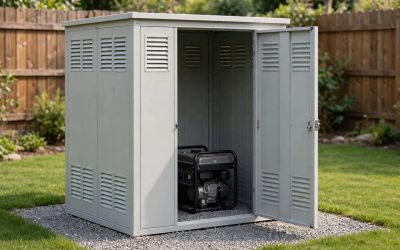
No. Run it outdoors, well away from windows, doors, and vents, on every fuel. Natural gas and propane exhaust still contains carbon monoxide; the CO sensor on every model here is a backup, not permission.
Do I really need a plumber for the natural-gas hookup?
In most places, yes for any new tap or line work: the connection has to deliver the pressure and flow the maker specifies, and a plumber can confirm your meter can feed the generator alongside your furnace and water heater.
How much output do I lose on natural gas?
Read it in watts, model by model. In this list the drop from gasoline to natural gas running watts ranges from 1,500 watts on the DuroMax to 2,000 watts on the Champion 201161. Size on the natural-gas figure if that is your main fuel.
Can I switch fuels while the generator is running?
Follow the manual for your model. The general pattern across these makers is to shut down, move the fuel selector, connect the new fuel source, and restart. Treat mid-run switching as off-limits unless your manual explicitly allows it.
Final Verdict
For most homes with a gas line, the Westinghouse WGen11500TFc is the shortlist anchor: 9,500 running watts on natural gas, remote start, and a transfer-ready panel, without the Champion 201161’s extra size. Choose the 201161 if your load list is long and your air conditioner is large, the DuroMax if published gas-demand figures matter to your plumber, the WGen9500TFc if your circuit list is disciplined, and the Champion 201223 for essentials-only or RV duty. Do the load math now, then check your pick’s product page for the current price and any live offers when you are ready to buy.
Top picks from this guide
Champion Power EquipmentChampion 5000-Watt Electric Start Tri Fuel Portable Generator | Gas…Champion Power EquipmentChampion Power Equipment 15,000-Watt Electric Start Tri Fuel Home Backup…DuroMaxDuroMax XP13000HXT 13,000-Watt 500cc Tri Fuel Gas Propane Natural Gas…WestinghouseWestinghouse 14500 Peak Watt Tri-Fuel Home Backup Portable Generator, Remote…




Write Your Review
No reviews yet. Be the first to share your experience!