
🛒 Best Price Today on Amazon
Prime members get fast, free shipping on everything above, plus member-only deals. New members get a 30-day free trial — cancel anytime.
- Top Pick: Westinghouse WGen9500DF Dual Fuel Portable Generator
- Runner-up: Jackery Explorer 1000 v2 Portable Power Station
- Also consider: Reliance Controls PB30 Power Inlet Box
Most outage gear fails in the gaps between purchases. The generator is powerful, but there is no safe way to connect it to the house. The cord is too light for the load. The carbon monoxide alarm was never bought at all. A storm and outage prep kit is only as strong as its weakest component, and most households assemble theirs one rushed piece at a time.
As an Amazon Associate, we earn from qualifying purchases.
Black Friday is the one stretch of the year when it makes sense to build the whole kit at once, while every component is easy to find and compare. This guide walks through the five components that matter, one anchor product each, plus the supporting items completing each layer. Black Friday offers change quickly, so check the Amazon product page for the current price and any live offers before you commit.
As an affiliate, we may earn a commission on qualifying purchases made through our links, at no extra cost to you.
Quick Answer
A working storm and outage prep kit has five parts: a dual-fuel generator like the Westinghouse WGen9500DF for bulk power, a Jackery Explorer 1000 v2 for quiet indoor power, a Reliance PB30 inlet box to connect safely, a Kidde CO alarm, and a 30-amp Champion cord. Buy them as one matched set.
The Power Source
Everything starts with the generator, and the fuel question matters as much as the wattage. Gasoline goes stale and disappears from pumps during regional outages; propane stores indefinitely in grill-style tanks. A dual-fuel machine runs whichever fuel you can get, which is why this anchor is dual-fuel rather than gasoline-only.
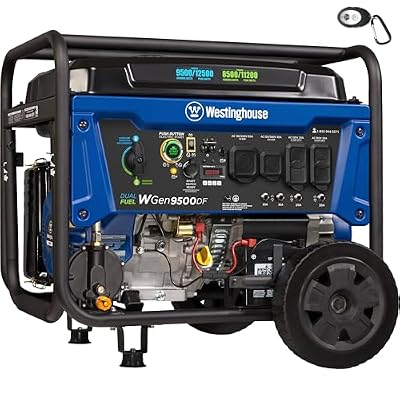
Westinghouse WGen9500DF Dual Fuel Portable Generator
Specs
- Running watts: 9,500 on gasoline, 8,500 on propane
- Peak watts: 12,500 on gasoline, 11,200 on propane
- Fuel: gasoline or propane, switchable
- Tank: 6-gallon steel fuel tank
- Start: remote electric start with key fob, plus recoil backup
- Outlets: 30-amp L14-30R locking outlet and 50-amp 120/240-volt outlet, transfer switch ready
- Run time: Westinghouse rates it at up to 12 hours at quarter load on gasoline
That output covers the classic outage load list — refrigerator, furnace blower, well or sump pump, lights, device charging — with headroom for a window air conditioner. The kit is built around its 30-amp locking outlet, because the inlet box and cord below match it.
Add the supporting items in the same order: two full propane tanks stored upright outdoors, fuel stabilizer, the oil the manual specifies, a funnel, and a fitted cover. A generator without stored fuel is furniture.
See the Westinghouse WGen9500DF on Amazon
The Indoor Bridge
A fuel generator should not run all night. It burns fuel while the house sleeps, it makes noise, and every runtime hour is wear. The bridge layer is a portable power station carrying the quiet loads between generator runs: the refrigerator cycling overnight, the router, phone charging, a CPAP machine, a lamp or two. The generator then runs in blocks, recharging the station while it powers the house.
Jackery Explorer 1000 v2 Portable Power Station

Specs
- Capacity: 1,070 watt-hours, lithium iron phosphate battery
- AC output: 1,500 watts continuous
- Ports: AC outlets plus USB-C up to 100 watts and USB-A
- Recharge: Jackery rates wall charging at about one hour with fast charge enabled
- Weight: 23.8 pounds
Lithium iron phosphate chemistry suits a kit that sits in a closet between storms, tolerating long storage and many cycles better than older lithium packs. One honest limit: this station is a bridge, not a replacement. It will not run a well pump or furnace blower for long. Its job is silence and convenience indoors, where a fuel generator can never go.
Supporting items are small: LED lanterns, a multi-port charging cable for the family phone pile, and a card on the station listing what it can and cannot run.
See the Jackery Explorer 1000 v2 on Amazon
The Connection
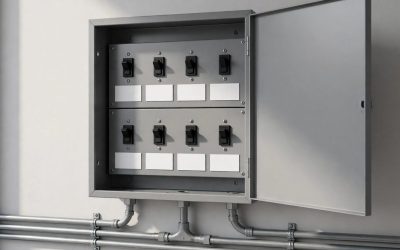
This component decides whether the kit is safe or improvised. Cords through a cracked window work until it rains sideways. Plugging a generator into a household outlet with a double-ended cord — backfeeding — is dangerous and illegal in many places, since it can energize utility lines where repair crews work. The correct path is an inlet box on the outside wall, wired to a transfer switch or interlock at the panel.
Reliance Controls PB30 Power Inlet Box

Specs
- Rating: 30 amps, 125/250 volts
- Inlet: NEMA L14-30 flanged inlet, matching the generator cord below
- Enclosure: NEMA 3R raintight powder-coated steel with a spring-loaded cover
- Capacity: for generators up to 7,500 running watts through the 30-amp path
- Listing: cULus listed
One point needs stating plainly: the PB30 is a component, not a project. A licensed electrician installs it and connects it to your panel through a transfer switch or interlock, so the house can never draw from grid and generator at once. Budget for the installation, and book it before storm season.
The supporting work here is decisions, not products: walk the house with the electrician and label the circuits the generator will carry — refrigerator, furnace, well or sump pump, lighting, and the outlet circuit where the station recharges.
See the Reliance Controls PB30 on Amazon
The Safety Layer
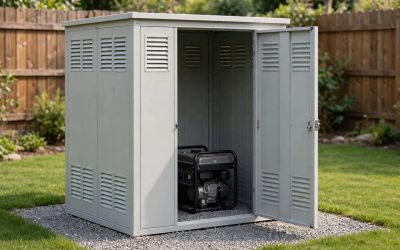
Carbon monoxide is where the wording has to be exact. A fuel generator produces it and must run outdoors only, well away from windows, doors, and vents, exhaust pointed away from the house — and no alarm changes that rule. The alarm is a backstop: it warns you if exhaust drifts somewhere it should not, or another fuel-burning appliance malfunctions.
Kidde Nighthawk KN-COPP-3 Carbon Monoxide Alarm

Specs
- Power: plug-in wall outlet power with 9-volt battery backup
- Display: digital readout showing carbon monoxide levels in parts per million
- Memory: peak-level button recalls the highest recorded level
- Alarm: 85-decibel alert with test and reset button
- Sensor: electrochemical, standard for residential CO alarms
Battery backup matters: during an outage, an outlet-powered alarm on a circuit the generator is not carrying goes dark exactly when you need it, and the battery keeps it watching. Place alarms outside each sleeping area and on every level, per the manual. Already own CO alarms? Check the manufacture date; sensors expire, and a past-date unit belongs in the replacement pile.
Supporting items cost almost nothing: spare alarm batteries, and a binder note with each alarm’s install date. The rule outranking every gadget here: the generator runs outdoors, always.
See the Kidde Nighthawk KN-COPP-3 on Amazon
The Reach
The last component is the cord tying the generator to the inlet box, where undersizing quietly ruins kits. It must carry the full 30-amp load, outdoors, in bad weather, over the distance between the generator’s safe spot and the inlet box. Household cords are not built for this, and chaining two light ones makes the problem worse, not longer.
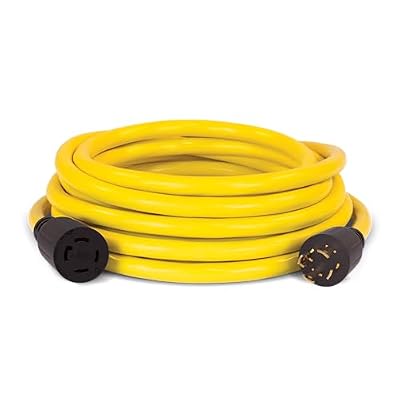
Champion 30-Amp Generator Cord, 25-Foot (Model 100395)
Specs
- Length: 25 feet
- Rating: 30 amps, 250 volts, up to 7,500 watts
- Ends: L14-30P plug to L14-30R connector, matching the generator outlet and the PB30 inlet
- Cable: 10-gauge SJTW jacket, rated for outdoor use
- Maker: Champion Power Equipment, built for manual transfer switch hookups
The ends are the whole story. L14-30 on both sides connects the Westinghouse straight into the Reliance inlet box: no adapters, no splitters, no improvisation. Twenty-five feet enforces good placement: long enough for a safe distance, short enough to discourage parking outside a window. Measure your run before ordering; a longer variant beats a generator parked too close.
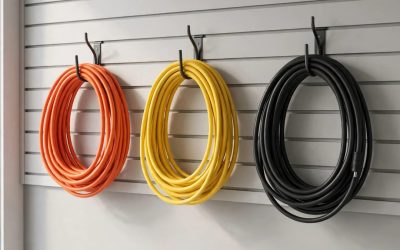
Supporting items: a storage hook so the cord lives coiled by the inlet box, and one shorter outdoor-rated cord kept with the station.
See the Champion 30-amp generator cord on Amazon
Common Kit Mistakes
- The generator with no way in. A powerful generator, no inlet box, no transfer equipment, and a plan ending at an open window and a tangle of cords.
- The forgotten CO alarm. Buyers research wattage for weeks yet skip the small cost of an alarm. A kit with a fuel engine needs working CO alarms with fresh dates.
- The cord that is too light. A thin household cord on a 30-amp outlet overheats under sustained load. Match the cord rating to the outlet; never chain cords.
- Fuel stored wrong, or not at all. Gasoline in an unapproved container, propane tanks stored indoors, or no stored fuel whatsoever. Store fuel as the makers direct; rotate gasoline so it never goes stale.
- Everything bought, nothing test-run. The kit gets assembled during the outage, the worst possible classroom. Run the generator under load once, through the inlet, on a calm weekend.
How to Choose
Size the kit from the loads outward, not from the generator inward. First, list what must run and add the running watts: a refrigerator, furnace blower, sump or well pump, lights, and a router typically land well inside what a 9,500-running-watt dual-fuel machine carries, even allowing for motors’ higher starting draw. Second, respect the connection layer’s ceiling: a 30-amp inlet path delivers up to 7,500 watts to the panel, so choose connected circuits with that ceiling in mind. Third, match the cord to the same 30-amp standard. Fourth, size the power station in watt-hours against overnight loads only; the fridge, router, and one medical device over eight quiet hours pick the station.
Who Should Skip
Apartment renters, and anyone whose lease or building forbids running a fuel generator, should skip the full kit and build the station-only version: a larger power station, lanterns, a phone battery bank, and the CO alarm if any fuel-burning appliance exists in the unit. Owners with an automatic standby generator and whole-house transfer switch should also skip; your power and connection layers are already solved. If your outages last minutes rather than days, a station alone is the honest kit size.
FAQ
Can I plug my generator into a dryer outlet or wall outlet instead of an inlet box?
No. Feeding power into household wiring through an outlet can backfeed the utility lines and endanger repair crews, bypassing every safeguard. An inlet box plus a transfer switch or interlock, installed by a licensed electrician, is the safe route.
How far from the house should the generator sit?
Outdoors only, far enough that exhaust cannot drift in through windows, doors, or vents. The 25-foot cord in this kit makes that placement practical instead of tempting you to park the machine against the wall.
Does the power station replace the generator?
No. The station covers quiet indoor overnight loads and stretches fuel. Pumps, furnace blowers, and multi-day outages belong to the fuel generator.
When should I assemble and test the kit?
As soon as the parts arrive, not when a storm is named. Have the electrician finish the inlet installation, then run one rehearsal: generator outside, cord connected, circuits live, station recharging.
Final Verdict
A storm and outage prep kit is a system; Black Friday is the moment to buy it as one. The Westinghouse WGen9500DF supplies the power, the Jackery Explorer 1000 v2 covers the quiet hours, the Reliance PB30 gives that power a safe way into the house, the Kidde Nighthawk watches the one risk that cannot be seen, and the Champion cord connects them with no weak link. Buy the five anchors as a matched set, store the fuel, book the electrician, and run the rehearsal.
Top picks from this guide
 WestinghouseWestinghouse 12500 Watt Dual Fuel Home Backup Portable Generator, Remote…Reliance ControlsReliance Controls Generators Up to 7,500 Running Watts PB30 30-Amp…Champion Power EquipmentChampion Power Equipment 25-Foot 30-Amp 250-Volt Generator Power Cord for…
 JackeryJackery Explorer 1000 v2 Portable Power Station,1070Wh,1500W | 1 Hr…




Write Your Review
No reviews yet. Be the first to share your experience!