
Our Short List of 3

- Magnification: 8x
- Objective lens: 42 mm
- Prism: BaK-4 roof, phase coated
- Field of view: 393 ft at 1,000 yd

- Magnification: 10x
- Objective lens: 42 mm
- Field of view: 330 ft at 1,000 yd
- Eye relief: 15 mm

- Magnification: 8x
- Objective lens: 25 mm
- Prism: BaK-4 roof
- Field of view: 429 ft at 1,000 yd
All 5 Picks at a Glance
| Product | Specs | Action |
|---|---|---|
| Celestron Nature DX ED 8×42 |
| Check price on Amazon |
| Vortex Diamondback HD 10×42 |
| Check price on Amazon |
| Nikon Trailblazer 8×25 ATB |
| Check price on Amazon |
 Bushnell Marine 7×50 |
| Check price on Amazon |
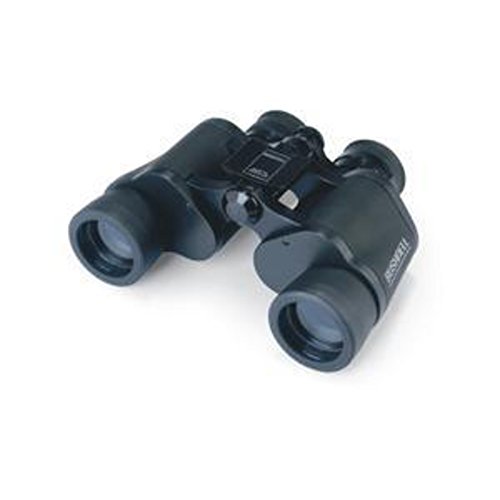 Bushnell Falcon 7×35 |
| Check price on Amazon |
🛒 Best Price Today on Amazon
Prime members get fast, free shipping on everything above, plus member-only deals. New members get a 30-day free trial — cancel anytime.
A single pair of binoculars rarely suits every job. Birding rewards a wide, bright view and a close focus for nearby warblers. Time on a boat calls for a sealed body, steady low magnification and lenses that stay clear when spray lands. A seat high in a stadium needs enough reach to follow play, plus a wide field so the action never slips out of frame. This guide lines up five proven designs, one per job, and explains the numbers that matter: magnification, objective size, field of view, eye relief and build.
As an Amazon Associate, we earn from qualifying purchases.
Quick answer
Short on time? Take the Celestron Nature DX ED 8×42 for birding and general wildlife watching. Choose the Vortex Diamondback HD 10×42 for one all-round pair with extra reach. The Nikon Trailblazer 8×25 ATB is the pair to keep in a jacket pocket or travel bag. Boaters should look at the Bushnell Marine 7×50, with its built-in compass and sealed body. For stadium seats and concerts, the Bushnell Falcon 7×35 gives the widest view here.
Celestron Nature DX ED 8×42
- Magnification: 8x
- Objective lens: 42 mm
- Prism: BaK-4 roof, phase coated
- Field of view: 393 ft at 1,000 yd
The Nature DX ED is the birding pick because it pairs the friendly 8×42 layout with extra-low dispersion objective lenses. ED glass reins in color fringing, so a white egret against dark reeds holds clean outlines and feather detail stays readable at dawn and dusk. The 8x magnification is easy to hold steady, and the wide field leaves room to find a moving bird and keep it in frame.
BaK-4 roof prisms with phase coatings and fully multi-coated optics keep the image bright and sharp across most of the field. A 6.5 ft close focus is a bonus for butterflies, dragonflies and feeder birds. The body is waterproof and fogproof with rubber armor, and 17.8 mm of eye relief lets glasses wearers take in the full view with the eyecups turned down. At 24.9 oz, the balance still sits well in the hands on long walks.
Vortex Diamondback HD 10×42
- Magnification: 10x
- Objective lens: 42 mm
- Field of view: 330 ft at 1,000 yd
- Eye relief: 15 mm
If one pair has to cover hillside scanning, distant shorebirds and the far end of a playing field, the Diamondback HD 10×42 is the all-rounder here. The 10x magnification pulls distant subjects noticeably closer than the 8x models, while the HD optical system and fully multi-coated lenses keep contrast strong when the light turns flat. A 330 ft field of view is generous for a 10x glass, which helps when you follow birds in flight or pan across a shoreline.
Close focus reaches down to 5 ft, and the sealed, purged body shrugs off rain and sudden temperature swings without fogging inside. At 21.3 oz it carries lighter than the Celestron despite the extra power. Vortex bundles a GlassPak harness case that holds it snug to your chest, quick to lift.
Nikon Trailblazer 8×25 ATB
- Magnification: 8x
- Objective lens: 25 mm
- Prism: BaK-4 roof
- Field of view: 429 ft at 1,000 yd
The Trailblazer 8×25 ATB exists for the days when a full-size binocular would stay at home. At 9.9 oz it rides in a coat pocket, a small daypack or a glove box, yet it still gives a proper 8x view through 25 mm objectives. The surprise is the field of view: 429 ft at 1,000 yd is wider than many full-size models offer, which makes it easy to follow moving subjects, from children on a pitch to birds in branches.
Nikon fills the roof-prism body with nitrogen and seals it with O-rings, so the little ATB is fully waterproof and fogproof. Multilayer-coated Eco-Glass optics keep the image bright for its size, and turn-and-slide eyecups adjust for glasses. The trade-off is physics: the small exit pupil dims faster at dusk than a 42 mm model, so this is a daylight and travel tool above all. For holidays, hikes and casual stadium trips, that is easy to accept.
Bushnell Marine 7×50
- Magnification: 7x
- Objective lens: 50 mm
- Prism: BaK-4 Porro
- Field of view: 350 ft at 1,000 yd
Boats punish optics. Spray, knocks against the rail and constant motion all argue for the classic marine formula, and the Bushnell Marine 7×50 follows it closely: modest 7x magnification for a steady view on a moving deck, big 50 mm objectives for light gathering at dawn and dusk, and a 7.1 mm exit pupil that stays bright and easy to align while the boat rolls.
This model (137500) builds in a liquid-filled compass with an illuminator for night bearings, plus a range-finding reticle. The Porro prism body is hermetically sealed, waterproof and fogproof, and wrapped in non-slip rubber armor that grips well with wet hands. At 37 oz, that mass helps settle the view in a swell. Eye relief of 18 mm leaves room for sunglasses.
Bushnell Falcon 7×35
- Magnification: 7x
- Objective lens: 35 mm
- Prism: Porro
- Field of view: 420 ft at 1,000 yd
The Falcon 7×35 is the wide-angle specialist. Its 420 ft field of view at 1,000 yd is among the broadest in this line-up, so a whole midfield or concert stage fits in a single look. That breadth, paired with gentle 7x magnification, makes it a natural fit for stadium seats, theater balconies and fast, close action where a narrow 10x view would keep losing the subject.
Bushnell’s InstaFocus lever sits under your fingertips and swings the focus quickly from near to far, handy when play moves up and down the field. The Porro prism body wears a rubberized, abrasion-resistant finish with fold-down eyecups. Fully coated optics keep the image clean in daylight, though the Falcon is not a sealed design, so it belongs under a jacket in the rain rather than out on an open boat. For casual, wide-open viewing it remains a long-running favorite.
How to choose
Magnification comes first. Models at 7x and 8x are easier to hold steady and give wider fields of view, which suits boats, stadiums and woodland birding. A 10x glass reaches farther across open water, fields and shorelines, in exchange for a narrower view and more visible hand shake.
Objective size sets brightness. A 42 mm or 50 mm front lens gathers enough light for dawn, dusk and shade, and gives a larger exit pupil that is forgiving to line up with your eyes. Compact 25 mm models shine in daylight and win on carry weight.
Field of view tells you how much scenery fits across the frame; wider is better for moving subjects. Eye relief matters if you wear glasses: 15 mm and upward usually lets you see the whole field with the eyecups turned down. ED glass reduces color fringing on high-contrast edges, phase coatings sharpen roof-prism images, and a waterproof, fogproof build is close to mandatory anywhere near water or winter weather.
FAQ
Is 8×42 or 10×42 better for birding?
For most birding, 8×42. The wider field helps you find and follow birds, the image shakes less, and close focus tends to be shorter for nearby subjects. Pick 10×42 for shorebirds, raptors and open wetlands where distance dominates the day.
Why do marine binoculars use 7×50?
The 7x magnification stays steady on a moving deck, and the 50 mm lenses deliver a 7.1 mm exit pupil that keeps the view bright in low light and easy to hold on target while the boat rolls.
Can I use compact binoculars at a stadium?
Yes. A compact 8×25 such as the Trailblazer slips into a pocket and gives a clear view of play in daylight. A wide-field 7×35 shows more of the field at once, which many fans prefer.
What does eye relief mean for glasses wearers?
Eye relief is the distance your eye can sit from the eyepiece while still seeing the full field. With glasses on, look for 15 mm or more and turn the eyecups down; without glasses, turn them back up.
Verdict
Match the glass to the day. Birders and walkers get the most from the Celestron Nature DX ED 8×42, all-round users from the Vortex Diamondback HD 10×42, and travelers from the Nikon Trailblazer 8×25 ATB. The Bushnell Marine 7×50 is the boat pair, compass included, while the Bushnell Falcon 7×35 owns the stadium brief.



Write Your Review
No reviews yet. Be the first to share your experience!