
Our Short List of 3

- Best for: Keepers who judge their bank by dimming lights and slow starters, and who want a stated reading at the door before deciding whether to run, charge or rest the set.
- Brand: Frienda, as named in the listing
- Type: Battery meter, per the listing name
- Role in this set: The measurement post — the bank’s state read at the door and logged, where dimming lights and memory served before
- Stated voltage range, shunt or sensor form, display form and lead length: Confirm on the listing

- Best for: Keepers whose charging or bank leads run unfused end to end, and who want a fault stopped at a holder instead of at the bank or the frame.
- Brand: Renogy, as named in the listing
- Type: In-line fuse holder, per the listing name
- Role in this set: The protection post — a fuse on the charging lead between the set and the bank, where no fuse ran before
- Stated fuse rating, fuse type, wire gauge and holder form: Confirm on the listing
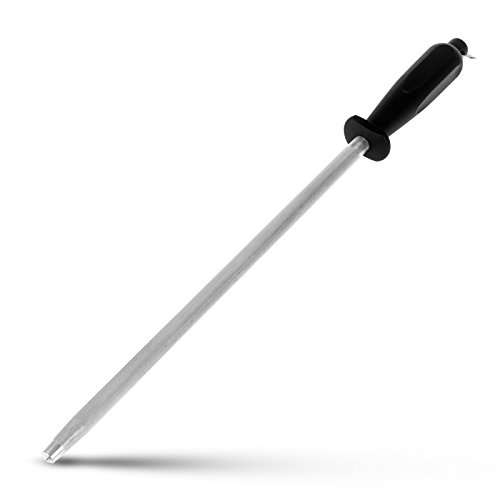
- Best for: Keepers whose one shed knife cuts rope, hose, sacking and strapping all week, and who want its edge kept honest at the bench instead of on a brick.
- Type: Knife sharpening rod, per the listing name
- Stated length: 12 inches, per the listing name
- Role in this set: The edge post — the shed knife kept cutting clean at the bench, where a brick edge served before
- Stated grit, rod material and handle form: Confirm on the listing
All 5 Picks at a Glance
| Product | Specs | Action |
|---|---|---|
| Frienda Battery Meter |
| Check price on Amazon |
| Renogy In-Line Fuse Holder |
| Check price on Amazon |
| 12″ Knife Sharpening Rod |
| Check price on Amazon |
 Salbree Office Chair Clamp Fix |
| Check price on Amazon |
 Nilight LED Light Pods |
| Check price on Amazon |
🛒 Best Price Today on Amazon
Prime members get fast, free shipping on everything above, plus member-only deals. New members get a 30-day free trial — cancel anytime.
The set lives in the old cart shed at the lane’s end, a stone lean-to that now holds the generator, its bank and a workbench rebuilt this autumn in louro. The timber came as mixed parcels under one yard name — boards the colour of weak tea beside boards two shades darker, all of them heavy. The shed was rewired in September and its cable runs pinned flat, so fastening is finished work; what the room still lacks is a reading of its own bank, and that gap sets this round’s buying decision.
It serves keepers who judge their bank by guesswork and want a reading instead, keepers whose charging lead still runs without a fuse, and anyone who works a dead set after dark with one hand holding a torch. The picks read the bank at the door, guard the lead, keep the shed knife cutting clean, hold the bench stool at its height and put fixed light over the machine.
Quick Picks
As an Amazon Associate we earn from qualifying purchases
Louro is a South American hardwood traded under its own yard name, and like every yard name it travels further than the timber it labels. The heartwood runs reddish-brown to dark brown, the texture is medium, and the grain runs straight to interlocked. It is hard and heavy, moderately durable, and the trade posts it to furniture, flooring, turnery and decorative work; it is demanding to work, slow on edges and unwilling to take a fixing without a pilot hole. A yard name shared across yards identifies nothing by itself, so each listing’s stated species and use decide the match rather than the name on the invoice.
| Product | Best for | Key spec from title |
|---|---|---|
| Frienda Battery Meter | A bank judged by dimming lights and a hydrometer kept up at the house | Battery meter, as the listing names it |
| Renogy In-Line Fuse Holder | A charging lead that runs bare from the set back to the bank | In-line fuse holder, as the listing names it |
| 12″ Knife Sharpening Rod | A shed knife that tears rope and strapping instead of cutting them | Sharpening rod, as the listing names it |
| Salbree Office Chair Clamp Fix | A bench stool that ends every evening session lower than it started | Office chair clamp sinking fix, as the listing names it |
| Nilight LED Light Pods | Night callouts to a dead set, worked until now by torchlight | LED light pods, as the listing names it |
How to Choose
One Yard Name, Several Parcels
The cart-shed load taught the lesson before a single fitting was chosen. Two parcels wore the same yard stamp, yet one planed pale and willing while the other ran darker and heavier, its grain reversing where the first parcel’s ran straight. Anyone trusting the stamp would have laid them as equals and learned otherwise at the first dropped spanner. Fittings carry the same habit: a headline gathers every variant of a part under one name, and the lines that settle a purchase sit beneath it. Read those lines first, in timber and in parts alike.
What Louro’s Character Suits It For
The trade posts louro to furniture, flooring, turnery and decorative work, and the stated character explains the posting. Hard, heavy stock shrugs off dropped tools and dragged benches in a working room, and moderate durability keeps a bench top and a door sound through years of damp air off stone walls. The bill arrives at the bench: the timber is demanding to work, quick to dull a plane iron and stubborn under a saw. Grade the room’s fittings by the same rule — stated duty first, and each piece posted where that duty belongs.
Read the Bank, Do Not Guess It
Until now the bank in this shed has announced itself only by failing: lights dimming at the house, a starter turning slower each cold morning, a hydrometer carried up to the kitchen table and its reading carried back down in the memory. None of that is a state of charge. The meter post exists so the room can be read at the door, before a run, in figures the logbook can hold. Grade it on its stated range against the bank’s voltage and its stated sensor fit against the main lead — a meter that cannot see the whole bank sees nothing.
Measure the Room Before the Parcel Ships
The remaining posts are settled with a tape and the listing’s printed figures before anything is opened. The rod wants its stated length read against the longest blade it must serve, because a short rod runs out of stroke halfway down a long edge. The clamp wants its stated column fit checked against the stool’s post. The pods want their stated mount and beam judged against the wall above the set. Ten minutes with a tape in the shed is cheaper than a return parcel on the lane.
The 5 Best Options
Frienda Battery Meter
- Best for: Keepers who judge their bank by dimming lights and slow starters, and who want a stated reading at the door before deciding whether to run, charge or rest the set.
- Brand: Frienda, as named in the listing
- Type: Battery meter, per the listing name
- Role in this set: The measurement post — the bank’s state read at the door and logged, where dimming lights and memory served before
- Stated voltage range, shunt or sensor form, display form and lead length: Confirm on the listing
Keepers who judge their bank by dimming lights and slow starters, and who want a stated reading at the door before deciding whether to run, charge or rest the set.
A meter is bought on its stated range and sensor fit. A range that stops short of your bank’s voltage, or a sensor that cannot take the main lead, reads a fraction and calls it the whole — confirm both lines on the listing against the bank in front of you.
Frienda’s listing names a battery meter, and it takes the measurement post — the one post this round stood open. The bank’s leads were cut back to sound cable and remade last spring, so the connection work is done; what nobody in this room can do today is say what the bank holds. The meter mounts where the keeper passes, at the shed door, and turns guesswork into a reading that can sit in the logbook beside the fuel figures. Grade it on the stated range against your bank’s voltage and the stated sensor fit against your main lead.
Renogy In-Line Fuse Holder
- Best for: Keepers whose charging or bank leads run unfused end to end, and who want a fault stopped at a holder instead of at the bank or the frame.
- Brand: Renogy, as named in the listing
- Type: In-line fuse holder, per the listing name
- Role in this set: The protection post — a fuse on the charging lead between the set and the bank, where no fuse ran before
- Stated fuse rating, fuse type, wire gauge and holder form: Confirm on the listing
Keepers whose charging or bank leads run unfused end to end, and who want a fault stopped at a holder instead of at the bank or the frame.
A fuse holder is bought on its stated rating, not on the holder’s shape. A rating above the line it guards protects nothing, and one below it opens on ordinary charging days — match the stated rating and wire gauge to your lead on the listing.
Renogy’s listing names an in-line fuse holder, and it holds the protection post for another round. The lead carrying charge from the set to the bank still runs its full length with nothing on it able to open the circuit, so one chafed patch above the stone floor has an unbroken path to travel. The holder splices into that lead and gives the fault a place to stop. Grade it on the stated fuse rating against the line it guards and the stated wire gauge against the lead itself, and confirm both lines on the listing.
12″ Knife Sharpening Rod
- Best for: Keepers whose one shed knife cuts rope, hose, sacking and strapping all week, and who want its edge kept honest at the bench instead of on a brick.
- Type: Knife sharpening rod, per the listing name
- Stated length: 12 inches, per the listing name
- Role in this set: The edge post — the shed knife kept cutting clean at the bench, where a brick edge served before
- Stated grit, rod material and handle form: Confirm on the listing
Keepers whose one shed knife cuts rope, hose, sacking and strapping all week, and who want its edge kept honest at the bench instead of on a brick.
A rod keeps a working edge honest; it will not rebuild a chipped or folded one. Confirm the stated grit and rod material on the listing against your blades, and the stated length against your longest knife — a rod shorter than the blade runs out of stroke before the edge is done.
The listing names a 12-inch knife sharpening rod, and it takes the edge post — open since the fastening post closed. The shed knife opens feed sacks, cuts rope and fuel hose, and slices the strapping off every parcel the lane delivers; by November it was tearing more than it cut, and the brick edge behind the door is no place to true a blade. The rod gives that knife a proper stroke at the bench, a few passes before the work starts. Grade it on its stated length against your longest blade and its stated grit and material against the steel it must serve.
Salbree Office Chair Clamp Fix
- Best for: Keepers who do their paperwork and small repairs seated at the bench, and whose stool finishes every long session lower than it began it.
- Brand: Salbree, as named in the listing
- Type: Office chair clamp sinking fix, per the listing name
- Stated function: Holds a chosen seat height, per the listing name — a hold, not a lift repair
- Role in this set: The seat post — the bench stool kept at its set height through long seated sessions
Keepers who do their paperwork and small repairs seated at the bench, and whose stool finishes every long session lower than it began it.
The clamp’s whole promise is a held height. A lift that drops in sudden jumps, leans to one side or refuses to rise at all is past holding — that is a replacement cylinder, and no tightness of clamp changes it. Confirm the stated column fit on the listing before ordering.
Salbree’s listing names an office chair clamp sinking fix, and it holds the seat post at the bench. The bench stool rides a gas lift, and across an evening of logbook entries, fuel figures and small repairs the lift gives up height a little at a time — square to the louro bench top at the start, stooped beneath it by the end. The clamp closes around the lift column and holds the stool where it was set. It repairs nothing beneath; the tired lift stays tired, simply overruled.
Nilight LED Light Pods
- Best for: Keepers who service their set after dark in a shed or outbuilding whose only light hangs in the wrong place, and who need both hands on the machine.
- Brand: Nilight, as named in the listing
- Type: LED light pods, per the listing name
- Role in this set: The light post — fixed light over the set and the bank for night callouts, where a door bulb and a torch served before
- Stated pod count, mount form, beam pattern and wiring form: Confirm on the listing
Keepers who service their set after dark in a shed or outbuilding whose only light hangs in the wrong place, and who need both hands on the machine.
A pod is bought on its stated mount and beam, not on the housing’s looks. Light aimed at the keeper’s eyes blinds instead of helping, and a mount that cannot hold its angle on a vibrating wall will wander — confirm the stated mount form and beam on the listing, and plan the wiring run before ordering.
Nilight’s listing names LED light pods, and they hold the light post. The shed’s only bulb hangs over the door, behind the keeper’s back, so the set is serviced in the keeper’s own shadow; the last two night callouts were worked by torchlight, one hand lost to holding the light. Pods fixed on the back wall throw light where the work is — over the set, the bank and the bench — and leave both hands for the machine. Grade them on the stated mount against your wall and the stated beam against the room.
Which One Fits Your Situation
You Judge the Bank by the Lights Dimming
Start with the Frienda meter. Dimming lights and a slow starter are the bank reporting itself too late, after the charge is already spent. A meter at the door gives the room a reading before the run starts, one the logbook can hold against last week’s. Match the stated range to your bank’s voltage first, and the stated sensor fit to your main lead second.
The Charging Lead Runs Bare
Fit the Renogy holder before the lead teaches the lesson itself. Today a fault anywhere along that run — worn insulation, a terminal crossed in the dark, a tool laid across the posts — travels the whole line unopposed. The holder breaks that path at a chosen point. Read the stated rating against the line’s duty first; the stated wire gauge against the lead comes second.
The Shed Knife Tears Instead of Cutting
Fit the rod, and give the brick edge back to the wall. A knife that tears rope and strapping slows every job in the shed and invites the extra force that slips. A few strokes on the rod before the work starts keep the edge cutting clean all week. Check the stated length against your longest blade first, then the stated grit against the steel.
The Bench Stool Sinks Through Every Session
Fit the Salbree clamp, and set the height once. An evening at the bench currently ends with the keeper perched lower than it began, shoulders up around the logbook while the bench top creeps toward chin height. The clamp locks the column at the height you chose in the morning and declines the slow surrender. Check the stated column fit against your stool’s post before the parcel ships.
Common Mistakes
- Trusting the stamp on the load — one louro parcel planed pale and willing, the next ran dark and stubborn; a headline does the same over its variants, and the stated lines are the only description of what arrives
- Asking louro to work like pine — hard, heavy stock with grain that reverses mid-board punishes dull edges and unplanned cuts, so sharpen first, pre-drill fixings and let the timber set the pace
- Reading the bank by its symptoms — lights dim and starters slow only after the charge is gone; a state of charge belongs in the logbook, taken at the door, not inferred at the house
- Leaving the charging lead bare because it has never faulted — one worn patch of insulation is all a fault needs, and a fuse rated above its line protects nothing but the holder
- Stroking a damaged edge on a rod and calling it sharpened — a rod maintains a working edge, and a chipped blade sent back to work dull will tear, wander and eventually slip
Frequently Asked Questions
Does anything in this set contain louro?
No. No listing here declares louro content; each piece is whatever its own listing states. The timber lends the round its standard: a South American hardwood sold under a yard name shared across yards — heartwood reddish-brown to dark brown, grain straight to interlocked, hard and heavy, and moderately durable. Grade stated duty, never names.
Why are there no staples in this round?
Because that post is staffed by finished work, not by stock. The shed was rewired in September and every cable run was pinned flat along the boarding that week, so the fastening post closed with the job done. Keeping a box of staples against work already finished turns a refresh into a restock — the open post was the shed knife’s edge, which is why the rod is here.
What is louro actually used for?
Furniture, flooring, turnery and decorative work. It is hard and heavy with a medium texture, which is why it becomes bench tops that take dropped tools without denting and doors that stay sound in damp outbuildings. Its moderate durability suits it to hard indoor service rather than ground contact.
Is louro easy to work?
No — it sits at the demanding end of the scale. Hard and heavy stock blunts edges quickly, grain that reverses mid-board tears out under a careless plane, and screws want pilot holes before they will sit. The return is a surface that takes years of hard use without showing it, which is why it was chosen for the bench.

Write Your Review
No reviews yet. Be the first to share your experience!