
🛒 Best Price Today on Amazon
Prime members get fast, free shipping on everything above, plus member-only deals. New members get a 30-day free trial — cancel anytime.
A 150Ah tubular battery is the workhorse size for home inverter backup. It is large enough to carry lights, fans, a television, a router, and a refrigerator through a long outage, yet still small enough to fit in a standard battery trolley or cabinet and to be charged by a typical home inverter. The tubular plate design is what separates this class from ordinary flat-plate inverter batteries: it trades a little upfront simplicity for a much longer service life under daily charge and discharge cycling.
This guide explains how tubular batteries work, how to read the ratings honestly, how much backup a 150Ah unit really delivers, and what to check before buying. One important buying note comes first, because it shapes everything else: genuine tubular-plate inverter batteries from makers such as Exide, Luminous, Genus, Amaron, and UTL are produced mainly for markets where grid outages are a daily fact of life, and they are sold through regional dealers and marketplaces in those regions. They are not stocked as regular listings on Amazon US, so this guide deliberately contains no Amazon product entries. What follows is a specification-led buying guide you can apply to any genuine 150Ah tubular model available in your market.
As an Amazon Associate we earn from qualifying purchases.
What “Tubular” Actually Means
Inside a lead-acid battery, the positive plate is where most of the wear happens. In a flat-plate battery, the active material is pasted onto a flat grid, and over hundreds of cycles that material gradually softens and sheds from the plate. Shedding is the main reason flat-plate inverter batteries lose capacity and fail.
A tubular battery builds the positive plate differently. A spine of lead alloy fingers runs down the center, and the active material is packed around those spines inside woven polyester tubes, often called gauntlets. The gauntlet holds the active material in place mechanically, so it cannot shed the way pasted material does. Exide describes its Inva Tubular range in exactly these terms: the technology seals the active material in polyester gauntlets instead of pasting it on the plate surface, which prevents shedding and supports long service life.
The practical consequences of tubular construction are consistent across manufacturers:
- Longer cycle life. Tubular plates tolerate deep discharge and partial-state-of-charge operation better than flat plates, which is the normal condition in outage-prone areas.
- Better charge acceptance. The large surface area of the tubular positive plate accepts charge efficiently, so the battery recovers faster between outages.
- Longer watering intervals. Well-made tubular batteries are designed for low water loss. Luminous, for example, describes its 150Ah solar tubular battery as needing topping up only once in roughly eight to ten months.
- A taller case. Tubular plates need height, which is why most 150Ah models are “tall tubular” designs around 400 to 440 mm high rather than the shorter cases used for flat-plate batteries.
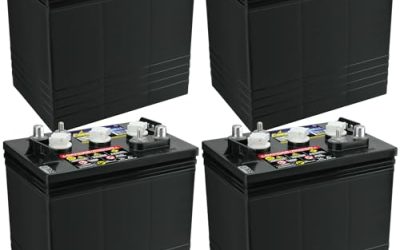
The trade-offs are equally consistent. A flooded tubular battery is heavy, typically in the region of 58 to 65 kg filled, it needs a ventilated space because it vents small amounts of gas while charging, and it needs periodic distilled-water top-ups. It is a stationary battery in every sense.
The Models That Define This Class
Because there are no verified Amazon US listings for this category, the honest way to shop is by specification. These manufacturer-published examples show what a genuine 150Ah tubular battery looks like on paper, and they give you a template for judging any model you find locally.
Exide InvaMaster IMTT1500. A 12V, 150Ah tall tubular inverter battery aimed at homes, offices, and shops, positioned by Exide for long backup and low maintenance in the InvaMaster range.
Luminous Inverlast ILTT 18060. A 12V, 150Ah tall tubular plate model with six water level indicators, a tower-type container, and published dimensions of about 502 x 191 x 440 mm with a filled weight around 65 kg. Luminous highlights fast charging and a puncture-resistant separator intended to reduce internal short circuits.
Luminous LPTT12150H. A solar-oriented 150Ah tubular battery, C10 rated for longer backup duty. Luminous publishes cycle figures of 1500 cycles at 80 percent depth of discharge and 5000 cycles at 20 percent depth of discharge, with topping-up intervals of eight to ten months.
Genus Hallabol GTT170. A 150Ah tall tubular model rated at 12V and 1800 watt-hours, with published dimensions of roughly 18.8 x 40.2 x 50.2 cm.
UTL UST1560. A 150Ah tubular battery rated at C10, in the common IT500 container size of about 503 x 190 x 410 mm, with a filled weight of about 61.2 kg.
Amaron Solar Tubular 12ASTT150. A 150Ah tubular battery rated 150Ah at the C10 rate at 27 degrees C, about 500 x 189 x 398 mm, and about 58 kg with acid, with tubular positive plates and flat pasted negative plates.
Notice the pattern: every genuine model is 12V, lands between roughly 398 and 440 mm tall, weighs in the high fifties to mid sixties of kilograms filled, and is sold with a long warranty measured in years rather than months. If a listing calling itself a 150Ah tubular battery is dramatically lighter, dramatically smaller, or sealed and maintenance-free, it is not a tubular battery, whatever the headline says. Sealed AGM and gel batteries at 150Ah are a different product class with different strengths, and lithium 150Ah batteries are a different class again.
C10 vs C20: The Rating That Changes Everything
The single most misunderstood figure on a tubular battery is the capacity rating basis. A battery’s amp-hour capacity depends on how fast you discharge it. Discharge it slowly and you get more amp-hours out; discharge it quickly and you get fewer.
Indian-market tubular batteries, which dominate this category, are commonly rated at C10: the capacity delivered over a ten-hour discharge. Many batteries sold in North America and Europe are rated at C20, over twenty hours. A battery rated 150Ah at C10 will typically deliver noticeably more than 150Ah if discharged over twenty hours, and a battery rated 150Ah at C20 will deliver less than 150Ah at a ten-hour rate.
Amaron’s datasheet for its 150Ah solar tubular battery states the basis plainly: rated capacity 150Ah at C10 at 27 degrees C. When you compare two 150Ah batteries, check that both use the same basis before treating them as equal. A C10-rated 150Ah tubular is, in real backup terms, the stronger battery.
Temperature is the second hidden variable. Ratings are quoted at 25 or 27 degrees C. Capacity falls in the cold and the battery ages faster in sustained heat, so a battery room that bakes in summer will shorten service life no matter how good the plates are.
How Much Backup Does 150Ah Actually Give?
The nameplate energy of a 12V, 150Ah battery is 1800 watt-hours. You will never use all of it. Flooded lead-acid batteries, tubular included, should be discharged to about 50 percent depth of discharge for a long life, with deeper discharges reserved for occasional long outages. That leaves roughly 900 usable watt-hours before inverter losses, and around 800 watt-hours delivered to your loads after a typical inverter’s conversion loss.
Translated into backup time:
- A light essential load of about 200 watts — lights, fans, a router, and a TV — runs for roughly four hours.
- A moderate load of about 400 watts adds a refrigerator cycling on and off, and lands around two hours.
- A heavy load of about 800 watts cuts that to roughly one hour, and sustained heavy discharge also reduces the effective capacity further, so treat that figure as optimistic.
If your outages regularly run longer than your target load allows, the correct fix is a second battery in a 24V configuration or a move up in capacity, not deeper discharge. The cycle figures published for solar tubular models make the reason clear: the same battery that delivers around 1500 cycles at 80 percent depth of discharge delivers several times that at shallow discharge. Depth of discharge is the lever that decides whether the battery lasts three years or seven.
Matching the Battery to Your Inverter
A 150Ah tubular battery pairs naturally with common home inverters in the 900VA to 1600VA class on a 12V system, and two of them in series serve 24V inverters. Three checks matter more than brand debates:
Charging current. Tubular batteries of this size generally want a charging current around ten to fifteen percent of capacity. Amara Raja’s tubular datasheets recommend a minimum charging current of ten percent of rated capacity. Confirm your inverter’s battery charging current setting can reach that range; a charger that is too weak leaves the battery chronically undercharged, which sulfates the negative plates and quietly kills capacity.
Battery type setting. Many inverters offer a tubular or flooded battery selection that adjusts charging voltages. Amaron’s published charging guidance for its tubular range is a float voltage of about 14.4V per battery and a boost voltage of about 15.0V, with a low-voltage cutoff near 10.8V. Use the tubular setting if your inverter has one rather than a sealed-battery profile.
Cable and placement. A 150Ah battery feeding a large inverter draws serious current. Keep cables short, thick, and tight, and place the battery on a level surface in a ventilated spot away from living areas, on a trolley or stand that can take the filled weight.
Solar Pairing
The C10-rated solar variants, such as the Luminous LPTT12150H and UTL’s solar tubular range, exist because solar duty is harder than grid backup duty: the battery cycles every day, often sits at partial charge overnight, and must accept charge whenever the sun is available. Tubular plates handle partial-state-of-charge operation better than flat plates, which is why the type dominates solar home systems in its home markets. If your inverter is a solar model with a charge controller, the same charging-current and voltage-setting checks apply, and panel capacity should be sized so the battery can reach a full charge on a normal sunny day rather than hovering at partial charge for weeks.
Maintenance That Decides the Lifespan
Flooded tubular batteries ask little, but they do ask something:
- Water level. Check the level indicators — many models have one per cell, six on the Luminous ILTT 18060 — and top up with distilled or demineralized water only, never tap water and never acid. Expect intervals of several months; a battery that suddenly needs water far more often is being overcharged or is nearing end of life.
- Terminals. Keep terminals clean and tight, and protect them from corrosion. Loose terminals heat under load and can damage the battery top.
- Equalization and full charges. Avoid leaving the battery discharged after an outage. Recharge promptly and fully; chronic undercharging is the most common avoidable cause of early failure.
- Ventilation. Charging releases small amounts of hydrogen. A ventilated battery corner is a requirement, not a preference.
Buying Checklist
Before paying for any 150Ah tubular battery, confirm the following from the datasheet or the dealer, not from the headline:
- The rating basis: 150Ah at C10 or at C20, and at what temperature.
- Real dimensions and filled weight, which should match the tall tubular pattern described above.
- Warranty terms in writing, including how much is full replacement and how much is pro-rata.
- Whether the battery is supplied factory-charged and filled, or dry-charged needing local filling and initial charging.
- The recommended charging current and voltages, and whether your inverter can deliver them.
- Local service support. A battery this heavy is effectively unshippable for warranty claims, so a dealer who can test and service it nearby is worth more than a small saving on a distant purchase.
- If you are shopping from the United States, set expectations correctly: plan on specialist importers or regional dealers rather than Amazon US, and be skeptical of any sealed battery marketed with the word tubular in the title.
Frequently Asked Questions
Is a tubular battery better than a flat-plate battery for an inverter?
For backup duty with regular cycling, yes, in the ways that matter most: longer cycle life, better tolerance of deep discharge and partial charge, and longer intervals between water top-ups. Flat-plate batteries cost less upfront and suit areas with rare, short outages.
How long will a 150Ah tubular battery last?
Service life depends mostly on depth of discharge and temperature. Manufacturer cycle data for solar tubular models runs from around 1500 cycles at deep discharge to several thousand at shallow discharge, which in home backup use typically translates to several years of service when the battery is charged properly and not routinely drained flat.
Can one 150Ah battery run a refrigerator?
Yes, as part of a moderate load. A refrigerator’s running draw is modest, but its compressor startup surge must be within the inverter’s surge rating, and the fridge’s daily energy use counts against the roughly 800 usable watt-hours a 150Ah battery can deliver at sensible discharge depths.
Tubular, AGM, or lithium at 150Ah?
Tubular flooded batteries offer the longest proven life per unit of capacity in stationary backup and tolerate heat and partial charge well, at the cost of weight, ventilation, and watering. AGM removes the watering and venting concerns but generally gives fewer deep cycles. Lithium gives the most usable capacity and the lightest weight, and needs a charger with a compatible profile. The right answer depends on your outage pattern and how much maintenance you will actually do.
Bottom Line
The best 150Ah tubular battery for an inverter is the one whose datasheet survives scrutiny: a true tubular positive plate, a C10 or clearly stated rating basis, dimensions and filled weight in the expected tall tubular range, charging requirements your inverter can meet, and a warranty backed by a dealer who can actually service a battery of this size. Judge any candidate — Exide, Luminous, Genus, Amaron, UTL, or a regional brand — against those points, size your loads against the realistic 800 or so usable watt-hours, and keep up with the simple watering and charging routine. Do that, and a tubular battery will outlast several flat-plate replacements.
Write Your Review
No reviews yet. Be the first to share your experience!