
Our Short List of 3

All 4 Picks at a Glance
| Product | Specs | Action |
|---|---|---|
| EF ECOFLOW DELTA Pro with 400W Portable Solar Panel (B0B1TCMZHZ) | Check price on Amazon | |
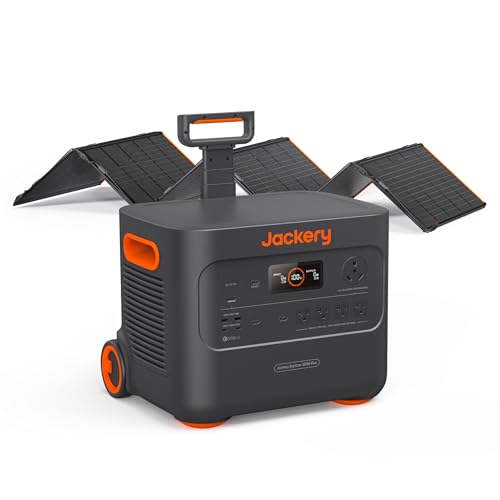 Jackery Solar Generator 2000 Plus 500W (B0DW43W43K) | Check price on Amazon | |
 BLUETTI AC200L (B0CLGZB3L6) | Check price on Amazon | |
 Anker SOLIX C1000 Gen 2 (B0FN7MSY4L) | Check price on Amazon |
🛒 Best Price Today on Amazon
Prime members get fast, free shipping on everything above, plus member-only deals. New members get a 30-day free trial — cancel anytime.
A sump pump only earns its keep when the power goes out, and that is exactly when storms send the most water toward a basement. A battery powered generator, also called a portable power station, can keep a sump pump running through an outage without fuel, fumes, or a pull cord in the rain. The catch is that a sump pump is a motor load, and motors ask for far more power at startup than they use while running. Pick a station that is too small and it will shut down the moment the pump tries to start, right when the water is rising.
The best battery powered generator for sump pump backup is one with enough surge output to start your pump, enough battery capacity to run it through a long outage, and enough outlets and recharging options to stay useful until grid power returns. For most homes, that means a station rated at 2,000 watts of continuous output or more, with a surge rating comfortably above the pump starting watts shown on the pump nameplate. Larger pumps, deeper pits, and heavier inflow all push the requirement upward.
This guide explains how to match a power station to a sump pump, compares five battery powered generators that can do the job, and flags the one pick that only fits smaller pumps. Every product below is a battery powered generator or portable power station, not a sump pump and not a gas generator. Check your pump nameplate for its running watts and starting watts before you buy, because that single label decides which station on this list fits your home.
Quick Picks
| Product | Best For | Key Spec |
|---|---|---|
| Anker SOLIX F3800 (B0CVVXQKYJ) | Longest runtime and largest pumps | 3,840Wh capacity, 6,000W output, 120V and 240V output |
| EF ECOFLOW DELTA Pro with 400W Portable Solar Panel (B0B1TCMZHZ) | Whole-home backup with solar recharging | 3,600Wh capacity, 3,600W output, 7,200W surge |
| Jackery Solar Generator 2000 Plus 500W (B0DW43W43K) | Expandable mid-size backup with a panel included | 2,042Wh capacity, 3,000W output, 500W solar panel |
| BLUETTI AC200L (B0CLGZB3L6) | Mid-size backup with room to expand | 2,048Wh capacity, 2,400W output, 3,600W Power Lifting |
| Anker SOLIX C1000 Gen 2 (B0FN7MSY4L) | Smaller pumps and short outages only | 1,024Wh capacity, 2,000W output, 3,000W peak |
How to Choose
Starting Watts Matter More Than Running Watts
A sump pump motor draws a short surge of power every time it starts, often two to three times its running watts. A common 1/3 horsepower pump may run on around 800 watts and need 1,500 to 2,000 watts to start, while a 1/2 horsepower pump may run on around 1,000 watts and need 2,000 to 3,000 watts to start. The pump nameplate, usually on the motor housing or in the manual, lists the running watts or the amps. Multiply amps by volts to get running watts, then allow at least double that figure for starting watts if the manufacturer does not list a starting figure. Choose a station whose surge rating clears the starting watts with room to spare. A station that matches the running watts but falls short on surge will trip or shut down on the first pump cycle.
Battery Capacity Decides How Long the Pump Keeps Running
Capacity is measured in watt-hours, and it sets the runtime ceiling. A 2,042Wh station powering an 800-watt pump could run it for roughly two and a half hours of continuous pumping, before inverter losses. In practice a sump pump cycles on and off, so the same station can last much longer during a storm, because the pump rests between cycles. Heavy inflow means longer and more frequent cycles, which drains the battery faster. As a rough guide, a 1,000Wh station suits short outages and light inflow, a 2,000Wh station suits a typical overnight outage, and a 3,600Wh or larger station suits long outages, heavy inflow, or a larger pump.
Output, Outlets, and the Plug That Fits
Check that the station has a standard grounded AC outlet that accepts the pump plug, and that nothing else needs to share the circuit at the same moment the pump starts. A pump that starts while a refrigerator compressor is also starting can push the combined surge past the station limit, so plan to run the pump on its own outlet and stagger other loads. A station with several AC outlets makes it easier to keep the pump separate from other essentials. Most residential sump pumps run on standard 120V household power, so 120V output is the figure to confirm first.
Battery Chemistry and Cycle Life
Most modern portable power stations use lithium iron phosphate batteries, often shortened to LiFePO4. This chemistry is popular for home backup because it tolerates many charge cycles and holds up well to being stored at a partial charge between storms. Cycle life figures vary by model, with many stations rated for thousands of cycles before noticeable capacity loss. For a sump pump station that may sit unused for months and then run hard through a storm, a LiFePO4 battery is a sensible choice. Whatever the chemistry, keep the station charged and check its charge level at the start of storm season, so it is ready when an outage arrives without warning.
Recharging During a Long Outage
A battery station is only as useful as its ability to recharge while the grid is down. Solar panels are the most practical option during a daytime outage, and several picks below include a panel or accept one. Wall charging is the fastest way to recharge between storms, and car charging works as a slower fallback. Check the maximum solar input watts, because a station that accepts only a small panel will take far longer to refill a large battery.
Weight, Placement, and Safe Use Indoors
Battery powered generators are safe to use indoors because they produce no exhaust, which is a real advantage over gas generators during a storm. Even so, placement matters. Keep the station dry and off the basement floor, away from standing water, and run the pump cord to it without stretching the cord across a walkway. A station with wheels and a handle is easier to move into position when the basement is already wet. Check the weight before you buy, because the largest stations in this guide are heavy enough to need two people or a wheeled design. Keep the station in a dry spot with airflow around it, and never place it where flood water can reach it.
UPS Mode and Automatic Switchover
Some power stations offer an uninterruptible power supply mode, where the pump stays plugged into the station and the station stays plugged into the wall. When grid power fails, the station switches to battery power in milliseconds. That switchover can keep a pump running without anyone going to the basement in the middle of the night. Not every station supports this mode, and the switchover speed varies, so confirm it in the listing if automatic backup matters to you. For a sump pump, automatic switchover is genuinely useful, because flooding does not wait for someone to notice the lights are out.
The Best Battery Powered Generator for Sump Pump Reviewed
Anker SOLIX F3800 (B0CVVXQKYJ)
The Anker SOLIX F3800 is a 3,840Wh LiFePO4 power station with 6,000W of AC output at both 120V and 240V, and it expands to 26.9kWh with additional battery packs. That output is far above the starting watts of any common residential sump pump, so a 1/2 horsepower pump and even larger pumps start without strain. The large battery gives the longest runtime in this guide, and the expansion option makes it a realistic base for a home that wants backup for the pump plus other essentials through a multi-day outage. Wheels and a retractable handle help move a heavy unit into place. Who it suits: households with a larger pump, heavy inflow, or long outages, and anyone who wants one station to cover the pump and the rest of the home. Who should skip it: buyers who need a light, carry-friendly unit, because this is a large and heavy station, and buyers who want a solar panel included in the same box, because this listing is for the station itself. Check on Amazon
EF ECOFLOW DELTA Pro with 400W Portable Solar Panel (B0B1TCMZHZ)
The EF ECOFLOW DELTA Pro bundle pairs a 3,600Wh LiFePO4 station with a 400W portable solar panel. The station delivers 3,600W of continuous AC output with a 7,200W surge, which covers the starting watts of most 1/3 and 1/2 horsepower sump pumps. The included panel gives the station a way to recharge during a daytime outage, which matters when the power stays out past the first night. Capacity expands with additional batteries for homes that need still more runtime. Who it suits: households that want strong output, long runtime, and solar recharging in one purchase. Who should skip it: buyers who only need to cover a small pump for a few hours, because this is a large and heavy system, and buyers with limited storage space, because the panel and the station both need a dry place to live between storms. Check on Amazon
Jackery Solar Generator 2000 Plus 500W (B0DW43W43K)
The Jackery Solar Generator 2000 Plus 500W kit pairs the Explorer 2000 Plus station with a 500W solar panel. The station holds 2,042Wh of LiFePO4 capacity and delivers 3,000W of AC output, which handles the starting watts of a typical 1/3 horsepower pump and many 1/2 horsepower pumps, provided the pump nameplate starting watts sit below the station surge rating. The included panel supports recharging during a daylight outage, and extra batteries expand the system for longer outages. Who it suits: households that want a mid-size station with solar recharging included and a clear path to add capacity later. Who should skip it: homes with a large pump whose starting watts approach or exceed the station surge rating, and buyers who need 240V output from a single unit, because this station is a 120V unit. Check on Amazon
BLUETTI AC200L (B0CLGZB3L6)
The BLUETTI AC200L is a 2,048Wh LiFePO4 station with 2,400W of AC output and 3,600W of Power Lifting for heavier loads, and it expands to 8,192Wh with additional batteries. Its output covers the starting watts of most 1/3 horsepower sump pumps and many smaller 1/2 horsepower pumps, though the pump nameplate is the final word. Four AC outlets and a 30A RV output give flexibility for the pump plus a few other essentials, and solar charging support allows recharging during a daylight outage. Who it suits: households with a standard 1/3 horsepower pump that want a mid-size station with room to grow. Who should skip it: homes with a large 1/2 horsepower pump and heavy inflow, where the extra output of a 3,000W or larger station is a safer margin, and buyers who need 240V output. Check on Amazon
Anker SOLIX C1000 Gen 2 (B0FN7MSY4L)
The Anker SOLIX C1000 Gen 2 is a 1,024Wh LiFePO4 station with 2,000W of continuous AC output and a 3,000W peak, plus a SurgePad mode rated at 2,400W. It recharges from a wall outlet in 49 minutes with its fast charging mode enabled in the app, and it switches to battery power in under 10 milliseconds in UPS mode. Partial-fit flag: this is the smallest station in this guide, and Anker’s own listing warns that pumps and other inductive loads may not be suitable because their high instantaneous startup power can exceed the station maximum output. Treat this pick as a fit for smaller 1/3 horsepower pumps with modest starting watts only, and only after confirming the pump nameplate figures. Its 1,024Wh capacity also means the shortest runtime here, so it suits short outages and light inflow rather than a full night of heavy pumping. Who it suits: homes with a small pump, light inflow, and short outages, and buyers who value fast recharging and a light, portable unit. Who should skip it: anyone with a 1/2 horsepower pump, a pump with high starting watts, or an area where outages last through the night. Check on Amazon
What to Check Before You Buy
Start with the pump nameplate. Write down the running watts, the starting watts if listed, the voltage, and the horsepower. If only amps are listed, multiply amps by volts to get running watts, then assume starting watts are at least double the running figure. Compare those numbers with the station continuous output and surge output, and keep a margin on both. Next, estimate the outage length your area usually sees and the inflow your pump handles in a heavy storm. Match that to the battery capacity, remembering that a pump cycles rather than running nonstop. Then check the recharging options: wall charging speed, solar input watts, and whether a panel is included. Confirm the outlet type fits the pump plug, the station weight is manageable for whoever will move it, and the station can sit somewhere dry with airflow. Finally, read the listing for the exact model and included parts, because bundles with the same station name can differ in panel size and battery count. Keep the station charged and test the setup once before storm season, so the first real outage is not the first time the pump and the station meet.
FAQ
How many watts does a sump pump need from a battery generator?
A common 1/3 horsepower sump pump runs on around 800 watts and needs roughly 1,500 to 2,000 watts to start, while a 1/2 horsepower pump runs on around 1,000 watts and needs roughly 2,000 to 3,000 watts to start. The exact figures vary by pump model, age, and head height, so the pump nameplate is the reliable source. Size the station to the starting watts, not the running watts, and keep a margin above the starting figure.
How long will a portable power station run a sump pump?
Runtime depends on battery capacity, pump size, and how often the pump cycles. A 2,042Wh station running an 800-watt pump continuously would last roughly two and a half hours before inverter losses, but a cycling pump rests between cycles, so the same station can last far longer during a typical storm. Heavy inflow shortens runtime because the pump runs more often and for longer each cycle. A larger battery, an extra battery pack, or solar recharging extends the coverage.
Can a battery powered generator run a sump pump indoors?
Yes. A battery powered generator produces no exhaust, so it can run indoors, which is a key advantage over a gas generator during a storm. Keep the station dry, off the basement floor, and away from standing water, with airflow around it. Never place the station where flood water can reach it, and keep the pump cord routed safely.
Is a 1,000Wh power station enough for a sump pump?
It can be enough for a small 1/3 horsepower pump with modest starting watts during a short outage with light inflow, but it is a tight fit. The starting watts are the limiting factor, not the capacity alone, and a 1,000Wh station gives the shortest runtime in this guide. For a 1/2 horsepower pump, heavy inflow, or an outage lasting through the night, a 2,000Wh station or larger is the safer choice.
Should I use UPS mode for my sump pump?
UPS mode can be a strong choice for a sump pump, because the station switches to battery power automatically when grid power fails, even in the middle of the night. Check that the station supports UPS mode and confirm the switchover speed in the listing. Keep the station plugged into the wall and charged so it is ready, and confirm that the pump load fits within the station output in UPS mode as well as in normal battery mode.
Bottom Line
The best battery powered generator for sump pump backup is the one that starts your pump without strain and keeps it running until the power returns. For most homes, that points to a station with at least 2,000 watts of continuous output, a surge rating above the pump starting watts, and 2,000Wh of capacity or more. The Anker SOLIX F3800 leads this guide on output and runtime, the EcoFlow DELTA Pro bundle adds solar recharging in the same purchase, and the Jackery 2000 Plus and BLUETTI AC200L cover standard pumps at a mid-size level. The Anker SOLIX C1000 Gen 2 only fits smaller pumps with modest starting watts, and only after a nameplate check. Whatever you choose, confirm the pump nameplate figures, keep the station charged, and test the pairing before the next storm.
Disclosure: As an Amazon Associate, we may earn from qualifying purchases.
Write Your Review
No reviews yet. Be the first to share your experience!