
Our Short List of 3

All 3 Picks at a Glance
| Product | Specs | Action |
|---|---|---|
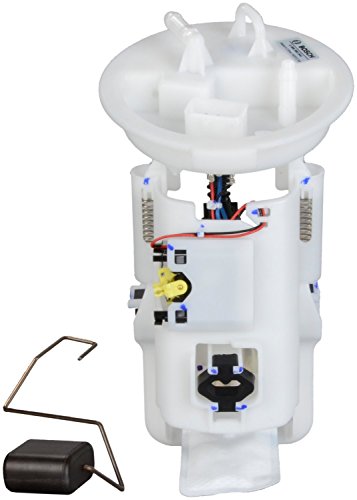
| Bosch 67896 Fuel Pump Module Assembly — BMW 3 Series In-Tank Module | Check price on Amazon | |
| Delphi FG0053 Fuel Pump Module Assembly — GM Full-Size Truck Module | Check price on Amazon | |
 Carter P4070 Electric Fuel Pump — Universal 12-Volt In-Line Pump | Check price on Amazon |
🛒 Best Price Today on Amazon
Prime members get fast, free shipping on everything above, plus member-only deals. New members get a 30-day free trial — cancel anytime.
A fuel injection system needs steady fuel pressure and steady flow, every second the engine runs. The best fuel pump for fuel injection is the one that matches your vehicle: the right pressure, the right flow, the right fit in the tank or on the frame, and the right electrical connector. Get any of those wrong and the engine starves under load, floods at idle, or refuses to start at all.
Fuel pumps for injection come in two broad kinds. In-tank module assemblies drop into the fuel tank as a complete unit with the pump, the fuel level sender, and the strainer, and they are built for one vehicle family. In-line pumps mount outside the tank and suit custom builds, older conversions, and lift-pump duty. This guide compares three options across both kinds and explains how to match one to your vehicle before you order.
A failing pump rarely quits without warning. Long cranking on a cold morning, a stumble when you press the accelerator, and a loss of power on a hill are all signs that fuel delivery is falling behind demand. Before you order a replacement, confirm the diagnosis with a pressure gauge on the fuel rail, since a clogged filter, a tired regulator, or a weak electrical connection can produce the same symptoms. Once the pump is confirmed as the fault, the part number, the pressure, and the fitment in this guide will point you to the right replacement.
How to Choose
1. Match the part number to your vehicle first
Fuel pumps are not universal, even when the listing says so. A module assembly is built for a specific year, make, model, and engine, and the sender, connector, and lock ring have to match. Find your original part number or look up the pump by vehicle application, and treat fitment as the first filter, not the last.
2. Pressure: the number that decides everything
Port fuel injection typically needs pressure in the 40 to 60 PSI range at the rail, and the regulator holds it there. A pump that cannot reach that pressure will never feed the injectors properly, no matter how much fuel it can move. Check the pressure your system needs and compare it with the pump specification before anything else.
3. Flow: enough fuel at full load
Flow is measured in liters per hour or gallons per hour, and it has to cover the engine at full throttle with margin left over. A pump that meets pressure at idle but falls short at wide-open throttle will cause hesitation and lean running under load. Match flow to your engine size and to any modifications that raise fuel demand.
4. Module assembly versus pump only
A complete module assembly replaces the pump, sender, strainer, and housing in one job, which suits a worn-out original unit and a single repair visit. A pump-only insert is cheaper and suits a serviceable module, but it needs more care during installation and a clean strainer. Choose the assembly when the sender or housing is also tired.
5. In-tank versus in-line
In-tank pumps run cooler and quieter because the fuel around them carries heat away, and they are the standard fit for modern injection systems. In-line pumps mount on the frame or in the engine bay and suit custom fuel systems, older vehicles converted to injection, and lift-pump duty feeding a surge tank. An in-line pump is not a drop-in replacement for an in-tank module.
6. Electrical connector and wiring
The pump connector, the wire gauge, and the relay all have to carry the pump current without voltage drop. A pump starved of voltage runs slow and delivers less pressure than its rating. Confirm the connector matches your harness, and plan on a relay and a proper ground for any high-flow or in-line installation.
7. Strainer, sender, and seals
A new pump with a clogged strainer is a wasted job. Module assemblies include a new strainer, and most include a new tank seal or O-ring. If you buy a pump-only insert, fit a new strainer and a new seal at the same time, and check the fuel level sender while the tank is open.
Top Picks
Bosch 67896 Fuel Pump Module Assembly — BMW 3 Series In-Tank Module
Bosch 67896 Fuel Pump Module Assembly on Amazon
The Bosch 67896 is a fuel pump module assembly built for select BMW 3 Series cars, including the 323Ci, 323i, 325Ci, 325i, 325xi, 328Ci, 328i, 330Ci, 330i, and 330xi from the late 1990s through the mid-2000s. It is a 12-volt electric in-tank module with a fuel level sender, and it runs at the stock pressure for those cars. The kit includes an O-ring, and the module carries a regulator in the assembly.
Bosch supplies original-equipment fuel systems, and this module follows that pattern: a direct-fit replacement for the listed BMW applications rather than a universal part. The turbine pump design runs quietly in the tank, and the sender keeps the fuel gauge accurate after the swap.
Who it is for: owners of the listed BMW 3 Series cars who need a complete in-tank module and want an original-equipment-grade replacement.
Caveats: it fits only the listed BMW applications, so confirm your year and model against the part number before ordering. The module is vehicle-specific, and the wrong application will not seal or connect correctly.
Delphi FG0053 Fuel Pump Module Assembly — GM Full-Size Truck Module
Delphi FG0053 Fuel Pump Module Assembly on Amazon
The Delphi FG0053 is a fuel pump module assembly for GM full-size trucks, covering Chevrolet Silverado and GMC Sierra models from 1999 through 2004 with engines from 4.3 liters to 8.1 liters. It is a complete in-tank module in the E3500M interchange family, which means it replaces a long list of original and aftermarket part numbers for those trucks.
Delphi builds original-equipment fuel modules, and the FG0053 carries that heritage: pump, sending unit, and strainer in one assembly that drops into the tank. The module includes the fuel pressure sensor provision used on those trucks, and the sender matches the original gauge calibration.
Who it is for: owners of 1999 to 2004 Silverado and Sierra trucks who need a complete module and want to replace the pump, sender, and strainer in one job.
Caveats: it fits only the listed GM truck applications, and the connector count varies by model year, so match the module code for your truck before ordering. Aftermarket assemblies that list FG0053 as a cross-reference are not the Delphi module itself.
Carter P4070 Electric Fuel Pump — Universal 12-Volt In-Line Pump
Carter P4070 Electric Fuel Pump on Amazon
The Carter P4070 is a universal 12-volt electric fuel pump for passenger cars, fleets, RVs, marine use, and industrial applications. It is an in-line rotary-vane pump rather than an in-tank module, so it mounts outside the tank on the frame or in the engine bay. Carter covers its electric fuel pumps with a lifetime limited warranty.
The P4070 suits systems that need a lift or transfer pump: feeding a surge tank, moving fuel between tanks, or supplying a low-pressure circuit. It is a low-pressure design, so it is not a standalone high-pressure replacement for a modern port injection pump. Used in the right role, it is a simple, durable pump with a long service history.
Who it is for: builders and owners who need a universal in-line pump for lift or transfer duty in a fuel system, or for an older conversion where a low-pressure feed pump is the correct part.
Caveats: confirm the pressure your injection system needs before choosing an in-line pump. A low-pressure pump cannot feed port injectors on its own, and the P4070 needs a proper relay, fuse, and ground to run at its rated output.
Comparison Table
| Pump | Type | Fitment | Pressure Role | Includes | Best For |
|---|---|---|---|---|---|
| Bosch 67896 | In-tank module assembly | BMW 3 Series, late 1990s to mid-2000s | Stock pressure for listed BMW cars | Pump, sender, O-ring, regulator | BMW 3 Series module replacement |
| Delphi FG0053 | In-tank module assembly | GM Silverado and Sierra, 1999 to 2004 | Stock pressure for listed GM trucks | Pump, sender, strainer | GM truck complete module swap |
| Carter P4070 | In-line electric pump | Universal, 12-volt systems | Low-pressure lift and transfer duty | Pump only | Lift pump and custom fuel systems |
Which One Is Right for You?
Start with your vehicle, not with the pump. If you drive one of the listed BMW 3 Series cars and the in-tank module is failing, the Bosch 67896 is the direct-fit answer. If you drive a 1999 to 2004 Silverado or Sierra and need a complete module, the Delphi FG0053 covers that family in one assembly. If you are building or repairing a custom fuel system and need a universal in-line pump for lift or transfer duty, the Carter P4070 is the pick, with the pressure caveat firmly in mind.
No pump in this guide is universal in the true sense. The module assemblies are vehicle-specific by design, and the in-line pump is role-specific by design. Match the part number, the pressure, and the role before you order, and the repair will hold.
Frequently Asked Questions
How do I know my fuel pump is failing?
Common signs are hard starting, stalling under load, hesitation at full throttle, and a whining noise from the fuel tank. A fuel pressure gauge on the rail gives the clearest answer: pressure that falls short of specification, or that drops as the engine warms up, points at the pump, the strainer, or the regulator.
Can I replace just the pump instead of the whole module?
Yes, when the module housing, sender, and wiring are still sound. A pump-only insert costs less, but it needs a new strainer and a careful installation. A complete module is the better choice when the sender is inaccurate, the housing is cracked, or you want to open the tank only once.
What pressure does my fuel injection system need?
Port injection usually needs 40 to 60 PSI at the rail, held steady by the regulator. Direct injection adds a separate high-pressure pump on top of a low-pressure feed pump, and the two must not be confused. Check your vehicle service information for the exact figure rather than guessing.
Do I need to replace the fuel filter with the pump?
Yes, in most cases. A clogged filter makes a new pump work harder and can mask a failing pump during diagnosis. Fit a new filter and a new strainer when you change the pump, and inspect the tank for debris while it is open.
How long does a fuel pump usually last?
A fuel pump often lasts well past 100,000 miles when the tank stays clean and the filter is changed on schedule, but heat, low fuel levels, and contaminated fuel can shorten its life. Running the tank near empty often leaves the pump without enough fuel to cool itself, so keeping at least a quarter tank helps. If the pump starts whining or the engine stumbles under load, have the pressure checked before the pump fails completely.
Disclosure: As an Amazon Associate, we may earn from qualifying purchases.


Write Your Review
No reviews yet. Be the first to share your experience!