
Our Short List of 3

- Best for: Jeep owners who want automatic charging and isolation for two lead-acid or AGM batteries with no switches to manage.
- Voltage sensitive relay (VSR), 140 Amp
- Connects at 13.3V and disconnects at 12.8V
- 12V system
- IP65 rated against water, dust and vibration

- Best for: Dual-tray installs where the auxiliary battery sits right next to the starter battery and runs are measured in inches.
- Isolator: True UTV-SBI-18 with silicon insulators
- Mounting: 3M Dual Lock fastener
- Cables: four sealed cables, two red and two black
- Cable lengths: 12 inch and 18 inch

- Best for: Wranglers with a winch and inverter whose owners want a manual link override and headroom above the usual 140-amp class.
- Current capacity: 300 AMP
- Voltage: 12V and 24V systems
- Intelligent controller with Link button to force connection or disconnection
- Controller connects to the cab, no need to open the hood to change settings
All 4 Picks at a Glance
| Product | Specs | Action |
|---|---|---|
| KeyLine Chargers Dual Battery Isolator Kit 12V – 140 Amp |
| Check price on Amazon |
| True UTV-SBI-CK UTV Dual Battery Kit |
| Check price on Amazon |
| maXpeedingrods 300AMP Dual Battery Isolator Kit 12V 24V |
| Check price on Amazon |
 VEVOR Split Charge Relay Kit, 6mtr 12V |
| Check price on Amazon |
🛒 Best Price Today on Amazon
Prime members get fast, free shipping on everything above, plus member-only deals. New members get a 30-day free trial — cancel anytime.
Adding a second battery to a Wrangler is the easy part; the decision that matters is how the two batteries are wired together. The kit between them decides whether your fridge, lights and compressor run all weekend without touching the starter battery, or whether everything shares one pool of charge and the engine will not turn over on Sunday morning. Cable length matters too, because a kit built for batteries side by side is useless when your auxiliary battery rides in the cargo area.
This roundup is for JK and JL owners planning a dual battery setup for overlanding, trail support or camp power, whether the second battery mounts under the hood on a dual tray or behind the rear seat. Every kit was chosen from its Amazon listing, using the relay type, cut-in voltage, amp rating and cable details on the product page, so you can match the wiring to where your battery will live.
Quick Picks
As an Amazon Associate we earn from qualifying purchases
| Product | Best for | Key spec from title |
|---|---|---|
| KeyLine Chargers Dual Battery Isolator Kit 12V – 140 Amp | Automatic isolation for a standard two-battery setup | 140 Amp VSR, connects at 13.3V |
| True UTV-SBI-CK UTV Dual Battery Kit | Batteries mounted close together | Sealed 6 AWG cables, 12 and 18 inch |
| maXpeedingrods 300AMP Dual Battery Isolator Kit 12V 24V | High-draw loads with in-cab control | 300 Amp with intelligent controller |
| VEVOR Split Charge Relay Kit, 6mtr 12V | Auxiliary battery in the cargo area | 140 Amp VSR with 6-meter cable |
How to Choose
Cut-In Voltage Decides When the Second Battery Charges
A voltage sensitive relay is the traffic controller of the whole setup. It waits until the starting battery reaches a set voltage, usually around 13.3 volts, which tells it the alternator is charging, and only then connects the auxiliary battery so it can charge too. When the engine stops and voltage falls to roughly 12.8 volts, it separates them again. In a Jeep that runs a fridge overnight, that separation point is the whole reason the engine still starts in the morning. Check both numbers on the listing, not just the amp rating on the box, because they define how the system behaves every single day.
Match the Amp Rating to Your Heaviest Load
Most wiring kits in this class carry a 140-amp relay, which covers charging current and moderate accessory loads comfortably. The rating becomes a problem when owners later add a large inverter or expect the auxiliary battery to help feed a winch through the isolator. A 300-amp kit gives that headroom and usually adds a manual link control, so both batteries can be joined deliberately for a hard pull or a self jump-start. Think about the largest load you realistically plan to run in the next two years, then buy the relay size that covers it, rather than replacing the kit after the build grows.
Cable Length Follows Battery Placement
Where the second battery sits decides which kit can even reach it. Under the hood of a JK or JL, a dual tray puts both batteries inches apart, and short sealed cables keep the run tidy and protected. A four-door with the auxiliary battery behind the rear seat is a different job entirely: the cable has to travel the length of the cabin, stay clear of seat brackets and trim, and still arrive with the right terminals attached. Measure your intended route before ordering. A kit that falls a foot short forces a splice, and a splice in a heavy charging cable is a weak point you created yourself.
Check Battery Chemistry Before You Buy
Voltage sensitive relays were designed around lead-acid and AGM batteries, and most listings state that plainly. If your auxiliary battery is lithium, a plain relay is the wrong tool: lithium banks need a DC-DC charger that delivers a controlled charge profile, and several kits say outright that they are not suitable for lithium. Mixing chemistries on a simple relay also leaves the auxiliary battery chronically undercharged, which shortens its life quietly over a season of trips. Read the chemistry line on the listing before anything else, and if you already own a lithium battery, skip straight to charger-based systems instead of forcing a relay kit to fit.
The 4 Best Options
KeyLine Chargers Dual Battery Isolator Kit 12V – 140 Amp
- Best for: Jeep owners who want automatic charging and isolation for two lead-acid or AGM batteries with no switches to manage.
- Voltage sensitive relay (VSR), 140 Amp
- Connects at 13.3V and disconnects at 12.8V
- 12V system
- IP65 rated against water, dust and vibration
Jeep owners who want automatic charging and isolation for two lead-acid or AGM batteries with no switches to manage.
The listing states that installation wires are not included, so budget separately for the battery cables and terminals your layout needs.
KeyLine’s kit is the straightforward automatic option for a Wrangler running two lead-acid or AGM batteries. Its solid-state relay connects the batteries at 13.3 volts once the alternator is charging and separates them at 12.8 volts, so the auxiliary battery handles camp loads while the starter battery stays out of the circuit. The sealed housing suits an engine bay that sees dust, water crossings and vibration, and the included mounting plate gives the relay a fixed home instead of leaving it to bounce around on a cable tie. For a dual tray under the hood, this is the set-and-forget pattern most owners actually want.
True UTV-SBI-CK UTV Dual Battery Kit
- Best for: Dual-tray installs where the auxiliary battery sits right next to the starter battery and runs are measured in inches.
- Isolator: True UTV-SBI-18 with silicon insulators
- Mounting: 3M Dual Lock fastener
- Cables: four sealed cables, two red and two black
- Cable lengths: 12 inch and 18 inch
Dual-tray installs where the auxiliary battery sits right next to the starter battery and runs are measured in inches.
The longest cable is 18 inches, so this kit cannot reach a battery mounted in the cargo area or anywhere beyond the engine bay.
The True kit takes the opposite approach to cable length: everything is short, sealed and ready to land. It pairs the True UTV-SBI-18 isolator with four pre-made 6 AWG cables in 12-inch and 18-inch lengths, which suits a second battery mounted immediately beside the starter battery, the layout a dual tray creates under a Wrangler hood. Silicon insulators and a 3M Dual Lock fastener keep the isolator secured without drilling, and the sealed cable ends shrug off the moisture that creeps into engine bays. If your two batteries will live side by side, this kit removes the measuring, cutting and crimping stage entirely.
maXpeedingrods 300AMP Dual Battery Isolator Kit 12V 24V
- Best for: Wranglers with a winch and inverter whose owners want a manual link override and headroom above the usual 140-amp class.
- Current capacity: 300 AMP
- Voltage: 12V and 24V systems
- Intelligent controller with Link button to force connection or disconnection
- Controller connects to the cab, no need to open the hood to change settings
Wranglers with a winch and inverter whose owners want a manual link override and headroom above the usual 140-amp class.
The listing offers several variants, including isolator-only and kit versions, so confirm you are ordering the full kit variant before checkout.
This is the heavy-current entry in the group, built around a 300-amp isolator that works on 12-volt and 24-volt systems. Its separate intelligent controller is the distinguishing feature: a Link button lets you force the two batteries to connect or disconnect from the cab, which is genuinely useful when you want both batteries behind a winch pull or need to borrow charge from the auxiliary battery for a start. For a Jeep that tows, winches and runs an inverter, that manual override plus the higher ceiling makes this the kit that leaves room for the build to grow.
VEVOR Split Charge Relay Kit, 6mtr 12V
- Best for: Four-door Wranglers with the auxiliary battery mounted in the cargo area, far from the starter battery.
- Current rating: 140 Amps
- Coil voltage: 12 Volts
- Automatic split charge relay (VSR)
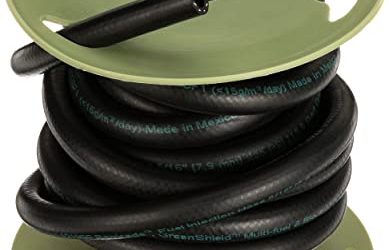
- Cable length: 6 meters
Four-door Wranglers with the auxiliary battery mounted in the cargo area, far from the starter battery.
Six meters of cable is generous for shorter routes, so plan where the excess will coil safely away from heat and moving seat hardware.
VEVOR’s kit answers the placement problem the other three cannot: its cable run stretches six meters, long enough to link a starter battery under the hood to an auxiliary battery at the back of a four-door Wrangler. The automatic 140-amp voltage sensitive relay handles charging and isolation the usual way, joining the batteries while the alternator works and separating them at rest. For overland builds that keep the second battery in a rear drawer system or cargo box, that factory-length cable avoids the custom cable fabrication the short kits would demand, and keeps every connection factory-terminated.
Which One Fits Your Situation
Your second battery sits beside the starter battery
A dual tray under the hood puts both batteries within inches of each other, and the True UTV-SBI-CK matches that geometry exactly. Its 12-inch and 18-inch sealed cables land without slack to manage, and the fastener-mounted isolator keeps the engine bay free of extra brackets. Short runs also mean less voltage drop between the batteries while they charge.
The auxiliary battery rides in the back of a four-door
Cargo-area batteries in drawer systems or storage boxes need reach more than anything else. The VEVOR kit’s six-meter cable covers the distance from the engine bay to the rear of a JK or JL Unlimited in one factory-terminated run, and its automatic relay still protects the starter battery while you run camp loads off the back battery all evening.
A winch and an inverter share your second battery
Heavy intermittent loads argue for the maXpeedingrods kit. Its 300-amp ceiling tolerates the charging side of a hard-working system, and the in-cab Link button lets you join both batteries deliberately for a recovery pull instead of hoping an automatic relay happens to be connected at the right moment. That manual control is the feature the 140-amp kits simply do not offer.
You want to wire it once and forget it exists
Choose the KeyLine kit if your plan is two AGM batteries and zero ongoing interaction. The relay joins and separates the batteries on voltage alone, the sealed housing ignores engine-bay weather, and there is no controller to mount or button to remember. Just add the cables the listing leaves out, sized for your battery placement.
Common Mistakes
- Assuming every kit includes cables: some listings supply the relay and hardware only, so read the contents line before ordering the rest of your parts around it.
- Placing the auxiliary battery first and measuring for cable second, then discovering the kit you bought cannot reach it without a splice.
- Pairing a lithium auxiliary battery with a plain voltage sensitive relay, when the listing limits the kit to lead-acid batteries and a DC-DC charger is the correct tool.
- Routing a long charging cable against exhaust components or seat rails, where heat and chafing quietly destroy the insulation over a season.
- Forgetting that a wiring kit does not hold the battery: the second battery still needs a tray, box or tie-down rated for off-road movement.
Frequently Asked Questions
Does a dual battery wiring kit include the second battery?
No. Every kit in this roundup is wiring and control hardware only: a relay or isolator, cables on some models, terminals and mounting pieces. The auxiliary battery itself is always a separate purchase, and it should match the chemistry the kit supports. Plan the battery, its tray or box, and the wiring kit as three parts of one project.
Will a 140-amp kit work with a winch?
For charging and isolation, yes, but a winch is usually wired to draw from a battery directly rather than through the isolator. The relay’s job is managing charge between the two batteries, not feeding the winch motor. If you want the option to link both batteries deliberately for recovery work, choose a kit with a manual link control and a higher amp rating.
Can I use one of these kits with a lithium auxiliary battery?
The voltage sensitive relay kits here are specified for lead-acid and AGM systems, and their listings do not claim lithium support. A lithium auxiliary battery charges best from a DC-DC charger with the correct profile. If lithium is already part of your build, shop for charger-based systems instead of adapting a relay kit and hoping the voltages line up.
Where should the second battery go in a Wrangler?
The two common answers are a dual tray under the hood, which keeps cable runs short, and the cargo area of a four-door, which frees engine-bay space and suits drawer systems. Neither is automatically better. The right choice is the one your cable length, battery size and daily use support, so decide placement before choosing the kit, not after.


Write Your Review
No reviews yet. Be the first to share your experience!