
Choosing between a solar generator and a traditional gas-powered unit comes down to how you plan to use it in 2026. Solar generators, which are really large lithium battery power stations paired with foldable panels, run silently and produce zero emissions, making them ideal for indoor backup, apartments, and tent camping. Traditional generators still win on sustained high-wattage output, which matters when you need to run a well pump or a full refrigerator for days.
This roundup weighs the real trade-offs of each approach and highlights standout solar-based options such as the UDPOWER S1000 Pro, the OUKITEL P2001 Pro, and the Jackery HomePower 3600 Plus. Use it to match battery capacity, recharge speed, and runtime to your actual power needs rather than paying for headroom you will never touch.
As an Amazon Associate we earn from qualifying purchases at no extra cost to you.




⚡ Save on Your Next PC — Amazon Prime
Prime members get fast free shipping on the systems above, plus early access to Prime Day & Black Friday PC deals. New members get a 30-day free trial.
Watch: Solar Generator vs. Traditional Generator: Pros and Cons — Video Review
How to Choose
- Watt-hours vs. running watts: Capacity (Wh) tells you how long a unit lasts; output (W) tells you what it can run at once. A 2,000Wh station at 200W of draw lasts roughly 8-9 hours.
- Recharge method: Solar recharge is free but slow (3-8 hours in full sun); wall recharge on newer LFP units can hit 80% in under an hour. Traditional generators refuel in seconds with fresh gas.
- Noise and placement: Solar units run at 0-30 dB and can sit indoors; gas generators run 65-75 dB and must stay 20+ feet from windows.
- Battery chemistry: LiFePO4 (LFP) cells last 3,000-4,000 cycles versus 500-800 for older NMC packs, so favor LFP for daily or backup use.
- Total cost of ownership: Solar has a higher upfront price but no fuel, oil, or maintenance; gas is cheaper to buy but costs $10-30 per day to run during outages.
The Best Picks Reviewed
UDPOWER S1000 Pro Portable Power Station
A balanced mid-size solar generator with fast solar charging support, the S1000 Pro suits home backup and RV camping. Its 1,000Wh-class capacity handles a mini-fridge, laptop, and lights through a typical overnight outage while staying completely silent indoors.
OUKITEL P2001 Pro (3200W / 2048Wh)
With a 3,200W inverter and 2,048Wh battery, this unit bridges the gap toward traditional generator territory. It can start power-hungry tools and small appliances that trip lesser stations, making it the pick for workshops or extended off-grid weekends.
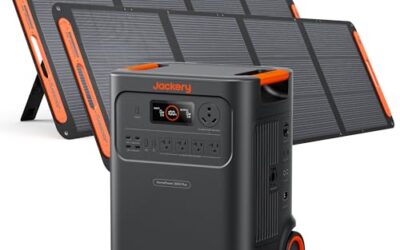
Jackery HomePower 3600 Plus with 2x 200W Panels
Bundled with two 200W solar panels and delivering 3,600W AC output from a 3,584Wh LFP pack, this is a genuine whole-room backup solution. The included panels let you recharge in roughly 4-5 hours of strong sun, closing the refueling gap with gas.
P5000 Pro (5120Wh) Solar Generator
At 5,120Wh, this is the closest a solar option gets to multi-day resilience. It is heavy and best kept stationary, but for a home that wants silent, fume-free backup for a fridge plus essentials, it can span two or three cloudy days between charges.
MARBERO 237Wh Portable Power Station
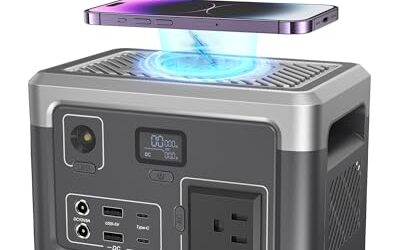
The budget entry point, this 237Wh unit with an included panel is not a house backup but shines for phones, cameras, CPAP top-ups, and tent lighting. Its 300W pure sine wave output is clean enough for sensitive electronics, and it weighs only a few pounds.
Frequently Asked Questions
Can a solar generator replace a gas generator for home backup?
For essentials like a fridge, lights, phones, and a router, yes. For central AC, electric heat, or a well pump running for days, a traditional or dual-fuel gas generator is still the practical choice.
How long do solar generators last on a single charge?
Divide capacity by draw: a 2,000Wh unit powering a 60W fridge cycle averaging 200W lasts about 8-9 hours. Larger 5,000Wh units can stretch essentials across a full day or more.
Are solar generators safe to use indoors?
Yes. They produce no carbon monoxide and no exhaust, so they are safe in bedrooms, RVs, and apartments where a gas generator would be lethal.
What size solar panel do I need to recharge in a day?
Aim for panel wattage roughly equal to one-fourth to one-third of your battery’s Wh rating. A 2,000Wh station recharges in a day with 400-600W of panels in good sun.
Final Thoughts
If silence, clean air, and low maintenance top your list, a solar generator like the Jackery HomePower 3600 Plus or OUKITEL P2001 Pro is the smarter 2026 buy. If you need days of uninterrupted high-wattage power on demand, keep a traditional gas unit in the mix. Many households now own both: solar for daily and indoor use, gas for worst-case, long-duration outages.
Top picks from this guide
 EcoVoltP5000 Plus 5120Wh Portable Power Station, 3600W Solar Generator$1,499 \xc2\xb7 96/100
 MARBEROMARBERO 111Wh Solar Generator with Panels Included Solar Panel Kit…$95 \xc2\xb7 96/100
 MARBEROMARBERO 237Wh Solar Generator with Solar Panel Included Portable Power…$180 \xc2\xb7 95/100
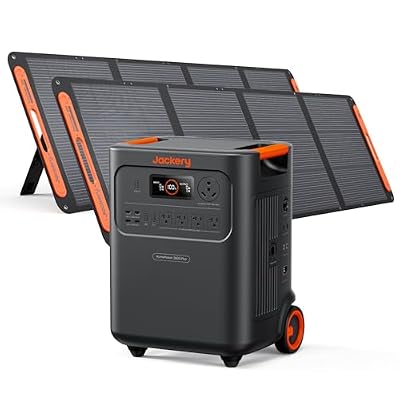 JackeryJackery HomePower 3600 Plus & 2x200W Solar Panels, 3584Wh, 3600W…$2,549 \xc2\xb7 95/100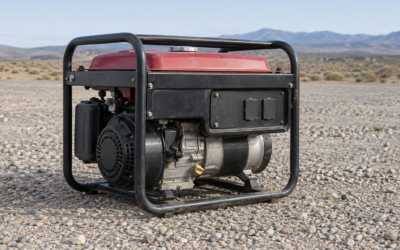
Write Your Review
No reviews yet. Be the first to share your experience!