
A sudden blackout hits your desk, and the PC you were using to finish a quarterly report simply dies. No save dialog, no graceful shutdown, no chance to close the game or the database connection cleanly. That is the exact scenario a pc battery backup is supposed to prevent, yet the market is flooded with units that differ so wildly in topology, capacity, and feature set that a buyer can easily end up with a surge protector wearing a battery-branded costume.
The real differentiators are the transfer time, the output waveform, and whether the unit can actually sustain your load long enough to shut down safely. A standby UPS might hand off power in 4-10 milliseconds and only deliver a simulated sine wave, which is fine for a router but risky for a desktop with a sensitive power supply. A line-interactive unit with true sinewave output handles those same loads without a blink. Below, every product in this 2026 roundup is compared on published specs, street prices, and recurring owner feedback patterns.
As an Amazon Associate we earn from qualifying purchases at no extra cost to you. Product prices and availability are accurate as of the date shown and are subject to change.

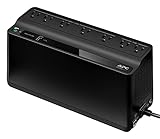


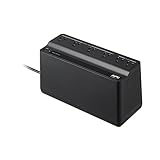
Quick Picks
| Product | Best for | Price |
|---|---|---|
| CyberPower CP1500PFCLCD | High-end gaming or workstation rigs | $239.95 |
| APC BE600M1 | Single PC plus router on a tight budget | $83.99 |
| CyberPower ST425 | Modem or router protection only | $59.95 |
| CyberPower EC850LCD | Efficiency-minded office PC | $119.95 |
| APC BX1500M | Line-interactive protection for mid-range builds | $189.99 |
| CyberPower CP1500AVRLCD3 | Dual-monitor productivity setups | $199.95 |
| APC BE650G1 | Entry-level PC backup with basic monitoring | $109.99 |
| APC BE425M | Small electronics and network gear | $62.5 |
How We Picked
Four criteria drove this ranking. First, topology: line-interactive units with AVR (automatic voltage regulation) consistently outperform standby designs on both transfer speed and long-term battery health because they correct minor sags without draining the battery. Second, output waveform: pure or PFC sinewave output matters if your PC uses an active-PFC power supply, and several budget units here only provide a simulated waveform that can cause buzzing or premature shutdown. Third, capacity headroom: a unit rated near your system’s peak draw leaves no margin for a monitor on the same battery bank, so we prioritized models whose wattage rating exceeds a typical load by at least 30 percent. Fourth, software and notifications: a UPS that cannot signal your operating system to shut down gracefully defeats the purpose of owning one, so units lacking USB or network management were ranked lower unless their primary use case (router protection) made that irrelevant.
The 8 Best PC Battery Backup in 2026
1. CyberPower CP1500PFCLCD PFC Sinewave UPS
This is the unit most serious PC builders should consider first. With 1500VA and 1000W of line-interactive output, it comfortably handles a gaming rig, a large monitor, and peripherals simultaneously. The PFC sinewave output eliminates the compatibility friction that active-PFC power supplies experience on cheaper UPSes. Owners frequently praise the LCD panel and the inclusion of twelve outlets—six battery-backed, six surge-only—which reduces the need for a separate power strip. The main drawback is that its mini-tower form factor is physically larger and heavier than the standby models in this list, and the $239.95 price tags you for the premium tier.
- Pro: True sinewave output ensures compatibility with modern PC power supplies.
- Pro: Twelve outlets with split battery/surge banks simplify cable management.
- Con: Bulky form factor; not ideal for under-desk placement on compact setups.
Skip this if your system draws under 300W and you are protecting only a laptop or a router—the extra capacity adds cost you will never use.
2. APC BE600M1 Battery Backup
The BE600M1 is a standby-topology unit rated at 600VA and 330W, positioned by APC as a basic computer and router protector. At $83.99, it is one of the cheapest ways to keep a modest office PC from crashing during a momentary blip. Owners note its compact footprint and straightforward setup. The trade-off is the simulated sine wave output and the absence of AVR, meaning the unit jumps to battery for every minor voltage fluctuation, which accelerates battery wear over years of service. It also has fewer outlets than you might expect for the price.
- Pro: Low entry price makes graceful shutdown accessible without much commitment.
- Pro: Small enough to sit on a desk without dominating the space.
- Con: No AVR; the battery cycles more often than a line-interactive equivalent.
Skip this if you own a high-end graphics card or a workstation with a sensitive PSU; the simulated waveform and limited wattage make it a poor match.
3. CyberPower ST425 Standby UPS
At $59.95 and 425VA, the ST425 is not meant to protect a desktop PC. It is a network-gear sentinel: cable modems, small routers, and NAS enclosures that need seconds of runtime rather than minutes. Its standby topology and minimal outlet count are entirely appropriate for that role. Owners like how silent it runs and how easily it fits behind a shelf. However, its 225W-equivalent ceiling means even a mid-range laptop charger plus a monitor would push it toward overload, so pairing it with a PC is inadvisable.
- Pro: Among the least expensive entry points into battery backup protection.
- Pro: Near-silent operation suits home-office shelves and entertainment centers.
- Con: Capacity is too low for any desktop computer with a discrete GPU.
Skip this entirely if your primary goal is protecting a PC; look at the BE600M1 or EC850LCD instead.
4. CyberPower EC850LCD Ecologic UPS
The EC850LCD sits at the midpoint of this list at $119.95 and 850VA. Its “Ecologic” branding refers to a bypass mode that routes power without battery conditioning during stable input, which owners report can measurably reduce electricity waste compared to always-on standby units. The LCD readout shows input and output voltage, letting you confirm the bypass is active. It is a sensible pick for an office PC with integrated graphics and a single monitor. The line-interactive topology includes AVR, a clear step up from the BE600M1 in battery longevity.
- Pro: Ecologic bypass mode reduces energy consumption during normal operation.
- Pro: AVR means fewer unnecessary battery activations during grid fluctuations.
- Con: Simulated sine wave output may not suit every active-PFC power supply.
Skip this if your PSU is particularly sensitive to waveform quality; the CP1500PFCLCD is the safer upgrade path.
5. APC BX1500M Line-Interactive UPS
At $189.99 and 1500VA/900W, the BX1500M is APC’s direct competitor to the CyberPower CP1500PFCLCD. It adds line-interactive AVR and a clear LCD dashboard to the APC ecosystem, and owners appreciate the PowerChute software, which integrates well with both Windows and macOS. The 900W rating is slightly below the CyberPower unit’s 1000W, a difference that matters only for extreme power draws. The chassis is also somewhat taller, which affects desk placement. For households already invested in APC networking gear, the management consistency is a real advantage.
- Pro: PowerChute software is mature and widely praised for reliability.
- Pro: AVR plus 1500VA gives generous headroom for mid-range gaming PCs.
- Con: Output waveform is stepped-approximation, not pure sinewave.
Skip this if your power supply has shown sensitivity to non-pure sine waves in the past; the CP1500PFCLCD is the better fit.
6. CyberPower CP1500AVRLCD3 Intelligent LCD UPS
This $199.95 unit is the third-generation revision of CyberPower’s popular 1500VA line-interactive model. The LCD interface now displays real-time load percentage and estimated runtime, which owners find genuinely useful when deciding whether to shut down or ride out an outage. It shares the AVR-equipped, 12-outlet layout with its sibling CP1500PFCLCD but delivers a simulated rather than pure sinewave output. For most standard desktop PCs, that distinction is academic; for audio workstations or medical-grade equipment, it is not. The price sits between the BX1500M and the CP1500PFCLCD, making it a value play.
- Pro: Updated LCD shows load percentage and runtime estimate at a glance.
- Pro: Twelve outlets reduce or eliminate the need for a separate power strip.
- Con: Simulated waveform; the pure sinewave version costs only $40 more.
Skip this if you can stretch the budget $40 further to the CP1500PFCLCD and want guaranteed waveform compatibility.
7. APC BE650G1 Battery Backup
At $109.99, the BE650G1 offers 650VA and 390W of standby protection in a compact tower. It is a step up from the BE600M1 in both capacity and outlet count, and owners note the updated design that improves ventilation. The simulated sine wave and lack of AVR remain, which is expected at this price. For a basic home office PC with integrated graphics and one 24-inch monitor, the 390W ceiling provides adequate margin. It is the right choice when you want APC build quality without spending line-interactive money.
- Pro: Compact tower form factor fits easily on a desk or shelf.
- Pro: Slightly more headroom than the BE600M1 for the same footprint.
- Con: Standby topology means the battery engages on every minor sag.
Skip this if you live in an area with frequent brownouts; the AVR-less design will consume battery cycles faster than you would like.
8. APC BE425M Battery Backup
The BE425M is the most affordable APC entry here at $62.5, delivering 425VA and 225W of standby protection. It is functionally a close cousin to the CyberPower ST425: both target routers, small switches, and modest NAS boxes rather than desktop PCs. Owners value the APC brand recognition and the compact size. The 225W ceiling is the critical number; plug in a 65W laptop charger, a 30W monitor, and you are already near half capacity before any peak surge.
- Pro: APC reliability reputation at the lowest entry price in the lineup.
- Pro: Tiny footprint fits behind a TV or inside a media cabinet.
- Con: 225W is too low for any modern desktop computer configuration.
Skip this if a desktop PC is on your protection list; the BE600M1 is only $21 more and doubles your headroom.
Buying Guide
Topology: Standby vs. Line-Interactive
Standby units pass utility power straight through until a cutoff is detected, then switch to battery. That switch takes a few milliseconds, which is fine for electronics with robust internal capacitors. Line-interactive units add an autotransformer that corrects under- and over-voltage without touching the battery, meaning fewer cycle events and a longer battery lifespan. If your grid is stable, standby is acceptable. If you see lights flicker or notice brownouts monthly, line-interactive saves you from premature battery replacement every two to three years.
Output Waveform and PSU Compatibility
Modern desktop power supplies with active-PFC front ends expect a clean sine wave from the wall. A UPS delivering a stepped-approximation or simulated waveform can cause audible buzzing, reduced efficiency, or in rare cases unexpected shutdowns during the transfer window. True or PFC sinewave output is the safest choice for high-wattage systems, but at a clear price premium. If your PC draws under 250W and uses a quality PSU from a reputable brand, a simulated waveform is unlikely to cause problems.
Capacity Headroom and Runtime Planning
Match the UPS wattage rating to your total connected load, then add at least 30 percent headroom. This margin accounts for startup surges (a mechanical HDD or a large GPU can spike above rated draw momentarily) and leaves room for a monitor. A 600VA/330W unit cannot reliably support a 300W gaming PC plus a 30W monitor; it will overload or provide only seconds of runtime. Check your system’s peak draw using a wall meter or published PSU reviews, then choose a UPS whose battery-backed wattage exceeds that number with margin.
Our Verdict
The top pick for most PC users seeking reliable, no-compromise protection is the CyberPower CP1500PFCLCD. Its PFC sinewave output, 1000W capacity, AVR, and twelve outlets cover every scenario from a workstation to a dual-monitor gaming rig without waveform anxiety or port starvation. The $239.95 price is the highest here, but it buys the widest compatibility envelope in this group.
The best budget pick is the APC BE600M1 at $83.99. It will keep a basic office PC alive through a blip and give you enough runtime to save files and shut down. Accept the standby topology and simulated waveform as the trade-off for a low entry cost.
If you are already deep in the APC management ecosystem with PowerChute running across multiple devices, the APC BX1500M at $189.99 wins on software integration despite its slightly lower wattage rating and stepped-approximation output.
FAQ
Can a pc battery backup run my gaming PC for hours during an outage?
No. A UPS is designed to give you two to fifteen minutes of runtime—enough to save work and shut down cleanly—not to serve as a portable generator. Sustained off-grid operation requires a generator or a dedicated lithium power station, which are entirely different product categories.
Do I need a UPS if I use a laptop instead of a desktop?
A laptop’s internal battery already provides graceful shutdown capability, so a UPS is redundant unless you rely on a USB-C dock with a connected external monitor and do not want the screen to flicker during a transfer. For most laptop users, a quality surge protector suffices.
How often do UPS batteries need replacement?
Lead-acid UPS batteries typically last three to five years under normal conditions. Line-interactive units with AVR tend to outlast standby units because the battery cycles less frequently during minor voltage events. CyberPower and APC both sell user-replaceable battery cartridges for most models.
Is a UPS the same as a surge protector?
No. A surge protector clamps voltage spikes but stops working entirely during a blackout. A UPS adds a battery that keeps connected devices running through outages and, in line-interactive models, also corrects sustained undervoltage and overvoltage before spiking events reach your equipment.








Write Your Review
No reviews yet. Be the first to share your experience!