
🛒 Best Price Today on Amazon
Prime members get fast, free shipping on everything above, plus member-only deals. New members get a 30-day free trial — cancel anytime.
The phrase “battery power station” covers a wider range than most shoppers expect. At one end sits a 288Wh box that charges a laptop and runs a lamp; at the other, a 3584Wh system sized for essential household circuits. Picking the right rung of that ladder matters more than picking the right logo, because a unit that is too small stalls under load and one that is too large simply adds weight and cost. This roundup lines up nine listings by the numbers in their titles so you can see where each one lands.
It is written for people replacing a noisy gas generator for outage backup, building a camping or van power setup, or adding a quiet battery to a home office in 2026. The advice leans on stated capacity, output, and charging figures only, so treat it as a filter and then confirm every detail on the official spec sheet before ordering.
Quick Picks

Jackery Explorer 300 Portable Power Station,292Wh | Backup LiFePO4 Battery, Solar Generator for Outdoors, Camping, Travel, Hunting, Blackout (Solar Panel Optional)
Included for '9 Best Battery Power Station (October 2026)' as a representative consumer electronics in this roundup; selection reflects the product set returned for this topic.
View on Amazon
Jackery Explorer 1000 v2 Portable Power Station,1070Wh,1500W | 1 Hr Fast Charge, LiFePO4 Battery, 100W USB-C Output, Solar Generator for Camping, Emergency, RV (Solar Panel Optional)
Included for '9 Best Battery Power Station (October 2026)' as a representative consumer electronics in this roundup; selection reflects the product set returned for this topic.
View on Amazon
BLUETTI Elite 30 V2 Portable Power Station 288Wh 600W LFP Solar Generator | Power Lifting 1500W, 10ms UPS, 45 Min 0-80% Fast Charging, Emergency Backup Power for Blackout, Camping, Outage and Road Trip
Included for '9 Best Battery Power Station (October 2026)' as a representative consumer electronics in this roundup; selection reflects the product set returned for this topic.
View on Amazon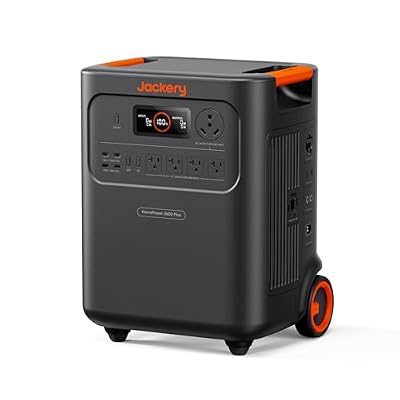
Jackery HomePower 3600 Plus Power Station, 3584Wh, 3600W AC Output
Included for '9 Best Battery Power Station (October 2026)' as a representative consumer electronics in this roundup; selection reflects the product set returned for this topic.
View on Amazon
Anker SOLIX C2000 Gen 2 Portable Power Station, 2,048Wh, 2,400W, Camping | 2,048Wh LiFePO4 Battery, Full Charge in 58 Min, 2,400W (Peak 4,000W) Solar Generator for USP, Outdoor and Emergency Use
Included for '9 Best Battery Power Station (October 2026)' as a representative consumer electronics in this roundup; selection reflects the product set returned for this topic.
View on Amazon
Anker SOLIX S2000 Portable Power Station, 2,010Wh, 1,500W | 2,010Wh LiFePO4 Battery, 1,500W Output, Solar Generator for Home Backup, Outdoor and Emergency Use
Included for '9 Best Battery Power Station (October 2026)' as a representative consumer electronics in this roundup; selection reflects the product set returned for this topic.
View on Amazon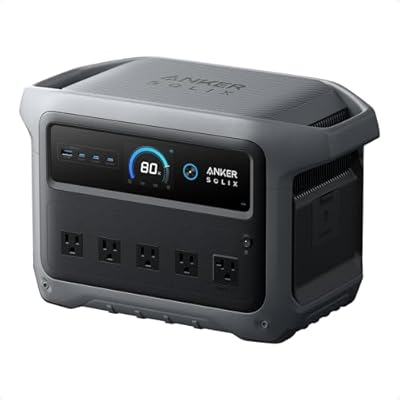
Anker SOLIX C1000 Gen 2 Portable Power Station | 1,024Wh LiFePO4 Battery, Full Charge in 49 Min, 2,000W Solar Generator (Peak 3,000W) for UPS, Outdoor and Emergency Use
Included for '9 Best Battery Power Station (October 2026)' as a representative consumer electronics in this roundup; selection reflects the product set returned for this topic.
View on Amazon
Anker SOLIX C300 DC Portable Power Station, 288Wh, 300W, Outdoor Camping | 288Wh LiFePO4 Battery, 300W Solar Generator for UPS, Travel, and Emergency Use (No Wall Charger Included)
Included for '9 Best Battery Power Station (October 2026)' as a representative consumer electronics in this roundup; selection reflects the product set returned for this topic.
View on Amazon
EBL 2400W Portable Power Station LiFePO4 Battery for Home Use | 1843.2Wh Solar Generator,Home Battery Backup,12 Outlets(2400W AC Outlets), USB-C PD 100W,2Hrs Quick Charge
Included for '9 Best Battery Power Station (October 2026)' as a representative consumer electronics in this roundup; selection reflects the product set returned for this topic.
View on Amazon| Product | Best for | Key spec from the title |
|---|---|---|
| Jackery Explorer 300 | Light camping and travel | 292Wh, LiFePO4 |
| Jackery Explorer 1000 v2 | Mid-size all-rounder | 1070Wh, 1500W, 1 hr fast charge |
| BLUETTI Elite 30 V2 | Compact UPS-style backup | 288Wh, 600W, 10ms UPS |
| Jackery HomePower 3600 Plus | Essential home circuits | 3584Wh, 3600W AC |
| Anker SOLIX C2000 Gen 2 | Large capacity with quick refill | 2,048Wh, 2,400W, 58 min full charge |
| Anker SOLIX S2000 | Home backup and outdoor use | 2,010Wh, 1,500W output |
| Anker SOLIX C1000 Gen 2 | Fast-charging mid-tier | 1,024Wh, 2,000W, 49 min full charge |
| Anker SOLIX C300 DC | DC and travel loads | 288Wh, 300W, LiFePO4 |
| EBL 2400W Power Station | Multi-outlet home backup | 1843.2Wh, 2400W, 12 outlets |
How to Choose
Pick a capacity tier first
Think in tiers. Around 300Wh is the personal tier: phones, laptops, cameras, and lights. Between 1,000Wh and 1,100Wh is the camp-and-cabin tier, enough for a small cooler, a laptop workstation, and device charging together. Roughly 1,800Wh to 2,100Wh is the outage tier, where a refrigerator and a few lights become realistic overnight. Past 3,000Wh you are powering circuits, not gadgets. Estimate runtime by dividing watt-hours by the combined wattage of what you run, then subtract about 15 percent for conversion loss.
Read the AC rating, not just the headline wattage
Output ratings decide which appliances you can connect. A 600W unit cannot run a 1,000W space heater, and a 1,500W unit will struggle with two kitchen appliances at once. Peak figures such as 4,000W or 7,200W describe a brief surge for motor startup, so judge by the continuous number. When one appliance dominates your plan, choose a unit whose rating clears it by at least 20 percent.
Weigh recharge time and UPS behavior
Wall recharge speed varies a lot in these titles, from 45 minutes to 80 percent on one compact model, to 49 or 58 minutes for a full charge on larger Anker units, to a one-hour fast charge on one Jackery. Faster refills pay off during repeated outages. If you want to protect a computer or modem, look for a stated UPS switchover time such as 10ms, and verify that pass-through charging is supported.
Chemistry, expansion, and budget trade-offs
Every unit here lists LiFePO4 or LFP cells, which is the chemistry to prefer for long service life. Expandability is rarer, and the home-focused Jackery listing is the only one advertising growth. Lower-cost stations usually trim outlet counts and fast-charge ability. Disregard unitless marketing phrases and any claim you cannot trace to a wattage or watt-hour figure.
The 9 Best Options
Jackery Explorer 300
This unit pairs a 292Wh LiFePO4 battery with a description as a solar generator for outdoors, camping, travel, hunting, and blackouts. It is the entry point for anyone who wants a dependable but small battery station for phones, a laptop, and lighting, without committing to a heavy household-class system.
- Strength: LiFePO4 chemistry suits a unit that will be cycled often over many trips.
- Strength: the use cases in the title span hunting camps, travel days, and short blackouts, so it is versatile at its size.
- Trade-off: no output wattage appears in the title, so check the AC rating before planning around it.
Skip it if you want to power a refrigerator, a space heater, or any other heating appliance.
Jackery Explorer 1000 v2
This model lists 1070Wh, 1500W, a one-hour fast charge, a LiFePO4 battery, and a 100W USB-C output. It sits in the camp-and-cabin tier, large enough to run a small cooler, a laptop, and lights together, yet it stops short of the household-scale capacities higher in this list.
- Strength: 1500W of output opens the door to small kitchen appliances and power tools.
- Strength: the one-hour fast charge cuts the wait between weekend trips or repeated outages.
- Trade-off: 1070Wh empties quickly if you actually run a heavy load near the 1500W ceiling.
Skip it if you need multi-day appliance cover or want something that disappears into a small bag. It also overshoots needs that stop at phones and a lamp.
BLUETTI Elite 30 V2
Listed with 288Wh, 600W, LFP cells, a 10ms UPS function, and a 0-80% charge in 45 minutes, it also mentions a Power Lifting feature up to 1500W. On paper it packs unusually high output into a small capacity class, which suits short, punchy loads rather than long sessions.
- Strength: the 10ms UPS rating makes it a candidate for keeping a router or small computer alive during a flicker.
- Strength: 45 minutes to 80 percent keeps downtime short after you drain it.
- Trade-off: 288Wh is a small tank, so a high-draw device will empty it in a short time.
Skip it if you need sustained runtime rather than quick bursts of power. A full-size heater or kettle would still outrun what a 288Wh tank can sustain.
Jackery HomePower 3600 Plus
The largest battery in the group lists 3584Wh and 3600W of AC output, and the product line is described elsewhere with expansion to 21kWh and an essential home backup role. That points to a household purpose: keeping refrigeration, lighting, and communications running through a long outage. Buyers comparing it with the 2,000Wh-class units should note the jump in both stored energy and AC rating, which is the main reason to pay for this tier.
- Strength: 3600W of AC output can serve several household loads at once.
- Strength: the 3584Wh capacity leaves room for overnight essentials without constant rationing.
- Trade-off: this is a premium-tier, stay-at-home system rather than a camping tool.
Skip it if you only need a camping battery or have a limited budget. Anyone who wants a carryable battery should drop down a size class.
Anker SOLIX C2000 Gen 2
Listed at 2,048Wh and 2,400W with a 4,000W peak, a LiFePO4 battery, and a full charge in 58 minutes, this model is aimed at buyers who want outage-tier capacity without a long wait at the wall. The camping tag in the title suggests it can also leave the house.
- Strength: a 58-minute full charge is quick for a battery holding two kilowatt-hours.
- Strength: 2,400W of output covers several appliances running at the same time.
- Trade-off: the capacity class puts it out of reach for anyone who wants to carry gear on foot.
Skip it if portability matters more than runtime, or if your needs stay under a few hundred watts. It also overshoots a phone-and-lamp setup by a wide margin.
Anker SOLIX S2000
This one lists 2,010Wh, 1,500W of output, and LiFePO4 cells, and it is positioned for home backup, outdoor use, and emergencies. Its capacity is close to the C2000 above, but with a lower output cap, which shifts it toward steady, moderate loads instead of heavy simultaneous draws. Choosing between it and the C2000 comes down to whether you want maximum output or are content with a lower ceiling and steadier loads.
- Strength: 2,010Wh gives outage-tier energy for essential devices.
- Strength: the broad use-case list covers both house and outdoor scenarios.
- Trade-off: the 1,500W cap limits how many high-wattage appliances can run together.
Skip it if you plan to run several large appliances at the same moment. For heavy tools or several appliances, the higher-output sibling is the safer fit.
Anker SOLIX C1000 Gen 2
Listed with 1,024Wh, 2,000W (peak 3,000W), LiFePO4 cells, and a 49-minute full charge, with UPS and outdoor use named in the title. It pairs a mid-size tank with a high output ceiling, a combination that suits tools and kitchen gear for short periods. The UPS mention suggests it can sit beside a desk and cover a flicker, which broadens its use beyond camping.
- Strength: 2,000W of output is high for a battery in the 1,000Wh class.
- Strength: the 49-minute full charge is the fastest refill listed in this roundup.
- Trade-off: running heavy loads will drain 1,024Wh within a short window.
Skip it if you want long runtime at modest loads, where a larger capacity would serve better. It is also a poor choice if weight on your back is the priority.
Anker SOLIX C300 DC
Listed at 288Wh and 300W with LiFePO4 cells, this unit is aimed at camping, travel, UPS use, and emergencies. The DC tag in the name suggests a focus on DC and USB outputs, so confirm the outlet types on the spec sheet before assuming a household socket exists. Its sweet spot is a buyer who knows exactly which low-voltage gear they own and wants a compact reserve built around it.
- Strength: the compact 288Wh capacity suits travel and light camping.
- Strength: UPS and emergency use cases are named directly in the title.
- Trade-off: the DC label means a standard AC outlet may not be included.
Skip it if you need standard wall outlets for everyday appliances. If a laptop with a wall-plug adapter is your main load, confirm compatibility first.
EBL 2400W Power Station
This LiFePO4 unit lists 1843.2Wh, 2400W AC, 12 outlets, and USB-C PD, and the title positions it for home use and battery backup. The outlet count is the main draw: it lets several devices connect without extra power strips during an outage. Compared with the Anker units of similar size, the outlet count is the differentiator, while the others lean on charging speed.
- Strength: 12 outlets simplify plugging in lamps, a modem, and chargers at once.
- Strength: 2400W of AC output covers multiple loads in the outage tier.
- Trade-off: a home-focused design is likely less convenient to carry on trips.
Skip it if you need a travel-friendly battery for camping or a small vehicle. Anyone prioritizing fast wall recharge should read the charging details closely, since the title does not state a time.
Which One Fits Your Situation
You work from home and fear brief outages
The BLUETTI Elite 30 V2 with its 10ms UPS suits a router and laptop, while the Anker SOLIX C1000 Gen 2 adds room for a monitor and more.
You want overnight outage cover for a refrigerator
Choose the Anker SOLIX C2000 Gen 2 for fast recharging, or the Anker SOLIX S2000 if you prefer a lower output rating with similar capacity.
You are planning for a long storm
The Jackery HomePower 3600 Plus is the home-circuit option, and the EBL 2400W Power Station gives you 12 outlets.
You camp on weekends
The Jackery Explorer 1000 v2 balances capacity and output, and the Jackery Explorer 300 is the lighter, simpler pick.
Common Mistakes
- Confusing peak output with continuous output: only the continuous figure tells you what can run.
- Ignoring recharge speed: a large battery that takes hours to refill is a problem during repeated outages.
- Overlooking the DC tag on models like the C300 DC: confirm outlet types before assuming a wall socket exists.
- Running a gas generator inside a garage or near a window to save money: carbon monoxide from fuel generators can kill, so they belong outdoors, well away from the house. A battery station avoids exhaust entirely.
- Buying more capacity than needed: a larger unit adds weight, and you may never use the extra energy.
Related guides
Frequently Asked Questions
Is a battery power station the same as a generator?
It does the same job without burning fuel. It stores energy and releases it, so runtime depends on capacity, not a fuel tank.
Why do some titles say LFP and others LiFePO4?
They are two names for the same lithium iron phosphate chemistry. It is generally preferred for long cycle life and stability.
Can I add more batteries later?
Only some systems support it. The Jackery HomePower line advertises expansion, while the smaller units here are fixed in capacity.
How much capacity do I need for a refrigerator?
Check the appliance label for running watts, multiply by the hours you need, and add a margin. The units in the 1,800Wh to 2,100Wh range are closest to an overnight scenario.


Write Your Review
No reviews yet. Be the first to share your experience!