
Our Short List of 3

- Best for: Owners whose battery run was wired with no fuse at all and who want the weak link sealed inside the cable run itself, out of the corner’s damp.
- Brand: Renogy, as named in the listing
- Product type: In-line fuse holder, waterproof, per the listing name
- Stated rating: 30A, per the listing name
- Role in this set: The protection post — the run’s appointed, replaceable failure point
- Best for: Bank builders who want every cable end crimped and bolted once, in daylight, instead of re-tightened by torchlight during an outage.
- Brand: Frienda, as named in the listing
- Product type: Round terminal battery cable lugs, per the listing name
- Stated form: 3-inch round terminal, per the listing name
- Role in this set: The terminations — the finished ends of every cable joining bank, fuse holder, and loads
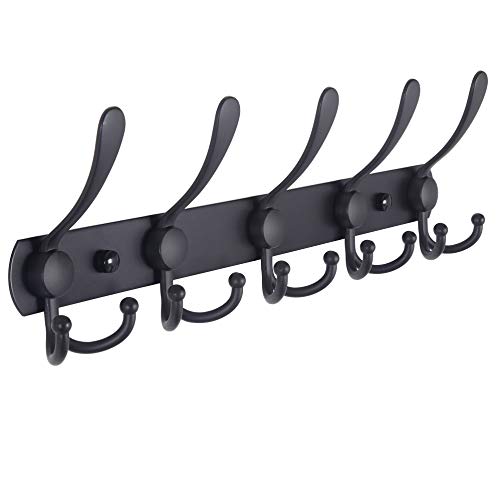
- Best for: Anyone whose maintenance routine currently opens with a search through the shed for the lead and the gloves.
- Brand: Dseap, as named in the listing
- Product type: Coat rack, wall mount format, per the listing name
- Stated count: 5 hooks, per the listing name
- Role in this set: The order post — wall storage for leads, gloves, and the manual beside the machine
All 5 Picks at a Glance
| Product | Specs | Action |
|---|---|---|
| Renogy 30A Waterproof In-Line Fuse Holder |
| Check price on Amazon |
| Frienda Round Terminal Battery Cable Lugs |
| Check price on Amazon |
| Dseap Coat Rack Wall Mount 5 Hooks |
| Check price on Amazon |
 Timeet Red Brick Peel-and-Stick Wallpaper |
| Check price on Amazon |
 Brightech Maxwell Shelf Floor Lamp |
| Check price on Amazon |
🛒 Best Price Today on Amazon
Prime members get fast, free shipping on everything above, plus member-only deals. New members get a 30-day free trial — cancel anytime.
A generator corner rarely fails because a part was weak. It fails because a part was asked to work outside the job it was made for: a lead carrying more than its ends can hold, a run with no link assigned to open first, gear stored wherever the last job ended. The real decision in a refresh is matching each post in the corner to its actual duty, and refusing every assignment that ignores a stated limit.
This guide is written for owners who keep a starting battery or small bank next to the machine, for households whose generator lives in a garage or shed corner, and for anyone tired of servicing equipment in bad light. Every pick is read from its Amazon listing name. The set is graded against pulai — an Alstonia hardwood from Malaysia and Indonesia, pale, light, and easy to work — as a standard of honesty about what a thing can and cannot do.
Quick Picks
As an Amazon Associate we earn from qualifying purchases
Pulai comes from Alstonia species, notably Alstonia scholaris, grown across Malaysia and Indonesia. Its heartwood is creamy white to pale yellow-brown, its texture fine and even, its grain straight, and the timber itself is light and soft — the qualities that make it a favourite for carving, pattern making, plywood cores, crates, and packing cases. It carries one blunt limit: pulai is not naturally durable, and left outdoors untreated it perishes. Nothing in this set is made of pulai. The timber is the yardstick: does each pick work inside its stated limits, the way pulai rewards anyone who respects theirs?
| Product | Best for | Key spec from title |
|---|---|---|
| Renogy 30A Waterproof In-Line Fuse Holder | A run whose weak link was never assigned | In-line fuse holder, waterproof, stated 30A, per the name |
| Frienda Round Terminal Battery Cable Lugs | Cable ends twisted bare under screw heads | Round terminal cable lugs, 3-inch, per the listing name |
| Dseap Coat Rack Wall Mount 5 Hooks | Leads and gloves stored wherever they fell | Wall mount rack, stated 5 hooks in the name |
| Timeet Red Brick Peel-and-Stick Wallpaper | A wall behind the machine scarred by splashes and scuffs | Peel-and-stick wallpaper, red brick pattern, per the name |
| Brightech Maxwell Shelf Floor Lamp | Maintenance done in the worst-lit corner of the shed | Shelf floor lamp, Maxwell line, per the listing name |
How to Choose
Start With What the Part Cannot Do
Pulai’s reputation rests on a limit stated plainly: untreated, it perishes outdoors. Nobody calls that a defect, because the timber was never sold as a marine wood; it is graded inside its envelope and performs beautifully there. Hold every generator part to the same honesty. A fuse holder has a stated rating, a lug a stated gauge range, a lamp a stated job. The refresh goes wrong when a buyer reads only what a part can do and skips the line that says where its duty ends. Start with the limit, and the right assignment usually names itself.
Give the Run One Failure It Is Allowed to Have
A carver chooses pulai knowing exactly where it will give: the grain is straight, the wood is soft, and the cut fails predictably long before the tool or the hand is at risk. A DC run deserves a failure that behaves the same way — planned, located, and cheap. Without an appointed fuse, overcurrent improvises, and it improvises at the frailest joint in the dark. With a rated holder bolted into the run, the opening happens at a replaceable link, in the open, where a spare and a wrench can reach it.
Finish the Ends Before You Trust the Middle
Pulai is easy to work precisely because its fibres are even and straight; there are no surprises hiding along its length. A battery cable should offer the same courtesy. The middle of a cable almost never causes trouble — the ends do, where bare strands twisted under a screw loosen a fraction with every start until the joint is the fault. A crimped terminal bolted flat is a finished end: one surface, full contact, nothing left to creep. Grade a bank by its ends, because that is where it will be judged in service.
Put Wear on Layers You Can Retire
Crates and packing cases are pulai’s honest work: a light, cheap, replaceable layer that takes the knocks of the road so the cargo inside does not have to. A generator corner needs the same arrangement on its floor and walls. The wall behind the machine collects soot, splashes, and scuffs whether or not a layer is there to receive them; leads and gloves end up on the floor unless hooks give them somewhere better. Spend the wear on layers designed to be lifted out, cleaned, and replaced — and the permanent corner stays out of the transaction.
The 5 Best Options
Renogy 30A Waterproof In-Line Fuse Holder
- Best for: Owners whose battery run was wired with no fuse at all and who want the weak link sealed inside the cable run itself, out of the corner’s damp.
- Brand: Renogy, as named in the listing
- Product type: In-line fuse holder, waterproof, per the listing name
- Stated rating: 30A, per the listing name
- Role in this set: The protection post — the run’s appointed, replaceable failure point
Owners whose battery run was wired with no fuse at all and who want the weak link sealed inside the cable run itself, out of the corner’s damp.
Thirty amps is this set’s ceiling, set by the listing, not a figure to stretch; the listing name states the holder, so confirm on the listing whether a fuse element is included and which type it takes, and order spares of the same rating while you are there.
This holder takes the protection post, and it takes it inside the cable itself: the Renogy listing names a waterproof in-line fuse holder, stated at 30A, spliced into the run rather than bolted beside it. That placement is the argument. The weak link sits in the middle of the path it guards, sealed against the damp of a garage or shed corner, where weather finds unprotected joints first. In a set graded by pulai’s rule — know the limit, work inside it — the fuse is the one member whose whole job is to be the limit, opening the run before anything dearer is asked to.
Frienda Round Terminal Battery Cable Lugs
- Best for: Bank builders who want every cable end crimped and bolted once, in daylight, instead of re-tightened by torchlight during an outage.
- Brand: Frienda, as named in the listing
- Product type: Round terminal battery cable lugs, per the listing name
- Stated form: 3-inch round terminal, per the listing name
- Role in this set: The terminations — the finished ends of every cable joining bank, fuse holder, and loads
Bank builders who want every cable end crimped and bolted once, in daylight, instead of re-tightened by torchlight during an outage.
A lug is sized twice — once for the cable gauge, once for the post it bolts to — and a near fit is a loose fit waiting for load. Read both figures on the listing against your cables and posts, and confirm a crimper is on hand before the lugs arrive.
If the fuse is the run’s appointed limit, the lugs are what make the rest of the run worth protecting. The Frienda listing names round terminal battery cable lugs: metal terminals crimped onto a stripped cable end so the connection bolts flat against a post or bus point, full face to full face. The contrast with the usual arrangement is the whole argument. Bare strands twisted under a screw head present a fraction of their surface and loosen with every thermal cycle; a crimped lug presents all of it, once, permanently, where anyone can see it.
Dseap Coat Rack Wall Mount 5 Hooks
- Best for: Anyone whose maintenance routine currently opens with a search through the shed for the lead and the gloves.
- Brand: Dseap, as named in the listing
- Product type: Coat rack, wall mount format, per the listing name
- Stated count: 5 hooks, per the listing name
- Role in this set: The order post — wall storage for leads, gloves, and the manual beside the machine
Anyone whose maintenance routine currently opens with a search through the shed for the lead and the gloves.
Check the dimensions, hook spacing, and load rating on the listing, and fix the rack into studs or solid masonry. Hooks sized for leads and hand gear are not rated for a battery or a fuel container, and loading them like it is exactly the out-of-envelope assignment this set grades against.
Disorder is the default state of a working corner, and it compounds: the lead draped over the machine today is buried under the fuel funnel next month. The Dseap listing names a wall mount rack with 5 hooks, as stated in the name, and mounted beside the machine it takes the order post. Each lead hangs on its own hook, gloves and the manual stay dry at reaching height, and the floor stops being the storage system. The gain is not tidiness for its own sake; it is that every service job starts from the same known arrangement.
Timeet Red Brick Peel-and-Stick Wallpaper
- Best for: Households whose generator stands against a garage or shed wall that is quietly collecting soot, splashes, and scuffs.
- Brand: Timeet, as named in the listing
- Product type: Peel-and-stick wallpaper, per the listing name
- Stated pattern: Red brick, per the listing name
- Role in this set: The surface-layer post — a sacrificial skin between the machine corner and the wall behind it
Households whose generator stands against a garage or shed wall that is quietly collecting soot, splashes, and scuffs.
Measure the wall and read the listing’s roll dimensions and coverage against it before ordering, and check which wall surfaces the adhesive is stated to suit. Keep the paper clear of exhaust heat and fuel handling at all times; it is a wall layer doing a wall layer’s job, not insulation, not a heat shield, and not protection for cables.
The wall behind a generator keeps the corner’s other ledger: oil mist, exhaust soot, scuffs from every can and case swung past it. The Timeet listing names a red brick peel-and-stick wallpaper, and here it takes the surface-layer post — a defined, replaceable skin on the wall behind and beside the machine that receives the marks so the paintwork does not have to. Like pulai’s crates, it is a sacrificial layer by design: it fixes the corner’s boundary, wipes down, and peels away for replacement when its service is spent.
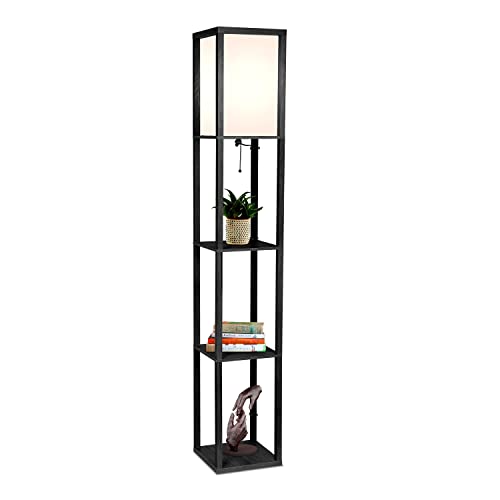
Brightech Maxwell Shelf Floor Lamp
- Best for: Owners who service the machine in a dim corner and want light and a small-parts shelf standing in one fixed place.
- Brand: Brightech, as named in the listing
- Product type: Shelf floor lamp, Maxwell line, per the listing name
- Role in this set: The light post — fixed light plus shelf surface standing at the service corner
- Bulb type, shelf count, dimensions, and switch style: Confirm on the listing
Owners who service the machine in a dim corner and want light and a small-parts shelf standing in one fixed place.
Verify bulb type, shelf count, and dimensions on the listing against your corner before ordering. This is a household mains lamp for planned maintenance, not a battery light for the outage itself, and it plays no part in the DC run it illuminates.
Generator work is nearly all planned work, and planned work happens where the machine lives — reliably the dimmest corner of the building. The Brightech listing names a Maxwell shelf floor lamp, a floor lamp built around shelving, which puts steady light at working height while its shelves hold the small kit the routine reaches for. In this set it takes the light post, and it retires two improvisations at once: the phone balanced on the machine for its torch, and the hand that holding a lamp would take away from the wrench.
Which One Fits Your Situation
The Run Was Wired With No Fuse Anywhere
Start at the protection post. The Renogy in-line holder splices into the cable run itself, stated at 30A and sealed waterproof; confirm on the listing whether a fuse element is included and which type it takes, fit it where a hand can reach it, and keep spare elements of the same rating beside the machine from that day on.
The Cable Ends Are Twists Under Screws
Finish the ends. Crimp a Frienda lug onto every cable in the bank and bolt each one flat, post by post, until no joint in the run depends on friction and hope. It is an afternoon of unglamorous work in daylight that removes the commonest fault the fuse would otherwise spend its life answering for.
The Wall Behind the Machine Shows Every Job Ever Done There
Skin the wall. The Timeet peel-and-stick wallpaper takes the soot, splashes, and scuffs currently going into the paintwork and fixes the corner’s boundary so the layout stops drifting. Check its roll dimensions and coverage on the listing against your wall first, and keep it well clear of the exhaust side.
Every Job Starts With Finding Things
Fix the arrangement and the light in the same afternoon. The Dseap rack gives each lead, the gloves, and the manual an address on the wall; the Brightech shelf lamp stands light at the service face with the small kit shelved inside it. A corner that starts every job already arranged is a corner whose maintenance actually happens.
Common Mistakes
- Asking a part to work past its stated limit: a fuse holder’s rating, a lug’s gauge range, and a hook’s load figure are envelopes, not suggestions, and the failure arrives at the first real load rather than at the moment of purchase.
- Buying the holder and forgetting the fuse: protection that waits on a second order is protection the run does not have; the appointed weak link has to be complete, installed, and spared before it counts.
- Leaving cable ends as bare twists: the joint loosens a fraction with every start until it becomes the fault itself, while a crimped lug bolted flat stays a plain surface anyone can inspect at a glance.
- Storing leads and gloves at floor level: damp concrete reaches everything resting on it, small gear migrates under the machine, and each job opens with a hunt instead of the work it was meant to be.
- Treating the wall layer as a cure-all: wallpaper receives soot and scuffs, but run across exhaust heat or used as a shield around fuel handling it becomes a hazard of exactly the kind this set exists to remove.
Frequently Asked Questions
Is anything in this set actually made of pulai?
No. The fuse holder, lugs, rack, wallpaper, and lamp contain no pulai. Pulai is the standard the set is graded against: an Alstonia hardwood from Malaysia and Indonesia, pale and light, with fine, even texture and straight grain, prized for carving and pattern work — and not durable outdoors untreated. Each pick is judged on staying inside its stated limits, as pulai rewards those who respect its own.
What does an in-line fuse holder do inside the run?
An in-line holder splices into the cable itself, so the fuse element sits in the middle of the path it protects rather than on a panel beside it. The Renogy listing names a waterproof holder stated at 30A, sealed against the damp of a shed corner. The listing name states the holder, so confirm on the listing whether a fuse element is included and which type it takes.
Why grade a generator corner against a soft, light wood?
Because pulai’s virtue is honesty, not strength. Its limits are stated — soft, light, perishable outdoors untreated — and inside those limits it is superb: carvers and pattern makers choose it because it never surprises them. A generator corner graded the same way stops failing by surprise. Every part is assigned only the duty its listing states, and the part appointed to fail is the cheapest in the run.
If the budget covers only two picks, which come first?
The lugs and the fuse set, in that order. Finished cable ends decide whether the run’s joints can be trusted, and the appointed fuse decides where a fault ends. The rack, wallpaper, and lamp add comfort a household can borrow from what it already owns — but sound terminations and a chosen weak link cannot be improvised at midnight when the power is already out.






Write Your Review
No reviews yet. Be the first to share your experience!