
🛒 Best Price Today on Amazon
Prime members get fast, free shipping on everything above, plus member-only deals. New members get a 30-day free trial — cancel anytime.
- 30 amp versus 50 amp: what the hookup tells you
- How we chose
- RV generator comparison table
- Air conditioner sizing: the worked calculation
- Best for 30 amp RVs
- Best when weight is the problem: two small units in parallel
- Best for 50 amp coaches
- Soft starts, parallel kits and noise: three upgrades that change the answer
- Storage, weight and mounting
- Safety
- Decision guide
- Frequently asked questions
- Bottom line
The best RV generators for a 30 amp hookup are the Honda EU3200i for the lightest 3,000-watt-class unit, the Generac iQ3500 for long run time and headroom, and the Westinghouse iGen4500DF or Champion 201318 for a lower-cost 4,500-watt dual-fuel option with an RV outlet. For a 50 amp coach, the Honda EU7000is is the 120/240V class to look at. The right pick depends on the air conditioner, because the compressor starting surge, not the running draw, decides whether a generator can start it.
RV generator shopping goes wrong in two ways. Buyers either pick a 2,000-watt camping unit that will never start a rooftop air conditioner, or they buy a heavy 7,000-watt unit they can barely load into a storage bay. This guide gives you a sizing method, then compares eight options by hookup type, soft-start behavior, parallel capability, campground noise, weight and storage.

Oxseryn Power Equipment 4400 Watts Inverter Generator Gas Powered, Portable Open Frame Generator, Low Noise with ECO Mode, RV Ready, Emergency Home Backup
Included for 'Best RV Generators for 30 Amp and 50 Amp Hookups' because the listing specifies Portable Open Frame Generator and Low Noise with ECO Mode, details this guide uses to compare options.
View on Amazon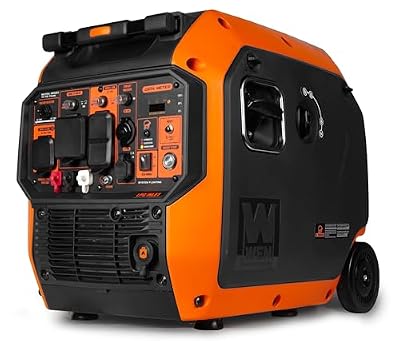
WEN 6800-Watt Dual Fuel RV-Ready Electric Start Portable Inverter Generator with Fuel Shut Off and CO Watchdog for Electric Vehicle Backup (DF680iX)
Included for 'Best RV Generators for 30 Amp and 50 Amp Hookups' as a relevant option in this category; details come from the product listing.
View on Amazon
Genkins 4500W Inverter Generator for Home, RV Ready 30A Outlet, Gas Powered | Open Frame Portable Generator,Pure Sine Wave (THD<3%), 56lbs Lightweight & Low Noise, Outdoor Generators for Long Runtime
Included for 'Best RV Generators for 30 Amp and 50 Amp Hookups' because the listing specifies RV Ready 30A Outlet and Gas Powered, details this guide uses to compare options.
View on Amazon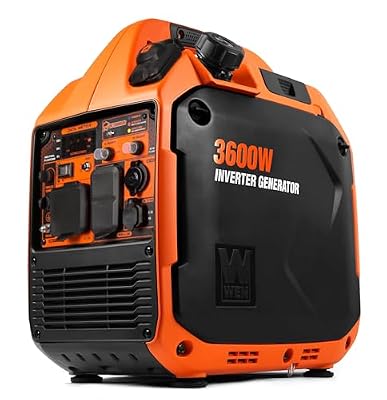
WEN Quiet and Lightweight 3600-Watt Dual Fuel RV-Ready Portable Inverter Generator with Fuel Shut Off and CO Watchdog (DF360iX)
Included for 'Best RV Generators for 30 Amp and 50 Amp Hookups' as a relevant option in this category; details come from the product listing.
View on Amazon30 amp versus 50 amp: what the hookup tells you
RV shore power comes in two forms, and the difference is the maximum power your coach can draw.
- 30 amp service (TT-30): one 120V leg at 30 amps, which is about 3,600 watts at most. It supports one rooftop air conditioner plus limited accessories, but not two air conditioners at once.
- 50 amp service: two 120V legs at 50 amps each, or 120/240V. That is up to roughly 12,000 watts in total. Larger coaches use it for two or three air conditioners, an electric water heater element and a residential refrigerator.
A generator with a TT-30R receptacle connects to a 30 amp coach with a simple cord. A 50 amp coach needs a generator with a 50A output, or a 30-to-50 amp adapter that limits you to roughly 3,600 watts of 120V power. Never use an adapter to exceed the generator’s rating or to backfeed a house.
How we chose
This is a research-based comparison from manufacturer specification sheets, camping-industry guides and recurring figures in 2026 roundups. We did not run the generators ourselves. We selected inverter units because campgrounds restrict noise and because modern RV control boards prefer clean power. Criteria:
- Output: at least 2,500 running watts for a 13,500 BTU air conditioner with a soft start, 3,000 or more without one.
- Outlet: a TT-30R or 30A locking outlet for a 30 amp RV, or 50A output for a 50 amp coach.
- Noise: published dBA at quarter load, ideally under 60 and measured at a stated distance.
- Weight and storage: under 60 pounds for lift-in, about 100 pounds or more needs a cart or ramp.
- Parallel capability: a manufacturer cord or kit to link two units, which is how smaller units run an air conditioner.
- Run time: hours per tank at light load.
RV generator comparison table
| Model | Running / starting watts | Weight (approx.) | Noise (published) | Hookup fit | Parallel | Fuel |
|---|---|---|---|---|---|---|
| Honda EU2200i, pair in parallel | About 3,600 combined running | 47.4 lb each | 48 to 57 dBA each | 30 amp with parallel kit that includes a 30A outlet | Required | Gasoline |
| Honda EU3200i | 2,600 / 3,200 | 59.1 lb | 54 to 58 dBA | 30 amp (locking outlet) | Yes | Gasoline |
| Generac iQ3500 | 3,000 / 3,500 | About 109 lb | About 58 dBA at light load | 30 amp class | Yes | Gasoline |
| Westinghouse iGen4500DF | About 3,700 / 4,500 on gasoline | About 100 lb class | Mid 50s to 60s dBA | 30 amp (RV outlet) | Yes | Gasoline or propane |
| Champion 201318 (4,500-watt dual fuel) | About 3,500 / 4,500 | About 100 lb class | About 61 dBA | 30 amp (RV-ready outlet) | Yes (ParaLINK) | Gasoline or propane |
| Yamaha EF3000iSEB | About 2,800 / 3,000 | Heavy, about 130 lb class | Mid 50s dBA | 30 amp class | Yes | Gasoline |
| Honda EU7000is | About 5,500 / 7,000 | About 260 lb class | Mid 50s to 60s dBA | 50 amp class (120/240V) | No, single large unit | Gasoline |
Figures marked “class” or “about” vary by listing, so confirm the current manufacturer sheet before buying.
Air conditioner sizing: the worked calculation
Most RV buying advice stops at “get 3,500 watts.” Use this step-by-step logic instead. It turns a nameplate into a generator size.
- Read the air conditioner nameplate. A 13,500 BTU rooftop unit typically draws about 12 to 14 amps running at 120V, or roughly 1,500 to 1,700 watts. A 15,000 BTU unit draws about 14 to 16 amps, around 1,700 to 1,900 watts.
- Estimate the starting surge. The compressor’s locked-rotor current is often listed on the nameplate. Without a soft start it frequently lands between 40 and 55 amps, which is 4,800 to 6,600 watts for a moment. That is why a 3,000-watt generator may stall on a hot day.
- Add a soft start. A soft-start device, such as the widely used Micro-Air EasyStart, trims the surge by a large share. Published figures range from about 40 percent to over 60 percent, which brings a 13,500 BTU unit to roughly 2,000 to 3,000 watts at start.
- Add other loads. Refrigerator 150, converter and lights 250, television and chargers 200, microwave only when the air conditioner is off. That is about 600 watts of continuous accessories.
- Total. Running load: 1,600 plus 600 is 2,200 watts. Starting load with a soft start: about 2,500 plus 600 is 3,100 watts. Without a soft start: about 5,000 plus 600 is 5,600 watts.
- Pick the generator. The 2,600 running-watt Honda EU3200i covers the running load with margin and can often start a 13,500 BTU unit with a soft start. A 3,000 to 3,700 running-watt unit adds comfort. Without a soft start, move to a 4,500-watt class or two paralleled units.
The pattern is simple. One 13,500 BTU air conditioner and a soft start fits a 3,000-watt class. One 15,000 BTU unit with no soft start wants a 4,500-watt class. Two air conditioners need about 7,000 watts and a 50 amp setup. These are estimates, not guarantees: altitude, heat, voltage drop in long cords and the age of the compressor all raise the real demand.
Best for 30 amp RVs
Honda EU3200i
Spec line: 3,200 starting / 2,600 running watts · 59.1 lb · 54 to 58 dBA · up to about 8.6 hours · 30A locking outlet · Honda parallel cord.
Best for: small and mid-size trailers, vans and truck campers where weight and storage space matter, running a 13,500 BTU air conditioner with a soft start.
Skip if: you will run a 15,000 BTU unit without a soft start or want dual-fuel flexibility.
Pros: light for its output, quiet, trusted brand, lift-in friendly.
Cons: premium cost, 120V only, gasoline only, recoil start.
Generac iQ3500
Spec line: 3,500 starting / 3,000 running watts · about 109 lb · about 58 dBA at light load · about 2.6 gal tank · roughly 14 hours at light load · parallel capable.
Best for: travel trailers with a 13,500 BTU air conditioner where you want a long run time and more headroom than the Honda.
Skip if: you must lift it into a compartment by hand. At around 109 pounds it needs wheels or a ramp.
Pros: large tank, steady output, enough headroom for a 13,500 BTU unit, enclosed inverter design.
Cons: heavy, and different listings quote slightly different specs, so confirm the outlet configuration before you buy.
Westinghouse iGen4500DF
Spec line: about 4,500 peak / 3,700 running watts on gasoline, slightly less on propane · about 100 lb class · electric start with remote · 30A RV outlet · parallel capable.
Best for: trailers and fifth wheels with a 13,500 or 15,000 BTU air conditioner, and owners who want propane as a fuel option.
Skip if: you need the lowest noise in the campground, since it is louder than the Honda under load.
Pros: strong output, electric start, dual-fuel flexibility, an RV-ready outlet.
Cons: heavy, mid-tier noise, and weight and noise vary by variant, so check the exact model.
Champion 201318 (4,500-watt dual fuel inverter)
Spec line: about 4,500 starting / 3,500 running watts · gasoline or propane · under 3% THD · about 61 dBA · RV-ready outlet · ParaLINK parallel capable.
Best for: value-minded owners who want a single generator with enough starting power for one 15,000 BTU air conditioner and the ability to add a second unit later.
Skip if: you often camp in strict quiet-hour parks. At about 61 dBA it is among the louder choices here.
Pros: published low distortion, dual fuel, parallel capable, value cost per watt.
Cons: heavy, louder, and output drops on propane.
Yamaha EF3000iSEB
Spec line: about 3,000 starting / 2,800 running watts · heavy, about 130 lb class · mid 50s dBA · electric start · gasoline · parallel capable.
Best for: owners who prefer a long-established brand, a steady output and electric start for a 13,500 BTU air conditioner with a soft start.
Skip if: you need a light unit. It weighs about twice the Honda EU3200i for similar output.
Pros: durable design, electric start, solid reputation.
Cons: heavy, premium cost, and we could not verify every figure from a manufacturer sheet, so confirm before buying.
Best when weight is the problem: two small units in parallel
Two Honda EU2200i generators with a parallel kit
Spec line: each 2,200 starting / 1,800 running watts · 47.4 lb each · 48 to 57 dBA each · about 3,600 running watts combined · 30A output via Honda’s parallel kit.
Best for: small trailers and vans where storage is tight, because two 47-pound units are easier to carry than one 100-pound unit, and either can run alone for light loads.
Skip if: your budget is tight. Two premium units plus the kit cost more than a single 3,500 to 4,500-watt unit.
Pros: redundancy, flexible weight, low noise on one unit at night.
Cons: high combined cost, two fuel tanks to fill, and a longer setup with cords.
Best for 50 amp coaches
Honda EU7000is
Spec line: about 7,000 starting / 5,500 running watts · about 260 lb class · mid 50s to 60s dBA · gasoline · 120/240V outputs · electric start.
Best for: larger fifth wheels and Class A coaches with two air conditioners, where you want one quiet premium unit instead of a conventional open-frame generator.
Skip if: you have a small or medium trailer. The weight, size and cost are far beyond what a 30 amp RV needs.
Pros: true 50 amp class output, inverter-quiet, electric start, trusted brand.
Cons: very heavy, premium cost, and it needs wheels and storage space. Confirm the receptacle layout and match it to your coach’s cord or adapter.
If you own a 50 amp coach but only run one air conditioner, a 30 amp generator plus a 30-to-50 amp adapter works, but your usable power is limited to about 3,600 watts and you cannot run both legs fully.
Soft starts, parallel kits and noise: three upgrades that change the answer
- Soft-start device: often the cheapest way to start a 13,500 BTU air conditioner on a 3,000-watt generator. Installation costs money and may require a technician for warranty reasons.
- Parallel kit: doubles the available watts. Both units must be the same model or compatible, with the manufacturer’s cable.
- Noise: many campgrounds cap generators near 60 dBA at a set distance and limit running hours. Premium inverters in the low-to-mid 50s dBA at light load make this easy. Position the generator on the far side of your site from neighbors and run it on soft ground.
Storage, weight and mounting
- Under 50 pounds: one person can lift it into a bumper rack or compartment. This is the main benefit of two Honda EU2200i units.
- 55 to 60 pounds: the Honda EU3200i is still manageable, but use two hands and good lifting form.
- About 100 pounds and above: use a ramp, a hitch carrier or a lift and plan to leave it on the vehicle. Check the tongue weight and carrier rating.
- Security: use a lockable cable or a hitch-mounted cage, since generators are common theft targets at campsites.
- Transport: run the carburetor dry or close the fuel valve and keep the unit upright so oil and gasoline do not leak into the cylinder.
Safety
- Carbon monoxide: never run a generator inside an RV, a storage bay or under an awning that traps exhaust. Place it outdoors, as far as the cord allows from windows, doors and vents, with the exhaust pointing away.
- Alarms: keep working battery-powered carbon monoxide alarms in the coach. Check them before each trip.
- Do not backfeed: connect only through the correct RV inlet or cord, and never to a household outlet.
- Grounding and bonding: follow the manual. Some inverter generators have floating neutrals that need special handling when feeding an RV.
- Fueling: shut down and cool the unit before adding fuel. Store fuel in approved containers away from ignition sources. Do not store spare fuel inside living space.
- Propane: for dual-fuel models, inspect hoses and regulators, and use only listed connections.
Decision guide
| Your RV | Air conditioner | Recommended setup |
|---|---|---|
| Van or teardrop, no air conditioner | None | Single Honda EU2200i |
| Small trailer, 30 amp | One 13,500 BTU with soft start | Honda EU3200i, or two EU2200i in parallel |
| Mid-size trailer, 30 amp | One 13,500 or 15,000 BTU | Generac iQ3500, Westinghouse iGen4500DF or Champion 201318 |
| Dry-camping with propane available | One air conditioner | A dual-fuel 4,500-watt model |
| Large fifth wheel or coach, 50 amp | Two air conditioners | Honda EU7000is class unit |
Frequently asked questions
What size generator do I need to run an RV air conditioner?
For a 13,500 BTU rooftop unit, plan on 3,000 running watts with a soft start, or about 4,000 starting watts without one. A 15,000 BTU unit needs a bit more.
Read the air conditioner nameplate for running amps and locked-rotor amps, then multiply by 120 volts to get watts.
Can a 3,000-watt generator run a 30 amp RV?
Yes for one air conditioner and moderate accessories, especially with a soft start. A 30 amp service can draw about 3,600 watts, so you will manage loads instead of running everything.
Turn off the microwave and water heater element when the air conditioner is running, and stage your start-ups.
Can I run two air conditioners on a 30 amp generator?
No. A 30 amp RV circuit tops out near 3,600 watts, which cannot start and run two air conditioners. Two units need a 50 amp coach and about 7,000 watts of generator.
A paralleled pair of 3,000-watt units may handle two small air conditioners only if your coach is wired for 50 amp.
Do I need a soft start for my RV air conditioner?
Often yes with a 3,000-watt generator. A soft start cuts the compressor surge so a smaller generator can start it. With a 4,500-watt generator it is helpful but not always required.
Published reductions range from about 40 to over 60 percent. Check compatibility with your air conditioner model.
Is a dual-fuel RV generator worth it?
For many owners, yes. Propane stores well and burns cleanly, so the generator starts after months of storage. Output on propane is usually lower than on gasoline.
The Westinghouse iGen4500DF and Champion 201318 both list reduced running watts on propane.
How loud can an RV generator be at a campground?
Limits vary. Many parks cap noise near 60 dBA at a set distance and restrict hours. Confirm the park’s current rules before arriving.
Inverter models in the low-to-mid 50s dBA at light load are usually accepted. Place the unit away from neighbors.
Can I use a 30 amp generator on a 50 amp RV?
Yes with a 30-to-50 amp adapter, but you are limited to about 3,600 watts on one leg. You cannot run both air conditioners and the rest of the coach at once.
For full 50 amp use, choose a generator with a 50 amp, 120/240V output.
Which RV generator is the lightest?
The Honda EU2200i at about 47 pounds is the lightest in this guide, and the Honda EU3200i at about 59 pounds is the lightest 3,000-watt-class unit.
Two EU2200i units in parallel give about 3,600 running watts while each unit stays under 50 pounds.
Bottom line
For a 30 amp RV with one air conditioner, start with the Honda EU3200i and a soft start if weight matters, the Generac iQ3500 if run time and headroom matter, or the Westinghouse iGen4500DF or Champion 201318 if you want dual fuel and lower cost per watt. For a 50 amp coach with two air conditioners, step up to the Honda EU7000is class. Read your air conditioner nameplate, size the generator for the starting surge, and run it outdoors, away from every window and vent.


Write Your Review
No reviews yet. Be the first to share your experience!