
🛒 Best Price Today on Amazon
Prime members get fast, free shipping on everything above, plus member-only deals. New members get a 30-day free trial — cancel anytime.
The Champion 4375/3500-watt dual-fuel generator is the kind of machine people buy after their first long outage: affordable, electric start, and able to run on either gasoline or propane. It sits at the lower end of whole-essentials backup, which is exactly why it is popular and also why it disappoints people who expect too much. This review treats it as a budget home backup decision and shows how to plan circuits so a mid-size generator does the most useful work.
What the numbers mean
The two figures in the name describe starting and running watts on gasoline: roughly 4,375 watts for a few seconds of motor startup, and 3,500 watts continuous. Propane ratings are typically around 10 percent lower. Confirm the label on current production. Continuous output is what you plan around.

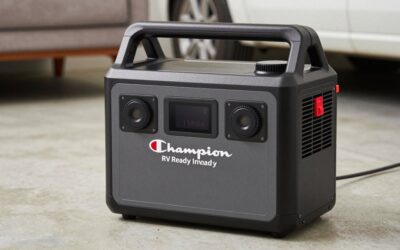
Champion 4000-Watt Dual Fuel RV Ready Portable Inverter Generator
Included for 'Champion 4375/3500 Watt Dual Fuel Review: Is It Worth Buying in 2026?' as a relevant option in this category; details come from the product listing.
View on Amazon
Champion 4500-Watt Electric Start Dual Fuel Portable Inverter Generator
Included for 'Champion 4375/3500 Watt Dual Fuel Review: Is It Worth Buying in 2026?' as a relevant option in this category; details come from the product listing.
View on Amazon
Champion 4250-Watt Dual Fuel Portable Open Frame Inverter Generator, CARB
Included for 'Champion 4375/3500 Watt Dual Fuel Review: Is It Worth Buying in 2026?' because the listing specifies CARB, details this guide uses to compare options.
View on Amazon
Champion 11,000-Watt Electric Start Dual Fuel Portable Inverter Generator
Included for 'Champion 4375/3500 Watt Dual Fuel Review: Is It Worth Buying in 2026?' as a relevant option in this category; details come from the product listing.
View on AmazonA budget essentials plan
| Load | Running watts | Starting watts | Priority |
|---|---|---|---|
| Refrigerator | 700-800W | 1,500-2,200W | 1 |
| Gas furnace blower | 500-800W | 1,000-1,600W | 1 in winter |
| 1/3 hp sump pump | 800W | 1,300-2,000W | 1 in rain season |
| Router + phones + LED lights | 150-300W | None | 1 |
| Chest freezer | 500-700W | 1,000-1,500W | 2 |
| Microwave, short use | 1,000-1,200W | None | 3, rotate |
| Window AC, 8,000 BTU | 700-900W | 1,500-2,200W | 3 |
Priority-one loads total roughly 2,200 to 2,700 running watts, leaving about 800 to 1,300 watts for rotation. You cannot run everything at once, but you can run the things that protect food, prevent flooding, and keep heat on.
Starting surge management
The biggest failure mode with mid-size generators is starting two motors simultaneously. If the fridge compressor and sump pump start together, their combined surge can exceed 4,375 watts and stall the engine or trip the breaker. Start the generator with no load, add the largest motor load first, then add others one at a time.
Fuel planning
With a tank around 3.4 gallons, expect roughly 10 to 12 hours at a quarter load and 6 to 8 hours at half load on gasoline. A 20-pound propane cylinder lasts roughly 8 to 10 hours at quarter load and 5 to 6 hours at half. For a 3-day outage with 8 to 12 hours of daily run time, plan 12 to 20 gallons of gasoline or about 5 to 7 propane cylinders.
Storing gasoline safely
Store gasoline in approved containers, in a detached shed or away from living spaces and ignition sources. Add stabilizer at fill-up and rotate the supply into your car every 6 to 12 months.
Connecting to your home
This class typically includes a 120V 30A locking outlet and standard household outlets rather than a 240V outlet. That limits it to 120V circuits. A 120V transfer switch or inlet setup installed by a licensed electrician lets you power hardwired furnace and sump circuits. Otherwise, use heavy-duty 12-gauge extension cords run through a window gap sealed against drafts, never through a door left open near the exhaust.
Noise and neighbors
Open-frame generators in this class commonly run near 68 dBA at 23 feet. That is noticeable but typical for storm season. Place it on a flat, dry surface, never under a deck or near a window, and consider a ventilated generator cover rated for operation if rain is forecast.
Carbon monoxide safety
Run the generator outdoors at least 20 feet from the house with exhaust pointing away from doors and windows. Never in a garage, even with the door open. Install battery-backup CO alarms on every level of the home and outside bedrooms.
Maintenance for a machine that sits
Budget generators often fail because they sit for a year. Start it every month for 15 to 20 minutes with a light load, keep the electric-start battery on a maintainer, change oil after break-in and then annually, and stabilize fuel or run on propane to keep the carburetor clean.
FAQ
Can the Champion 4375/3500 run a house?
It can run selected essentials, not a whole house. Plan around roughly 3,500 running watts and prioritize fridge, furnace, sump, and lights.
Is dual fuel worth it on a budget generator?
Yes. Propane stores indefinitely without clogging the carburetor, which is the most common reason budget generators fail to start after long storage.
Bottom line
The Champion 4375/3500 dual-fuel generator is worth buying as an affordable essentials backup if you plan loads carefully and stagger motor starts. If you need a 240V well pump or want to run a microwave and window AC alongside everything else, step up to a 5,500 to 7,500-watt class unit.
Write Your Review
No reviews yet. Be the first to share your experience!