
🛒 Best Price Today on Amazon
Prime members get fast, free shipping on everything above, plus member-only deals. New members get a 30-day free trial — cancel anytime.
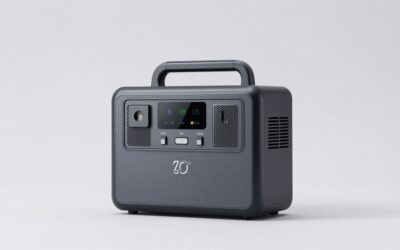
Marketing for portable power stations loves cycle numbers: 3,000 cycles, 4,000 cycles, sometimes more. Those figures are real, but they describe only one of several ways a power station ages. Most owners will never reach the rated cycle count; heat, calendar aging, storage habits, and component wear in fans, ports, and the inverter usually decide how long a unit stays useful. This guide breaks down those factors and gives realistic lifespan estimates for different kinds of owners.
What a cycle rating actually means
A cycle rating says how many full charge and discharge cycles the battery can complete before its capacity falls to a stated level, commonly 70 or 80 percent of original. A 3,000-cycle rating at 80 percent means that after 3,000 full cycles, a 1,000Wh station should still hold about 800Wh. It does not mean the station dies at cycle 3,001.
Partial cycles add up
Two half discharges count as roughly one full cycle. Topping up from 60 to 100 percent counts as 0.4 of a cycle.
Realistic lifespan by owner type
The table assumes LiFePO4 cells rated for about 3,000 cycles to 80 percent, stored and used at reasonable temperatures.
| Owner type | Typical cycles per year | Years to reach cycle rating | Likely limiting factor |
|---|---|---|---|
| Occasional outage backup | 5-20 | 150+ years | Calendar aging, electronics |
| Weekend camper | 30-60 | 50-100 years | Calendar aging, wear |
| Van lifer, daily use | 250-365 | ~8-12 years | Cycle wear |
| Daily solar self-consumption | 365 | ~8 years | Cycle wear |
| Job site, twice daily | 500-700 | ~4-6 years | Cycle wear, physical damage |
For most owners, cycles are not the problem. Calendar aging and electronics are.
Calendar aging: the silent factor
Lithium cells lose capacity slowly just by existing, even unused. The rate depends heavily on temperature and state of charge. A LiFePO4 battery kept cool and at moderate charge might lose around 1 to 3 percent of capacity per year; one kept full in a hot garage may lose noticeably more. Over 10 years, calendar aging alone can reduce capacity by 10 to 25 percent depending on conditions.
Heat is the biggest enemy
Storing a station in a car in summer, where cabin temperatures can exceed 140 degrees Fahrenheit, or in an attic accelerates aging dramatically. A cool, dry indoor closet is the best storage location.
Components besides the battery
A power station contains an inverter, cooling fans, a battery management system, charge controllers, and many ports. These can fail independently:
- Cooling fans accumulate dust and bearing wear, especially in dusty campsites or job sites.
- USB and AC ports loosen with repeated plugging.
- Inverters can fail from repeated overloads or heat.
- Displays and buttons can fail after drops or moisture exposure.
Warranties of 3 to 5 years cover many early failures; beyond that, repair options depend on the manufacturer.
Older chemistries age faster
Power stations built with NMC lithium cells, common in older and some lightweight models, are typically rated for 500 to 1,000 cycles to 80 percent. Heavy users of NMC units may see noticeable capacity loss within 2 to 4 years. LiFePO4 units last much longer in cycling use.
How to tell if your station is aging
Run a simple capacity test once a year. Fully charge the station, connect a steady known load such as a 100W lamp or fan, and time how long it runs until shutdown. Multiply watts by hours and compare with the rated capacity after roughly 15 percent inverter losses. A 1,000Wh station that delivers 850Wh is healthy; one delivering 600Wh has aged significantly.
Habits that extend life
- Store at 50 to 60 percent if unused for months, and recharge every 3 months.
- Keep it indoors at moderate temperatures, ideally 50 to 77 degrees Fahrenheit.
- Use charge limits in the app, such as 80 or 90 percent, for daily use.
- Avoid repeated overloads that trip the inverter.
- Keep vents clean and avoid dusty storage.
FAQ
Is it bad to keep a power station plugged in all the time?
Most modern units manage this well, but keeping them at 100 percent in a warm room speeds calendar aging. If the app allows, set a charge limit of 80 to 90 percent for long-term standby.
When should I replace my power station?
When capacity falls below what your outage or camping plan requires, or when electronics fail outside warranty. For many LiFePO4 owners, that is 10 years or more.
Bottom line
A LiFePO4 portable power station commonly lasts 10 years or more for typical owners, often limited by calendar aging and electronics rather than cycles. Daily heavy users may reach cycle limits in about 8 years. Keep it cool, avoid storing it full in heat, and test capacity yearly to know where it stands.

Write Your Review
No reviews yet. Be the first to share your experience!