
🛒 Best Price Today on Amazon
Prime members get fast, free shipping on everything above, plus member-only deals. New members get a 30-day free trial — cancel anytime.
A refrigerator is the first appliance most people want running during a power outage, and it is also one of the most misunderstood in terms of wattage. The number printed on the label, the watts it uses while the compressor runs, the burst it needs to start, and its average consumption across a day are all different. Understanding each figure lets you size a generator or battery correctly and avoid tripped breakers or spoiled food.
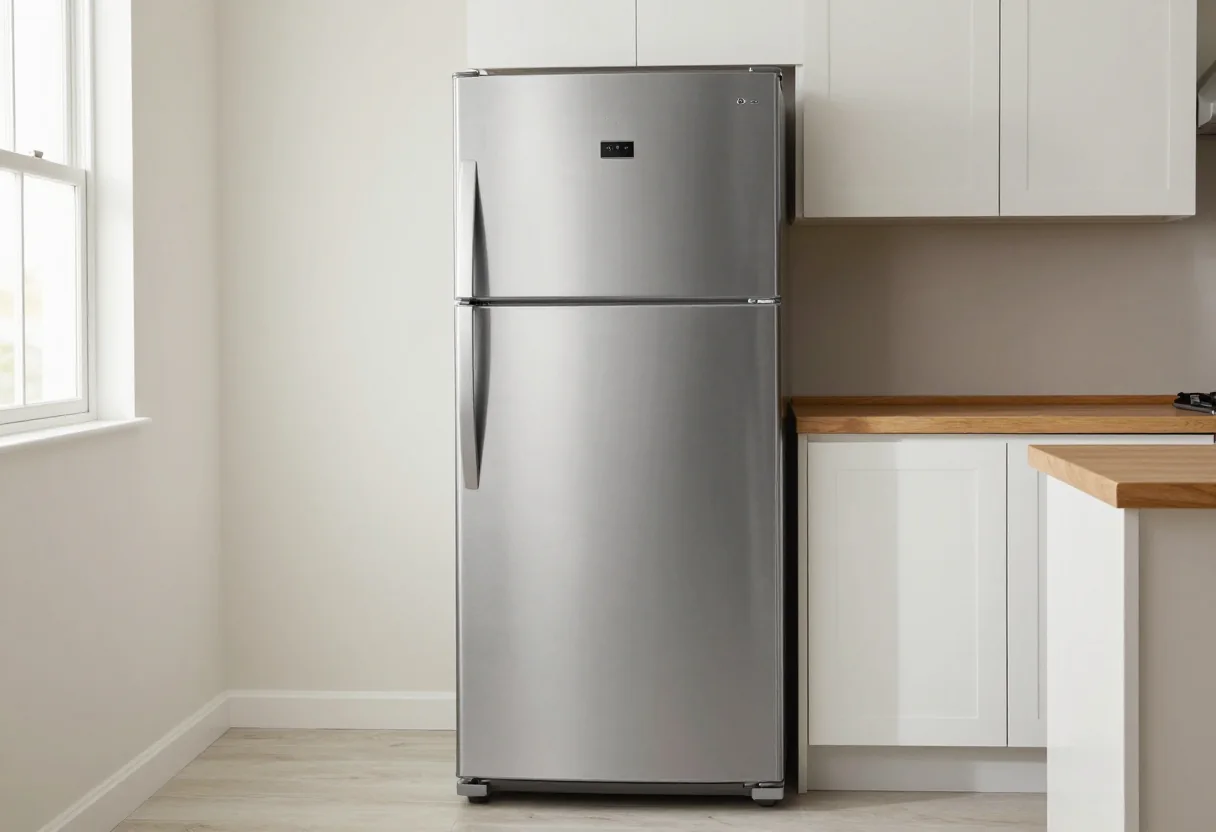
Typical refrigerator wattage
| Refrigerator type | Running watts (compressor on) | Starting watts | Daily energy use |
|---|---|---|---|
| Mini fridge (2–4 cu ft) | 50–100W | 300–600W | 0.3–0.7 kWh |
| Top-freezer (15–20 cu ft) | 100–250W | 800–1,500W | 1.0–1.6 kWh |
| Side-by-side / French door | 150–400W | 1,200–2,200W | 1.3–2.2 kWh |
| Older (pre-2000) full-size | 300–800W | 1,500–2,500W | 2.0–4.0 kWh |
| Inverter-compressor models | 50–200W (variable) | Low, often under 600W | 0.8–1.5 kWh |
Running watts versus starting watts
A standard refrigerator compressor needs a surge of power to start — commonly three to five times its running draw — lasting a fraction of a second. That spike is why a small generator rated at 1,000W may stall when the compressor kicks on, even though the fridge only needs 200W to keep running. Modern refrigerators with inverter compressors ramp up gradually and have much smaller surges, making them easier to back up.
Defrost heaters and ice makers
Frost-free refrigerators periodically run a defrost heater, often 300–600W for 20–40 minutes, a few times a day. Ice makers use heating elements briefly to release cubes. These cycles can make short-term draw higher than the compressor alone.
Average consumption across a day
The compressor cycles on and off, typically running 30–50% of the time depending on room temperature, door openings and how full the fridge is. That duty cycle is why a fridge that draws 200W while running averages only 60–100W across a day. The yellow EnergyGuide label lists annual kWh; divide by 365 for daily kWh, and by 24 for average watts.
| EnergyGuide annual rating | Daily kWh | Average watts |
|---|---|---|
| 350 kWh/year | ~0.96 | ~40W |
| 500 kWh/year | ~1.37 | ~57W |
| 650 kWh/year | ~1.78 | ~74W |
| 800 kWh/year | ~2.19 | ~91W |
Real-world use during an outage can run 20–40% above the label if the kitchen is hot or doors are opened often.
How to measure your own refrigerator
- Plug the refrigerator into a plug-in electricity usage meter (about $20–30).
- Leave it for 24–48 hours with normal use to capture compressor cycles and a defrost cycle.
- Record peak watts, typical running watts and total kWh.
- Use the kWh figure for battery sizing and the peak figure for generator surge sizing.
Note that plug-in meters may not capture the full startup spike, which lasts milliseconds. Use the 3–5× rule as a safety margin.
Reducing refrigerator power needs during an outage
- Keep doors closed; a full, closed fridge stays safe for about 4 hours without power, and a full freezer for around 48 hours.
- Fill empty space with water jugs to add thermal mass.
- Set the thermostat to 37–38°F rather than colder.
- Run the fridge on a generator in intervals, such as 1–2 hours on, 2–3 hours off, keeping an eye on a thermometer.
Refrigerator wattage and generator or battery choice
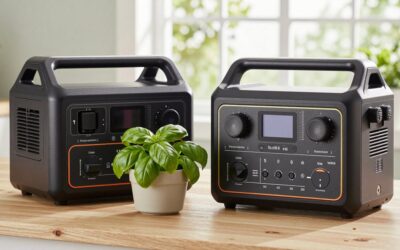
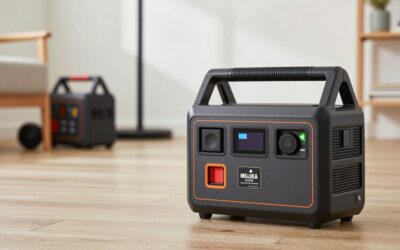
Once you know your fridge’s numbers, choosing backup power becomes simple. For a generator, you size by surge: a 2,000–2,500W inverter covers almost any modern full-size refrigerator along with lights and chargers. For a battery power station, you size by daily energy and inverter surge: a unit with at least 1,500–2,000W surge capacity and 1,500–2,500Wh of storage can run a typical fridge for about a day. If your refrigerator is more than 15 years old, consider that it may use twice the energy of a new Energy Star model; replacing it can halve the size of the backup system you need, which is worth factoring into your budget.
Freezers compared
Stand-alone chest freezers typically draw 80–150W running and use 0.6–1.2kWh per day, less than most refrigerators, because their lids hold cold air in.
FAQ
Can a 1,000W generator run a refrigerator?
Sometimes, if it is a modern efficient or inverter-compressor model. Many full-size fridges need 1,200W+ to start, so a 2,000W-class inverter is a safer choice.
How much battery do I need to run a refrigerator for 24 hours?
Plan on 1.5–2.5kWh of usable capacity for a typical modern full-size fridge, plus inverter losses of around 10–15%.
Bottom line
Most modern refrigerators run on 100–400W with starting surges of 800–2,200W and use 1–2kWh per day. Size generators for the surge and batteries for daily kWh, and measure your own unit if you want precision.



Write Your Review
No reviews yet. Be the first to share your experience!