
🛒 Best Price Today on Amazon
Prime members get fast, free shipping on everything above, plus member-only deals. New members get a 30-day free trial — cancel anytime.
Inverter generators and conventional generators both burn fuel to make electricity, but they process that power very differently. A conventional generator spins its engine at a constant speed — usually 3,600 RPM — to produce 60Hz AC directly. An inverter generator produces raw AC, converts it to DC, then electronically inverts it back into clean, stable AC, which lets the engine speed up or slow down with demand. That difference affects noise, fuel use, power quality, weight and price.
Comparison at a glance
| Factor | Inverter | Conventional |
|---|---|---|
| Power quality (THD) | Typically under 3% | Often 5–25% |
| Noise at 23 ft | ~50–62 dBA | ~65–75 dBA |
| Fuel use at light load | 20–40% lower (eco throttle) | Fixed speed, higher burn |
| Typical output range | 1,000–9,000W | 3,000–15,000W |
| Cost per running watt | $0.25–0.70 | $0.10–0.25 |
| Parallel capability | Common | Rare |
Power quality: why it matters
Total harmonic distortion measures how far the electrical waveform deviates from a pure sine wave. Utility power is typically under 3–5%. Laptops, TVs, CPAP machines, variable-speed furnace motors and modern appliance control boards prefer clean power. A conventional generator with high THD can cause buzzing, overheating or even damage to sensitive electronics over time.

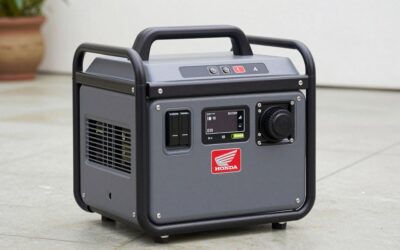
Honda EU2200i 2200 Watt Inverter Generator (EU2200ITAN)
Included for 'Inverter Generator vs Conventional Generator: Which Is Right for You?' as a relevant option in this category; details come from the product listing.
View on Amazon
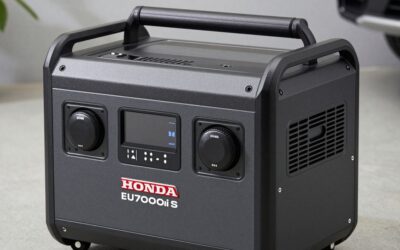
Honda EU7000iS 7000 120/240V Watt Inverter Generator (EU7000ISNAT1X)
Included for 'Inverter Generator vs Conventional Generator: Which Is Right for You?' as a relevant option in this category; details come from the product listing.
View on Amazon
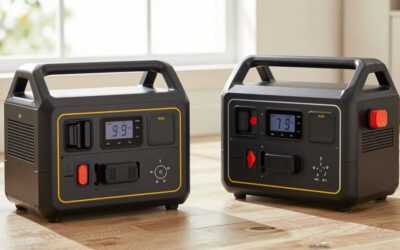
Honda EB2200i 2200 Watt 120V Super Quiet Inverter Generator (EB2200ITAN)
Included for 'Inverter Generator vs Conventional Generator: Which Is Right for You?' as a relevant option in this category; details come from the product listing.
View on Amazon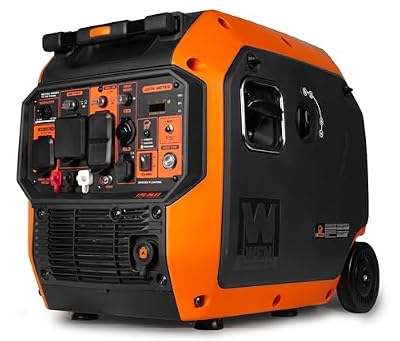
WEN 6800-Watt Dual Fuel RV-Ready Electric Start Portable Inverter Generator with Fuel Shut Off and CO Watchdog for Electric Vehicle Backup (DF680iX)
Included for 'Inverter Generator vs Conventional Generator: Which Is Right for You?' as a relevant option in this category; details come from the product listing.
View on AmazonCan you make conventional power safe?
A line-interactive or double-conversion UPS between the generator and a computer adds protection, and some conventional generators have automatic voltage regulation that tightens output. Still, for electronics-heavy use, an inverter is the simpler solution.
Noise and fuel efficiency
Because an inverter throttles down when demand is low, it runs quieter and uses less fuel during typical partial loads. Most real use — lights, a fridge, chargers — is 20–40% of capacity, which is exactly where inverters shine. A 2kW-class inverter can run 8–10 hours on a gallon at quarter load; a 3,500W conventional unit might run 5–7 hours on a gallon at a similar absolute load.
| Scenario | Inverter benefit | Conventional benefit |
|---|---|---|
| Campground with quiet hours | Strong — low noise | Weak — often too loud |
| Home backup with well pump | Needs large, costly unit | Strong — cheap surge |
| Job site with saws/compressor | Good for small tools | Strong — high output |
| Electronics, CPAP, laptops | Strong — clean power | Weak without UPS |
Output and surge
Conventional generators deliver high surge wattage cheaply because the alternator is directly driven and the engine is larger per dollar. That makes them excellent for motor loads — well pumps, sump pumps, compressors — and for feeding a home transfer switch. Large inverters exist, but cost rises steeply above about 4,000 running watts.
Weight and portability
Small inverters weigh 40–60 lb and have enclosed cases that are easy to carry. Conventional generators are open-frame designs, often 120–250 lb, that need wheel kits. For camping and tailgating, portability usually decides the matter.
Which should you choose?
- Inverter: camping, RVs, tailgating, electronics, anyone with close neighbors, and users who run the generator many hours a year.
- Conventional: home backup feeding a transfer switch, heavy motor loads, job sites, and buyers who need maximum watts on a limited budget.
Some owners buy both — a small inverter for everyday use and a large conventional unit for storms — which can cost less than one large inverter.
Hybrid and open-frame inverter designs
The line between the two categories has blurred. Several manufacturers now sell open-frame inverter generators that combine the clean power and eco-throttle of an inverter with the lower cost and larger output of an open-frame chassis. They are louder than enclosed inverters — often low-to-mid 60s dBA — but quieter and cleaner than conventional units, and they typically cost 20–40% more than a conventional generator of the same rating. For home backup that includes electronics and a furnace control board, an open-frame inverter in the 4,000–5,000W range is often the best compromise: enough surge for a refrigerator and sump pump, clean enough for computers, and affordable enough to leave budget for a transfer switch. If you are torn between the two traditional types, look at these hybrids before deciding.
FAQ
Is an inverter generator worth the extra cost?
Yes if you value quiet operation, clean power and fuel savings or use the generator often. For occasional storm backup with heavy loads, a conventional unit offers more power per dollar.
Can a conventional generator damage electronics?
It can if its harmonic distortion is high or voltage is unstable. Use surge protection and a UPS for sensitive devices, or choose a model with low THD and automatic voltage regulation.
Bottom line
Inverter generators are quieter, cleaner and more efficient; conventional generators are cheaper and more powerful per dollar. Match the type to your loads: electronics and campsites favor inverters, while pumps, heavy tools and whole-circuit backup favor conventional units.
Write Your Review
No reviews yet. Be the first to share your experience!