
🛒 Best Price Today on Amazon
Prime members get fast, free shipping on everything above, plus member-only deals. New members get a 30-day free trial — cancel anytime.
Choosing a generator for a CPAP machine is different from sizing for most household appliances. The CPAP itself uses little power, but it runs all night beside your bed, needs clean electricity, and must be absolutely reliable. That combination makes the choice of generator type, placement and backup strategy more important than raw wattage. This guide explains what size generator you need for a CPAP, why an inverter model is essential, and when a battery power station is the better tool.
Generator size recommendations
| Scenario | Load | Recommended generator |
|---|---|---|
| CPAP only, no humidifier | 20–60W | 1,000–2,000W inverter (or power station) |
| CPAP + humidifier + heated tube | 60–130W | 1,000–2,000W inverter |
| CPAP + fridge + lights + phone charging | ~400–600W running, ~1,500W start | 2,000–2,500W inverter |
| CPAP + household essentials via transfer switch | 3,000–6,000W | Mid-size inverter or large generator + UPS |
Even the smallest inverter generators provide far more power than a CPAP needs. The real reasons to size up are other loads you want to run and fuel efficiency at light load.
Why an inverter generator is essential
CPAP power supplies are designed for clean utility power. Conventional generators can produce voltage and frequency fluctuations and higher total harmonic distortion (often 5–25%), which can cause power supplies to overheat, fail or behave unpredictably. Inverter generators typically produce under 3% THD, similar to grid power. If you must use a conventional generator, place an online (double-conversion) UPS between it and the CPAP.
Placement and noise
A generator must run outdoors, at least 20 feet from the house, with exhaust pointing away from windows. That means a long extension cord to the bedroom. Use a 14- or 12-gauge outdoor cord of suitable length; the CPAP’s low draw means voltage drop is minimal. Noise matters too — a 2,000W-class inverter at quarter load is around 50–55 dBA at 23 feet, usually quiet enough indoors with windows closed.
Fuel runtime
A CPAP-only load is so light that small inverter generators run at their most efficient idle. Expect roughly 8–12 hours per gallon on a 2,000W-class inverter with a CPAP and a few small loads.
| Setup | Average load | Runtime per tank (~1 gal) | Fuel for 3 nights |
|---|---|---|---|
| CPAP only (40W) | ~40W | ~10–12 hours | ~2.5–3 gallons |
| CPAP + humidifier (100W) | ~100W | ~9–11 hours | ~3 gallons |
| CPAP + fridge + lights (400W avg) | ~400W | ~7–9 hours | ~4–5 gallons (12 hrs/day) |
Generator plus battery: the best of both
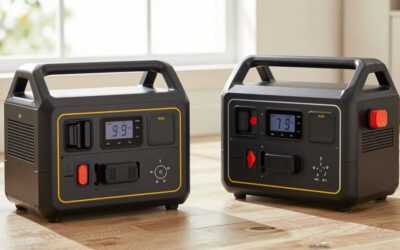
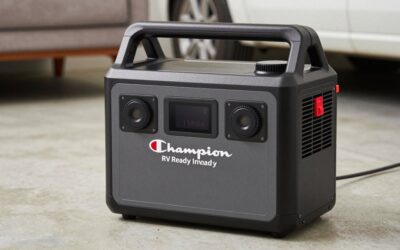
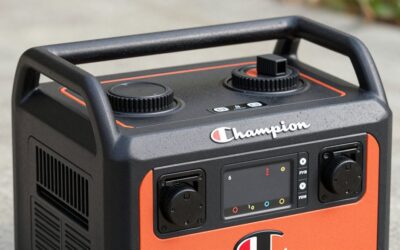
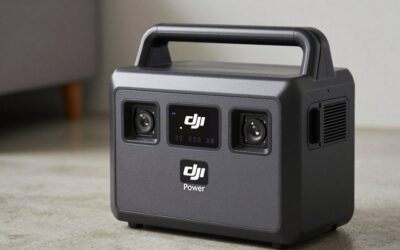
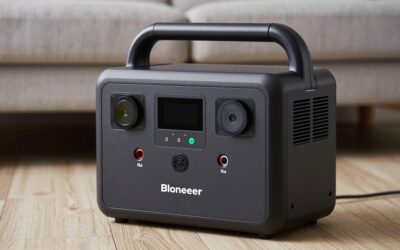
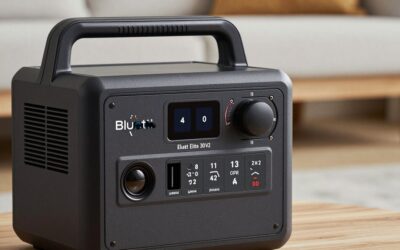
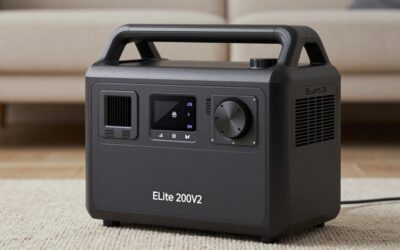
Many CPAP users combine a small inverter generator with a power station. Run the generator for a few hours in the evening to recharge the power station and power the fridge, then shut it down overnight. The power station runs the CPAP silently and safely indoors. A 500–1,000Wh station covers one or two nights; the generator refills it in 2–4 hours.
Why not rely on the generator overnight?
A generator running overnight can run out of fuel, stall, be stolen or pose CO risk if placed poorly. A battery buffer ensures therapy continues even if the generator stops at 3 a.m.
When a power station alone is enough
- Outages typically shorter than 1–2 nights.
- Apartment or condo living where generators are not allowed.
- Travel and camping with limited space.
- Pair with a 100–200W solar panel for multi-day independence.
Preparation checklist
- Measure your CPAP’s draw with and without humidifier.
- Buy the manufacturer DC cable or converter for efficient battery operation.
- Test your full backup setup for one night before storm season.
- Keep fuel stabilized and batteries charged.
- Install a CO alarm in the bedroom.
Humidifier trade-offs on generator power
On generator power, you can keep the humidifier on without much concern, because even 130W is a light load. The trade-off appears when you switch to battery overnight: a heated humidifier can triple energy use and shorten runtime from two nights to less than one. A reasonable approach is to use the humidifier during the evening while the generator runs, then turn it off or down when switching to battery. If dryness is uncomfortable, a passive humidifier or saline spray can help during outage nights. Talk with your healthcare provider about any changes to therapy settings.
FAQ
Is a 1,000W generator enough for a CPAP?
Yes, a 1,000W inverter generator easily runs a CPAP with humidifier. Choose a larger 2,000W-class inverter only if you also want to run a refrigerator or other appliances.
Can I run a CPAP on a conventional generator?
It is not recommended without protection. Use an online UPS or choose an inverter generator to avoid voltage and frequency fluctuations that can harm the power supply.
Bottom line
Any small inverter generator from 1,000–2,000W can run a CPAP. The keys are clean inverter power, safe outdoor placement and a battery buffer for overnight reliability. For short outages, a power station alone may be the simplest and quietest solution.
Write Your Review
No reviews yet. Be the first to share your experience!