
🛒 Best Price Today on Amazon
Prime members get fast, free shipping on everything above, plus member-only deals. New members get a 30-day free trial — cancel anytime.
“Value” in a portable power station is not the same as “cheapest.” A very low-cost battery that cannot run the one appliance you bought it for is wasted spend, while a huge expandable system is wasted money if all you ever plug in is a phone charger. The useful question is how many usable watt-hours, how many watts of output, and how many sensible extras you get for every unit of budget, and whether the listing is honest about all three.
This roundup is written for shoppers drawing a line between tiers: a first-time buyer who wants a dependable camping battery, a homeowner who wants a short-outage plan without committing to a whole-house system, and a van or cabin owner who might grow into a big, expandable setup in 2026. Seven models are compared using only what each listing title states, so there are no invented runtimes or performance claims, and no prices; budget tiers are described in general terms instead.
Quick Picks

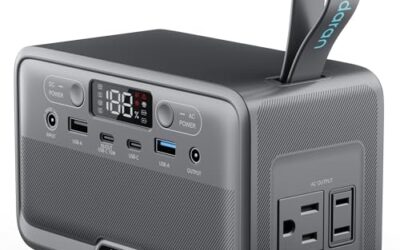
Daran Portable Power Station 89.6Wh LiFePO4 Battery 100W(200W Peak) Solar Power Bank, Portable Charger Small Generator with AC Outlets & PD Fast Charging for Home/Laptop/Camping(Solar Panel Optional)
Included for '7 Best Value Portable Power Station (October 2026)' as a representative consumer electronics in this roundup; selection reflects the product set returned for this topic.
View on Amazon
BLUETTI Elite 30 V2 Portable Power Station 288Wh 600W LFP Solar Generator | Power Lifting 1500W, 10ms UPS, 45 Min 0-80% Fast Charging, Emergency Backup Power for Blackout, Camping, Outage and Road Trip
Included for '7 Best Value Portable Power Station (October 2026)' as a representative consumer electronics in this roundup; selection reflects the product set returned for this topic.
View on Amazon
ABOK Ark3600 Portable Power Station with 400W Solar Panel,2000W Solar Input | 3840Wh LiFePO4 Battery, Expandable to 11520Wh,15 Outlets, 3600W Solar Generator for Home Backup, Hurricane, Camping, RV
Included for '7 Best Value Portable Power Station (October 2026)' as a representative consumer electronics in this roundup; selection reflects the product set returned for this topic.
View on Amazon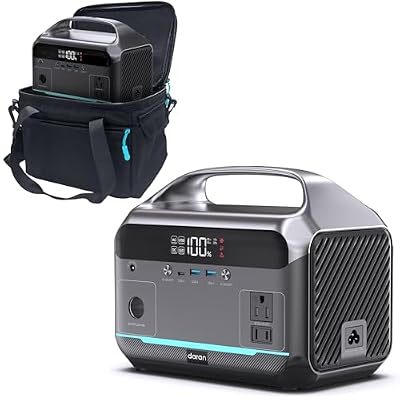
DARAN Portable Power Station, 288Wh LiFePO4 Battery, 350W (600W Peak) Power Bank with AC Outlet, Mini Solar Generator 7-Port Design, 2.1Hrs Fast Charing for Emergency, Hurricane (Solar Optional)
Included for '7 Best Value Portable Power Station (October 2026)' as a representative consumer electronics in this roundup; selection reflects the product set returned for this topic.
View on Amazon
Portable Power Station 300W MARBERO 237Wh Camping Solar Generator Backup Lithium Battery with Pure Sine Wave 110V AC Outlet, USB C, USB A, DC for Outdoors Camping CPAP Home Blackout Emergency
Included for '7 Best Value Portable Power Station (October 2026)' as a representative consumer electronics in this roundup; selection reflects the product set returned for this topic.
View on Amazon
Portable Power Station 200W, FF Flashfish 40800mAh Backup Power Battery Pack With 110V AC Outlets/2 DC Ports/3 USB Ports, Solar Generator Power Supply For Home Backup, Power Outages, and Camping
Included for '7 Best Value Portable Power Station (October 2026)' as a representative consumer electronics in this roundup; selection reflects the product set returned for this topic.
View on Amazon
Portable Power Station 192Wh Outdoor Generator with AC Outlet 100W(200W Surge) Power Bank for Home Backup Outdoor Emergency RV Van Hunting, 3.9lb, Music Player&LED Lights LiFePO4 Battery
Included for '7 Best Value Portable Power Station (October 2026)' as a representative consumer electronics in this roundup; selection reflects the product set returned for this topic.
View on Amazon| Product | Best for | Key spec from the title |
|---|---|---|
| Daran 89.6Wh | Entry-level charging on a tight budget | 89.6Wh LiFePO4, 100W (200W peak) |
| BLUETTI Elite 30 V2 | Feature-rich compact backup | 288Wh, 600W, 10ms UPS, 45 min 0-80% |
| ABOK Ark3600 | Room to grow into home backup | 3840Wh, 3600W, expandable to 11520Wh |
| Daran 288Wh | Most ports for a compact size | 288Wh LiFePO4, 350W (600W peak), 7 ports |
| MARBERO 237Wh | Camping with pure sine wave output | 237Wh, 300W, pure sine wave |
| Flashfish 200W | Simple outlet mix for small gear | 200W, 40800mAh, AC, DC, and USB ports |
| 192Wh generic station | Light pack for vans and hunting | 192Wh, 100W (200W surge), 3.9lb |
How to Choose
Compare watt-hours per budget, not sticker totals
Divide whatever you are willing to spend by the listed watt-hours. Small units under about 100Wh cost less overall but give the least energy per unit of spend. The 190Wh to 300Wh class is usually the sweet spot for single-person camping and short outages. Above 1000Wh, spend per watt-hour often improves, but only if you will actually use that capacity.
Do the continuous-watts check
Value disappears when the output rating is too low for your gear. A 100W unit suits laptops and phone chargers only. Moving to 300W to 600W lets you run a small fan, a projector, or a mini fridge. Titles that list a peak or surge figure are describing a brief spike, so judge by the first, continuous number. If an appliance label says 400W, a 300W station is the wrong choice at any budget.
Read the battery chemistry and port mix
LiFePO4 or LFP cells usually endure more charge cycles than older lithium formulas, which stretches the working life and improves long-term value. Next look for pure sine wave AC output if you plan to run sensitive electronics, plus a USB-C port for fast phone and laptop charging. Be careful with mAh figures: a battery pack rated in milliamp-hours is not directly comparable to a watt-hour rating without knowing the voltage.
Where cheap models cut corners
Budget units tend to trim the warranty clarity, the number of outlets, the fast-charging speed, and the UPS-style switchover. Skip claims of “solar generator” if the listing does not state solar input. And a battery station never replaces a fuel generator for heavy loads; if you do go with gas, run it only outdoors and well away from windows because of carbon monoxide.
The 7 Best Options
Daran 89.6Wh
The smallest battery in the group, it lists 89.6Wh with a LiFePO4 battery, 100W continuous with a 200W peak, and PD fast charging alongside AC outlets. It is a charger with a wall socket more than a power source for appliances. In value terms, it earns its place when the goal is keeping phones, earbuds, a camera, and a laptop alive during a short trip or a brief outage, and when spending more would simply buy capacity that never gets used.
- Strength: LiFePO4 cells at a very small capacity.
- Strength: PD fast charging suits phones and laptops.
- Trade-off: 89.6Wh gives very little reserve for anything beyond charging.
Skip it if you want to power a light or a fan for an evening; the capacity runs out too quickly to justify it. Buyers who only charge devices on a trip will find it enough.
BLUETTI Elite 30 V2
With 288Wh, 600W, and LFP cells, this one carries the most features among the compact entries. The title adds Power Lifting up to 1500W, 10ms UPS, and a 45-minute 0-80 percent charge, which is the sort of detail that improves day-to-day usefulness. For a buyer who wants one purchase to serve as a camping battery, a desk-side bridge, and an emergency shelf item, that spread of capabilities is where a mid-range spend can pay back over several years.
- Strength: 600W continuous output is high for 288Wh.
- Strength: UPS switching and fast charging both appear in the title.
- Trade-off: a well-known name usually means a higher entry budget than the generic options.
Skip it if your needs are phone charging only; its strengths are wasted on light use, and a smaller, simpler unit would deliver the same result with less outlay.
ABOK Ark3600
This is the outlier: 3840Wh of LiFePO4 storage, 3600W output, 15 outlets, a 400W solar panel in the bundle, and expansion up to 11520Wh. The title also lists 2000W of solar input. At this scale the question changes from how long a trip lasts to how much of a home or cabin you want to keep running, so the value case depends on planned use, not on a bargain hunt.
- Strength: capacity and output far above every other unit here.
- Strength: expandable design means you can start small and grow.
- Trade-off: the size and weight implied by 3840Wh make it a home or cabin station, not a carry-in-hand unit.
Skip it if you want something to toss in a backpack or you will never need more than a few hundred watt-hours. Overbuying capacity is a quiet way to lose value. Anyone without a clear heavy-load plan will likely do better with a mid-size station.
Daran 288Wh
The listing pairs 288Wh of LiFePO4 storage with 350W continuous and 600W peak, plus a 7-port design and a 2.1-hour fast charge claim. It aims at people who want more connections for the same capacity class. In practice that suits a campsite where a phone, a headlamp, a camera battery, and a tablet all need power at the same time, since every device can plug in directly without a separate hub.
- Strength: seven ports serve several devices at once.
- Strength: 350W continuous output beats the 300W rated alternatives.
- Trade-off: no UPS switchover claim is visible in the title.
Skip it if you need seamless desktop backup; pick a unit that names a UPS response time. Shoppers who want a long track record behind the purchase may also prefer a larger, better-known brand.
MARBERO 237Wh
This model lists 300W, 237Wh, a pure sine wave 110V AC outlet, USB-C, USB-A, and DC outputs, built around a lithium backup battery for camping. Pure sine wave output is the detail that matters for sensitive gear. Camera chargers, CPAP-style electronics, and some laptop adapters are happier with that cleaner waveform, so the label adds practical value beyond the raw numbers.
- Strength: pure sine wave output is stated outright.
- Strength: mixed USB-C, USB-A, and DC outputs cover most camp gear.
- Trade-off: the title does not name LiFePO4, so cycle life is unclear.
Skip it if long-term durability is the top priority and you want LiFePO4 confirmed on the label. Anyone planning daily cycling, for example in a van, should look for a unit that spells out its cell type.
Flashfish 200W
The title states 200W, 40800mAh, 110V AC outlets, 2 DC ports, and 3 USB ports. It is a plain, port-rich power supply for small gear, but 40800mAh cannot be compared to watt-hours without knowing the cell voltage. Treat it as a plain, entry-level power supply and verify the real capacity before relying on it for anything demanding.
- Strength: a balanced outlet mix covers phones, lights, and small DC gear.
- Strength: 200W is enough for a laptop and a fan together.
- Trade-off: a milliamp-hour rating hides the true energy figure.
Skip it if you plan to run multiple appliances for hours; confirm the real watt-hour capacity first. A listing that leads with mAh instead of Wh makes honest comparison harder, which is a value cost of its own.
192Wh generic station
A brandless listing with 192Wh, 100W (200W surge), an AC outlet, and a 3.9lb weight, positioned for vans, hunting, and emergencies. Its appeal is simplicity: a light box with an AC outlet that stays in a truck or a go-bag until it is needed, with no extras to learn or maintain.
- Strength: 3.9lb weight is easy to pack.
- Strength: 192Wh gives a decent buffer for phones and a laptop.
- Trade-off: no brand or battery chemistry in the visible title.
Skip it if support, a clear warranty, or LiFePO4 confirmation influence your decision. Brandless listings can change between batches, so the exact unit received may differ from what you expect, and returns or support may be harder to arrange than with a named maker.
Which One Fits Your Situation
You have a small budget and only charge devices
Start with the Daran 89.6Wh. Its PD fast charging and AC outlet cover phones, tablets, and a laptop top-up for the least outlay.
You want one compact unit that does more
The BLUETTI Elite 30 V2 offers the broadest feature list in the title, from 600W to 10ms UPS, which is where a mid-range purchase tends to justify itself.
You plan to build toward home backup
The ABOK Ark3600 is the only expandable system in the list, with room up to 11520Wh, so it suits a cabin or home plan better than the small units.
You camp and want clean power for gadgets
Choose the MARBERO 237Wh for its stated pure sine wave output, or the Daran 288Wh if you want more ports and 350W of continuous output.
Common Mistakes
- Judging value by the lowest total spend instead of watt-hours and watts per unit of budget.
- Reading mAh as if it were watt-hours and overestimating runtime.
- Buying a huge expandable system when a compact station would cover the actual loads.
- Counting on peak wattage to start an appliance that needs a higher continuous rating.
- Using a gas generator indoors to save money, which brings the risk of carbon monoxide.
Related guides
Frequently Asked Questions
What capacity gives the best value for most people?
For single-person camping and short outages, roughly 190Wh to 300Wh covers most needs. Going bigger helps only if you run appliances for hours or want a home backup.
Is a generic brandless unit a smart value buy?
It can be, but the trade-off is missing detail: battery chemistry, warranty, and support may be unclear. Check the full listing before committing.
Does solar input matter at the budget tier?
It matters if you plan to recharge off-grid. Look for a stated solar input rating, since a “solar generator” label alone does not promise a panel or a fast solar charge.
Is a battery station safer than a gas generator?
For indoor use, yes, because a battery station has no exhaust. A gas generator must stay outdoors, away from doors and windows, because of carbon monoxide.



Write Your Review
No reviews yet. Be the first to share your experience!