
🛒 Best Price Today on Amazon
Prime members get fast, free shipping on everything above, plus member-only deals. New members get a 30-day free trial — cancel anytime.
- Top Pick: PlugSaf 50FT 30 Amp Generator Cord 4 Prong, 10AWG 125/250V 3750/7500W STW | NEMA L14-30P/L14-30R Twist Lock Generator Extension Cord 50 Foot, Heavy Duty 30 Amp Generator Cord Durable, Yellow ETL Listed
- Best Value: PlugSaf 50 FT 10 Gauge Outdoor Extension Cord with Multiple Outlets Yellow | Light Indicator, Flexible 3 Outlet Weatherproof Heavy Duty Extension Cord Waterproof 50 Feet, 15A 1875W SJTW, ETL Listed
- Premium Choice: Champion Power Equipment 25-Foot 30-Amp 125-Volt Fan-Style Generator Extension Cord (L5-30P to three 5-15R)
When the grid goes down and a portable generator is the only thing keeping a CPAP machine, oxygen concentrator, nebulizer or refrigerated medication running, the cord between the generator and the device suddenly matters a great deal. A thin, worn or undersized cord can overheat or drop voltage, and a plug that does not match the generator outlet is simply useless. Choosing among the best extension cords for generators powering medical equipment starts with matching the plug type, amperage and length to your setup.
This guide is for households that depend on powered health devices and want a cord that fits a generator with a 30-amp outlet or a standard 15- or 20-amp receptacle. We compare eight cords using only what their listings state: gauge, amperage, connector type, length and listed certifications. This is general buying information, not medical or electrical advice; confirm your device’s power needs with its manufacturer or your care provider, and have a licensed electrician set up any permanent connection.
Quick Picks
As an Amazon Associate we earn from qualifying purchases at no extra cost to you.




| Product | Best for | Key feature from the title |
|---|---|---|
| PlugSaf 50FT 30 Amp L14-30 | Distance from a generator with a 30-amp outlet | 10AWG, 125/250V, twist lock, ETL listed |
| PlugSaf 50FT 10 Gauge Multi-Outlet | Powering several small devices from one run | 3 outlets, light indicator, 15A 1875W |
| Champion 25-Foot 30-Amp Fan-Style (L5-30P) | Splitting 125-volt output to three outlets | L5-30P to three 5-15R |
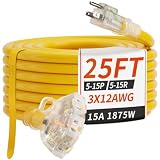
| PlugSaf 25FT 12 Gauge Multi-Outlet | Short runs on a standard outlet | 12AWG, 3 outlet, indoor/outdoor |
| Vockjour 50FT L14-30 Cord | Camper or home emergency hookups | 4 prong, STW 10AWG, ETL listed |
| POWGRN 100 FT 12/3 | Very long distances | 100FT, cold-resistant, 15Amp 1875W |
| PlugSaf 25FT 30 Amp L14-30 | Short, heavy-duty generator connection | 25 foot, 10AWG, twist lock |
| Champion 25-Foot 125/250V Fan-Style (L14-30P) | Turning one outlet into four | L14-30P to four 5-20R |
How to Choose
Match the plug to the generator outlet first
A generator cord is not interchangeable with a household extension cord. Many portable generators have a locking 30-amp outlet, and the cord must use the same configuration: L14-30 for a four-prong 125/250 volt outlet or L5-30 for a three-prong 125 volt outlet. Read the receptacle label on your generator before you shop. The listings here show L14-30P to L14-30R straight cords, an L5-30P to three 5-15R fan-out and an L14-30P to four 5-20R fan-out, and the wrong choice means an adapter or a return.
Check gauge, amperage and wattage together
Thicker wire carries more current over a distance. The 10AWG cords here list 30 amps and either 3750 watts at 125 volts or 7500 watts at 125/250 volts. The 12AWG and 12/3 cords list 15 amps and 1875 watts. Add up the running watts of everything you plan to power, and leave headroom, since some medical devices draw more at start-up. Your device label or manual lists its draw, and its maker or your provider can say how it behaves on generator power.
Choose length with voltage drop in mind
Longer cords lose more voltage, so use the shortest cord that keeps the generator a safe distance outdoors and away from windows and doors. A generator should never run indoors or in a garage, which makes length a safety question and not just a convenience. If the layout forces a 100-foot run, a thicker gauge matters more than it would at 25 feet.
Look at jacket type, certifications and weather rating
Letters such as STW and SJTW describe jacket types intended for outdoor use, and “ETL listed” indicates testing by an outside laboratory according to the listing. Bright yellow or green jackets are easier to spot in the dark. Where budget cords cut corners is often in connector quality and strain relief, so look for molded ends and read what the listing says about the plug build. Ignore vague words like heavy duty unless a gauge and amp rating back them up.
The 8 Best Options
PlugSaf 50FT 30 Amp Generator Cord (L14-30)
A fifty-foot four-prong twist-lock cord for generators with an L14-30 outlet. The title lists 10AWG wire, 125/250V, 3750/7500W, STW jacket and ETL listing in yellow.
- Strength: 10AWG and 30 amps give high capacity over fifty feet.
- Strength: Twist-lock ends help keep the connection from pulling loose.
- Trade-off: Ends in an L14-30 receptacle, so you need a matching distribution box or adapter.
Skip it if your generator or transfer inlet is not L14-30.
PlugSaf 50 FT 10 Gauge Outdoor Extension Cord with Multiple Outlets
This fifty-foot cord has three outlets at the end and a light indicator. The title lists 10 gauge, 15A, 1875W, SJTW weatherproof jacket and ETL listing.
- Strength: Three outlets let you power several small devices from one point.
- Strength: Light indicator shows when the cord is energized.
- Trade-off: Total capacity is capped at 15 amps.
Skip it if you have a 30-amp generator outlet you want to use fully.
Champion 25-Foot 30-Amp Fan-Style Generator Cord (L5-30P)
Champion’s fan-style cord takes one 125-volt L5-30 generator outlet and splits it into three standard household receptacles over 25 feet.
- Strength: Turns one outlet into three 5-15R sockets.
- Strength: Brand from a generator maker, matched to its outlet style.
- Trade-off: The title does not list wire gauge or certifications.
Skip it if you want documented gauge and listing details in the title.
PlugSaf 25 FT 12 Gauge Heavy Duty Outdoor Extension Cord
A shorter cord with three outlets and a light indicator, listed as 12AWG, 15A, 1875W, SJTW and ETL listed for indoor or outdoor use.
- Strength: Compact 25-foot length is easy to store.
- Strength: Weatherproof jacket and light indicator.
- Trade-off: 12 gauge and 15 amps limit what it can carry.
Skip it if your generator is more than 25 feet from where devices sit.
Vockjour 50FT L14-30P/L14-30R Generator Extension Cord
The Vockjour is another fifty-foot four-prong cord. The title states STW jacket, 10AWG, 125V, 3750W and ETL listed, and names camper and home emergency use.
- Strength: 10AWG and a 30 amp rating on a fifty-foot length.
- Strength: Yellow jacket is easy to see outdoors.
- Trade-off: Lists 125V and 3750W, lower than a 125/250V rating.
Skip it if you need a 7500W figure on the label.
POWGRN 100 FT 12/3 Outdoor Extension Cord
The POWGRN is the long-distance option. The title lists 100 feet, 12/3 wire, a cold-resistant flexible jacket, 15 amps, 1875W, SJTW and ETL listing.
- Strength: Hundred-foot reach for awkward layouts.
- Strength: Cold-resistant jacket stays flexible in winter.
- Trade-off: Long runs of 12 gauge lose more voltage under load.
Skip it if you plan to run anything that draws close to the 15 amp limit.
PlugSaf 25FT 30 Amp Generator Cord (L14-30, Green)
The short sibling of the fifty-foot model, in green. It lists 10AWG, 125/250V, 3750/7500W, STW jacket and ETL listing in a 25-foot length.
- Strength: Shorter run keeps voltage drop low.
- Strength: Twist lock holds the connection.
- Trade-off: May not reach if the generator must sit far from the house.
Skip it if you need more than 25 feet.
Champion 25-Foot 30-Amp 125/250-Volt Fan-Style Generator Cord (L14-30P)
This cord takes an L14-30 outlet and splits it into four 5-20R receptacles, which suits a household that needs to run several 20-amp-capable appliances at once.
- Strength: Four outlets from one generator connection.
- Strength: Four-prong 125/250V compatibility.
- Trade-off: No gauge or listing details in the title.
Skip it if your generator uses a three-prong L5-30 outlet.
Which One Fits Your Situation
Your generator has an L14-30 outlet and sits in the yard
The PlugSaf 50FT 30 Amp cord or the Vockjour 50FT cord gives you a heavy gauge, fifty-foot connection. Add a matching power inlet or distribution setup installed by a qualified electrician instead of improvising.
You run several small devices from one spot
The Champion 25-Foot 125/250V fan-style cord gives four outlets from an L14-30 generator output. For generators with L5-30 outlets, the Champion L5-30P version gives three outlets.
The generator must sit far from the house
The POWGRN 100 FT suits long layouts with light loads, while the PlugSaf 50 FT 10 Gauge handles middle distances with more outlets. If your device draws near the limit, check with its maker before running 100 feet of 12 gauge cord.
Common Mistakes
- Buying a cord before reading the receptacle label on the generator.
- Using a thin household extension cord for a high-draw device.
- Running the generator in a garage or near a window to shorten the cord.
- Adding up device watts without allowing for start-up surges.
- Daisy-chaining several cords instead of buying one properly sized cord.
Related guides
- Extension Cords For Generators Powering Medical Equipment
- Pure Sine Wave Inverters For Cpap Machines
- Solar Generators For Home Medical Devices
Frequently Asked Questions
Is a 12 gauge cord enough for medical equipment?
It depends on the device’s draw and the cord length. Many small devices draw little, but check the device label and ask its manufacturer or your provider, especially for life-supporting equipment, and keep a backup plan ready in 2026 and beyond.
What does L14-30 mean?
It is a NEMA locking configuration for a four-prong, 30-amp, 125/250 volt connection. The plug twists to lock into the outlet, which helps keep it from pulling out.
Should I plug a generator into a wall outlet?
No. Plugging a generator into a household outlet can send power back onto the lines and is dangerous. Use a properly installed transfer switch or inlet, set up by a licensed electrician.
How do I know the total power my devices need?
Find the wattage or amperage on each device label and add them. Allow extra capacity for start-up surges, and confirm details with the manufacturer or a medical professional.
Top picks from this guide
 PlugSafPlugSaf 50FT 30 Amp Generator Cord 4 Prong, 10AWG 125/250V…
 Champion Power EquipmentChampion Power Equipment 25-Foot 30-Amp 125/250-Volt Fan-Style Generator Extension Cord…
 POWGRNPOWGRN 100 FT 12/3 Outdoor Extension Cord Waterproof, Heavy Duty…
 Champion Power EquipmentChampion Power Equipment 25-Foot 30-Amp 125-Volt Fan-Style Generator Extension Cord…


Write Your Review
No reviews yet. Be the first to share your experience!