
🛒 Best Price Today on Amazon
Prime members get fast, free shipping on everything above, plus member-only deals. New members get a 30-day free trial — cancel anytime.
You can run a CPAP from a car or RV by using either a DC power cord made for your specific device or a pure sine wave inverter that turns 12V battery power into household AC. The right route depends on your machine, whether you use a heated humidifier, and how many nights you need to cover without starting the engine.
This guide walks through the options in plain language, from the simplest cigarette-socket cable to a battery-based setup for long trips. It is general information, not medical or electrical advice. Your machine’s manual, your equipment supplier, and your clinician are the final word on what power sources suit your therapy, and a qualified installer should handle any permanent wiring in an RV.
Start With What Your Machine Actually Needs
Before you buy a cable or converter, find the power information printed on your CPAP’s power supply and in the manual. You are looking for the input and output voltage, the current or wattage, and whether the heated humidifier uses the same supply as the blower.
The humidifier is usually the biggest power consumer in a travel setup. Many people turn off the heater, use the machine without it, or switch to a lower setting when running from a battery, but that is a comfort and therapy decision to discuss with your provider. Knowing the numbers lets you size cables, fuses, and batteries correctly instead of guessing.
It also helps to check whether your machine has a built-in battery option or a travel mode. Some models are designed for lower power travel use, and your supplier can explain what accessories are compatible. Write the figures on a card and keep it in your travel kit, because you will need them again whenever you add a battery or swap a cable.
Three Ways to Run a CPAP From 12V
Option 1: A dedicated DC cord
Many machine makers sell a DC adapter cord that plugs into a vehicle accessory socket and feeds the device directly. This avoids the conversion losses of an inverter, so it is often the most efficient way to run a CPAP overnight. Only use the cord intended for your exact model, since voltage and connector mismatches can damage equipment. The trade-off is that vehicle accessory sockets are generally fused for modest current, and many switch off with the ignition, so overnight use usually means a separate battery instead of the car’s starting battery.
Option 2: A pure sine wave inverter
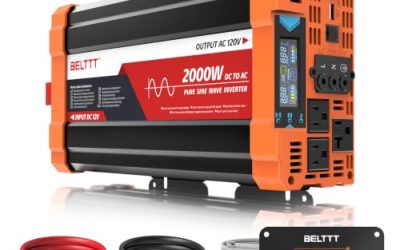
An inverter creates AC from battery power so you can plug in the standard wall adapter. Choose pure sine wave output, which closely resembles household power, and size it above the device load with some headroom. Connect it according to its instructions, and use proper cable gauge and an inline fuse for anything beyond the smallest units. Most RV owners put the inverter close to the battery so the thick DC cables stay short, then run an ordinary AC extension to the bedside. Look for a model that lists low-voltage shutdown, so it stops before it flattens the battery.
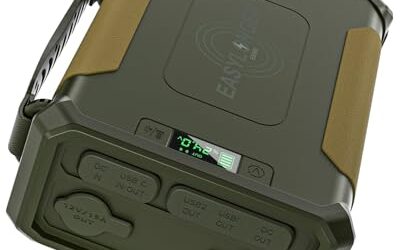
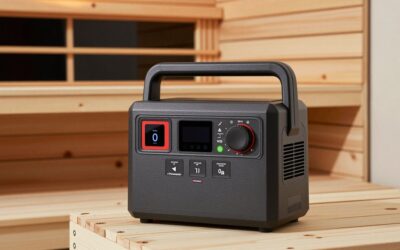
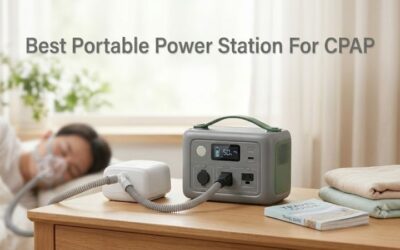
Option 3: A portable power station or battery pack
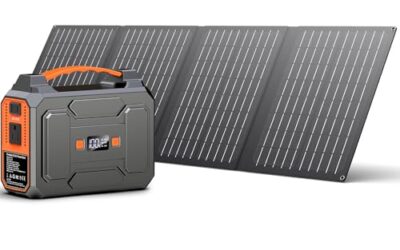
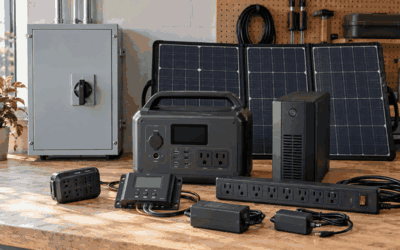
Some travelers skip vehicle wiring and use a separate battery with AC outlets or a DC output. The convenience is that the battery sits next to the bed and can be recharged from the vehicle, a wall outlet, or solar. Capacity matters most here, so compare the battery’s watt-hour rating against your nightly consumption, with a safety margin. Lithium units tend to deliver their stated capacity more consistently, while lead-acid types lose usable capacity when cold, which matters in a camper parked in winter.
Comparing the Options at a Glance
| Approach | Efficiency | Setup effort | Best for | Main caution |
|---|---|---|---|---|
| Dedicated DC cord to accessory socket | Generally high | Low | Short trips, car travel | Socket limits and engine-off battery drain |
| Inverter wired to a deep-cycle battery | Moderate, some conversion loss | Medium to high | RVs and vans, long stays | Fuse, cable gauge, and battery capacity |
| Portable battery with outlets | Moderate | Low | Camping, outages, flexible placement | Capacity runs out; recharge plan needed |
| Vehicle accessory socket with inverter | Moderate | Low | Only very small loads | Fuse rating of the socket |
Sizing the Battery for a Full Night
The math is simple even if the numbers are not. Multiply the device’s power draw in watts by the hours you sleep, then add a margin for inverter losses and a battery you do not want to drain completely. That gives you watt-hours needed per night, which you can compare against the capacity stated on the battery label.
Account for the humidifier and extras
If the heated humidifier is on, include it. Add anything else on the same circuit, such as a phone charger or a small fan, so you do not discover a shortfall at three in the morning. An example: if a device with the humidifier on draws a certain number of watts and you sleep eight hours, multiply those two numbers, then add roughly a fifth on top for inverter losses and reserve.
Respect battery type and depth of discharge
Starter batteries are built to crank an engine, not to be drained repeatedly. Deep-cycle and lithium batteries tolerate longer discharge, but each type has its own recommended usable range. Follow the maker’s guidance rather than draining to empty.
Plan the recharge
A vehicle alternator, solar panel, or campground hookup can top the battery up each day. If you rely on driving to recharge, estimate how many hours of driving a night’s use requires. Having a second power plan for bad weather is worth the effort, whether that is a campground hookup, a spare battery, or a stop at a motel with a wall outlet.
Before You Start Checklist
- Read the CPAP manual for approved power sources and any DC cord options
- Note the device wattage, with and without the heated humidifier
- Decide between a DC cord, an inverter, or a battery pack
- Confirm the inverter uses pure sine wave output if you choose that route
- Use an inline fuse and correctly sized cable for any wired connection
- Calculate nightly watt-hours and add a safety margin
- Keep power gear dry, ventilated, and away from bedding
- Do a full test night at home before a long trip
Safety and Setup Habits That Matter
Keep inverters and batteries in a ventilated spot, away from pillows, blankets, and moisture. Heat builds up around power electronics, and fabric blocks airflow. Route cables so nobody trips over them in the dark and so they cannot be pinched in a door or slide.
Check connectors before each trip for loose pins, frayed insulation, or heat marks. If your setup uses a vehicle outlet, find out its fuse rating in the vehicle manual, because many accessory sockets are meant for low loads. When in doubt, ask a mobile electrician or RV technician to review a permanent installation.
Also think about what happens if power drops mid-night. A low-battery alarm on the inverter, a battery monitor near the bed, or a simple routine of checking voltage before sleep can prevent a surprise shutdown. Keep a backup plan, such as a fully charged spare battery or a nearby wall outlet option, and discuss with your provider what to do if therapy is interrupted during travel.
Related guides
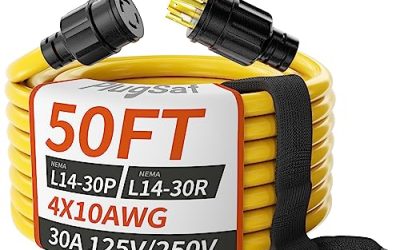
- Extension Cords For Generators Powering Medical Equipment
- Pure Sine Wave Inverters For Cpap Machines
- Solar Generators For Home Medical Devices
Frequently Asked Questions
Can I plug my CPAP straight into a cigarette lighter?
Only if you use a DC cord designed for your model. Plugging the standard wall adapter into a vehicle socket will not work without an inverter, and mismatched cords can damage the device.
Do I need a pure sine wave inverter?
It is the common choice for sensitive electronics because the output is similar to household power. Check your manual, since the maker may state which supplies are acceptable.
Will it drain my car battery overnight?
It can, especially with the heated humidifier on and the engine off. A separate deep-cycle battery or portable power pack is a safer plan than relying on the starting battery.
Should I test the setup before traveling?
Yes. Run a full night at home in 2026 or any year, with the same cables and settings you will use on the road, so any shortfall shows up while you can still fix it. Ask your provider if you notice any change in your therapy.
Write Your Review
No reviews yet. Be the first to share your experience!