
🛒 Best Price Today on Amazon
Prime members get fast, free shipping on everything above, plus member-only deals. New members get a 30-day free trial — cancel anytime.
A stockingfoot wader is only half a system. The neoprene bootie at the end of each leg needs a real boot over it, one that grips slick rock, sheds water fast, and supports your ankles against the current. The wrong boot makes every crossing feel tense; the right one disappears under you and lets you fish.
The five boots below are all separate boots made to wear over stockingfoot waders. They cover the main sole choices an angler faces: classic felt, lugged rubber, a stud-ready sole, and a fully interchangeable sole system.
As an Amazon Associate, we earn from qualifying purchases.
Quick answer
For mixed freestone rivers, the Korkers Buckskin is the most flexible pick here: its soles unclip and swap, and the studded set is in the box. Felt loyalists get the FROGG TOGGS Hellbender, sold in felt or cleated versions. Anglers who hike far to the water should look at the Foxelli, the lightest boot in this group. The Caddis Northern Guide suits anyone wanting a roomy fit with a sole ready for stud kits, and the BASSDASH IMMERSE is the breathable mesh option.
FROGG TOGGS Hellbender Wading Boot

The Hellbender is the traditional choice in this lineup: a sturdy boot sold in two sole versions, felt or cleated, so you can match it to your home water. The felt version grips algae-covered rock the way felt always has, with a broad contact patch that keys into slime and smooth stone. The cleated version trades some slick-rock bite for better manners on muddy banks.
The upper mixes mesh and PVC with reinforced toe and heel caps, so it shrugs off the bumps that come with climbing over boulders. A padded ankle collar keeps the boot comfortable through a long day, and the draining design lets water escape instead of pooling around your booties. Speed laces pull the boot snug quickly. Pick felt for slick freestone rivers where rules allow it, and the cleated sole anywhere felt is restricted.
Specs
- Sole: felt or cleated rubber, two versions
- Upper: mesh and PVC with reinforced toe and heel caps
- Collar: padded ankle collar
- Drainage: water-draining upper design
- Closure: speed laces
Foxelli Wading Boots

Foxelli built this boot for anglers who cover ground. At about 1.3 lb per boot, it weighs far less than a traditional wading boot, and it walks like a light hiking boot on the trail in. The microfiber and plaid nylon upper flexes naturally, the EVA midsole cushions rough approaches, and the removable OrthoLite insole adds lasting comfort.
Underneath, a rubber outsole with a tread pattern that channels water and debris gives steady footing on gravel, sand and mud. It will not match felt on polished, algae-slick boulders, but for mixed banks and moderate rivers it is a calm, predictable platform. Mesh drain ports let water out quickly, and a rear pull loop makes the boot easy to pull on over thick booties.
Specs
- Weight: about 1.3 lb per boot
- Upper: microfiber and breathable plaid nylon
- Midsole: EVA with removable OrthoLite insole
- Sole: rubber with water-channeling tread
- Drainage: mesh drain ports
Caddis Northern Guide Wading Shoe
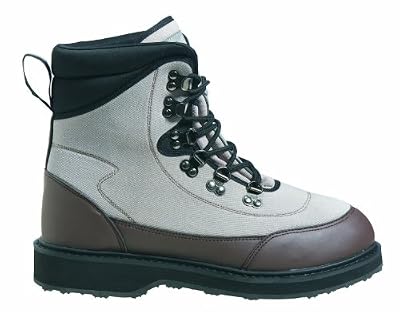
Caddis cuts the Northern Guide generously, and that is the point. The shoe is oversized on purpose, shaped to swallow a thick neoprene bootie without crushing your toes, which makes it a kind pick for wide feet and for anyone layering heavy socks in cold water.
The EcoSmart II sole is the headline feature. It is a grippy rubber compound with a clutch-style tread that holds on gravel, mud and mossy edges, and it accepts Caddis stud kits, so you can add metal bite for the slickest stretches of your home river and take the studs back out on a boat deck. The rest is practical: a rugged nylon upper in two-tone gray and brown, a reinforced toe cap, saltwater-proof eyelets, and speed laces.
Specs
- Sole: EcoSmart II rubber, accepts Caddis stud kits
- Upper: nylon, gray and brown two-tone
- Eyelets: saltwater-proof
- Closure: speed lace system
- Fit: oversized cut for neoprene booties
- Model: CA8903S
Korkers Buckskin Wading Boot with Kling-On and Studded Kling-On Outsoles

The Buckskin solves the felt-versus-rubber argument by refusing to pick a side. Its OmniTrax system lets the whole outsole unclip from the boot, and this version ships with two sets: a plain Kling-On sticky rubber sole for banks, boats and felt-restricted water, and a Studded Kling-On sole with metal studs embedded for polished rock and pushy current. Swapping takes a minute at the tailgate, with no tools.
That makes the Buckskin the natural choice for travelling anglers and anyone whose local rules change from river to river: studs in the morning, plain rubber before stepping into a drift boat. The boot itself is an 8-inch lace-up built from hydrophobic materials that hold less water and dry faster than leather, with internal drainage channels.
Specs
- Sole system: OmniTrax interchangeable soles
- Included soles: Kling-On and Studded Kling-On
- Height: 8 inches
- Upper: hydrophobic synthetic with internal drainage
- Closure: traditional laces with web loops
- Color: Chocolate Chip/Black
BASSDASH IMMERSE Men’s Wading Boots

The IMMERSE is the warm-weather, walk-far option from BASSDASH. A breathable mesh shell, backed with PVC and PU panels in the wear zones, keeps the boot light and quick to dry, and drainage holes along the sides let water escape with every step. At roughly 43.7 ounces per pair, it feels light without feeling flimsy.
The rubber outsole uses an exclusive cleat pattern with deep, widely spaced lugs aimed at slippery riverbeds and soft banks, and the open spacing sheds mud instead of packing it in. A shock-absorbing EVA midsole takes the sting out of cobble and broken rock, while reinforced toe and heel caps guard against hard knocks. Webbing straps front and back make the boots easy to pull on.
Specs
- Upper: breathable mesh with PVC and PU panels
- Sole: rubber with deep cleat pattern
- Midsole: shock-absorbing EVA
- Weight: about 43.7 oz per pair
- Protection: reinforced rubber toe and heel caps
- Drainage: side drainage holes
How to choose
Begin with the sole, because it decides where the boot works. Felt gives the surest grip on smooth, algae-covered rock, which is why it remains the default on slick freestone rivers. The trade-off is that felt holds water, dries slowly, and can carry invasive species between watersheds, so several states and famous fisheries now restrict or ban it. Clean and fully dry felt boots between trips, and check local rules before you travel.
Rubber soles are the all-rounders. They hike better, work on mud, grass and boat decks, and face no felt-style restrictions, but plain rubber can skate on polished, slimy boulders. Studs close that gap: screw-in kits, factory-studded soles and interchangeable studded sets add metal bite where rubber lets go. If your river mixes slick rock with long bank walks, a stud-ready rubber sole is the wisest purchase.
Fit matters as much as traction. Boots are worn over neoprene booties, so most anglers go one full size up from their street shoe; thick socks or 5 mm booties may need more room still. Look for a padded collar, a firm heel counter and enough ankle height for the depth you wade.
FAQ
Do I need to size up for stockingfoot waders?
Almost always, yes. A neoprene bootie adds roughly a full size of bulk, so order one size above your street shoe. With heavy socks or thick 5 mm booties, roomier models help.
Are felt soles banned where I fish?
Rules vary widely. Some states and national parks restrict felt because it can move invasive species between rivers, while many waters still allow it. Check the regulations for each fishery before you travel, and clean and dry your boots between trips.
Can I add studs to any rubber sole?
No. The sole needs enough thickness and the right compound to hold a screw-in stud without tearing. Boots sold as stud-ready, like the Caddis Northern Guide, are made to take maker stud kits. Factory-studded soles, like the Korkers set above, skip the fitting work.
How should I dry and store wading boots?
Rinse off grit and river slime, open the laces wide, remove the insoles, and air the boots in a shaded, ventilated spot, away from radiators and strong sun. Fully dry boots resist odour and mildew.
Verdict
For most anglers, the Korkers Buckskin is the easiest boot to recommend: one purchase covers felt-restricted water, boat decks and studded grip for slick rock. Felt traditionalists get honest value from the Hellbender, hikers get the featherweight Foxelli, wide feet point to the Caddis Northern Guide, and warm-weather waders will like the breathable BASSDASH IMMERSE. Match the sole to your river and size for your booties.
Write Your Review
No reviews yet. Be the first to share your experience!