
🛒 Best Price Today on Amazon
Prime members get fast, free shipping on everything above, plus member-only deals. New members get a 30-day free trial — cancel anytime.
For most tailgaters, the WEN 56235i is the best all-round quiet pick: it is light enough to lift out of a trunk by yourself, its 1,900-watt running rating covers a TV, lights, a blender and phone charging, and the manufacturer rates it around 51 dBA at light load. If you only need to charge phones and run a few lights, the AIVOLT 1600W is lighter still. If your lot party includes an electric griddle, a mini fridge and a projector, step up to the 4,000-watt class. “Quiet inverter” here means an engine that throttles with demand and outputs clean, stable power, which makes it far less intrusive than an open-frame construction generator.
Every model below is a portable gasoline inverter, so the same safety rules apply to all of them: run outdoors only, far from tents, windows and vehicle cabins.

AIVOLT 1600W Super Quiet Inverter Generator 28lbs Portable for Camping | Gas Generator. 1260W Running. Super Quiet 57dBA. <3% THD Pure Sine Wave. CO Auto-Shutoff. 8hr ECO Mode. EPA Compliant.
Included for '6 Best Quiet Inverter Generators for Tailgating (October 2026) Expert Picks' as a relevant option in this category; details come from the product listing.
View on Amazon
WEN Super Quiet 2350-Watt Portable Inverter Generator with Fuel Shut Off, Gasoline Power, Ultra Lightweight (56235i), Black
Included for '6 Best Quiet Inverter Generators for Tailgating (October 2026) Expert Picks' because the listing specifies Gasoline Power and Ultra Lightweight (56235i), details this guide uses to compare options.
View on Amazon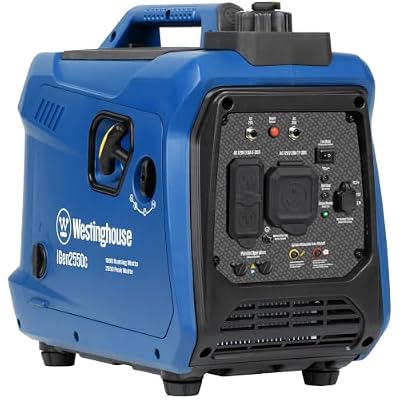
Westinghouse 2550 Peak Watt Super Quiet & Lightweight Portable Inverter Generator, RV Ready 30A Outlet, Gas Powered, CO Sensor, Parallel Capable, Long Run Time,Blue
Included for '6 Best Quiet Inverter Generators for Tailgating (October 2026) Expert Picks' because the listing specifies RV Ready 30A Outlet and Gas Powered, details this guide uses to compare options.
View on Amazon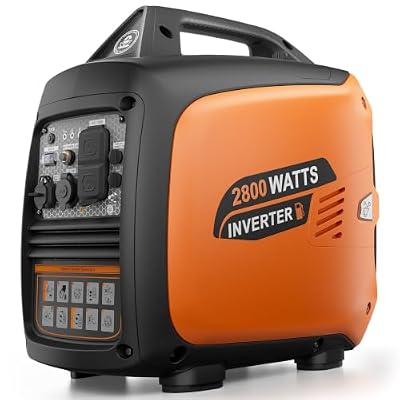
2800W Portable Inverter Generator, Quiet Gas Generator for Camping, RVs, Home Backup and Outdoor Activities, EPA Compliant
Included for '6 Best Quiet Inverter Generators for Tailgating (October 2026) Expert Picks' because the listing specifies Quiet Gas Generator for Camping and RVs, details this guide uses to compare options.
View on Amazon
WEN Quiet and Lightweight 4800-Watt RV-Ready Portable Inverter Generator with Fuel Shut Off (56477i)
Included for '6 Best Quiet Inverter Generators for Tailgating (October 2026) Expert Picks' as a relevant option in this category; details come from the product listing.
View on Amazon
A-iPower 4300W Gas Propane Inverter Generator, Lightweight, Fuel Sense | Dual Fuel RV Ready w/ Integrated Mobility kit for Backup Home Use, Tailgating & Camping, EPA&CARB Compliant, CO Sensor
Included for '6 Best Quiet Inverter Generators for Tailgating (October 2026) Expert Picks' because the listing specifies Lightweight and Fuel Sense, details this guide uses to compare options.
View on AmazonQuick List
- AIVOLT 1600W – best for the lightest carry and phone, light and speaker duty
- WEN 56235i – best for an all-round quiet tailgate setup
- Westinghouse 2550 Peak Watt (RV ready) – best for a built-in carbon monoxide sensor and a 30-amp outlet
- 2800W Portable Inverter Generator – best for shoppers who want a mid-size output class and will confirm details on the listing
- WEN 56477i 4800-Watt – best for big setups with cooking appliances and a camper
- A-iPower 4300W Dual Fuel – best for a propane option and a built-in mobility kit
Which One Is Right for You?
| If you… | Choose |
|---|---|
| Want a CO sensor and a 30-amp RV outlet in a 2,000-watt-class unit | Westinghouse 2550 Peak Watt |
| Carry gear by hand and only run lights, a speaker and chargers | AIVOLT 1600W |
| Want the quietest rated figure and a proven size for tailgates | WEN 56235i |
| Plan to run an electric griddle or a small air conditioner | WEN 56477i 4800-Watt |
| Want to burn propane as well as gasoline | A-iPower 4300W Dual Fuel |
| Are comfortable verifying specs on an unbranded listing | 2800W Portable Inverter Generator |
Start with your total watts, not the headline number. Add up everything you plan to run at the same time, then pick a unit whose running rating is at least 20 percent higher. If you will move the generator across gravel or grass, weight and a wheel kit matter nearly as much as decibels.
All 6 Picks in Detail
1. AIVOLT 1600W – Best for the lightest carry and small loads
As an Amazon Associate we earn from qualifying purchases at no extra cost to you.
This is the pick for tailgaters who want to haul as little as possible. The listing describes a 1,600-watt starting rating with 1,260 watts running, a weight of 28 pounds, a 57 dBA noise figure and pure sine wave output under 3 percent total harmonic distortion. That is enough for phone and tablet charging, LED string lights, a Bluetooth speaker, a laptop and a small fan, and it can usually handle a compact TV plus a game console. It will not run a full-size griddle or a microwave comfortably.
- 1,600 watts starting, 1,260 watts running (per listing)
- About 28 pounds, light enough to carry by the handle
- 57 dBA stated noise level; confirm the load and distance used for the rating
- Pure sine wave, under 3 percent THD, suitable for sensitive electronics
- Gasoline engine; confirm tank size and runtime on the listing
Pros
- Lightest unit in this list, easy to load and unload
- Clean power for phones, laptops and cameras
- Low enough output to stay on the quiet side at light load
Cons
- 1,260 running watts leaves little room for heating appliances
- Stated noise is higher than the WEN 56235i’s rated light-load figure
Best use: a tailgate where the load is a speaker, a few lights, phones and perhaps a laptop, and where you would rather carry a bag of chairs than a heavy engine. Pair it with a short heavy-gauge cord and set it downwind.
Compared with the WEN 56235i, you give up roughly 640 watts of running capacity in exchange for about 11 pounds less to carry.
2. WEN 56235i – Best for an all-round quiet tailgate

The WEN 56235i is the safe middle of the road. It is rated at 2,350 starting watts and 1,900 running watts, and the manufacturer’s manual lists a 79 cc four-stroke engine, a weight of about 39 pounds and a 1.06-gallon tank. The sound rating of roughly 51 dBA is quoted at a quarter load, so expect it to rise when you load the unit harder. It suits a group of friends who want a TV, lights, a slow cooker and charging, without paying for capacity they will not use.
- 2,350 starting watts, 1,900 running watts (manufacturer rating)
- Around 51 dBA at 25 percent load; louder under heavier load
- About 39 pounds, with a fuel shut-off feature named in the listing
- 120-volt outlets plus 12-volt DC and USB ports (confirm layout on the listing)
- Low-oil and overload protection
Pros
- Very quiet at light load for its size class
- Fuel shut-off makes storage and transport tidier
- Can be paralleled with a second unit using a separate kit
Cons
- No built-in carbon monoxide sensor named in the listing
- Small tank means more refilling during an all-day event
Best use: the classic stadium-lot setup with a TV, a pop-up canopy light, a slow cooker and a phone-charging station. Keep the load under about 1,700 watts and it will idle quietly most of the afternoon.
Next to the Westinghouse 2550, it offers the same rough output class but lacks the RV-style 30-amp outlet and CO sensor.
3. Westinghouse 2550 Peak Watt – Best for a CO sensor and an RV outlet
This Westinghouse is the choice if you tailgate from an RV or want an extra layer of safety. The listing names a 2,550 peak-watt rating, a 30-amp RV-ready outlet, a carbon monoxide sensor, parallel capability and long run time. The manufacturer’s information for the iGen2550c family lists 1,900 running watts, noise as low as 52 dBA and a weight in the low 40-pound range, though its own pages are not fully consistent on weight, so confirm on the product page. A CO sensor does not make indoor or enclosed use safe, but it adds a shutdown if gas builds up around the unit.
- 2,550 peak watts; manufacturer lists about 1,900 running watts
- 30-amp RV outlet, a standard household outlet and USB ports
- Built-in CO sensor with automatic shutdown
- Around 52 dBA at light load as stated by the manufacturer
- Parallel capable (cable sold separately; confirm)
Pros
- Safety sensor and low-oil shutdown add protection
- RV-ready outlet connects directly to a camper
- Long runtime at light load
Cons
- Output is in the same class as other 2,000-watt units
- Weight figures vary between sources
Best use: RV owners who tailgate from the camper. The 30-amp outlet allows a direct connection with the right adapter, and the sensor adds protection if the unit is parked near the rig. Remember that sensor-equipped units still need open air all around.
Choose it over the WEN 56235i if the sensor and 30-amp outlet matter to you; choose the WEN if you want the lowest rated noise.
4. 2800W Portable Inverter Generator – Best for a mid-size class with details to confirm
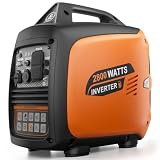
The listing for this unit names no brand in its title. It describes a 2,800-watt portable inverter generator for camping, RVs, home backup and outdoor activities, labeled quiet and EPA compliant. Because the title does not state running watts, decibels, weight, tank size or outlet types, treat every one of those as something to confirm on the product page before you buy. A 2,800-watt peak rating typically means running output somewhere around 2,200 to 2,500 watts, which would cover a griddle or a small space heater only one at a time, but that is an estimate for the class, not a stated number.
- 2,800 watts, stated as the headline rating; running watts to confirm
- Gasoline inverter design marketed as quiet
- EPA compliant according to the listing
- Use cases named: camping, RVs, home backup, outdoor events
- Noise, weight, tank and outlets: confirm on listing
Pros
- Larger output class than the 2,000-watt units
- EPA compliance is a useful baseline for use at organized events
Cons
- Key specifications are not in the listing name
- Brand and support details need checking before purchase
Best use: buyers who have already confirmed the missing numbers and want more headroom than the 2,000-watt class. Write down the running watts, noise rating, weight and warranty terms from the full listing before comparing it with the branded models.
It sits between the Westinghouse 2550 and the A-iPower 4300W in capacity, so check noise and weight against both.
5. WEN 56477i 4800-Watt – Best for large setups and cooking

When the tailgate becomes a full camp kitchen, this WEN gives you headroom. The manufacturer lists 4,800 starting watts and 4,000 running watts from a 224 cc four-stroke engine, with a noise rating of about 62 dB at quarter load and a 1.9-gallon tank. Its weight is around 72 pounds according to most sources, so it comes with wheels and a telescoping handle. It is RV ready, which means you can plug in a camper, and it can power an electric griddle, a refrigerator and lights at once.
- 4,800 starting watts, 4,000 running watts (manufacturer rating)
- About 62 dB at 25 percent load; 70 dB on one retailer page
- Roughly 72 pounds, wheels and handle included
- 1.9-gallon tank, about 7 hours at half load per manufacturer
- RV-ready 30-amp outlet; fuel shut-off per listing
Pros
- Enough capacity for cooking appliances plus a refrigerator
- Longer runtime per tank than the small units
- Wheel kit makes moving it manageable
Cons
- Loudest rating in the list and too heavy to lift casually
- Overkill for lights and phone charging
Best use: a full tailgate camp with a griddle, a refrigerator, lighting and a camper plugged in at the same time. Plan on two people for lifting into a truck bed, or use a ramp.
Compared with the A-iPower 4300W, it offers about 500 more running watts but no propane option.
6. A-iPower 4300W Dual Fuel – Best for propane flexibility

This model runs on gasoline or propane, which is useful at a tailgate where you may already be carrying a grill cylinder. The manufacturer’s information lists 4,300 starting and 3,450 running watts on gasoline, and about 3,900 starting and 3,100 running watts on propane. The listing names a fuel sensor, an RV-ready outlet and an integrated mobility kit. Published noise figures run from about 62 to 63 dB, and the net weight is around 55 pounds, so confirm both on the listing.
- 4,300 starting watts, 3,450 running watts on gasoline
- Propane output lower than gasoline output, as is normal for dual fuel
- Integrated mobility kit with handle and wheels
- CO sensor named by the manufacturer
- About 62 to 63 dB stated; confirm measurement conditions
Pros
- Propane burns cleaner and stores longer than gasoline
- Lighter than the WEN 56477i despite the large output class
- Good fit for RV hookups
Cons
- Noise is far above the small 2,000-watt units
- Propane operation requires a correct hose and regulator
Best use: groups that already bring propane for a grill and want a second fuel option for longer events, or for emergency home backup after the season ends. Store propane cylinders upright and outdoors, away from the generator exhaust.
It trades a little output for lower weight and fuel flexibility when set beside the WEN 56477i.
Specs Compared
| Model | Starting watts | Running watts | Stated noise | Weight | Fuel | CO sensor |
|---|---|---|---|---|---|---|
| AIVOLT 1600W | 1,600 | 1,260 | 57 dBA | 28 lb | Gasoline | Confirm on listing |
| WEN 56235i | 2,350 | 1,900 | About 51 dBA at 25% load | About 39 lb | Gasoline | Confirm on listing |
| Westinghouse 2550 Peak Watt | 2,550 | About 1,900 (manufacturer) | As low as 52 dBA | Confirm on listing | Gasoline | Yes |
| 2800W Portable Inverter | 2,800 | Confirm on listing | Confirm on listing | Confirm on listing | Gasoline | Confirm on listing |
| WEN 56477i 4800-Watt | 4,800 | 4,000 | About 62 dB at 25% load | About 72 lb | Gasoline | Confirm on listing |
| A-iPower 4300W Dual Fuel | 4,300 | 3,450 (gas) | About 62 to 63 dB | About 55 lb | Gasoline or propane | Yes |
How We Chose These
We built this list from the six models in the catalog set for this topic and compared them using manufacturer product pages, manual excerpts and the specification fields on each retailer listing. We looked at five criteria: stated noise level and the load it applies to, running watts compared with starting watts, weight and handling, built-in safety features such as carbon monoxide shutdown and low-oil protection, and how clearly the listing describes what you get. Where sources disagreed, we say so and tell you to confirm on the product page. All figures come from manufacturer and retailer sources rather than our own measurements, and we flag them when sources disagree.
What to Look For
Rated watts versus real watts
Generators carry two numbers. Starting (or surge) watts are available for a few seconds, which helps motors and compressors start. Running watts are what the unit can supply continuously. A “2,350-watt” generator that runs at 1,900 watts has about 19 percent less continuous capacity than the headline suggests, and manufacturers usually advise staying near 90 percent of the running rating. Always shop by running watts.
Worked example: a 55-inch TV (about 100 watts), two LED light strings (about 50 watts), a Bluetooth speaker (about 30 watts), a phone and tablet charger (about 40 watts) and a slow cooker (about 200 watts) add up to roughly 420 watts. A 1,260-watt unit handles that easily. Add a 1,500-watt griddle and the total passes 1,900, which is why the 4,000-watt class exists.
Noise ratings and how to read them
A decibel figure means little without a load and a distance. Many brands quote noise at 25 percent load at 23 feet; a few quote closer to the unit. Every 10 dB increase is perceived as roughly twice as loud, so the gap between 51 dBA and 62 dB is audible, not trivial. Inverter generators throttle the engine to the load, so a light load keeps them near the low end of the range. Place the unit on grass or a mat rather than on a hard surface, point the exhaust away from people, and use a longer extension cord to move it further away.
Safety: carbon monoxide, fuel and ventilation
Carbon monoxide is odorless and deadly. Run a generator only outdoors, at least 20 feet from tents, open windows and vehicle doors, and never inside a garage, trailer or pickup bed cap. A built-in CO sensor is a backup, not permission to relax distance rules. Add a battery-powered CO alarm in any camper or tent used nearby. Let the engine cool before refueling, store fuel in an approved container away from ignition sources, and keep the unit dry. Use a heavy-gauge outdoor extension cord rated for the load, and a GFCI adapter if the outlets are not protected.
Weight, fuel and venue rules
Lot rules differ: some stadiums ban generators outright, others allow only low-noise inverters or require a quiet rating. Check the venue policy before you go. For weight, anything under 45 pounds is easy to lift into a trunk solo; above 60 pounds, wheels and a second person become practical necessities. For runtime, divide the tank by the burn rate at your expected load: a 1-gallon tank that runs about 7 hours at half load lasts about 10 hours at quarter load. Dual fuel adds propane as a backup if you run short of gasoline.
Power quality and outlets
Inverter generators convert engine output to direct current and back to alternating current, which gives a stable sine wave. Total harmonic distortion under about 3 percent is generally considered safe for laptops, TVs and chargers. Check the outlet mix as well: a 30-amp RV outlet is useful for campers, but a tailgate often needs two standard 120-volt outlets and a few USB ports more than anything else. Avoid daisy-chaining power strips, and use a surge-protected strip only on the load side of the generator, never between the generator and a house or camper circuit.
Break-in, maintenance and storage. New engines usually need an initial oil change after the first few hours, and most manuals ask for a break-in period at moderate load. After that, check the oil before every outing, clean or replace the air filter as the manual directs, and inspect the spark plug each season. If a generator will sit for more than a month, either run the carburetor dry using the fuel shut-off or add a fuel stabilizer to the tank. Ethanol blends above 10 percent can damage small engines, so use fresh fuel labeled for outdoor power equipment. Run the unit for a few minutes every month during the off-season so seals stay supple and the battery of any electric-start model stays charged.
Questions
How many watts do I need for a tailgate?
For lights, speakers, phone charging and a TV, 1,000 to 1,500 running watts is enough. Add cooking appliances, a refrigerator or a camper and you should plan for 3,000 to 4,000 running watts.
Are inverter generators really quieter than standard ones?
Yes, in most cases. They adjust engine speed to the load and have closed enclosures, so they often sit 10 to 20 dB below open-frame models at the same output. They also produce cleaner power for electronics.
Can I run an electric griddle or microwave?
Only if your running watts exceed the appliance total. A typical griddle draws around 1,500 watts, so the 1,260-watt unit cannot run it, while the 1,900-watt class can manage it alone with little else on.
How far should the generator be from my tent or vehicle?
Keep it at least 20 feet away with the exhaust pointed away from people and openings. Distance also reduces the noise your neighbors hear.
Is dual fuel worth it for tailgating?
It can be, if you already carry propane. Output is usually lower on propane, but the fuel stores well and burns cleaner. If you only run short events, plain gasoline is simpler.
Can I connect two generators together?
Models described as parallel capable can be linked with a separate parallel kit to roughly double output. Confirm that the kit is compatible with your exact model before you buy.
Update History
- October 20, 2026 – Initial publication; product set drawn from current catalog listings.
- Check the product page for current specifications and availability before buying.
Sources
- Manufacturer product pages and manuals for WEN, Westinghouse and A-iPower
- Retailer listing titles and specification fields for each model
- General generator safety guidance from US consumer safety agencies on carbon monoxide and outdoor placement


Write Your Review
No reviews yet. Be the first to share your experience!