
🛒 Best Price Today on Amazon
Prime members get fast, free shipping on everything above, plus member-only deals. New members get a 30-day free trial — cancel anytime.
An outboard tilted up for the drive home hangs off the back of the boat like a heavy lever. Every bump, pothole and railroad crossing multiplies that load, and the transom, the tilt tube and the hydraulic rams absorb all of it. Over a season of rough roads, that repeated flexing can work gelcoat loose around the mounting bolts.
A transom saver solves the problem with simple geometry. One end cradles the lower unit, the other lands on the trailer frame or a rear roller, and the motor’s weight travels down the bar into the trailer instead of prying on the boat. The five supports below cover the main styles, from classic adjustable bars to a shock-absorbing bracket and a rubber support that also locks the steering straight.
As an Amazon Associate, we earn from qualifying purchases.
Quick answer
For most trailered boats, the Attwood SP-400-RB is the safe default, with a padded composite head and both trailer-end mounts in the box. The Extreme Max 3001.1068 reaches further and handles motors up to 150 hp, while the Panther 55-1900 suits trailers whose crossmember sits deep under the hull. The Five Oceans FO3465 adds a built-in shock absorber, and the SeaSierra support bar with steering stops fits single-ram motors that wander side to side.
Attwood SP-400-RB Adjustable Transom Saver

The SP-400-RB is the design most boaters picture when they hear the term transom saver. A composite head with soft pads cups the lower unit without chewing up the paint, and the tube adjusts from 23 to 35 inches, covering the setback on most trailered fishing and runabout rigs.
What makes it easy to live with is the pair of trailer-end fittings in the box. Use the roller mount when your trailer has a rear roller in the right spot, or bolt on the trailer mount bracket when it does not. Attwood positions this model for outboards up to 100 hp, which covers most mid-size fishing motors, so if your rig falls in that range, this is the bar to fit first.
Specs
- Adjustment range: 23 to 35 inches
- Head: composite head with pads that cradle the lower unit
- Trailer end: roller mount and trailer mount brackets both included
- Motor fit: outboards up to 100 hp
- Model: SP-400-RB
Extreme Max 3001.1068 Angled Transom Saver

Some trailers put a long gap between the lower unit and anything solid enough to lean on. The 3001.1068 answers with an angled tube adjusting from 28 to 59 inches, the widest span here, built for outboards up to 150 hp.
Two mounting options come with it. The over-the-roller cradle drops onto a rear roller for a tool-free fit, and the bolt-on bracket handles trailers with no roller in reach. The alloy steel build keeps the bar stiff under a heavy four-stroke, so the motor rides quietly instead of bouncing against the pads. Pick this one when a standard bar comes up short, or when your motor sits at the upper end of mid-range horsepower.
Specs
- Adjustment range: 28 to 59 inches, angled design
- Motor fit: outboards up to 150 hp
- Trailer end: over-the-roller cradle or bolt-on mounting bracket
- Construction: alloy steel
- Item weight: 9.2 lb
Marinetech Panther 55-1900 Adjustable Transom Saver

The Panther 55-1900 is built for the awkward trailers, the ones where the rear crossmember hides well under the hull and a short bar simply cannot reach it. Its adjustment runs from 28 to 59 inches, so it bridges that recessed gap and still lands the load on steel rather than on the boat.
The telescoping tube locks at the length your rig needs, which means one support can serve a small skiff on weekdays and a bigger center console on weekends. If you have measured your setup and found every standard saver too short, this is the bar designed around your problem.
Specs
- Adjustment range: 28 to 59 inches
- Reach: suits crossmembers set deep under the hull
- Design: telescoping adjustable support bar
- Fit: universal outboard support
- Model: 55-1900
Five Oceans FO3465 Transom Saver with Shock Absorber

A rigid bar transfers the motor’s weight, but it also passes along every sharp jolt. The FO3465 builds a shock absorber into the support, so washboard gravel and expansion joints lose their sting before the force reaches the transom.
The bracket adjusts from 20.5 to 31 inches, a shorter span that suits compact trailers and smaller boats, and Five Oceans builds it for most outboards up to 200 hp. That pairing of short reach with a high horsepower ceiling suits powerful motors on tight, single-axle trailers, and the roller mount end keeps fitting simple. If your home lake sits at the end of a rough road, the cushioning earns its place on every trip.
Specs
- Adjustment range: 20.5 to 31 inches
- Motor fit: most outboards up to 200 hp
- Cushioning: built-in shock absorber
- Trailer end: roller mount
- Model: FO3465
SeaSierra Transom Saver with Motor Steering Stops
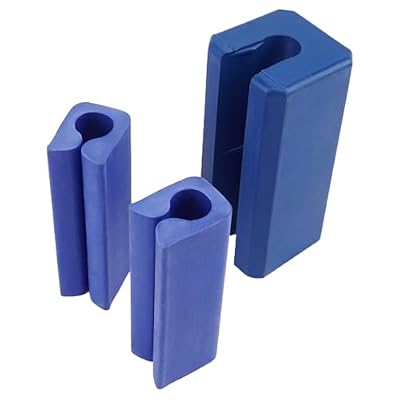
Not every support needs to reach the trailer. The SeaSierra bar works at the motor itself, bracing a tilted outboard on single-ram trim and tilt systems from Yamaha, Mercury, Johnson, Evinrude and Suzuki, and it adds a second job most bars ignore: steering stop stabilizers that keep the motor from flopping side to side behind you.
The body is marine-grade high-density EPDM rubber, so there is no paint to chip, no metal to corrode, and nothing to scratch the motor’s finish. At just over a pound, it drops into a locker on the water and pops back on at the ramp in seconds. Choose this style when your trailer leaves no good landing spot for a long bar, or when side sway bothers you as much as bounce.
Specs
- Material: marine-grade high-density EPDM rubber
- Fit: single-ram trim and tilt systems on major outboard brands
- Included: support bar plus two steering stop stabilizers
- Item weight: 1.3 lb
- Model: 2148+2150
How to choose
Measure before you order. With the motor tilted to its trailering position, measure from the lower unit’s contact point down to the trailer frame or rear roller where the bar will land. That distance, plus a little adjustment room either way, is the range you need.
Match the mount to your trailer. An over-the-roller cradle is the fastest fit when a roller sits in line with the motor. A bolt-on frame bracket works anywhere but takes a few minutes with a drill. Rubber supports that brace at the motor skip the trailer entirely, which suits trailers with no crossmember in reach.
Match the support to the motor. Respect the horsepower guidance on each model, and think about weight as much as the number on the cowling, since a modern four-stroke carries more mass than an older two-stroke of the same output. Add steering stops or clips if your motor swings while towing.
Finally, look at the contact points. Padded heads and rubber V-blocks protect the lower unit’s finish, and a firm, snug fit matters more than raw strength. A bar that rattles is a bar that is not carrying its share of the load.
FAQ
Do I really need a transom saver for short trips?
Even short drives cross rough pavement, and the leverage of a tilted motor does not shrink with distance. A support takes a minute to fit and removes the prying load from the transom on every trip, long or short.
Will a transom saver fit my trailer?
Most likely, yes. Adjustable bars cover a wide span of setbacks, and the choice between a roller cradle and a bolt-on bracket handles most frame layouts. If no landing spot exists, a rubber support that braces at the motor avoids the trailer altogether.
How tight should the motor sit against the support?
Snug and silent. Lower the motor onto the head or block until the weight settles in, then confirm the bar cannot rattle or walk sideways. Steering stops help here, since a centered motor keeps even pressure on the pads.
Can I leave the support on at the ramp?
Fit it after the boat is loaded and the motor is tilted, and remove it before launching. It lives in the tow vehicle or a locker while you are on the water, which keeps it free of slime and grit.
Verdict
For a typical fishing boat on a typical trailer, the Attwood SP-400-RB covers the need with the least fuss. Long setbacks point to the Extreme Max 3001.1068 or the Panther 55-1900, rough roads argue for the cushioned Five Oceans FO3465, and single-ram motors that swing in transit are best served by the SeaSierra support. Fit any of them snugly, and the transom stops doing a job the trailer should do.
Write Your Review
No reviews yet. Be the first to share your experience!