
Our Short List of 3
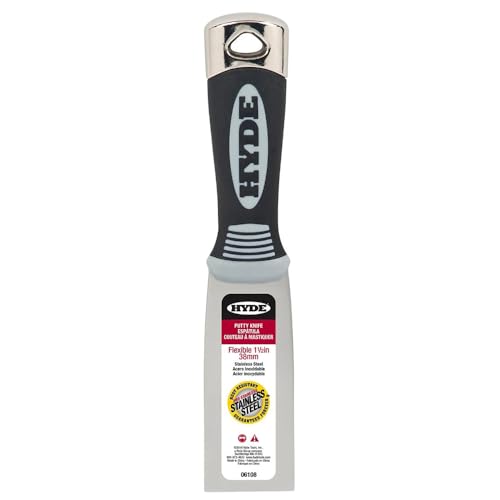
- Blade width: 1.5 inch
- Blade material: stainless steel, double hollow ground
- Blade flex: flexible
- Handle: cushion grip with metal setting end

- Blade width: 1.5 inch
- Blade material: stainless steel, tempered with satin finish
- Blade flex: stiff
- Handle: solvent resistant grip with metal setting end

- Contents: 5-in-1 painter tool plus 1.5 inch full flex putty knife
- Blade material: carbon steel
- Handles: ProGrip soft grip, color coded
- Functions: scrape, spread, clean rollers, open cans, pull nails
All 5 Picks at a Glance
| Product | Specs | Action |
|---|---|---|
| 1. Hyde Tools 06108 Pro Stainless Flexible Putty Knife, 1.5 Inch |
| Check price on Amazon |
| 2. Hyde Tools 06158 Pro Stainless Stiff Putty Knife, 1.5 Inch |
| Check price on Amazon |
| 3. Warner ProGrip Painter Combo Pack, 5-in-1 Tool and Flex Knife |
| Check price on Amazon |
 4. Warner 3-Pack Plastic Putty Knives, 1.5, 3 and 6 Inch |
| Check price on Amazon |
 5. Goldblatt G05248 Classic Style Taping Knife, 8 Inch |
| Check price on Amazon |
🛒 Best Price Today on Amazon
Prime members get fast, free shipping on everything above, plus member-only deals. New members get a 30-day free trial — cancel anytime.
- Quick answer
- 1. Hyde Tools 06108 Pro Stainless Flexible Putty Knife, 1.5 Inch
- 2. Hyde Tools 06158 Pro Stainless Stiff Putty Knife, 1.5 Inch
- 3. Warner ProGrip Painter Combo Pack, 5-in-1 Tool and Flex Knife
- 4. Warner 3-Pack Plastic Putty Knives, 1.5, 3 and 6 Inch
- 5. Goldblatt G05248 Classic Style Taping Knife, 8 Inch
- How to choose
- FAQ
- Verdict
A putty knife looks simple, yet the wrong blade turns a ten minute patch into a lumpy wall needing heavy sanding. Flex, width and blade material decide how cleanly compound goes on and how firmly a scraper bites into old paint. This guide covers five tools: a flexible stainless knife for small fills, a stiff stainless scraper, a painter combo pack with a 5-in-1 tool, a plastic set for messy jobs, and a wide taping knife for seams.
As an Amazon Associate, we earn from qualifying purchases.
Quick answer
For most small repairs, pick the Hyde 06108 flexible stainless knife: its 1.5 inch blade presses spackle into nail holes and wipes the fill flush in one pass. For scraping failed paint and digging out loose filler, the stiff Hyde 06158 does the heavy work. The Warner combo pack adds a 5-in-1 painter tool, the Warner plastic 3-pack suits sticky one-time jobs, and the Goldblatt 8 inch taping knife feathers compound over seams.
1. Hyde Tools 06108 Pro Stainless Flexible Putty Knife, 1.5 Inch
- Blade width: 1.5 inch
- Blade material: stainless steel, double hollow ground
- Blade flex: flexible
- Handle: cushion grip with metal setting end
The 06108 is the classic small repair knife done properly. Its stainless blade is double hollow ground, giving a controlled flex point along the blade rather than a bend at the handle. Press the edge into a nail hole and the blade loads filler in; drop to a low angle and the same spring wipes the surface clean, leaving a thin film that sands fast.
Stainless matters because patching compound is wet. The blade rinses clean under a tap and will not leave rust marks in white filler or pale paint. The cushion grip stays comfortable through a room of dings, and the metal end cap taps a proud nail head below the surface before you fill over it. This is a spreading tool, not a pry bar: driven into hardened filler it bows away instead of lifting, so pair it with a stiff blade for removal work.
2. Hyde Tools 06158 Pro Stainless Stiff Putty Knife, 1.5 Inch
- Blade width: 1.5 inch
- Blade material: stainless steel, tempered with satin finish
- Blade flex: stiff
- Handle: solvent resistant grip with metal setting end
The 06158 shares the same handle family as the flexible knife above but its blade barely bends, and that stiffness is the whole point. A stiff blade turns hand pressure into scraping force, so it lifts peeling paint, pops loose filler out of cracks and opens a hairline crack into a shallow V that fresh compound can grip.
The stainless blade shrugs off the gritty mess scraping creates, and its ground edge can be honed on a fine stone when it dulls. The metal end cap takes light hammer taps when you use the edge like a small chisel along trim.
Work safely: wear eye protection, because old paint chips fly without warning. In older homes, test old paint for lead before dry scraping; if lead is present, follow local rules for wet methods and containment instead of making dry dust.
3. Warner ProGrip Painter Combo Pack, 5-in-1 Tool and Flex Knife
- Contents: 5-in-1 painter tool plus 1.5 inch full flex putty knife
- Blade material: carbon steel
- Handles: ProGrip soft grip, color coded
- Functions: scrape, spread, clean rollers, open cans, pull nails
This pack pairs two tools that cover most of a paint day. The 5-in-1 tool (model 10971A) combines a stiff scraper edge, a curved cutout for cleaning rollers, a pointed tip for opening cracks, a can opener edge and a nail pulling slot. The second tool is a 1.5 inch full flex putty knife (model 90127A) for spreading filler and smoothing small patches.
A multi-tool earns its place by cutting trips back to the toolbox. It opens the compound tub, scrapes the loose flake you missed, pulls the picture nail, then cleans the roller. The flex knife handles the filling with a thinner, more forgiving edge.
Both tools use ProGrip handles that stay secure in dusty hands. The blades are carbon steel, which holds a keen edge but needs a dry cloth or a wipe of oil after washing, since carbon steel rusts if put away wet.
4. Warner 3-Pack Plastic Putty Knives, 1.5, 3 and 6 Inch
- Contents: 3 knives, 1.5 inch, 3 inch and 6 inch
- Blade material: flexible plastic
- Blade flex: flexible
- Use cases: filler, adhesive, caulk and delicate surfaces
Plastic knives fill a different niche: sticky materials, delicate surfaces, or jobs where the tool may be thrown away after one use. This set includes 1.5, 3 and 6 inch flexible plastic blades for spreading filler, adhesive, caulk or wood putty without gouging soft surfaces.
The flex is forgiving on fresh drywall paper, tubs, tile and trim where a steel edge might leave marks. Cleanup is the other win: dried compound pops off the smooth blade, and a knife coated in tar or glue is no great loss.
The trade-off is edge life and scraping power. Plastic will not lift failed paint or dig out hard filler, and the edge rounds over with heavy use. Treat this set as an expendable companion to your metal knives.
5. Goldblatt G05248 Classic Style Taping Knife, 8 Inch
- Blade width: 8 inch
- Blade material: blue steel with aluminum spine
- Handle: contoured wood
- Blade flex: flexible, tapered for corner work
Once a patch grows past a few inches, a narrow knife leaves ridges that telegraph through paint. The Goldblatt G05248 spreads compound 8 inches at a time, so seams and wide skim patches feather out in fewer passes. Its contoured wood handle mounts on an aluminum spine that keeps the long blade straight.
The blade is blue steel, a tempered carbon steel finishers like for its smooth, springy feel as it lays compound down. It rusts quickly if stored damp, so wash it, dry it fully and wipe it with light oil before putting it away.
An 8 inch knife is too wide for nail holes and clumsy inside corners, but for bedding tape and second coats on seams it leaves the flattest surface of any tool here, which means less sanding and less dust.
How to choose
Pick flex for spreading and stiff for removal. A flexible blade bends against the wall and feathers compound thin; a stiff blade pushes through failed paint and old filler. Most households need one of each in a narrow width before anything wide.
Match width to the repair. A 1.5 inch knife suits nail holes and screw pops. A 3 inch blade covers dents and short cracks. Move to 6 to 8 inches for taped seams and skim patches, where a wide pass leaves fewer ridges.
Choose blade material with cleanup in mind. Stainless resists rust from wet compound and can sit in a water bucket during a job. Carbon and blue steel hold a fine edge but rust fast, so dry and oil them after washing. Clean any blade before compound dries on it: dried filler under the edge leaves lines in the next patch and dulls the edge when scraped off.
FAQ
Can one putty knife do every job?
One flexible 1.5 inch knife covers most small fills, but it will not scrape well and it is too narrow for seams. A flexible knife, a stiff scraper and one wide taping knife cover nearly every repair.
How do I keep a carbon steel blade from rusting?
Wash off all compound, dry the blade fully, then wipe on a thin film of light oil before storing. Never leave a carbon or blue steel blade soaking in a water bucket overnight.
When should I use a plastic knife instead of metal?
Use plastic on delicate surfaces, with sticky adhesives or caulk, or when the tool may be discarded after a messy job. Keep metal for scraping and for crisp feathering of compound.
How wide should a taping knife be for seams?
An 8 inch knife beds tape and applies the second coat well for most home seams. Wider blades feather final coats flatter, but they are harder to control on small patches and corners.
Verdict
Buy the Hyde 06108 first for small, neat fills, and add the stiff Hyde 06158 when old paint or failed filler has to come off. The Warner combo pack is the handy pick for paint days, the plastic set covers messy one-off jobs, and the Goldblatt 8 inch taping knife finishes seams and wide patches.





Write Your Review
No reviews yet. Be the first to share your experience!