
Our Short List of 3
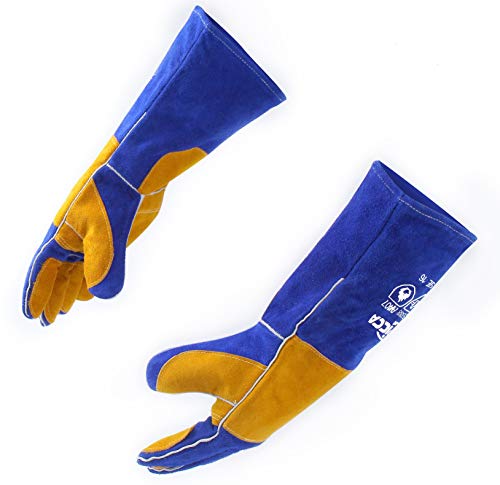
- Material: fireproof cowhide leather shell
- Layers: leather outer, aluminum foil insulation, cotton liner
- Length: 14 in gauntlet
- Heat limit: 662°F per maker

- Material: cowhide split leather
- Length: 16 in gauntlet
- Heat limit: 662°F per maker
- Lining: soft cotton

- Material: 1.2 mm cowhide leather
- Length: 14 in, with 5.7 in sleeve section
- Heat limit: 482°F per maker
- Stitching: Kevlar thread, double palm stitching
All 4 Picks at a Glance
| Product | Specs | Action |
|---|---|---|
| 1. RAPICCA Fireplace Gloves, 14 Inch, Black |
| Check price on Amazon |
| 2. INNO STAGE Welding Gloves, 16 Inches Cowhide |
| Check price on Amazon |
| 4. TOPDC Welding Gloves, 14 Inches |
| Check price on Amazon |
 5. Grill Heat Aid BBQ Grill Gloves |
| Check price on Amazon |
🛒 Best Price Today on Amazon
Prime members get fast, free shipping on everything above, plus member-only deals. New members get a 30-day free trial — cancel anytime.
Tending a fire means reaching into a hot box with your hands close to coals, hot steel and rough bark. Bare hands and thin work gloves both fail that job quickly. A proper pair of fireplace gloves wraps the hand and forearm in thick leather or heat-proof fiber, with an insulated lining that buys you the seconds to set a log exactly where you want it, shift a grate, or lift a hot pan off the grill.
As an Amazon Associate, we earn from qualifying purchases.
Quick answer
For most wood stove and hearth work, the RAPICCA 14-inch gloves are the all-round pick: thick fireproof leather, a foil insulation layer and Kevlar stitching. If your firebox is deep or you load a furnace, the INNO STAGE 16-inch gauntlets reach further, and the YESWELDER 16-inch pair adds a higher heat limit for the hardest use. The TOPDC 14-inch gloves are the lighter, more flexible option for smaller stoves, and the Grill Heat Aid aramid gloves trade cuff length for fingertip control at the grill.
1. RAPICCA Fireplace Gloves, 14 Inch, Black
- Material: fireproof cowhide leather shell
- Layers: leather outer, aluminum foil insulation, cotton liner
- Length: 14 in gauntlet
- Heat limit: 662°F per maker
RAPICCA builds these gloves in three layers: a fireproof leather shell, an air-isolated aluminum foil middle layer that reflects heat back, and a soft cotton liner against the skin. That foil layer is what sets them apart from plain leather gauntlets, because it slows the heat soak that makes long holds uncomfortable.
The 14-inch length covers the wrist and a good stretch of forearm, which is the zone that brushes the stove door frame when you reach in to place a log. The palm and thumb are reinforced, the stitching is Kevlar thread, and the leather shrugs off bark, splinters and rough cast iron. Dexterity is decent for a glove this thick: you can still work a latch, grip a poker and handle split logs without fumbling.
2. INNO STAGE Welding Gloves, 16 Inches Cowhide
- Material: cowhide split leather
- Length: 16 in gauntlet
- Heat limit: 662°F per maker
- Lining: soft cotton
The INNO STAGE pair is the long-reach option in this group. Sixteen inches of cowhide split leather runs from fingertip to mid-forearm, so loading a deep firebox, a forge or a furnace keeps the whole arm behind leather. The outside is thick split cowhide, the inside a soft cotton lining, and the maker sets the heat limit at 662°F.
A thickened palm cushions your grip when you carry heavy splits or shift a grate, and reinforced stitching holds the seams under load. Each cuff carries a hanging hoop, a small detail that matters in practice: the gloves hang by the hearth, dry out between fires, and are always in the same place when you need them. The one-size cut suits most hands, and the leather softens with use.
3. YESWELDER Leather Forge Welding Gloves, 16 Inches
YESWELDER comes from the welding world, and this 16-inch glove is built like it: shoulder split cowhide, every seam sewn with Kevlar thread, and a heat limit of 932°F per the maker, the highest among the leather picks here. The 7.5-inch sleeve guards the forearm against sparks, hot coals and the edge of a stove opening.
A reinforced palm patch takes the wear from log ends and grate bars, while the sweat-absorbing lining keeps the inside bearable during long sessions. Choose this pair if your gloves will also see grill, forge or workshop duty, where stray sparks punish thinner leather.
Specs
- Material: shoulder split cowhide leather
- Length: 16 in, with 7.5 in sleeve section
- Heat limit: 932°F per maker
- Stitching: Kevlar thread throughout
- Palm: reinforced patch for heavy wear points
- Lining: sweat-absorbing, insulated
4. TOPDC Welding Gloves, 14 Inches
- Material: 1.2 mm cowhide leather
- Length: 14 in, with 5.7 in sleeve section
- Heat limit: 482°F per maker
- Stitching: Kevlar thread, double palm stitching
The TOPDC gloves use 1.2 mm cowhide with a fully lined cotton interior, and they sit at the lighter, more flexible end of this group. The maker sets the heat limit at 482°F, lower than the heavy gauntlets above, which makes this pair a match for smaller stoves, fire pits and grill work rather than long reaches into a furnace.
What you get in return is feel. The straight thumb design keeps fingertip sensitivity, the double leather stitching on the palm holds up to daily use, and the 14-inch length with its 5.7-inch sleeve still covers the forearm for routine loading. For a modest hearth fire, that balance of protection and control is easy to live with.
5. Grill Heat Aid BBQ Grill Gloves
- Material: aramid fiber shell, silicone grip strips
- Heat limit: 1472°F per maker, EN407 certified
- Lining: cotton and polyester blend
- Length: about 12.6 in, wrist-length cuff
Grill Heat Aid takes a different route: no leather at all. The shell is aramid fiber, the family of fiber used in firefighter gear, with silicone grip strips across the fingers and palms. The maker certifies the gloves to EN407 with a heat limit of 1472°F, and because the knit is thinner than any leather gauntlet here, your fingers keep the control you need for tongs, skewers and hot grates.
The trade-off is coverage and armor. At about 12.6 inches, the cuff ends at the wrist, so deep firebox work is out, and aramid knit does not shrug off splinters and bark the way cowhide does. Around a grill, smoker or pizza oven, though, the grip and dexterity are the best in this group, and the gloves machine wash when greasy.
How to choose
Match cuff length to your fire first. A 14-inch glove suits most fireplaces and stoves; step up to 16 inches if your firebox is deep, you load from above, or you tend a furnace or forge, because the extra length guards the forearm past the door frame.
Then weigh material. Full-grain and split cowhide both block heat and shrug off splinters, sharp bark and rough grates, with split cowhide the common choice in longer gauntlets. Suede finishes grip well and stay supple. Aramid knit gloves give the finest fingertip control and the highest maker heat limits, but they cover less arm and wear faster against rough firewood.
Look at the layers, not just the shell. A foil insulation layer plus a cotton lining, as in the RAPICCA, slows heat soak far better than a single layer of leather, which matters when you hold a log in place briefly. Reinforced palms and Kevlar stitching decide how long the gloves survive daily loading. Finally, check the small things: hanging loops keep gloves dry and findable, and a comfortable lining decides whether you actually wear them every time.
FAQ
How long should fireplace gloves be?
For a standard fireplace or stove, 14 inches covers the hand and wrist with a margin. Choose 16 inches for deep fireboxes, top-loading stoves, furnaces and forges, where your forearm passes the opening each time you add wood.
Can I pick up a burning log or a hot grate directly?
You can reposition a log or lift a grate for a few seconds; that is what these gloves are for. Heat still soaks through with time, so work in short, deliberate moves and set the piece down. For moving cookware, the same rule applies: grip, move, release.
Leather or aramid gloves for a wood stove?
Leather, every time. A stove glove has to survive bark, splinters, sharp grate bars and the steel door frame, and cowhide handles all of that while blocking heat. Aramid knit shines at the grill, where dexterity and grip matter more than armor.
How do I care for leather hearth gloves?
Shake out ash and grit after use, let the gloves dry at room temperature away from the fire itself, and hang them by their loops. Keep leather out of the washing machine; a brush and an occasional leather conditioner keep the hide from drying and cracking.
Verdict
The RAPICCA 14-inch gloves are the pair most hearth owners should buy: three-layer insulation, Kevlar stitching and a gauntlet length that fits everyday stove work. Reach for the INNO STAGE or YESWELDER 16-inch gauntlets when your firebox is deep or your work is rough, keep the TOPDC for lighter duty and better feel, and let the Grill Heat Aid gloves handle the grill, where grip and control beat leather.






Write Your Review
No reviews yet. Be the first to share your experience!