
🛒 Best Price Today on Amazon
Prime members get fast, free shipping on everything above, plus member-only deals. New members get a 30-day free trial — cancel anytime.
Blackthorn is the hedge that works in the bare months. It flowers white on leafless black branches while the rest of the hedgerow is still dormant, and its thorns keep stock out in every season. A standby generator belongs to the same calendar. The machine is bought for the cold, storm-dark part of the year, yet most setups around it are arranged in summer and never reconsidered. The decision that decides an outage is rarely the generator itself; it is whether the fusing, the charge check, the working light, the cleanup, and the written layout were settled before the season turned.
This guide serves three kinds of owner: the household running a battery bank beside the machine, the home whose outage gear waits in one room, and anyone whose setup was wired in fair weather and has not been looked at since. It builds the cold-season setup in five layers, one job each, with every pick drawn from its Amazon listing name and the specs stated there.
Quick Picks
As an Amazon Associate we earn from qualifying purchases
| Product | Best for | Key spec from title |
|---|---|---|
| Renogy 20A ANL Fuse Holder and ANL Fuse | A battery bank whose main run still has no fuse at its start | 20A ANL fuse with bolt-down holder |
| Frienda DC Golf Cart Battery Meter | A bank that sits idle through the cold months unchecked | DC battery meter for golf cart banks |
| Brightech Maxwell Shelf Floor Lamp | The indoor room where outage gear waits in the dark | 63 inch shelf lamp, LED bulb included |
| ALYYDBG Shop Vac Bags Type A 5 Pack | Autumn litter cleared off the pad before winter sets in | Type A fit, five bags per pack |
| Teskyer Leather ID Badge Holder with Lanyard | A setup layout that exists only in one person’s head | Leather holder, lanyard included |
How to Choose
Set the Hedge in the Off-Season, Not During the Storm
Blackthorn whips are planted while the ground is cold and the plant is dormant, because roots settle best when nothing is being asked of them. Generator support gear follows the same rule. A fuse fitted on a calm October weekend is a decision; the same fuse fitted by torchlight in January is a gamble. Work through the setup layer by layer while the weather is still fair: protection first, then the charge check, then light, then clearing, then the written record. Each layer is cheap to add in the off-season and disproportionately hard to improvise once the outage has already started.
Give Each Layer Exactly One Job
A blackthorn hedge works because its parts do not compete. The thorns turn stock aside, the roots hold the bank against erosion, the blossom feeds early insects, and the fruit ripens for whoever picks after frost. Nothing in the hedge tries to do two of those jobs. Copy that discipline into the setup. The fuse protects and does nothing else. The meter reports and does not charge. The lamp lights the room where the gear waits. The bags keep the vacuum clearing. The card remembers. When one piece is asked to cover two jobs, both usually go undone.
Size the Thorn to the Run It Guards
Protection is the layer buyers most often size by guesswork, usually by copying whatever fuse a different circuit happens to carry. A bank run is its own circuit, with its own design current, and the fuse on it has to be chosen for that run alone. Format matters as much as rating: a bolt-down ANL fuse in a fixed holder suits a battery bank because it cannot shake loose, work free, or be borrowed for another job. Buy the holder and the fuse as one matched set, and keep the rating decision tied to the circuit’s design, not to convenience.
Watch the Setup Through Its Idle Months
A hedge is inspected in winter, when the leaves are gone and the structure shows. A generator setup deserves the same dormant-season audit, because its failures accumulate while it sits idle. A bank drifts low without announcing itself. Autumn leaves pack against the machine and stay there, holding moisture through the cold months. The audit has to be effortless or it will not happen: a meter read at the bank in passing, a vacuum kept ready for one clearing pass before winter, and a card at the machine stating what normal looks like, so a changed reading is recognisable at a glance.
The 5 Best Options
Renogy 20A ANL Fuse Holder and ANL Fuse

The thorn layer of this setup, and the piece to fit first. The main run leaving a battery bank carries everything the bank will ever deliver, and on many home setups it still has no fuse of its own. This set bolts a 20A ANL fuse and its holder into that run at the bank, so a short or overload opens the link where the power starts instead of hunting for a weaker point downstream. Buying fuse and holder together matters more than it sounds: the holder is never left empty while its fuse serves somewhere else.
Specs
- Brand: Renogy, as named in the listing
- Product type: ANL fuse holder supplied with an ANL fuse, per the listing name
- Fuse rating: 20A, as named in the listing
- Fuse format: ANL bolt-down, per the listing name
- Intended side of the system: DC battery circuits, per the ANL format
- Wire gauge acceptance, terminal style, and cover details: Confirm on the listing
Best for: A battery bank whose main run leaves the bank with no fuse at its start.
Watch out for: The 20A rating must match the run’s own design current; copying a rating from a different circuit defeats the point of fitting it.
ASIN: B07P5PFFMZ
Frienda DC Golf Cart Battery Meter

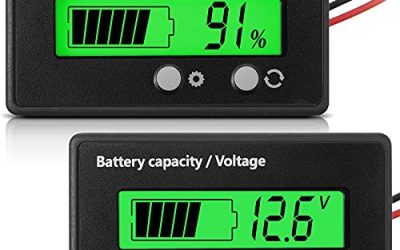
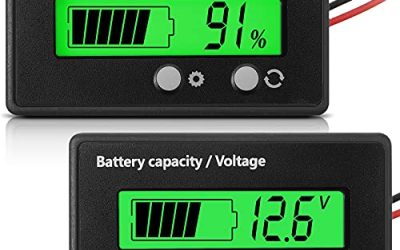
A bank in its idle months behaves like a hedge in winter: nothing visibly changes, and the decline is structural. Left sitting at a low state of charge between outages, a bank loses capacity quietly, and the loss surfaces only on the night the power fails. This DC meter, named for golf cart battery monitoring, puts the bank’s state on display where the bank sits, so the reading gets taken in passing — on the way to the bins, the mower, the woodpile — instead of requiring a deliberate trip with test gear.
Specs
- Brand: Frienda, as named in the listing
- Product type: DC battery meter, per the listing name
- Stated application: Golf cart battery monitoring, per the listing name
- Role: A standing state-of-charge read at the bank itself
- Voltage range, display format, and mounting style: Confirm on the listing
Best for: A bank that sits through the cold months with nobody tracking its charge.
Watch out for: The listing name states no voltage range; confirm it covers your bank’s voltage before ordering, and note the meter reports state — it does not charge or maintain the bank.
ASIN: B093KTM1PS
Brightech Maxwell Shelf Floor Lamp

Every setup has an indoor end: the room where the outage gear waits, where the panel or transfer point lives, and where people actually stand during a blackout. That room is usually the worst lit in the house. The Maxwell is a shelf floor lamp, 63 inches tall with three open shelves and an LED bulb included, and it does two shifts there. Its shelves hold the outage kit — spare fuse, gloves, the setup card’s duplicate — off the floor and in one place, and its light covers the room the generator feeds once that circuit is live.
Specs
- Brand: Brightech
- Model line: Maxwell, per the listing name
- Product type: Shelf floor lamp, per the listing name
- Height: 63 inches, per the listing record
- Footprint: 10 x 10 inches, per the listing record
- Shelves: Three open shelves, per the listing record
- Bulb: LED bulb included, warm 3000K light, per the listing record
- Shade material and cord length: Confirm on the listing
Best for: The room where the outage kit and the panel live, lit only by whatever someone carries in.
Watch out for: It is a plug-in lamp, so it lights that room only on a circuit the generator actually feeds; place it on the backed-up circuit, and route the cord clear of the walkway.
ASIN: B01N1Z2HUS
ALYYDBG Shop Vac Bags Type A 5 Pack

Autumn is when a generator pad gets buried. Leaves come off the trees in a few weeks, drift to wherever the wind drops them, and pack against the machine, across vents, and over the bank — then stay there all winter, holding damp against metal and hiding corrosion until spring. This five pack of Type A shop vacuum bags is the unglamorous layer that prevents it: the pad’s vacuum stays in service for one thorough clearing pass after leaf-fall, so the machine starts the cold season exposed to air and open to inspection instead of composting in place.
Specs
- Product type: Shop vacuum bags, per the listing name
- Fit: Type A, per the listing name
- Pack size: 5 pack, per the listing name
- Role: One full clearing pass at the pad before the cold season, then spares in hand
- Capacity and exact model compatibility: Confirm on the listing
Best for: A pad under trees, where leaf-fall buries the machine every autumn.
Watch out for: Confirm your vacuum takes Type A bags before ordering; the listing name gives the fit family, not every model it covers.
ASIN: B0B4NGCSD9
Teskyer Leather ID Badge Holder with Lanyard

A hedge outlives whoever planted it because its layout is visible in the ground. A generator setup has no such luck: its layout lives in one person’s memory and leaves when they do. This leather badge holder, sold with its lanyard, hangs the written version where the work happens — at the machine or on the panel room’s hook. The card it carries states the run’s route, the fuse and its rating, the meter’s reading on a full charge, and the date of the last clearing. Whoever faces the outage reads the setup instead of reconstructing it.
Specs
- Product type: ID badge holder with lanyard
- Material: Leather, per the listing name
- Orientation: Vertical, per the listing record
- Included: Lanyard, per the listing record
- Role: The setup’s written layout, hung where the outage work happens
- Window size, card capacity, and pack quantity: Confirm on the listing
Best for: A setup whose layout, fuse rating, and normal readings exist only in the installer’s memory.
Watch out for: Check your widest card against the window before ordering; the listing record does not state dimensions.
ASIN: B0C1BK95M5
Which One Fits Your Situation
The Bank Has Sat Since Autumn and Nobody Has Checked It
Start with the Frienda meter. Fit it at the bank, record the reading on a full charge, and glance at it on every yard crossing from then on. A bank that has been sliding all winter is still a recoverable problem in February; discovered during the outage itself, it is simply a smaller bank than the one you paid for.
Your Main Run Leaves the Bank With Nothing on It
Start with the Renogy ANL set. Bolt the holder into the main run at the bank itself, with the 20A rating confirmed against that circuit’s design first. Until that is done, every other improvement to the setup sits downstream of an unprotected source, and a single short anywhere on the run has nothing between it and the bank.
The Outage Room Is the Darkest Room in the House
Start with the Brightech Maxwell, placed on the circuit the generator feeds. Its shelves gather the outage kit into one visible stack — spare fuse, gloves, the duplicate setup card — and its light turns the room where people actually wait out a blackout into a place where the panel, the card, and each other can be read without a torch in someone’s teeth.
Whoever Is Home When It Fails Did Not Install It
Start with the Teskyer holder and write the card before touching anything else. Walk the run, note the fuse and its rating, the meter’s full-charge reading, and where the spare bags and fuse live, then hang the card at the machine. That single page converts a midnight failure from an interview with an absent installer into a lookup anyone in the house can perform.
Common Mistakes
- Arranging the whole setup in summer and never re-walking it with the cold season in mind.
- Sizing the bank run’s fuse by copying the rating off a different circuit.
- Reading the bank’s charge for the first time during the outage it was meant to carry.
- Letting autumn leaf-fall sit against the machine through winter because the vacuum’s bag was full in October.
- Leaving the setup’s layout, fuse rating, and normal readings unwritten, in one person’s memory.
Frequently Asked Questions
Why does the fuse belong at the bank end of the run?
Because the bank is where the run’s power starts. A fuse at the far end protects only what sits beyond it, leaving the run itself — often the longest, most exposed stretch of cable in the setup — able to carry a fault the whole way back to the bank. Protection fitted at the source covers the run and everything downstream of it in one move.
Does the battery meter do anything besides display the charge?
No, and that narrowness is the point. It does not charge, maintain, or equalise the bank; those jobs belong to the charger wired to it. What the meter adds is timing. A reading taken in passing through the idle months shows whether the charger is keeping up, early enough that a failing bank is a planned replacement rather than an outage discovery.
Why is a floor lamp part of a generator setup at all?
Because the setup has an indoor end, and it is usually unlit. The lamp serves the room the generator feeds: once that circuit is live, the room where the panel, the outage kit, and the people are has steady light, and the lamp’s shelves keep the kit stacked in one place instead of scattered through drawers. It is preparation furniture, not emergency lighting.
When should the pad get its clearing pass?
After leaf-fall ends and before the cold season settles in — the same window when a hedge gets its winter inspection. One thorough pass then removes the whole autumn accumulation at once, and the machine spends the wettest months exposed to air, with its vents, terminals, and bank top visible at a glance whenever anyone walks out to read the meter.




Write Your Review
No reviews yet. Be the first to share your experience!