
🛒 Best Price Today on Amazon
Prime members get fast, free shipping on everything above, plus member-only deals. New members get a 30-day free trial — cancel anytime.
A generator station that shares a shed with other work — dye bench, potting bench, repair bench — rarely fails dramatically. It fails by fading. The fuel tag goes illegible, the last battery reading lives in somebody’s memory, the cable feeding the pump is the one nobody marked. The decision here is not what looks rugged on arrival, but what keeps the station readable: every mark, log, and label still legible when the season has worn the rest smooth.
This guide serves owners whose generator works beside other work: the smallholder whose station shares the shed with tools and dye pots, the craft grower running pumps and lights from one machine, the household where three people may start the generator and none was there for the last service. Each pick comes from its Amazon listing name and stated specs, graded by the madderwort standard: madder root gives the dyer a red that holds for generations, and this set asks the same permanence of its records and order.
Quick Picks
As an Amazon Associate we earn from qualifying purchases
| Product | Best for | Key spec from title |
|---|---|---|
| Frienda DC Golf Cart Battery Meter | A bank whose slow decline has to be caught in a written log, not remembered | DC battery meter, per the listing name |
| ANKAKA 6-in-1 Tactical Pen | The hand that writes the log, dates the fuel, and tags the cables at the machine | Tactical pen, per the listing name |
| toolant Impact Allen Wrench Bit Set | Covers that come off between other jobs, on a machine sharing shed space | 20-piece Allen wrench bit set |
| Nilight 7 Inch 30W LED Pods | Work judged by eye — colour, condition, leaks — in a shed that goes dark early | 7-inch 30W LED pods |
| 12-Inch Knife Sharpening Rod | Shed edges that open bales, cut cordage, and clear the madder beds’ fence line | Knife sharpening rod, 12 inch |
How to Choose
A Record Only Counts If It Is Written Down
Dyers keep batch books because madder punishes guesswork: the red you get depends on ratios and dip counts nobody remembers a month later. A generator bank declines the same way — a little capacity at a time, each loss small enough to blame on the load. Memory is a fugitive dye; it fades exactly when it is needed. Grade the station’s monitoring by whether it produces a written figure, taken the same way at every visit and kept where the machine lives, so the trend survives whoever happened to be on duty.
Marks Have to Outlast the Weather That Tests Them
Colour-fastness is the dyer’s whole grading system: a red that washes out is worthless no matter how bright it looked in the pot. Station marks face the same trial — damp air, dust, fuel splash, and sun through the shed door all work on tags, labels, and chalk lines. Grade every marking habit by its fastness: writing that stays legible on a fuel tag through a wet season, cable marks that survive being handled with greasy gloves. A station whose marks fade becomes a station nobody can read, and an unreadable station gets misrun.
Work Judged by Eye Needs Light That Stays Put
Dye work is judged by eye, and so is most station work: the colour of a plug, the sheen of a leak, the state of a belt. Both fail under a borrowed lantern that arrives late and leaves with whoever carried it. Light graded by the madderwort standard is fixed where the work happens — mounted at the machine, fed from the station’s own system, and broad enough to read a whole work face rather than spotlight one bolt. Judge a shed’s light by whether it is simply there, every time, for every pair of hands.
Small Things Need Named Homes
A dyer’s bench holds a hundred small things — skeins, mordant jars, tied bundles — and stays workable only because each has a tag and a place. A station shed is identical: bits, fuses, tags, and the one pen that writes the log all wander unless the set is built around returning them. Grade the supporting kit by whether it counts back in — a bit set with a case that shows a gap, an edge tool with a fixed staging point, a pen that lives at the machine instead of migrating to the house.
The 5 Best Options
Frienda DC Golf Cart Battery Meter

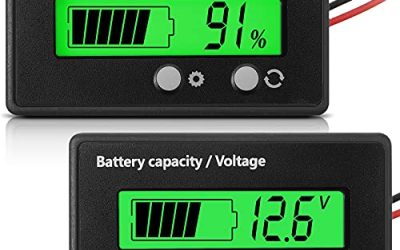
A DC battery meter sold for golf cart battery monitoring, per its listing name. At a shared-shed station its job is to feed the batch book: a bank that runs pumps and lights between other work loses capacity in small steps, and a fixed readout turns those steps into figures that can be written down and compared. Read it at the same point in the routine each visit and log the number with its date. A bank trending down over a month becomes a planned service on a quiet afternoon, instead of a surprise announced mid-outage.
Specs
- Brand: Frienda, as named in the listing
- Product type: DC battery meter, per the listing name
- Stated application: Golf cart battery monitoring, per the listing name
- Intended role here: The fixed readout behind the station’s written reading log
- Voltage range, display format, and mounting details: Confirm on the listing
Best for: A bank whose health is currently carried in someone’s memory, at a station run by more than one pair of hands.
Watch out for: Confirm the meter’s voltage range covers your bank before ordering — and a gauge nobody logs is decoration, so pair it with the notebook or log card kept at the machine.
ASIN: B093KTM1PS
ANKAKA 6-in-1 Tactical Pen

A tactical pen, per its listing name. Its station job is the written record itself: this refresh trades the staged cutter earlier sets carried for the tool that writes the reading log, dates the fuel can, and tags which cable feeds which load. Madder dyers learned centuries ago that an untagged batch is an unknown batch; a generator station run from memory is the same. A pen built for rough carry, staged at the machine rather than borrowed from the house, is what makes the log a habit instead of an intention.
Specs
- Brand: ANKAKA, as named in the listing
- Product type: Tactical pen, per the listing name
- Intended role here: The station’s writing tool, for the reading log, fuel dates, and cable tags
- Ink refill type, dimensions, and construction details: Confirm on the listing
Best for: Stations where the log, the tags, and the fuel dates currently depend on finding a pen that is never in the shed.
Watch out for: Confirm the refill type on the listing before ordering, and stage a spare refill with it — a log-keeping pen that runs dry in the first month teaches everyone to stop logging.
ASIN: B07RDGN4HD
toolant Impact Allen Wrench Bit Set

A 20-piece set of Allen wrench bits in a 2-inch format spanning metric and SAE sizes, per its listing name and pipeline records for this ASIN, driven by a drill or impact tool. A machine that shares its shed with other work gets opened between jobs — covers off for a check, guards off for cleaning, a panel off to chase the rattle — and that rhythm punishes soft hand-driver bits, which round out mid-task. Impact-rated bits in both measurement systems, counted back into their case after each session, keep the fasteners of a hard-worked machine serviceable season after season.
Specs
- Brand: toolant, as named in the listing
- Product type: Impact Allen wrench drill bit set, per the listing name
- Pieces: 20, per the listing name
- Systems: Metric and SAE, per pipeline listing records for this ASIN
- Bit length: 2 inch, per pipeline listing records for this ASIN
- Individual size list and case details: Confirm on the listing
Best for: Owners who service the machine themselves in short sessions between other shed work, and need the right bit present every time.
Watch out for: Check the listing’s size list against every machine you own, and count the bits back into the case after each job — in a shared shed, an uncounted set quietly becomes a partial set.
ASIN: B0B73ZYWFN
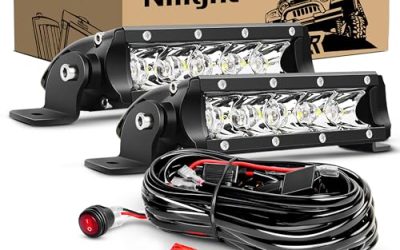
Nilight 7 Inch 30W LED Pods

LED light pods in a 7-inch, 30W format, per the pool listing name, of the type mounted on vehicles and work equipment. Mounted at the station and aimed at the machine, they give the shared shed the dyer’s first requirement: light that is already there when work is judged by eye. Starts in the dark, plug checks, leak hunts, and the colour of anything the machine produces are all read under this light, and both hands stay free for the work itself instead of holding a lantern that someone will carry off.
Specs
- Brand: Nilight, as named in the listing
- Product type: LED light pods, per the listing name
- Size: 7 inch, per the listing name
- Power: 30W, per the listing name
- Intended role here: Fixed light at the machine for a shed where work is judged by eye
- Beam pattern, mounting hardware, and wiring details: Confirm on the listing
Best for: A station sharing a shed with bench work, where the light has to serve the machine and the bench alike, every evening.
Watch out for: Confirm the supply voltage and mounting hardware on the listing before ordering, and seal every connection — dust and damp in a working shed find an open splice faster than weather does outdoors.
ASIN: B072QBGQM8
12-Inch Knife Sharpening Rod

A 12-inch knife sharpening rod — a honing tool that realigns and maintains an edge rather than restoring one, per pipeline records for this ASIN. Its station job is the shed’s everyday cutting: bale twine, cordage, strapping, and the clearing knife that keeps the fence line and the madder beds’ edges open. Madder is a perennial crop worked by hand, and the beds sit in the same ground the generator serves; edges dull steadily across that work, and a rod staged at the shed returns them between proper sharpenings, where the cutting actually happens.
Specs
- Brand: Not stated in the listing name
- Product type: Knife sharpening rod (honing rod), per the product name
- Length: 12 inches, per the product name
- Function: Realigns and maintains a knife edge; does not repair chips or heavy dullness
- Intended role here: Edge maintenance for the shed’s working knives, done at the station
- Details to confirm: Rod material, grit, and handle construction — Confirm on the listing
Best for: Owners whose shed cutting is daily and small — twine, cord, packaging, and light clearing — and whose edges dull a little every day.
Watch out for: A rod maintains an edge; it does not rebuild one. A chipped or fully dead edge still belongs to a stone or a professional, and forcing it on the rod wastes both the edge and the session.
ASIN: B074HFNS9B
Which One Fits Your Situation
More Than One Person Runs This Station
Start with the pen and meter as a pair. A station run by several hands fails on handovers: the reading one person noticed, the fuel date another forgot. A fixed gauge gives everyone the same figure, and a pen staged at the machine turns that figure into a log anyone can read. Together they make the station legible to whoever is on duty next — the whole madderwort standard in one habit.
The Generator Shares a Shed With Bench Work
Start with the Nilight pods. Bench work and machine work compete for the same poor light, and both are judged by eye — a dye colour, a plug’s condition, a belt’s fraying edge. Mounted pods aimed at the machine end the nightly negotiation over the one good lantern, and they stay when the bench’s portable light inevitably migrates. Fixed light is the shed’s shared memory of where things are.
Service Happens in Short Sessions Between Other Jobs
Start with the toolant set. Shed service is rarely a dedicated afternoon; it is twenty minutes between the dye pots and the feeding round. That rhythm needs the right bit in hand immediately, in both measurement systems, and a case that shows at a glance whether the set came back whole. Impact-rated bits survive the drill-driven pace that short sessions impose.
The Beds and Fence Line Are Part of the Same Property
Start with the sharpening rod. Where the generator serves a worked holding — beds, fence lines, bale stores — the cutting never stops, and dull edges slow every small job on the place. A rod staged at the shed keeps the working knives honest between bench sharpenings, so the edge is maintained in the same building, on the same visit, as everything else the station supports.
Common Mistakes
- Keeping the bank’s readings in memory, then discovering that memory is a fugitive dye — gone by the time the trend matters.
- Tagging cables and fuel with marks that pulp, smear, or fade in the first damp month in the shed.
- Letting the station’s only pen live in the house, so the log at the machine is always about to be written and never is.
- Judging plugs, belts, and dye work alike under one dim bulb that flatters everything it shows.
- Carrying shed edges to a distant bench for maintenance, so small cutting jobs queue up behind a trip that never happens.
Frequently Asked Questions
Why name a generator refresh after madderwort?
Madderwort — the madder plant — gives dyers their most permanent red, the colour that survives centuries of washing and light when lesser dyes have faded to nothing. Its craft runs on written batch records and tagged skeins. A generator station that shares a working shed lives or dies by the same standard: records and marks that hold fast, or a station nobody can read by mid-season.
Why does a pen belong in a generator guide?
Because the log is an instrument. Readings, fuel dates, cable tags, and service notes are what turn a bank’s slow decline and a station’s wiring into things the next person can act on. This set trades the staged cutter for the marking tool, on the dyer’s evidence that an unrecorded batch is an unknown one — and a station nobody can read gets misrun by whoever starts it next.
What fades first at a working station?
The information. Labels pulp in the damp, chalk smears, fuel dates blur, and the reading somebody meant to remember is gone within the week. The machine outlasts its own documentation almost every time, which is why this refresh grades the record-keeping gear — gauge, pen, light to read by — alongside the hardware. Hardware failures announce themselves; faded information fails silently, at the worst moment.
How do you keep a reading log that actually gets kept?
Make it cost nothing: a fixed meter read the same way each visit, a pen that lives at the machine, and the log itself kept at the station rather than in the house. Write the figure and the date, nothing more. Dyers’ batch books survive because the entry is short and the book is beside the pots; a station log works for exactly the same reasons.





Write Your Review
No reviews yet. Be the first to share your experience!