
Our Short List of 3

- Best for: Solar, RV and marine use on a modest budget with standard chargers.
- 12V 100Ah AGM deep cycle chemistry
- 1150A maximum discharge current
- 3 percent self-discharge rate
- Maintenance-free sealed construction

- Best for: RV and boat house banks that cycle daily and run evening inverter loads.
- 12V 100Ah AGM deep cycle chemistry
- 1100A maximum discharge current
- Low self-discharge rate
- Maintenance-free sealed construction
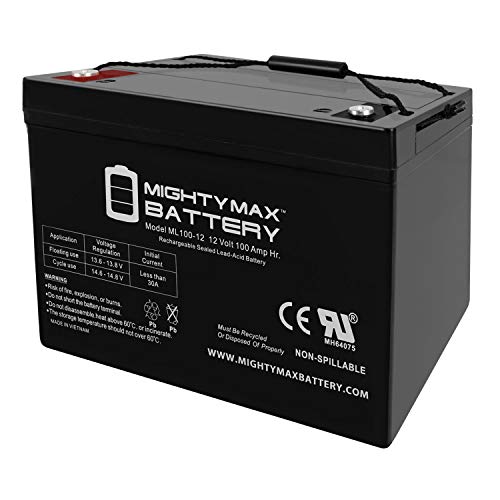
- Best for: Certified backup for critical home systems such as sump pumps and security gear.
- 12V 100Ah SLA AGM, UL Certified
- Internal thread terminals
- Group 30H size
- About 12.17 x 6.61 x 8.31 inches, about 60.7 pounds
All 3 Picks at a Glance
| Product | Specs | Action |
|---|---|---|
| Weize 12V 100Ah AGM Battery |
| Check price on Amazon |
| Renogy 12V 100Ah AGM Battery |
| Check price on Amazon |
| Mighty Max ML100-12 SLA AGM Battery |
| Check price on Amazon |
🛒 Best Price Today on Amazon
Prime members get fast, free shipping on everything above, plus member-only deals. New members get a 30-day free trial — cancel anytime.
A 750-watt inverter turns a 12-volt battery into household power for a fridge, a laptop or a few lights, and the battery decides how long that power lasts. The real decision is capacity against weight: a 100 amp-hour battery holds about 1,200 watt-hours, which runs a 750-watt load for well under two hours once inverter losses and safe discharge limits are counted. Buy too small and the inverter shuts down mid-task; buy a chemistry your charger cannot handle and the battery ages fast.
This guide is for owners pairing a battery with a 750-watt inverter for camping, backup power, a workshop or a small off-grid cabin. The four batteries below were chosen from the names and specifications on their Amazon pages, covering lithium and sealed AGM types, with attention to capacity, discharge current, weight and the safety features each listing states. Read the safety section before wiring anything.
Quick Picks
As an Amazon Associate we earn from qualifying purchases
| Product | Best for | Key spec from title |
|---|---|---|
| Renogy 12V 100Ah LiFePO4 Battery with Bluetooth | Lightweight power for campers and cabins | 100Ah, 12.8V, 100A max continuous discharge |
| Weize 12V 100Ah AGM Battery | Budget deep-cycle power for solar and RV use | 100Ah, 1150A max discharge, Group 31 |
| Renogy 12V 100Ah AGM Battery | A proven house battery for daily cycling | 100Ah, 1100A max discharge, series and parallel |
| Mighty Max ML100-12 SLA AGM Battery | Certified backup for critical home systems | 100Ah, 12V, UL Certified, Group 30H |
How to Choose
Match capacity to the 750-watt load
A 750-watt inverter draws 62 amps from a 12-volt battery at full load, so runtime comes straight from amp-hours. A 100 amp-hour battery stores about 1,200 watt-hours, and after inverter losses that runs a 750-watt load for roughly an hour and a half at most. In practice the load rarely runs flat out: a fridge cycles, lights draw little, and a laptop draws far less than the inverter rating. Add up the watts of everything that runs at once, divide the battery watt-hours by that total, then cut the result for losses. Sealed AGM batteries should not be drained flat every time, so plan on using half the rated capacity in daily use.
Lithium or sealed AGM
Lithium and sealed AGM solve the same job with different trade-offs, and the choice shapes weight, lifespan and charger needs. The Renogy lithium battery in this guide weighs 26 pounds against 57 to 64 pounds for the AGM options, and its listing states 4,000 cycles at 80 percent depth of discharge. Lithium also needs a charger with a lithium profile, while sealed AGM works with the standard chargers most inverters and solar controllers already provide. AGM costs less up front and tolerates a wider range of chargers, but it is heavy and gives fewer deep cycles. Pick lithium when the battery moves often or cycles daily, and AGM when budget and charger compatibility matter more.
Discharge current and inverter surge
A battery must supply the inverter current without sagging, and motors add a surge at startup that a thin battery cannot cover. A 750-watt continuous load draws about 62 amps at 12 volts, and a fridge compressor or power tool can briefly demand far more when it starts. The Renogy lithium lists a 100-amp maximum continuous discharge current, which covers the 750-watt load with headroom for short surges. The AGM batteries list much higher maximum discharge figures, 1100 and 1150 amps, which describe short bursts rather than steady output. Check the continuous rating on the listing, keep cable runs short and thick, and fit a fuse close to the battery terminal.
Safety: wiring, ventilation and the BMS
Batteries store serious energy, and the listing details tell you how each one protects itself. The Renogy lithium battery has a built-in battery management system that the listing says protects against abnormalities and manages charging and discharging, and its listing states the batteries connect in parallel only and must not be strung in series. The sealed AGM batteries are described as leak-proof and gas-free, with valve-regulated construction and no watering, which suits indoor cabinets and RV compartments. The Mighty Max lists UL certification on its product page. Keep terminals covered, fit a fuse between battery and inverter, and confirm the charger matches the battery chemistry before connecting anything.
The 4 Best Options
Renogy 12V 100Ah LiFePO4 Battery with Bluetooth
The Renogy lithium battery suits owners who carry the battery by hand or cycle it every day, because it packs 100 amp-hours into 26 pounds. Bluetooth monitoring shows state of charge from a phone, and the built-in battery management system guards charging and discharging while the listing states 4,000 cycles at 80 percent depth of discharge. A 100-amp maximum continuous discharge current covers a 750-watt inverter with room for startup surges, and the 12.8-volt nominal output matches standard 12-volt inverter inputs. Its compact case fits tight RV and cabin compartments where a 60-pound AGM battery would be a struggle to move.
Specs
- Rated capacity 100 Ah, nominal voltage 12.8 V
- Maximum continuous discharging current 100 A
- Maximum continuous charging current 50 A
- Cycle life 4,000 cycles at 80 percent depth of discharge
- Built-in battery management system with Bluetooth monitoring
- Parallel connection only, do not string in series
- Dimensions 11.4 x 6.8 x 7.4 inches, weight 26 pounds
- Certifications UN38.3, MSDS and UL 1642 for the lithium cell
Best for: Campers and cabin owners who want light weight, deep cycling and phone monitoring.
Watch out for: It needs a lithium-profile charger, and series wiring is not allowed, so plan a parallel bank only.
Weize 12V 100Ah AGM Battery
- Best for: Solar, RV and marine use on a modest budget with standard chargers.
- 12V 100Ah AGM deep cycle chemistry
- 1150A maximum discharge current
- 3 percent self-discharge rate
- Maintenance-free sealed construction
Solar, RV and marine use on a modest budget with standard chargers.
The Group 31 case is large and heavy, so measure the battery box before ordering.
The Weize AGM battery suits owners who want a 100 amp-hour deep-cycle pack for solar, RV, marine or off-grid use without paying a premium. Its 1150-amp maximum discharge current covers an inverter or a trolling motor, and the low self-discharge rate keeps the battery ready between trips. The heavy-duty calcium-alloy grid suits both float and cyclic use, so the battery handles a solar controller charging it every day. The Group 31 size fits battery boxes found on many RVs and boats, and the sealed design needs no watering. At 57 pounds it is heavy, but the price and standard AGM charging make it an easy fit for existing systems.
Watch out for: The Group 31 case is large and heavy, so measure the battery box before ordering.
Renogy 12V 100Ah AGM Battery
- Best for: RV and boat house banks that cycle daily and run evening inverter loads.
- 12V 100Ah AGM deep cycle chemistry
- 1100A maximum discharge current
- Low self-discharge rate
- Maintenance-free sealed construction
RV and boat house banks that cycle daily and run evening inverter loads.
At nearly 64 pounds it is the heaviest battery here, so plan the lifting and mounting.
The Renogy AGM battery is the workhorse of the Renogy range, and it suits RVs, boats and solar systems that cycle every day. The 100 amp-hour capacity and 1100-amp maximum discharge current cover a trolling motor, a fridge and lights together, and the low self-discharge rate means the battery holds its charge between trips. The sealed design needs no maintenance, and the listing says it supports series and parallel connections up to four batteries, so the bank can grow as the loads grow. It is the safe, proven choice for a house bank that cycles daily and a 750-watt inverter that runs evening loads.
Watch out for: At nearly 64 pounds it is the heaviest battery here, so plan the lifting and mounting.
Mighty Max ML100-12 SLA AGM Battery
- Best for: Certified backup for critical home systems such as sump pumps and security gear.
- 12V 100Ah SLA AGM, UL Certified
- Internal thread terminals
- Group 30H size
- About 12.17 x 6.61 x 8.31 inches, about 60.7 pounds
Certified backup for critical home systems such as sump pumps and security gear.
The charger is not included, so pair it with a charger suited to AGM batteries.
The Mighty Max ML100-12 is the certified choice for critical backup systems, with UL certification listed on the product page and a design built for float and cyclic use. It is a 12-volt, 100 amp-hour sealed lead-acid AGM battery with internal thread terminals, a calcium-alloy grid for long service life and a valve-regulated design that can be used indoors without leaking or maintenance. Group 30H sizing and dimensions of about 12.2 by 6.6 by 8.3 inches fit many UPS and inverter cabinets. It suits a home where the backup battery guards a sump pump, a security system or medical equipment and must work without fail.
Watch out for: The charger is not included, so pair it with a charger suited to AGM batteries.
Which One Fits Your Situation
You run a fridge and lights in a camper
Pick the Renogy lithium battery. At 26 pounds it moves easily in and out of a camper, the 100-amp continuous discharge covers the 750-watt inverter, and the deep cycle life suits nightly use. Bluetooth monitoring shows the remaining charge before the fridge cycles again, so there are no surprises at midnight.
You want backup power at home
Pick the Mighty Max ML100-12. Its UL certification and design for float and cyclic use suit sump pumps, security systems and medical equipment that must not fail. The internal thread terminals give a secure connection, and the sealed case needs no maintenance through long standby periods in a garage or utility room.
You build a solar cabin bank
Pick the Renogy AGM battery. It supports series and parallel connections up to four batteries, so the bank grows from one 100 amp-hour unit to a larger system as loads grow. The sealed AGM design works with standard solar controllers, and the low self-discharge rate holds charge through cloudy stretches.
You carry the battery by hand
Pick the Renogy lithium battery or the Weize AGM, and check the weight first. The Renogy lithium weighs 26 pounds, less than half the Weize at 57 pounds, so it wins whenever the battery moves between a truck, a boat and a cabin. The Weize suits a fixed spot where weight stays put.
Common Mistakes
- Using a car starting battery with an inverter, which fails after a few deep discharges.
- Draining a sealed AGM battery flat in every outing instead of keeping a reserve margin.
- Mixing an old battery with a new one in the same bank, which drags the new one down.
- Skipping the fuse between the battery and the inverter, leaving a short circuit unprotected.
- Charging a lithium battery with a lead-acid charger profile, which shortens its service life.
Frequently Asked Questions
How long will a 100Ah battery run a 750W inverter?
About an hour and a half at full 750-watt load, once inverter losses are counted, since 100 amp-hours at 12 volts stores about 1,200 watt-hours. Real loads are usually smaller: a fridge cycles on and off, so the same battery can run evening lights and a fridge for several hours.
Can I use a car battery with a 750W inverter?
A car battery works for a short emergency run, but it is built for brief cranking bursts and fails quickly under repeated deep discharges. A deep-cycle battery from this guide survives nightly cycling, so choose one of the four above for regular inverter use.
Do I need a lithium battery for a 750W inverter?
No, a sealed AGM battery runs a 750-watt inverter well, and the Weize and Renogy AGM options here cost less and work with standard chargers. Lithium wins on weight and cycle life, so pick it when the battery moves often or cycles every day.
How many batteries do I need for a 750W inverter?
One 100 amp-hour battery covers short runs and light evening loads on a 750-watt inverter. For longer runtime, wire a second matching battery in parallel to double the capacity, and never mix old and new batteries or different chemistries in one bank.


Write Your Review
No reviews yet. Be the first to share your experience!