
🛒 Best Price Today on Amazon
Prime members get fast, free shipping on everything above, plus member-only deals. New members get a 30-day free trial — cancel anytime.
Setting up reliable power outdoors used to mean stringing together a tangled mess of dusty extension cords and risky power strips every time you needed to run tools, patio heaters, or landscape lighting. Today, weatherproof outdoor power towers offer a cleaner, safer, and far more permanent solution for managing electricity in your yard, garden, or workshop area. However, shopping for one requires looking past sleek marketing and focusing on structural integrity, weather ratings, and load capacities.
Whether you are feeding power from a portable power station, a standby generator, or standard grid outlets to your exterior living spaces, making the right choice saves you from frequent circuit trips and premature hardware failure. As power distribution technology has evolved into 2026, manufacturers have introduced smarter features and heavier-duty materials, but the fundamentals of weatherproofing and electrical safety remain paramount. This guide breaks down the critical factors you need to evaluate so you can invest in a power tower that truly withstands the elements.
As an Amazon Associate we earn from qualifying purchases at no extra cost to you.
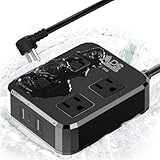
Understanding NEMA and IP Weatherproof Ratings
The single most important factor when purchasing an outdoor power tower is its ingress protection rating. Terms like “weather-resistant” are marketing fluff; you need to look for standardized ratings such as NEMA or IP codes. For basic outdoor use exposed to light rain and sprinklers, a rating like NEMA 3R or IP44 is often the baseline. However, if your tower will sit in an open yard exposed to heavy downpours, blowing dust, and snow, you should prioritize NEMA 4 or IP65-rated units featuring tight rubber gaskets, spring-loaded outlet covers, and seamless housing designs.
Evaluating Load Capacity and Continuous Wattage
It is easy to misjudge how much electrical draw you are putting through a single power hub, especially when running multiple heavy-duty tools or seasonal decorations simultaneously. Always calculate the total continuous wattage of the devices you plan to plug in, and ensure the tower’s internal circuitry and main breaker exceed that combined total with a comfortable safety margin. Overloading a tower leads to internal heat buildup, melted casing components, and tripped breakers. Remember that inductive loads, such as electric motors found in pressure washers or leaf blowers, require higher starting wattage than their running wattage indicates.
Cord Construction and Safe Power Delivery
How the power tower connects to your primary power source dictates both its placement flexibility and its overall electrical efficiency. Integrated power cords must feature heavy-duty wire gauges—typically 14-gauge or 12-gauge construction—to prevent voltage drop over longer distances. If your tower relies on an inlet plug rather than an attached cord, pay close attention to the gauge of the extension cord you use to supply it. Undersized cords acting as feeders will heat up dangerously under heavy loads, degrading performance and posing a serious fire hazard regardless of how weatherproof the tower itself is.
Surge Protection and Equipment Safety
Not all outdoor power towers are created equal when it comes to safeguarding your connected electronics. Basic models function merely as weatherproof distribution blocks, splitting one power source into several outlets without internal electronic defenses. If you plan to plug in sensitive items like outdoor smart home hubs, string lights with integrated microchips, or expensive power tool battery chargers, look for units built with integrated surge suppression. A quality surge-protected tower will absorb sudden voltage spikes caused by distant lightning or utility grid fluctuations, sacrificing its internal components to save your expensive gear.
Mounting, Stability, and Physical Placement
An outdoor power tower needs to stay securely anchored against environmental forces like strong winds, lawnmower bumps, and curious wildlife. Units typically come in a few physical formats, including stake-mounted spikes, flat-base weighted towers, and wall-mountable blocks. Spike-mounted towers are fantastic for gardens and landscaping, but they require soil that isn’t excessively rocky. Flat-base towers work well on concrete patios and decks but may need physical anchoring straps if placed in exceptionally windy coastal or open-field regions.
Common Mistakes to Avoid and When to Upgrade
Buyers often make critical errors by assuming indoor power strips can simply be moved outside if kept under a covered porch. Humidity, condensation, and shifting temperatures will quickly corrode unsealed internal contacts. Another common trap is ignoring the physical orientation of the outlets; upward-facing sockets are notorious for collecting rainwater and debris even when covered. While entry-level outdoor power towers usually suffice for holiday lights or a single hedge trimmer, it is worth investing more money in higher-tier models if you require specialized features like individual circuit breakers per outlet, heavy-duty metal housings instead of brittle plastics, or smart energy monitoring.
Related Guides
If you are ready to compare specific models currently on the market, take a look at our expert roundup of the best weatherproof outdoor power towers to find the ideal match for your setup.
FAQ
Can I leave my outdoor power tower plugged in during a heavy winter storm?
Yes, provided the unit features a high NEMA or IP weather rating and is connected to a properly grounded GFCI outlet. However, it is always wise to clear heavy snow accumulation away from the base and ensure outlet covers remain fully snapped shut when not actively in use.
What is the difference between a GFCI outlet and a standard outdoor tower?
A Ground Fault Circuit Interrupter immediately cuts power if it detects an electrical imbalance, such as electricity leaking toward water or a grounded person. While many outdoor towers plug into a pre-existing GFCI source, advanced towers feature built-in GFCI reset buttons for added localized safety.
How do I clean and maintain my outdoor power tower?
Always disconnect the tower from its power source before performing any maintenance. Wipe down the exterior housing with a damp cloth, check the rubber gaskets for cracking or debris buildup, and ensure the spring-loaded covers operate smoothly without sticking.
Can I use an indoor extension cord to supply power to my outdoor tower?
No, you should never use indoor-rated extension cords outdoors. They lack the necessary heavy-duty insulation, moisture resistance, and thick copper wiring required to safely handle environmental exposure and high electrical loads.

Write Your Review
No reviews yet. Be the first to share your experience!