
Our Short List of 3

- Specs:
- 12 oz bottle (355 mL)
- For vehicles over 75,000 miles
- Treats up to 21 gallons

- Specs:
- 6 oz bottle
- CarbonClear PEA cleaning agent
- Removes carbon deposits

- Specs:
- 12 oz bottle
- For high-mileage vehicles
- Removes carbon, gum, and varnish
All 3 Picks at a Glance
| Product | Specs | Action |
|---|---|---|
| Chevron Techron High Mileage |
| Check price on Amazon |
| Gumout Regane High Mileage |
| Check price on Amazon |
| Valvoline MaxLife Complete |
| Check price on Amazon |
🛒 Best Price Today on Amazon
Prime members get fast, free shipping on everything above, plus member-only deals. New members get a 30-day free trial — cancel anytime.
An engine with more than 75,000 miles on it has lived through years of heat cycles, short trips, and fuel that leaves deposits behind. Carbon builds up on injectors and intake valves, seals age, and fuel economy slowly slips. A high-mileage fuel additive is a cleaner and conditioner you pour into the tank, designed to dissolve those deposits and protect the fuel system from further wear. It is not a repair for a broken part, but it can restore some of the efficiency a high-mileage engine has lost.
This guide is for owners of older cars and trucks who want to keep a high-mileage engine running cleanly. It covers drivers who notice rough idling or falling fuel economy, owners who want to protect an aging fuel system, and anyone who uses ethanol-blended gasoline and worries about corrosion. Every additive below was chosen from the name and specifications listed on its Amazon product page.
Quick Picks
As an Amazon Associate we earn from qualifying purchases
| Product | Best for | Key spec from title |
|---|---|---|
| Chevron Techron High Mileage | Deep cleaning on engines over 75,000 miles | 12 oz bottle treats up to 21 gallons |
| Lucas Oil 10977 High Mileage | Small-bottle treatment with lubrication | 5.25 oz bottle treats up to 25 gallons |
| Gumout Regane High Mileage | Carbon deposit removal with PEA cleaner | 6 oz bottle with CarbonClear cleaning agent |
| Valvoline MaxLife Complete | All-around cleaning and protection | 12 oz bottle for high-mileage vehicles |
How to Choose
Cleaning power and active ingredients
The cleaning power of a fuel additive comes from its active chemistry, and the most effective cleaners use a detergent such as PEA, a polyetheramine that dissolves carbon deposits on injectors and intake valves. Look for a product that names its cleaning agent or describes deposit removal in detail, because a vague label that only promises a cleaner engine tells you little. A high-mileage formula should also address the gum and varnish that build up over years of use, not just fresh deposits. Stronger cleaning matters most on an engine that has never had a fuel system treatment before.
Treat rate and bottle size
Every additive treats a certain amount of fuel, and that treat rate decides how many bottles you need for a full tank. A 12-ounce bottle that treats up to 21 gallons covers most passenger cars and trucks in one pour, while a smaller bottle that treats up to 25 gallons is more concentrated. Check the treat rate on the listing and compare it to your tank size before ordering, because a bottle that only treats half a tank means you need two bottles for one fill-up. Also check whether the product is meant for use at every fill-up or only every few thousand miles.
Mileage threshold and vehicle age
High-mileage additives are formulated for vehicles over 75,000 miles, and that threshold matters because the formula targets the wear and deposits that accumulate with age. If your car has far fewer miles, a standard fuel system cleaner may be a better match, since it is designed for general maintenance rather than age-related buildup. If your vehicle is well past the threshold, look for a formula that also conditions seals and protects against corrosion, since those are the problems that show up late in an engine’s life. A car that mostly makes short trips builds deposits faster, so it benefits more from a treatment.
Fuel type and ethanol protection
Most fuel additives are made for gasoline, and some are also safe for diesel or flex-fuel blends, so check the listing for the fuels it supports. Ethanol-blended gasoline can attract moisture and cause corrosion in an aging fuel system, so a high-mileage additive that fights ethanol damage and rust is worth having if you buy blended fuel. Never use a gasoline-only additive in a diesel tank, and never pour an additive into a tank that already has a different treatment in it unless the label says the two are compatible.
The 4 Best Options
Chevron Techron High Mileage
- Specs:
- 12 oz bottle (355 mL)
- For vehicles over 75,000 miles
- Treats up to 21 gallons
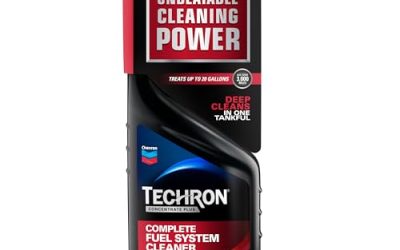
The Chevron Techron High Mileage cleaner is the deep-cleaning pick for engines over 75,000 miles. Its formula is built to remove gum, varnish, and carbon deposits from the fuel system while protecting against corrosion, and it stabilizes fuel for up to 24 months, which helps cars that sit for weeks between drives. The 12-ounce bottle treats up to 21 gallons, so one bottle covers a full tank on most cars and trucks. It is the pick when you want a thorough clean on an engine that has never had one.
Lucas Oil 10977 High Mileage
The Lucas Oil High Mileage treatment comes in a small 5.25-ounce bottle that treats up to 25 gallons, so it is concentrated for its size. Its formula combines cleaners with lubricants for the upper cylinder and fuel injectors, which suits an older engine where wear has made the fuel system noisier and less efficient. It is gasoline only and designed for vehicles over 75,000 miles. If you want a compact bottle that does two jobs at once, cleaning and lubricating, this is the one to look at.
- Specs:
- 5.25 oz bottle (155 mL)
- For vehicles over 75,000 miles
- Treats up to 25 gallons
- Gasoline only
- Cleans fuel injectors
- Lubricates upper cylinders
- Best for: Owners who want cleaning plus lubrication in one small bottle.
- Watch out for: The small bottle is easy to under-dose on a large tank, so check the treat rate first.
Gumout Regane High Mileage
- Specs:
- 6 oz bottle
- CarbonClear PEA cleaning agent
- Removes carbon deposits
The Gumout Regane High Mileage cleaner uses a CarbonClear PEA cleaning agent to remove carbon deposits from the fuel system, and it also lubricates piston rings and fights ethanol damage, rust, and corrosion. That combination suits an older engine running on blended gasoline, where moisture and deposits are both problems. The 6-ounce bottle is a single-tank treatment for most cars. It is the pick for drivers who want a strong cleaner with extra protection against the effects of ethanol.
Valvoline MaxLife Complete
- Specs:
- 12 oz bottle
- For high-mileage vehicles
- Removes carbon, gum, and varnish
The Valvoline MaxLife Complete Fuel System Cleaner is the all-around pick for high-mileage vehicles. Its formula removes carbon, gum, and varnish from the fuel system, restores performance, and protects against future buildup, so it works as both a cleaner and a maintenance treatment. The 12-ounce bottle suits a full tank on most cars. It is a good default when you want one product that covers cleaning, performance, and protection without a specialized formula.
Which One Fits Your Situation
Your engine has never had a fuel treatment
The Chevron Techron High Mileage cleaner is the best first treatment. Its formula is built for a deep clean on engines over 75,000 miles, and it removes the gum, varnish, and carbon that have built up over years. The 12-ounce bottle treats a full tank, and the fuel stabilization helps if the car sits between drives. Use it once to clean the system, then decide whether you need regular maintenance treatments.
You want cleaning plus lubrication
The Lucas Oil High Mileage treatment does both jobs in one small bottle. Its cleaners work on the fuel injectors while its lubricants protect the upper cylinders, which suits an older engine where wear has made the fuel system less efficient. The 5.25-ounce bottle treats up to 25 gallons, so it is concentrated for its size. Just check the treat rate against your tank before you pour it in.
You run ethanol-blended gasoline
The Gumout Regane High Mileage cleaner is the pick for blended fuel. Its CarbonClear PEA agent removes carbon deposits, and its formula fights the ethanol damage, rust, and corrosion that blended gasoline can cause in an aging fuel system. It also lubricates the piston rings, which helps an older engine hold its compression. It is the most protective option here for ethanol use.
You want one product for regular maintenance
The Valvoline MaxLife Complete cleaner covers cleaning, performance, and protection in a single 12-ounce bottle. It removes carbon, gum, and varnish, restores performance, and protects against future buildup, so it works well as a regular maintenance treatment on a high-mileage vehicle. It is the simplest choice when you do not need a specialized formula.
Common Mistakes
- Using a high-mileage additive on a low-mileage car, where a standard cleaner would be a better match.
- Pouring a gasoline-only additive into a diesel tank, which can damage the fuel system.
- Under-dosing by using one bottle in a tank larger than its treat rate covers.
- Expecting an additive to fix a mechanical problem, such as a failed injector or a worn fuel pump.
- Mixing two different fuel treatments in the same tank without checking whether they are compatible.
Frequently Asked Questions
How often should I use a high-mileage fuel additive?
Most high-mileage additives are meant for use every few thousand miles, not at every fill-up, but the right interval depends on the product. Check the label for the maker’s recommended frequency and follow it. Using a cleaner more often than recommended does not clean the engine faster. If your engine has heavy deposits, repeat the treatment at the recommended interval.
Will a fuel additive fix rough idling?
It can help if the rough idle comes from deposits on the injectors or intake valves, since a cleaner dissolves those deposits and restores a spray pattern. It will not fix rough idling caused by a mechanical fault, such as a failed injector, a vacuum leak, or worn spark plugs. If the idle does not improve after two treatments, have the engine checked.
Can I use a high-mileage additive in a car with fewer than 75,000 miles?
You can, but a standard fuel system cleaner is usually a better match for a lower-mileage engine. High-mileage formulas target the deposits and wear that accumulate with age, and a younger engine does not have those problems yet. Save the high-mileage product for when the odometer passes the threshold.
Does a fuel additive improve fuel economy?
It can restore some of the fuel economy an engine has lost to deposits, because clean injectors spray fuel more evenly and the engine burns it more completely. The gain is usually modest, and it only appears if deposits were actually hurting efficiency. An additive cannot overcome mechanical wear or a driving style that wastes fuel.



Write Your Review
No reviews yet. Be the first to share your experience!