
🛒 Best Price Today on Amazon
Prime members get fast, free shipping on everything above, plus member-only deals. New members get a 30-day free trial — cancel anytime.
A generator setup rarely fails all at once. More often, the small parts around it quietly age out: the battery runs down between test starts because nobody checked its charge, a fuse holder gets brittle, cable lugs corrode at the terminals, and the corner itself becomes so cluttered that a simple inspection turns into a chore everyone avoids. Those small parts decide whether a backup system feels ready or neglected.
This generator refresh valor roundup focuses on exactly that supporting cast. The picks below cover battery monitoring, circuit protection, clean cable terminations, work lighting for the generator corner, and a wall rack that keeps cords and gear off the floor. None of them replaces the generator itself or repairs a sick engine, but together they make a backup setup easier to check, service, and trust when the power goes out.
As an Amazon Associate, we earn from qualifying purchases.
Quick Answer
Start with the Frienda DC Golf Cart Battery Meter so battery charge is never a guess, protect the main battery run with the Renogy 20A ANL Fuse Holder, and renew worn cable ends with the Frienda 3 Inch Round Terminal Battery Cable Lugs. Add the Nilight 7 Inch 30W LED Pods for service lighting and the Dseap Coat Rack Wall Mount 5 Hooks to keep cords and gear organized beside the unit.
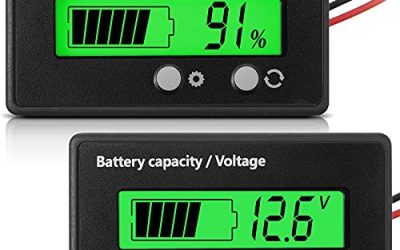
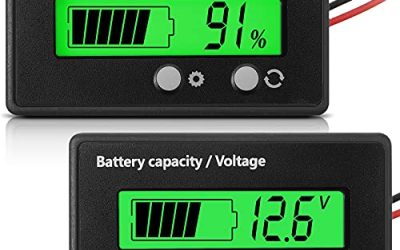
1. Frienda DC Golf Cart Battery Meter

A backup battery that sits for weeks between runs can lose charge without anyone noticing, and the first sign of trouble is often a no-start moment during an outage. This meter gives the battery a visible gauge, so a quick glance during a monthly walk-around tells you whether the pack is holding charge or drifting down. It suits golf cart battery banks and similar lead-acid setups that support generators, solar add-ons, and utility vehicles around a property.
The display reads easily at arm’s length, which matters in a dim shed corner. Wiring is a simple two-lead connection across the battery, and the compact housing fits a dash panel, battery box lid, or mounting plate near the bank. It is a monitoring aid rather than a charger or a tester, so it pairs well with a routine of monthly checks and a maintainer for long storage stretches.
Specs
- Type: digital battery capacity and voltage indicator
- Battery types: lead-acid battery banks, including golf cart packs
- Display: LED indicator segments with a digital readout
- System voltage range: confirm on the listing
- Mounting: panel or surface mount; check cutout size on the listing
- Wiring: two-lead connection across the battery terminals
2. Renogy 20A ANL Fuse Holder and ANL Fuse

Every battery bank feeding an inverter, a transfer arrangement, or a DC accessory run needs a deliberate weak point that gives up first in a fault, and that is the job of a properly rated fuse close to the battery. This Renogy set pairs an ANL fuse holder with a 20A ANL fuse, sized for lighter DC runs: small inverters, charge controller lines, and accessory circuits off a backup battery bank.
The bolt-down ANL format makes solid, low-resistance contact, and the holder keeps the fuse covered and inspectable. Place the holder on the positive cable as close to the battery as the layout allows, and keep a spare fuse with the generator paperwork so a blown fuse never becomes a parts hunt mid-outage. Match the fuse rating to the wire and the load, not to whatever happens to be in the drawer.
Specs
- Fuse type: ANL, bolt-down format
- Fuse rating: 20A
- Holder: ANL fuse holder with protective cover
- Typical use: battery to inverter, charge controller, or DC accessory runs
- System voltage: confirm on the listing
- Cable gauge range: confirm on the listing before ordering
3. Frienda 3 Inch Round Terminal Battery Cable Lugs

Corroded or loose cable ends waste power as heat and can make a healthy battery look weak. These ring terminal lugs give battery cables a clean, crimped termination that bolts down flat on the terminal, which is the kind of connection that stays tight through vibration and seasonal temperature swings. They help when building a replacement battery cable, extending a run to an inverter, or rescuing a cable whose original end has gone green and brittle.
The round ring format works with standard terminal posts and bus bars, and the closed barrel helps keep moisture away from the strands inside the crimp. A proper crimping tool matters more than the lug itself, so plan on a crimper matched to the cable size, followed by heat shrink for a finished, weather-resistant end. Check wire gauge and stud size against the listing before ordering.
Specs
- Type: round ring terminal cable lugs
- Format: closed-barrel crimp termination
- Material and plating: confirm on the listing
- Wire gauge range: confirm on the listing
- Stud hole size: confirm on the listing
- Pack quantity: confirm on the listing
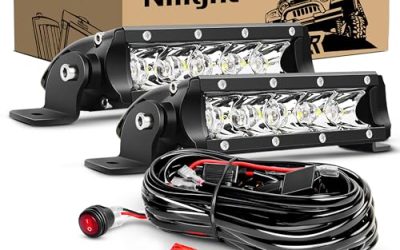
4. Nilight 7 Inch 30W LED Pods

Generator service work happens in sheds, garages, and side yards where the installed lighting rarely points at the machine itself. A pair of compact LED pods mounted above or beside the generator corner changes that: oil checks, fuel valve positions, and cable inspections all get easier when the light is fixed and aimed at the work instead of balanced on a shoulder. The 7 inch format is small enough to mount on a shed wall, a post, or a rack near the unit.
These pods run on low-voltage DC power, so they can be wired into the same battery system that supports the backup setup, with the fuse holder above protecting the run. The die-cast housing and adjustable bracket suit semi-sheltered outdoor mounting, and the focused beam pattern works well as task light over a work surface. They are work lights, not flood lighting for a whole yard, so expect close-range service and walkway lighting near the generator.
Specs
- Size: 7 inch LED light pods
- Power draw: 30W per pod
- Beam pattern: spot beam for focused task lighting
- Housing: die-cast aluminum with adjustable mounting bracket
- Input voltage: confirm on the listing
- Quantity in pack: confirm on the listing
5. Dseap Coat Rack Wall Mount 5 Hooks

The last refresh pick is not electrical at all, and that is the point. Generator corners collect extension cords, work gloves, ear protection, a flashlight, and a fuel funnel, and most of it ends up in a pile on the floor, damp, buried, or tripped over. This wall-mounted rack puts five sturdy hooks within reach of the machine, turning the wall beside the generator into the storage spot for the gear that belongs with it.
The wood board and metal hook format is a living-room product by origin, but it earns its place here honestly: cords hang in loops instead of tangles, hearing protection stays clean and findable, and the floor around the generator stays clear for safe footing during a dark, rainy service call. Mount it into studs or solid blocking, keep fuel containers on the floor away from the rack, and reserve the hooks for the light gear you actually grab during a test run or an outage.
Specs
- Type: wall-mounted coat rack with 5 hooks
- Board material: wood; confirm finish and dimensions on the listing
- Hooks: metal double hooks; confirm load rating on the listing
- Mounting: wall mount; hardware inclusion confirm on the listing
- Suggested use here: cords, gloves, ear protection, and light gear storage
How to Choose
Work in the order the system flows. Start at the battery: if there is no gauge on the bank, the meter comes first, because every other decision depends on knowing the battery is charged. Next, look at protection: any DC run leaving the battery should pass through a fuse sized for the wire and the load, mounted close to the battery end of the cable. Then inspect the terminations themselves. Lugs that show corrosion, fraying, or a loose crimp get replaced before they cause a hot connection.
Lighting and organization come last but should not be skipped. Fixed light over the generator makes every future inspection faster and safer, and a hook rack keeps the support gear in one known place. When ordering, confirm the unglamorous details on each listing: voltage range for the meter, cable gauge range for the fuse holder and lugs, stud size for the terminals, and mounting dimensions for the rack. Five minutes of checking prevents the classic failure: a box of almost-right parts.
Who Should Skip
Skip this roundup if your generator setup is hardwired by an electrician under a maintenance contract, since fuse holders and lugs belong inside that service agreement, not on a shopping list. Skip it as well if the generator itself has starting, surging, or fuel problems: no accessory in this list repairs an engine, and the money belongs with a mechanic first. Owners of fully sealed, self-contained battery stations with no user-serviceable DC wiring will find little here, since these parts assume an open battery bank you can inspect and service yourself.
FAQ
Where should the ANL fuse holder be installed in a battery run?
Install it on the positive cable as close to the battery terminal as the layout reasonably allows. The goal is for the fuse to protect as much of the cable run as possible, so a short anywhere downstream opens the fuse instead of heating the wire. Keep the holder accessible, since a fuse you cannot reach is a fuse you will not check.
Can this meter stay connected to the battery all the time?
Meters of this type are designed for permanent connection and draw very little current, but a battery that sits for months still self-discharges on its own. Check the draw figure on the listing, and if the bank sits unused for long stretches, pair the meter with a battery maintainer and a monthly glance at the gauge so a slow drain never surprises you.
Do the cable lugs need a special tool to install?
Yes, a proper crimp is the whole point of the part. Use a hammer crimper or hydraulic crimper sized for the cable gauge, tug-test the finished crimp, and cover the joint with adhesive-lined heat shrink. Pliers do not make a reliable crimp, and a poor crimp is worse than the worn lug it replaced.
Is a coat rack really appropriate next to a generator?
As storage for light gear, yes, with common-sense limits. Hang cords, gloves, ear protection, and similar items, mount the rack securely into studs, and keep fuel, oil, and anything heavy or flammable off the hooks, stored per the generator manual. The rack organizes the corner; it does not change any clearance or ventilation requirement in the manual.
Final Verdict
A generator refresh does not need a new generator. The valor in this set is in the fundamentals: the Frienda meter keeps the battery honest, the Renogy ANL holder protects the main run, the Frienda lugs restore clean connections, the Nilight pods light the work, and the Dseap rack keeps the corner organized. Work through them in that order and the next outage starts with a setup you have already inspected, not one you are meeting in the dark.
Product and ASIN Reference
| Product | ASIN |
|---|---|
| Frienda DC Golf Cart Battery Meter | B093KTM1PS |
| Renogy 20A ANL Fuse Holder and ANL Fuse | B07P5PFFMZ |
| Frienda 3 Inch Round Terminal Battery Cable Lugs | B08Q1WLGKW |
| Nilight 7 Inch 30W LED Pods | B072QBGQM8 |
| Dseap Coat Rack Wall Mount 5 Hooks | B07JJKQZDW |







Write Your Review
No reviews yet. Be the first to share your experience!