
🛒 Best Price Today on Amazon
Prime members get fast, free shipping on everything above, plus member-only deals. New members get a 30-day free trial — cancel anytime.
The Connecticut Electric Series 2 50 amp manual transfer switch kit is the best overall pick for most homes that want to power multiple circuits from a portable generator. It offers 10 circuits, a 25-foot cord and an outdoor-rated 50 amp inlet in one kit, and its rating suits larger portable generators in the 12,500 watt class. A transfer switch is a safety device that moves selected household circuits from utility power to a generator and back, so generator power can never flow backward onto the grid. The remaining five picks span a 30 amp kit, a single-circuit switch, a whole-service 100 amp switch, a generic 50 amp panel and one unit that does not suit a typical U.S. home.
Quick List
- 100A manual double-throw switch – best for a whole-service installation handled by an electrician
- Connecticut Electric Series 2 50 amp kit – best for a 10-circuit setup with a 50 amp generator
- 50A 10-circuit surface-mount transfer panel – best for a generic panel-style alternative
- EZ Generator Switch – best for backing up one critical circuit, such as a furnace or sump pump
- Connecticut Electric EmerGen 30 amp kit – best for 30 amp generators and essential circuits only
- 63A 110V automatic/manual ATS – runner-up and accessory-class unit, not a typical US whole-home choice
Which One Is Right for You?
| If you… | Choose |
|---|---|
| Own a 50 amp portable generator and want about ten circuits including a well pump | Connecticut Electric Series 2 50A kit |
| Run a 30 amp, 7,500 watt generator and only need the essentials | EmerGen 30A kit |
| Only care about one hard-wired load such as a furnace | EZ Generator Switch |
| Want to move the whole home panel to a generator, with a pro doing the work | 100A manual double-throw switch |
| Want a 10-circuit panel and will supply your own inlet and cord | 50A 10-circuit transfer panel |
| Need a DIN-rail automatic changeover for a small 110-volt system | 63A 110V ATS (confirm suitability first) |
Choose by generator first. A 30 amp switch is matched to a generator with an L14-30 outlet, and a 50 amp switch to a 50 amp outlet. Then count the circuits you truly need. Many households power a refrigerator, freezer, furnace blower, a few lights and the internet router, and that fits comfortably inside ten circuits. In every case, a licensed electrician should install the switch, pull permits where required and confirm that it meets local code. It also helps to photograph your panel and write down the generator’s model and outlet type before you talk with the installer, since both details decide which switch and inlet combination will work and how much of the project is wiring versus hardware.

100A Generator Transfer Switch for Home Backup Power, Manual Double Throw Safety Switch 120V/240V, NEMA 3R Outdoor Enclosure, Designed for Residential Generator Use
Included for '6 Best Generator Transfer Switches for Home Backup (October 2026) Reviews & Picks' because the listing specifies Manual Double Throw Safety Switch 120V/240V and NEMA 3R Outdoor Enclosure, details this guide uses to compare options.
View on Amazon
Connecticut Electric Series 2 Backup Power Manual Transfer Switch Kit, 50 Amp, 10 Circuits, with 25' Cord & Outdoor Rated 50A Inlet (Transfer Switch Kit - 25 ft Cord)
Included for '6 Best Generator Transfer Switches for Home Backup (October 2026) Reviews & Picks' because the listing specifies 50 Amp and 10 Circuits, details this guide uses to compare options.
View on Amazon
50A Generator Manual Transfer Switch, 10-Circuit 240V Transfer Switch for Home Backup Power, Surface Mount Generator Transfer Panel with Marked Wires for Selected Circuits, Indoor Use
Included for '6 Best Generator Transfer Switches for Home Backup (October 2026) Reviews & Picks' because the listing specifies 10-Circuit 240V Transfer Switch for Home Backup Power and Indoor Use, details this guide uses to compare options.
View on Amazon
The Original EZ GENERATOR SWITCH - Patented, UL/CSA Approved Manual Transfer Switch - Made in the USA
Included for '6 Best Generator Transfer Switches for Home Backup (October 2026) Reviews & Picks' because the listing specifies Patented and UL/CSA Approved Manual Transfer Switch, details this guide uses to compare options.
View on Amazon
Connecticut Electric EmerGen Backup Power Manual Transfer Switch Kit 30 Amp, 25 Foot Cord, 10-Circuit, 7500 Watts, EGS107501G2K25 for Portable Generator (with 25 FT Generator Cord)
Included for '6 Best Generator Transfer Switches for Home Backup (October 2026) Reviews & Picks' because the listing specifies 25 Foot Cord and 10-Circuit, details this guide uses to compare options.
View on Amazon
63A 110V Automatic/Manual Transfer Switch Dual Power 2P ATS for Generator | 50/60Hz LED Display CE Certified ATS for Generator/RV/Solar Backup Power & Gas Furnace Supply
Included for '6 Best Generator Transfer Switches for Home Backup (October 2026) Reviews & Picks' as a relevant option in this category; details come from the product listing.
View on AmazonAll 6 Picks in Detail
1. 100A Manual Double-Throw Switch – Best for Whole-Service Installations
As an Amazon Associate we earn from qualifying purchases at no extra cost to you.

This 100 amp, 120/240 volt manual double-throw safety switch comes in a NEMA 3R outdoor enclosure and is described as designed for residential generator use. A switch of this size moves the whole service to the generator, so the generator, cords and inlet must be sized to carry what the house will draw, and the installer must handle the service-entrance wiring. Remember that a 100 amp switch does not make a small generator big enough for the house; you still manage loads by hand. As with any generic listing, check for a UL or ETL mark and confirm that your local inspector will accept the product.
- Rating: 100 amp, 120/240 volt
- Style: manual double-throw safety switch
- Enclosure: NEMA 3R outdoor
- Scope: whole service, not individual circuits
- Certification: confirm on listing
Pros:
- High amperage for whole-home service
- Outdoor-rated enclosure
- Works with a large standby setup
Cons:
- No circuit-level control
- Installation is more involved
Compared with the Series 2 kit, it carries more service capacity but demands you manage loads manually.
The practical question is whether you want that responsibility. With a whole-service switch every load in the house is live on the generator at once, so you must keep the range, dryer, electric water heater and central air conditioner from running unless the generator is big enough. Many homeowners find a circuit-based panel less stressful for exactly that reason.
2. Connecticut Electric Series 2 50 Amp Kit – Best for a 10-Circuit, 50 Amp Setup

This kit is built for homeowners with a 50 amp portable generator who want to run a meaningful list of household loads. The listing describes a 50 amp, 10-circuit manual transfer switch with a 25-foot cord and an outdoor-rated 50 amp inlet. Product information for this series describes a steel NEMA 3R enclosure, ETL listing to UL standards, double-throw rocker switches that prevent backfeed, and a maximum of 12,500 watts. The switch fits at the electrical panel, with the inlet mounted outside. Confirm the exact kit contents on the current listing.
- Rating: 50 amp, 240 volt class, with up to 12,500 watts per maker information
- Circuits: 10
- Included: switch, 25-foot cord and outdoor-rated 50 amp inlet per the listing
- Enclosure: steel NEMA 3R per maker information; confirm
- Operation: manual rocker switches
Pros:
- Large circuit count
- Kit includes cord and inlet
- Sized for bigger generators
Cons:
- Needs a 50 amp generator outlet
- Professional installation required
Compared with the 30 amp EmerGen kit, it handles more watts and more circuits but demands a larger generator.
The kit format also reduces the number of separate purchases: the switch, a cord and the outdoor inlet are chosen to work together, so your electrician starts with matched parts. Ask them whether your panel has room for the circuits you want, and label each rocker at the switch once the work is complete.
3. 50A 10-Circuit Surface-Mount Transfer Panel – Best Generic Panel Alternative

This unbranded 50 amp, 240 volt, 10-circuit manual transfer switch is a surface-mount panel for home backup power. It will appeal to shoppers who want the 10-circuit format and plan to supply their own inlet and cord, or who want to compare against the branded kits. The listing mentions a surface-mount generator transfer panel and circuit markings, but it does not clearly name a safety listing, so look for a UL, ETL or equivalent mark on the product page and ask your inspector whether it will be accepted. If you cannot confirm certification, choose a listed alternative instead.
- Rating: 50 amp, 240 volt
- Circuits: 10
- Mounting: surface mount
- Included: confirm whether a cord or inlet is part of the package
- Certification: confirm on listing
Pros:
- Familiar 10-circuit layout
- Panel format works with many layouts
- Flexible choice if you already own an inlet
Cons:
- Safety listing is not clear from the title
- Fewer brand support resources
Compared with the Series 2 kit, it gives up the certification clarity and bundled inlet.
If you go this route, plan for the cord and inlet as separate line items and make sure their ampere and connector rating match the panel. Keep the paperwork and the listing page, because some inspectors want to see model numbers and certification marks before they sign off.
4. The Original EZ Generator Switch – Best for One Critical Circuit
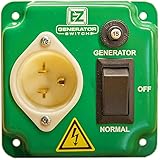
The EZ Generator Switch is not a 10-circuit panel; it is a small manual transfer switch that backs up a single circuit. According to the maker, it is UL and CSA approved, rated 15 amps at 125 volts in the generator position, and meant to tap one essential circuit, such as a furnace, refrigerator or sump pump. You plug a heavy-duty extension cord from the generator into it and move the switch from normal to generator. The maker recommends installation by a qualified person, and the switch comes with leads and a wiring diagram.
- Scope: single circuit
- Rating: 15 amp, 125 volt in generator position per maker information
- Listing: UL and CSA approved per the listing name
- Made in: USA per the listing name
- Use: furnace, sump pump or refrigerator circuits
Pros:
- Inexpensive way to back up one load
- Small and simple
- Works with a standard extension cord
Cons:
- Only one circuit
- Not suited to 240-volt loads
Versus the EmerGen 30 amp kit, it is much narrower in scope but far simpler.
A single-circuit switch is a good fit for someone who mainly wants to keep a gas furnace blower or a basement sump pump running and does not want a full panel project. Size the generator by the running amps of that one circuit plus about 25 percent for motor startup, as the maker suggests, and use a heavy-gauge cord for the connection.
5. Connecticut Electric EmerGen 30 Amp Kit – Best for 30 Amp Generators

The EmerGen 30 amp kit, model EGS107501G2K25, is a 10-circuit manual transfer switch rated at 7,500 watts, packaged with a 25-foot cord. It is the logical partner for a portable generator with a 30 amp L14-30 outlet, which is where most mid-size home-backup generators sit. Operation is simple: flip each rocker from line to generator after the generator is running, and use the meters to watch the load. Product information also says the switch is a double-throw design that blocks backfeed. Confirm the inlet details and exact kit parts on the listing.
- Rating: 30 amp, 7,500 watts per the listing
- Circuits: 10
- Cord: 25 feet per the listing
- Generator match: 30 amp portable generators
- Operation: manual rocker switches with load meters per maker information
Pros:
- Matches common 30 amp generators
- Meters help avoid overloads
- Cord included
Cons:
- Limited to 7,500 watts
- Does not support a 50 amp generator without a different switch
Next to the 50 amp Series 2 kit, it is the better fit when your generator tops out near 7,500 watts.
Because the circuits are individually switched, you can bring the refrigerator and furnace over first and add lights afterward, watching the meters each time. That staged approach is more forgiving of a modest generator than throwing the entire panel onto it at once.
6. 63A 110V Automatic/Manual ATS – Runner-Up, Not a Typical US Whole-Home Choice

This product is a 63 amp, 110 volt, 2-pole automatic or manual changeover switch with an LED display, listed as CE certified for 50/60 Hz use. It does not match the other picks: it is a DIN-rail style unit for single-phase 110-volt systems, not the 120/240 volt split-phase service found in most American homes, and the listing does not describe a US safety listing. It may suit a small off-grid cabin, a workshop sub-panel or a solar backup project designed for its voltage. Treat it as a runner-up for specialized use and do not use it as the transfer device for a typical house panel.
- Rating: 63 amp, 110 volt, 2-pole
- Mode: automatic or manual changeover
- Display: LED, per the listing
- Mounting: confirm on listing; DIN-rail style units are common
- Certification: CE per the listing; confirm any US listing
Pros:
- Automatic changeover option
- Compact
- Useful for specialized low-voltage setups
Cons:
- Does not match standard 120/240 volt US service
- No US listing named
Compared with the other manual switches here, it is the only automatic one but also the least suited to ordinary home backup.
If you are shopping for a normal house, skip it. If you are wiring a small single-phase 110-volt system and have an electrician who confirms the voltage, neutral handling and enclosure requirements, it may have a place. Either way, treat the listing as a starting point and ask for the datasheet.
Specs Compared
| Product | Amperage | Voltage | Circuits | Operation | Cord or inlet |
|---|---|---|---|---|---|
| 100A manual switch | 100 A | 120/240 V | Whole service | Manual | Confirm on listing |
| Connecticut Electric Series 2 | 50 A | 120/240 V | 10 | Manual | 25 ft cord and 50 A inlet |
| 50A generic panel | 50 A | 240 V | 10 | Manual | Confirm on listing |
| EZ Generator Switch | 15 A in generator position | 125 V | 1 | Manual | Uses a separate extension cord |
| Connecticut Electric EmerGen | 30 A | 120/240 V; confirm | 10 | Manual | 25 ft cord; confirm inlet |
| 63A ATS | 63 A | 110 V | 2-pole | Automatic or manual | Confirm on listing |
How We Chose These
We compared the six listings using their published titles, manufacturer descriptions and retailer specification fields. The criteria were amperage and voltage, the number of circuits, whether the unit is manual or automatic, enclosure rating, any named safety listing, and what is included in the package. We also checked how well each product matches a standard U.S. 120/240 volt home and the common 30 and 50 amp generator outlets. Where a listing did not name a certification or kit contents, we say so and ask you to confirm. This is a research-based comparison, not an installation guide or code advice, so use it to shortlist products and then talk with a licensed electrician.
What to Look For
Match the switch to the generator
A 30 amp switch is paired with a generator that has an L14-30 outlet and tops out near 7,500 watts. A 50 amp switch is paired with a 50 amp outlet and up to about 12,500 watts. Check the generator’s data plate for its rated running watts and outlet types before buying. Example: a 7,500-watt generator supplies about 31 amps at 240 volts at the very top of its range, so a 30 amp switch with meters helps you stay below that figure. Never choose a switch rated lower than the circuits you plan to power or the generator’s output breaker.
Circuit-based switches versus whole-service switches
A circuit-based transfer switch, with 6 to 16 individual rockers, powers selected circuits only. It limits the load on the generator and often costs less to install. A whole-service switch, like the 100 amp unit, moves all the loads at once and demands that you shed big loads by hand, such as an electric range or dryer. For most households with a portable generator, circuit-based switches are easier to live with.
Planning your circuits with a quick load worksheet
List the loads you want and add their running watts. A typical set might be a refrigerator at about 700 watts, a furnace blower at about 600, a sump pump at about 800, lights at 300 and a router at 50, which totals around 2,450 running watts. Add the biggest startup surge, often from a motor, of roughly 1,500 to 2,500 extra watts, and you land near 5,000 watts, which fits a 7,500-watt generator with margin. Start the generator before flipping circuits, and add loads one at a time.
Manual versus automatic transfer
Manual switches require you to start the generator and flip the rockers, which is simple and less expensive. Automatic transfer switches sense an outage and start a standby generator for you, but they are designed for permanently installed standby units and professional installation. Some inexpensive automatic modules sold online are built for different voltages or wiring standards, so check that voltage and pole count match US split-phase service.
Inlets, cords and breakers
The inlet is the weatherproof connector on the outside of the house, and it must match both the transfer switch rating and the generator cord. A 30 amp inlet uses an L14-30 style connector; a 50 amp inlet uses a different, larger connector. The cord should be rated for outdoor use and sized to the amperage, with 10-gauge copper typical for 30 amp and 6-gauge for 50 amp runs. Keep the cord as short as practical while respecting the 20-foot generator distance, and keep the inlet cover closed when it is not in use.
Testing and maintenance after installation
Have the installer walk you through the startup order: generator on, wait for it to settle, then flip circuits one by one. Reverse it at the end. Exercise the switch every few months, with the generator running outdoors, so the rockers do not seize and you remember the steps. Keep a written checklist next to the panel with the sequence and the labeled circuits, and update it if you add new appliances.
Listings, permits and installation
Look for UL, ETL or similar listing marks, a rainproof NEMA 3R enclosure if mounted outdoors, and a clear wiring diagram. Most areas require a permit and inspection for a transfer switch. Ask the electrician about generator neutral bonding, grounding and cord length. Do not use a homemade “double male” cord or a panel interlock you did not buy as a listed kit; both can backfeed the grid and endanger utility workers.
Questions
Do I really need a transfer switch for a portable generator?
If you want to power household wiring, yes. A transfer switch or code-compliant interlock isolates the house from the utility, preventing backfeed. If you only plug appliances into the generator with extension cords, you do not need one.
What is the difference between a transfer switch and an interlock?
An interlock is a mechanical plate that keeps the main breaker and the generator breaker from being on together. A transfer switch moves selected circuits between sources. Both can be code-compliant, so ask your electrician which fits your panel.
How many circuits do I need?
Most homes choose 6 to 10 essential circuits: refrigeration, heat, lighting, a sump pump and communications. Add up running watts and make sure the generator can handle the startup surge.
Can I install a transfer switch myself?
Installation involves live panel work and often requires a permit and inspection. Most owners hire a licensed electrician. Even skilled DIYers should check local rules first.
Will a 30 amp switch work with a 50 amp generator?
It will physically fit only if you use a matching cord or adapter, but the switch caps the available power at 30 amps. For a 50 amp generator, a 50 amp switch makes better use of it.
Where should the inlet box go?
Mount it on an exterior wall near the panel, away from windows and vents, and use a weatherproof cover. Run the generator at least 20 feet from the house with the exhaust pointing away.
Update History
- October 20, 2026 – Initial publication; product set drawn from current catalog listings.
- Check the product page for current specifications and availability before buying.
Sources
- Manufacturer product and specification pages for Connecticut Electric and EZ Generator Switch
- Retailer listing titles and specification fields for each product
- UL 1008 transfer switch equipment references as cited by manufacturers
- U.S. Consumer Product Safety Commission guidance on generator placement and carbon monoxide


Write Your Review
No reviews yet. Be the first to share your experience!