
Our Short List of 3
All 4 Picks at a Glance
| Product | Specs | Action |
|---|---|---|
 VEVOR 12V Fuel Transfer Pump (B0CNSKWWWD) | Check price on Amazon | |
 GPI M-180S 12V Fuel Transfer Pump (B00QVDPEJW) | Check price on Amazon | |
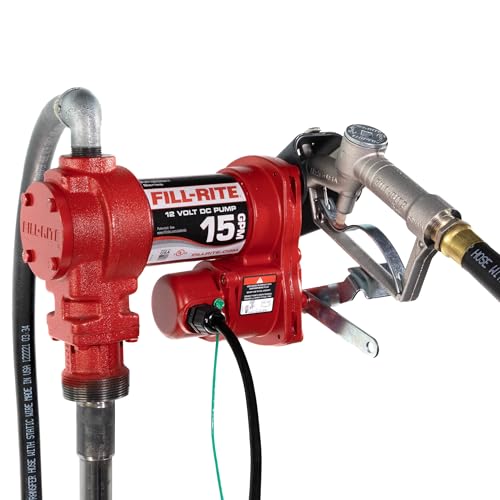 Fill-Rite FR1210H 12V Fuel Transfer Pump (B0000AX0XA) | Check price on Amazon | |
 Orion Motor Tech 12V Diesel Transfer Pump (B019ZD3U90) | Check price on Amazon |
🛒 Best Price Today on Amazon
Prime members get fast, free shipping on everything above, plus member-only deals. New members get a 30-day free trial — cancel anytime.
Moving fuel a few gallons at a time is slow work when the tank in front of you holds fifty gallons or more, and that is exactly where the best high volume fuel transfer pump earns its place. A high-volume pump is built to move fuel quickly from a storage tank, a truck-bed transfer tank, or a drum into tractors, trucks, generators, and other equipment, so the job finishes in minutes rather than stretching across a long afternoon. The pumps in this guide are all rated at roughly twelve gallons per minute or more, which puts them in a different class from small battery-powered can pumps that move two or three gallons per minute. For most buyers, a 12-volt pump rated at 15 to 20 gallons per minute is the right starting point, with fuel compatibility, duty cycle, nozzle type, and kit contents deciding among the models.
Quick Picks
| Product | Best For | Key Spec |
|---|---|---|
| VEVOR 12V Fuel Transfer Pump (B0CNSKWWWD) | Highest listed flow rate | Up to 20 GPM, 12V DC, automatic shutoff nozzle |
| GPI M-180S 12V Fuel Transfer Pump (B00QVDPEJW) | All-round 12V kit for several machines a day | 18 GPM, 12V DC, hands-free filling |
| Fill-Rite FR1210H 12V Fuel Transfer Pump (B0000AX0XA) | Heavy-duty cast-iron build | 15 GPM, 12V DC, manual nozzle |
| Orion Motor Tech 12V Diesel Transfer Pump (B019ZD3U90) | Diesel and light-oil transfers | Up to 11.9 GPM, 12V DC, self-priming |
How to Choose
Flow Rate and Real Transfer Time
Flow rate is the first number to compare when shopping for a high-volume pump, and it is measured in gallons per minute, usually shortened to GPM. A pump rated at 20 GPM can, in theory, move a 50-gallon tank in about two and a half minutes, while a pump rated at 12 GPM needs a little over four minutes for the same job. Those figures are manufacturer-listed maximums, not promises for every setup. Hose length, hose diameter, lift height, fuel temperature, fuel type, and the condition of the power supply can all reduce the flow you actually get.
Power Source: 12V DC and Where the Pump Lives
Every pump in this guide runs on 12V DC power, which means it can run from a truck or tractor battery and travel wherever the tank travels. That is the standard arrangement for high-volume field pumps, and it suits farms, construction sites, and generator setups where mains power is not close at hand. Before choosing, check how the pump connects to power: cable length, connector type, and whether it is meant to be wired permanently, clamped to a battery, or mounted on a tank.
Fuel Compatibility
Fuel compatibility is not a detail to assume. Some high-volume pumps are listed for gasoline, diesel, kerosene, ethanol and methanol blends, and biodiesel. Others are listed only for diesel and light oils. Using a pump with a fuel it is not listed for can damage seals and hoses, and it can create a safety risk, especially with gasoline vapor. Read the listing and the manual for the exact fuels named, and contact the manufacturer if the listing is unclear. Also think about the fuels you will move over the life of the pump, not just the fuel you move today: a farm that runs diesel tractors and gasoline mowers may need a pump listed for both.
Duty Cycle and Continuous Use
Duty cycle describes how long a pump can run before it needs to rest, and it matters more for high-volume work than many buyers expect. Many bung-mount pumps in this class are rated for about 30 minutes of running followed by about 30 minutes of rest. That pattern is plenty for topping up a few machines, and it suits a farm or workshop where filling happens in bursts. It is a poor match for a fleet that fills equipment all day without a break, which should look for a continuous-duty pump instead.
Nozzle Type: Manual or Automatic Shutoff
The nozzle decides how much attention each fill needs. A manual nozzle gives the operator direct control over flow: you squeeze to start, release to stop, and you watch the receiving tank throughout the fill. That control suits buyers who fill tanks of different shapes and sizes. An automatic shutoff nozzle is designed to stop flow when the tank reaches full, which helps limit overfilling and spills, and it suits buyers who fill the same tank repeatedly. An automatic nozzle is not a reason to walk away, though. Stay present, watch the tank, and stop the pump if the nozzle does not behave as expected.
Suction Lift, Head Lift, and Hose Reach
Suction lift and head lift describe how far a pump can pull fuel up and push it onward. Suction lift is the vertical distance from the fuel surface to the pump, while head lift covers the total vertical distance the pump can move fuel. These figures matter when the pump sits above the fuel source or when the receiving tank is higher than the source tank. Hose length matters just as much: a short discharge hose forces the source tank close to the receiving tank, which is not always possible with large equipment. Check both the suction side and the discharge side before buying, and note the hose diameter, since a narrow hose can limit flow even when the pump itself is rated for a high volume.
Kit Contents, Mounting, and Build
A high-volume pump is rarely a bare pump body. Most are sold as kits, and the contents vary widely. Compare the hose, nozzle, suction pipe, filter, mounting hardware, and wiring included in the box. A kit with a filter helps protect downstream equipment from debris in a storage tank, which matters for modern diesel engines. Build quality shows up in the casing, the motor housing, and the mounting base. Cast-iron construction suits rough operating environments and fixed installations. Look for thermal overload protection, which is designed to help prevent motor damage during abnormal use, and check the mounting thread size: most of these pumps thread into a standard two-inch bung on top of a tank, but confirming the fit before ordering avoids a return.
The Best Best High Volume Fuel Transfer Pump Reviewed
VEVOR 12V Fuel Transfer Pump (B0CNSKWWWD)
The VEVOR 12V Fuel Transfer Pump is the highest-flow pick here, with a listed maximum of up to 20 gallons per minute. It runs on 12V DC power and uses a 3000-rpm motor. The manufacturer lists gasoline, diesel, kerosene, ethanol and methanol mixtures, and biodiesel among compatible fuels, which gives it the broadest fuel list of the four pumps here.
The kit includes an automatic shutoff nozzle, a discharge hose, and a suction pipe. The automatic nozzle is intended to stop flow when the tank is full. A fuel collection box is designed to catch drips after use, while the aluminum-alloy casing provides a place to store the nozzle between fills. The listed head lift is at least 26.2 feet, and the listed suction lift is at least 9.8 feet.
This pump suits buyers who prioritize the highest stated flow rate for larger or time-sensitive transfers, such as filling several machines from a transfer tank in one session. It also suits buyers who want a complete kit with an automatic nozzle rather than assembling hoses and fittings separately.
Who should skip it: buyers who need a diesel-only pump with a long track record in a fixed fleet installation may prefer a cast-iron model from a long-established fuel-equipment brand. Buyers who fill only small tanks will not use the full 20 GPM capacity, and a lower-flow pump may be a simpler match. As with every pump here, a high advertised flow rate does not guarantee that every transfer will reach that rate, since setup and operating conditions matter.
GPI M-180S 12V Fuel Transfer Pump (B00QVDPEJW)
The GPI M-180S is a strong all-round 12V kit, listed at 18 gallons per minute.
The listing describes hands-free filling and a theft-resistant design, which suits a pump that stays mounted on a truck-bed transfer tank between jobs. A 30-minute duty pattern is listed for this class of pump, so plan filling sessions in bursts with rest time between longer runs.
This pump suits buyers who want a balance of flow, brand familiarity, and a complete kit for daily farm or contractor use. It is a sensible middle step between a 15 GPM cast-iron pump and a 20 GPM model.
Who should skip it: buyers who fill equipment all day without breaks should look at a continuous-duty pump instead, since the duty pattern here is built around run-and-rest cycles. Buyers who want an automatic shutoff nozzle as the headline feature should compare the nozzle type in the exact listing before choosing, since nozzle styles vary across GPI kits and model years.
Fill-Rite FR1210H 12V Fuel Transfer Pump (B0000AX0XA)
The Fill-Rite FR1210H is the heavy-duty pick in this guide. It is a 12V pump listed at 15 gallons per minute, with a cast-iron construction described as suitable for rough operating environments. That build suits a pump that stays mounted on a farm tank or a truck-bed tank and takes knocks, dust, and weather as part of normal use.
The product description lists gasoline, diesel, kerosene, ethanol and methanol blends, and biodiesel as compatible fuels, which covers the common fuels on a mixed farm or in a small fleet. The kit includes a discharge hose and a manual nozzle, so the operator controls flow directly and watches the receiving tank throughout the fill. A removable junction box rotates 180 degrees to help with wiring in tight spaces, and thermal overload protection is included to help prevent motor overheating during abnormal use.
This pump suits buyers who value durability and a straightforward manual setup over the highest flow number. It is a good match for a fixed or semi-fixed installation where the pump stays in place, the same operator fills the same equipment, and a manual nozzle is preferred for control near the top of the tank.
Who should skip it: buyers who want the fastest possible fill should look at the 18 GPM and 20 GPM models in this guide, since 15 GPM is the second-lowest flow here. Buyers who want hands-free filling should choose a pump with an automatic nozzle instead, because the manual nozzle on this model needs the operator present and in control for the whole fill.
Orion Motor Tech 12V Diesel Transfer Pump (B019ZD3U90)
The Orion Motor Tech 12V Diesel Transfer Pump is the most focused pump in this guide. It is listed at a maximum flow rate of up to 11.9 gallons per minute, with a 0.2-horsepower, 175-watt motor. That is the lowest flow in this group, and it is still roughly four times the flow of a small battery-powered can pump, so it keeps the high-volume angle for diesel work while staying more compact than the larger 15 to 20 GPM models.
The listing gives a maximum suction figure of 16 feet 5 inches and a maximum lift figure of 32 feet 10 inches. The kit includes inlet and outlet hoses, a nozzle, and other accessories. Its adjustable nozzle trigger allows manual flow control or continuous pumping. A bypass valve, a mesh strainer, and a mounting base are also listed. The pump is described as self-priming, which helps it start moving fuel without manual priming on each use.
The important limit is fuel type. The product description specifies diesel and light oils, not gasoline. Do not use it for a fuel type unless the manufacturer confirms compatibility. That limit makes it a poor match for a mixed-fuel farm, but a focused match for a diesel-only setup, such as a diesel generator, a diesel tractor, or a diesel truck fleet.
This pump suits buyers who transfer diesel or light oils, who want a self-priming 12V kit with a strong lift figure, and who do not need the 15 to 20 GPM flow of the larger models. It also suits buyers who want a complete kit with hoses and a nozzle included, rather than a bare pump body.
Who should skip it: anyone who needs to move gasoline should skip this pump entirely and choose one of the gasoline-listed models above. Buyers who fill large tanks in a hurry should also look at the 15 to 20 GPM models, since the Orion pump trades top-end flow for a smaller motor and a diesel-focused design.
What to Check Before You Buy
Start with the fuel. Write down every fuel you plan to move, including blends, and match that list against the exact compatibility list in the product description and the manual. Do not infer compatibility from the words fuel transfer pump alone.
Next, measure the setup. Measure the depth of the source tank or drum, the height of the receiving tank inlet, the distance between the two, and the thread size of the tank bung. Compare those measurements with the suction pipe length, the hose lengths, the lift figures, and the mounting thread in the listing.
Check the power arrangement as well. Confirm the voltage, the cable length, the connector type, and whether the pump is meant to be wired permanently or connected with clamps. Read the duty cycle in the manual and plan your filling sessions around it, allowing rest time where the manual calls for it.
Look at the kit list line by line. Confirm whether the hose, nozzle, suction pipe, filter, and mounting hardware are included, and note anything you will need to buy separately. Check the nozzle type and decide whether manual control or automatic shutoff suits your filling routine. Finally, read the safety and installation instructions in full before the first transfer. Keep ignition sources away from fuel, work in a ventilated area, stay present while pumping, and follow local rules for fuel transfer and storage.
FAQ
What counts as a high-volume fuel transfer pump?
There is no single legal threshold, but in practical terms a high-volume pump moves fuel far faster than a small can pump. The pumps in this guide are rated at roughly 12 gallons per minute or more, while small battery-powered can pumps are typically rated at two to five gallons per minute.
Is a 20 GPM pump always better than a 15 GPM pump?
Not always. A 20 GPM pump moves fuel faster under perfect conditions, but the flow you get depends on hose length, lift, fuel type, and power supply. A 15 GPM pump with a heavier build, a better kit, or a fuel list that matches your needs may serve you better than a 20 GPM pump with a shorter hose or a narrower fuel list. Compare the full kit and the duty cycle, not just the headline flow number.
Can one pump transfer both gasoline and diesel?
Only if the pump manufacturer lists both fuels as compatible. Some pumps in this guide list gasoline, diesel, kerosene, and blends, while the Orion Motor Tech model in this guide is listed for diesel and light oils only. Check the listing and the manual for the exact fuels, and contact the manufacturer if the listing is unclear.
Do I need an automatic shutoff nozzle?
An automatic shutoff nozzle can help limit overfilling, and it suits repeated fills of the same tank. A manual nozzle gives direct control and suits varied tanks and careful top-ups. Neither type removes the need to stay present and watch the receiving tank. Choose the style that matches how you fill, and stop the pump if the nozzle does not behave as expected.
How long can a high-volume 12V pump run without a break?
Many pumps in this class are rated for about 30 minutes of running followed by about 30 minutes of rest, so check the manual for the exact duty cycle of the model you choose. If you fill equipment all day, look for a pump with a continuous-duty rating.
Bottom Line
The best high volume fuel transfer pump for most buyers is a 12V model rated at 15 to 20 gallons per minute, with a fuel list that covers the fuels they actually move, a nozzle style that matches their filling routine, and a kit that includes the hose and suction parts they need. The VEVOR 20 GPM model leads on listed flow and fuel breadth, the GPI M-180S balances flow and field-ready design at 18 GPM, the Fill-Rite FR1210H trades a little flow for cast-iron durability at 15 GPM, and the Orion Motor Tech model serves diesel-only transfers at up to 11.9 GPM with strong lift figures. Measure your tanks, confirm fuel compatibility, and check the duty cycle before you choose.
Disclosure: As an Amazon Associate, we may earn from qualifying purchases.





Write Your Review
No reviews yet. Be the first to share your experience!