
Our Short List of 3

- Blade steel: AUS-8 stainless steel
- Blade length: 3.0 in drop point, satin finish
- Lock type: liner lock
- Handle: glass-filled nylon, black

- Blade steel: Sandvik 14C28N stainless steel
- Blade length: 3.0 in, bead-blasted finish
- Lock type: frame lock with Tip-Lock slider
- Handle: 410 stainless steel
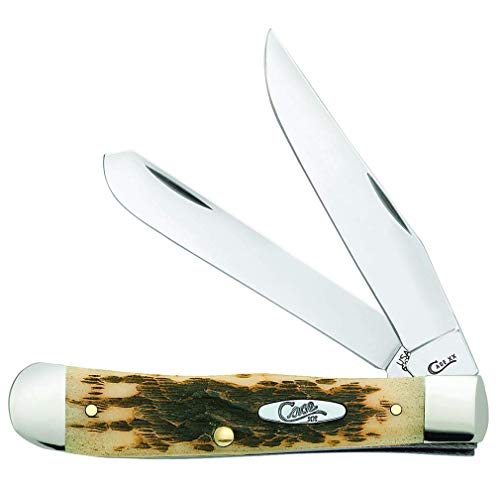
- Blade steel: chrome vanadium carbon steel
- Blade length: clip blade 3.25 in and spey blade 3.27 in
- Lock type: slipjoint, non-locking
- Handle: amber jigged bone with nickel silver bolsters
All 4 Picks at a Glance
| Product | Specs | Action |
|---|---|---|
| Ontario Knife Co. RAT Model II Folding Knife (8860) |
| Check price on Amazon |
| Kershaw Leek Assisted Opening Knife (1660) |
| Check price on Amazon |
| Case Trapper Pocket Knife, Amber Bone (6254 CV) |
| Check price on Amazon |
 Kershaw Shuffle Folding Pocket Knife, Purple (8700PURBW) |
| Check price on Amazon |
🛒 Best Price Today on Amazon
Prime members get fast, free shipping on everything above, plus member-only deals. New members get a 30-day free trial — cancel anytime.
A pocket knife earns its place by being there when a rope needs cutting, a package needs opening, or a camp kitchen needs a spare blade. The five knives below cover the main ways people carry: a proven liner lock folder for daily work, a slim assisted opener, a traditional two-blade slipjoint, a small budget folder with tricks in its backspacer, and a keychain tool that weighs almost nothing. Blade steel, lock type, handle material, pocket clip, and weight are covered for each one.
As an Amazon Associate, we earn from qualifying purchases.
Quick answer
For most people, the Ontario RAT Model II is the easy recommendation: a 3 inch AUS-8 blade, a secure liner lock, a four-position clip, and a light nylon handle. If you want one-handed speed in a slimmer profile, the Kershaw Leek opens with spring assistance and rides flat. Traditionalists should look at the Case Trapper, a two-blade slipjoint in amber bone. On a tighter budget, the Kershaw Shuffle adds a screwdriver and bottle opener, and the Victorinox Classic SD covers keychain duty with scissors and a small blade.
Ontario Knife Co. RAT Model II Folding Knife (8860)
- Blade steel: AUS-8 stainless steel
- Blade length: 3.0 in drop point, satin finish
- Lock type: liner lock
- Handle: glass-filled nylon, black
The RAT Model II shrinks the well known RAT Model I into a handier size while keeping the same open-post build and grippy nylon handle. The 3 inch drop point blade is AUS-8 stainless steel with a satin finish, a steel that sharpens quickly on almost any stone and shrugs off daily moisture. Thumb studs on both sides suit left or right handed opening.
A liner lock bar snaps behind the blade tang and holds it firmly during camp chores like cutting cord, shaving kindling, or breaking down boxes. The nylon handle has enough texture to stay put in wet hands without chewing up a pocket. A four-position clip allows tip-up or tip-down carry on either side, and at 2.7 ounces the knife disappears in jeans until needed.
Kershaw Leek Assisted Opening Knife (1660)
- Blade steel: Sandvik 14C28N stainless steel
- Blade length: 3.0 in, bead-blasted finish
- Lock type: frame lock with Tip-Lock slider
- Handle: 410 stainless steel
The Leek is the slim, quick option in this group. Its 3 inch blade is Sandvik 14C28N stainless steel, a fine-grained steel that takes a keen edge and resists rust well. A torsion bar system assists the blade the moment you nudge the flipper or thumb stud, so the knife opens fast with one hand and locks up with a solid frame lock.
The handle is bead-blasted 410 stainless steel, thin and smooth, which helps the Leek sit flat in a pocket. A Tip-Lock slider keeps the blade shut while carried, a detail that matters with assisted openers. The clip is reversible, and there is a lanyard hole for a fob. At 3 ounces and 4 inches closed, it suits office carry as easily as weekend trips, and it is made in the USA.
Case Trapper Pocket Knife, Amber Bone (6254 CV)
- Blade steel: chrome vanadium carbon steel
- Blade length: clip blade 3.25 in and spey blade 3.27 in
- Lock type: slipjoint, non-locking
- Handle: amber jigged bone with nickel silver bolsters
The Trapper is the traditional pattern in this lineup, a slipjoint with two full-length blades that open with a nail nick and stay open by spring tension rather than a lock. The clip blade handles general cutting, while the long spey blade was shaped for skinning and camp food work. Both blades are chrome vanadium steel, a carbon steel that takes a very fine edge and is easy to touch up, though it needs a wipe of oil now and then.
The handle is genuine amber bone with a jigged texture, nickel silver bolsters, and brass liners. There is no pocket clip; a Trapper rides loose in the pocket or in a belt sheath, the way these knives have been carried for generations. At 4.13 inches closed and about 3.4 ounces, it is a calm, capable tool for camp cooking, whittling, and opening feed bags.
Kershaw Shuffle Folding Pocket Knife, Purple (8700PURBW)
- Blade steel: 8Cr13MoV stainless steel, BlackWash finish
- Blade length: 2.4 in drop point
- Lock type: liner lock
- Handle: glass-filled nylon with K-Texture grip
The Shuffle proves a small knife can pull double duty. Its 2.4 inch drop point blade is 8Cr13MoV stainless steel with a BlackWash finish that hides scratches. The blade opens manually with thumb studs and locks with a liner lock. What sets the Shuffle apart is the backspacer: it carries a flathead screwdriver tip and a bottle opener, plus a lanyard hole, so the knife handles light fixing jobs around camp without a second tool.
The glass-filled nylon handle wears Kershaw’s K-Texture grip pattern, which keeps the short handle secure even with room for about three fingers. A reversible deep-carry clip tucks the knife low in the pocket, and the whole package weighs 2.8 ounces. For a glove box, a tackle tray, or a first everyday knife, it covers the basics and a little more.
Victorinox Swiss Army Classic SD Pocket Knife, Red
The Classic SD is the keychain pick, a tiny slipjoint tool that rides on a key ring and ends up used more often than knives ten times its size. The main blade is 1.5 inches of stainless steel, sized for opening letters, trimming cord, and slicing tape. Alongside it sit small scissors, a nail file with a 2.5 mm screwdriver tip, tweezers, and a toothpick, all folded into smooth red Cellidor scales.
There is no lock and no pocket clip; the split key ring is the carry system. At 0.7 ounces and 2.3 inches closed, it adds nothing noticeable to a keychain or a camp repair kit, and it makes a sensible backup when a full-size folder stays home.
Specs
- Blade steel: stainless steel
- Blade length: 1.5 in, plus scissors and nail file tools
- Lock type: slipjoint, non-locking
- Handle: red Cellidor scales
- Pocket clip: none, key ring carry
- Weight: 0.7 oz; closed length 2.3 in
How to choose
Match the lock to the work first. A liner lock or frame lock holds a blade open under load, which suits camp tasks and one-handed use. A slipjoint has no lock at all; it is gentle, classic, and fine for light cutting, but it asks for care and two hands to close. Blade steel is the next call. AUS-8 and 8Cr13MoV sharpen fast and forgive rough treatment, 14C28N adds rust resistance and edge life, and chrome vanadium takes the finest edge of the group while asking for an occasional wipe of oil.
Then look at carry. Blade lengths near 3 inches balance cutting ability with pocket comfort, and weights under 3 ounces get carried daily instead of left in a drawer. A reversible clip matters if you are left handed or prefer tip-up carry. Textured nylon holds on when wet, smooth steel slides easily, and bone is about feel and tradition. One last note: carry rules for blade length, assisted opening, and locking folders differ by city, state, and country, so check local rules before carrying any of these knives.
FAQ
Is AUS-8 or 14C28N better for a camp knife?
Both work well. AUS-8 is tough and very quick to resharpen on a basic stone. 14C28N holds its edge a bit longer and resists rust better, which suits wet camps and food prep.
Are assisted opening knives like the Leek hard to maintain?
No. The torsion bar lives inside the handle and needs no routine care beyond keeping lint out of the pivot. If the action feels gritty, a drop of light oil and a few open-and-close cycles usually sort it.
How do I care for a carbon steel slipjoint blade?
Dry it after use, especially after cutting fruit, and wipe on a thin film of food-safe oil before storage. A light patina is normal and helps guard the steel.
Can a keychain knife replace a full-size folder?
For tape, cord, and small daily snips, yes. For camp cooking, rope work, or kindling, a 3 inch locking blade is safer and more comfortable in the hand.
Verdict
Pick the RAT Model II for a dependable locking folder, the Leek for slim one-handed speed, the Case Trapper for tradition, the Shuffle for compact value, and the Classic SD for keychain duty.

Write Your Review
No reviews yet. Be the first to share your experience!