
Our Short List of 3

- Best for: Tight engine bays and moderate non-boosted nitrous shots where a compact dedicated cell is enough.
- 3-quart high-strength composite fuel cell that mounts in most factory battery trays without modification
- Low-pressure external fuel pump with non-bypass style regulator
- Fuel pressure adjustable from 5 to 12 psi
- Supports up to 500 nitrous horsepower on gasoline or race fuel

- Best for: Non-boosted street and strip cars that want a full gallon of dedicated nitrous fuel with simple low-pressure adjustment.
- 1-gallon high-strength composite fuel cell that mounts in most factory battery trays without modification
- Low-pressure external fuel pump with non-bypass style regulator
- Fuel pressure adjustable from 5 to 12 psi
- Supports up to 600 nitrous horsepower on gasoline or race fuel and 300 nitrous horsepower on methanol

- Best for: Boosted engines and high-horsepower builds that need fuel pressure to track boost across a wide adjustment range.
- 1-gallon high-strength composite fuel cell that mounts in most factory battery trays without modification
- High-output internally mounted E85-compatible fuel pump, pre-assembled with an adjustable external regulator
- Fuel pressure adjustable from 3 to 60 psi with no special jetting required
- Regulator is boost-referenced at a 1 to 1 rate for supercharged and turbocharged applications
All 3 Picks at a Glance
| Product | Specs | Action |
|---|---|---|
| Nitrous Express Mainline SAFE Stand Alone Fuel Enrichment System, 3-Quart Tank |
| Check price on Amazon |
| Nitrous Express SAFE Stand Alone Fuel Enrichment System Low Pressure Adjustable, 1-Gallon |
| Check price on Amazon |
| Nitrous Express SAFE Stand Alone Fuel Enrichment System Boosted, 1-Gallon |
| Check price on Amazon |
🛒 Best Price Today on Amazon
Prime members get fast, free shipping on everything above, plus member-only deals. New members get a 30-day free trial — cancel anytime.
A stand alone fuel system for nitrous solves one specific problem: your factory fuel system was never designed to feed a nitrous hit on top of everything else the engine already demands. When the nitrous solenoid opens, the enrichment side needs fuel at a steady pressure and in the right volume, and if the stock pump or rail pressure sags at that exact moment, the mixture goes lean. The real decision is not about brand loyalty. It is about matching a dedicated cell, pump, and regulator to your horsepower target, your fuel type, and whether your engine is boosted or naturally aspirated.
This guide is for street and strip builders adding a wet nitrous kit to a car that still runs its factory fuel system, for racers who want to run race gas or methanol through the nitrous side while the engine keeps pump gas, and for boosted owners who need a fuel supply that can track rising manifold pressure. The three systems below are all Nitrous Express SAFE stand alone fuel enrichment setups, chosen from their names and specifications on their Amazon listings, covering compact non-boosted builds, larger non-boosted builds, and boosted high-horsepower builds.
Quick Picks
As an Amazon Associate we earn from qualifying purchases
| Product | Best for | Key spec from title |
|---|---|---|
| Nitrous Express Mainline SAFE Stand Alone Fuel Enrichment System, 3-Quart Tank | Tight engine bays and smaller non-boosted nitrous shots | 3-quart composite cell with external pump and 5 to 12 psi regulator |
| Nitrous Express SAFE Stand Alone Fuel Enrichment System Low Pressure Adjustable, 1-Gallon | Non-boosted street and strip cars wanting a full gallon of dedicated fuel | 1-gallon composite cell, external pump, 5 to 12 psi |
| Nitrous Express SAFE Stand Alone Fuel Enrichment System Boosted, 1-Gallon | Boosted and high-horsepower builds needing wide pressure adjustment | 1-gallon composite cell, internal pump, 3 to 60 psi boost-referenced regulator |
How to Choose
Match the system to boosted or non-boosted use first
The single most important split is whether your engine is boosted. Low-pressure SAFE systems with a non-bypass regulator are built for naturally aspirated engines and provide fuel pressure in the 5 to 12 psi range, which suits most carbureted and low-pressure EFI nitrous setups. A boosted engine needs a regulator that rises with manifold pressure, so the boosted system uses a 1 to 1 boost-referenced regulator adjustable from 3 to 60 psi. Fitting a non-boosted system to a supercharged or turbocharged car leaves the enrichment fuel pressure flat while boost climbs, and that mismatch is exactly how a nitrous pass turns lean. Check your induction setup before you compare anything else.
Size the cell to your nitrous use, not your engine bay
A 3-quart cell holds enough fuel for a useful number of passes on a moderate nitrous shot, and it fits where a full gallon cell will not, including tight factory battery trays. A 1-gallon cell carries more fuel between refills and suits larger shots or longer nights at the track, but it needs the extra space and a secure mount. Think about how often you want to open the cell and refill it, and whether you plan to run a different fuel in the nitrous side, such as race gas or methanol, which makes a dedicated cell worth the space. Measure the tray or mounting area before ordering, because a cell that does not fit securely is not a bargain at any size.
Check the horsepower rating against your fuel type
Every SAFE system carries a horsepower rating that changes with fuel. The same pump that supports 600 nitrous horsepower on gasoline may support only 300 on methanol, because methanol needs roughly twice the volume for the same energy. The boosted system is rated higher on gasoline than on E85 for the same reason. Read the rating for the fuel you actually plan to run, add headroom for your target shot size, and remember that jetting changes with pressure. If you plan to step up to a bigger shot later, buy the system rated for the bigger number now rather than replacing the whole setup after one season.
Plan mounting, plumbing, and fuel handling before you buy
A stand alone system is only as good as its installation. The cell needs a flat, secure mount, usually in the factory battery tray, with the rollover valve and sealed cap oriented correctly so fuel cannot escape in a hard launch or an incident. External-pump versions need space and brackets for the pump and regulator, while internal-pump versions arrive pre-assembled and save that step. Some versions ship without fuel lines or fittings, so you choose rubber hose or braided line and the right thread size. Work with fuel only in a ventilated space away from ignition sources, keep a suitable fire extinguisher within reach, and route lines away from heat and moving parts.
The 3 Best Options
Nitrous Express Mainline SAFE Stand Alone Fuel Enrichment System, 3-Quart Tank
- Best for: Tight engine bays and moderate non-boosted nitrous shots where a compact dedicated cell is enough.
- 3-quart high-strength composite fuel cell that mounts in most factory battery trays without modification
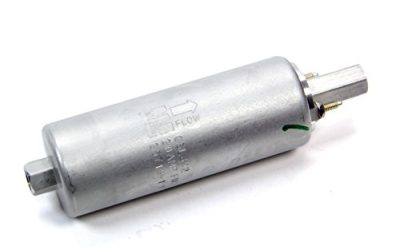
- Low-pressure external fuel pump with non-bypass style regulator
- Fuel pressure adjustable from 5 to 12 psi
- Supports up to 500 nitrous horsepower on gasoline or race fuel
Tight engine bays and moderate non-boosted nitrous shots where a compact dedicated cell is enough.
This version is not compatible with ethanol, methanol, or other harsh fuels, and EFI nitrous systems will need fuel jetting designed for 5 to 12 psi fuel pressure, so confirm your jetting chart before the first pass.
This is the compact entry into the SAFE range, built for naturally aspirated cars where space is tight and the nitrous shot is moderate. The 3-quart composite cell drops into most factory battery trays without modification, and the external low-pressure pump with a non-bypass regulator keeps the plumbing simple. It suits weekend racers and street cars running a wet nitrous kit on gasoline or race fuel, where a dedicated fuel supply removes the strain from the stock pump without a large tank taking over the engine bay.
Watch out for: This version is not compatible with ethanol, methanol, or other harsh fuels, and EFI nitrous systems will need fuel jetting designed for 5 to 12 psi fuel pressure, so confirm your jetting chart before the first pass.
Nitrous Express SAFE Stand Alone Fuel Enrichment System Low Pressure Adjustable, 1-Gallon
- Best for: Non-boosted street and strip cars that want a full gallon of dedicated nitrous fuel with simple low-pressure adjustment.
- 1-gallon high-strength composite fuel cell that mounts in most factory battery trays without modification
- Low-pressure external fuel pump with non-bypass style regulator
- Fuel pressure adjustable from 5 to 12 psi
- Supports up to 600 nitrous horsepower on gasoline or race fuel and 300 nitrous horsepower on methanol
Non-boosted street and strip cars that want a full gallon of dedicated nitrous fuel with simple low-pressure adjustment.
EFI nitrous systems will require new fuel jetting designed for 5 to 12 psi fuel pressure, and this version is not for use with boosted applications, so do not fit it to a supercharged or turbocharged engine.
The 1-gallon low-pressure system is the straightforward choice for a non-boosted street or strip car that needs more dedicated fuel between refills. The larger composite cell holds a full gallon, the external pump and non-bypass regulator cover the 5 to 12 psi range most low-pressure nitrous setups use, and the integrated fuel level gauge lets you check the cell at a glance. It fits drivers who run regular track nights or larger shots and would rather refill less often than squeeze the smallest possible cell into the tray.
Watch out for: EFI nitrous systems will require new fuel jetting designed for 5 to 12 psi fuel pressure, and this version is not for use with boosted applications, so do not fit it to a supercharged or turbocharged engine.
Nitrous Express SAFE Stand Alone Fuel Enrichment System Boosted, 1-Gallon
- Best for: Boosted engines and high-horsepower builds that need fuel pressure to track boost across a wide adjustment range.
- 1-gallon high-strength composite fuel cell that mounts in most factory battery trays without modification
- High-output internally mounted E85-compatible fuel pump, pre-assembled with an adjustable external regulator
- Fuel pressure adjustable from 3 to 60 psi with no special jetting required
- Regulator is boost-referenced at a 1 to 1 rate for supercharged and turbocharged applications
Boosted engines and high-horsepower builds that need fuel pressure to track boost across a wide adjustment range.
Settings above 20 psi require fitting the included high-pressure spring, and the regulator must be set while fuel is flowing, so follow the installation instructions step by step rather than guessing the pressure.
The boosted SAFE system is the pick for serious horsepower and forced induction. Its high-output internal pump and adjustable external regulator handle a wide 3 to 60 psi range, and the regulator is boost-referenced at a 1 to 1 rate, so fuel pressure rises with manifold pressure instead of falling behind it. It arrives pre-assembled with an E85-compatible internal pump, which keeps installation quick, and it supports the largest nitrous shots in this comparison. This is the system for supercharged and turbocharged builds where the enrichment side has to keep up with boost.
Watch out for: Settings above 20 psi require fitting the included high-pressure spring, and the regulator must be set while fuel is flowing, so follow the installation instructions step by step rather than guessing the pressure.
Which One Fits Your Situation
You have a tight engine bay and a moderate shot
Choose the Nitrous Express Mainline SAFE 3-quart system. Its smaller cell fits factory battery trays that a gallon cell cannot, and its 500-horsepower gasoline rating covers most street-level wet nitrous kits. You give up capacity and methanol compatibility, but for a moderate shot on pump gas or race fuel in a crowded bay, the compact cell and simple external pump are the right trade.
You run a non-boosted car at the track regularly
Choose the Nitrous Express SAFE Low Pressure Adjustable 1-gallon system. The full gallon means fewer refills between passes, the 600-horsepower gasoline rating covers larger shots, and methanol support opens up a second fuel option for the nitrous side. The included gauge and mounting hardware make it a complete, no-surprises setup for naturally aspirated track cars.
Your engine is supercharged or turbocharged
Choose the Nitrous Express SAFE Boosted 1-gallon system. Only the boost-referenced regulator in this group raises fuel pressure with manifold pressure, which is essential when boost climbs during a pass. Its 700-horsepower gasoline rating and E85-compatible internal pump also give you the headroom to grow the shot without replacing the fuel system.
You want the simplest install and room to grow
Choose the Nitrous Express SAFE Boosted 1-gallon system. It arrives pre-assembled with the internal pump and regulator already mounted, so there is less plumbing to plan, and the 3 to 60 psi range covers low-pressure and high-pressure nitrous setups alike. It costs more than the low-pressure versions, but it is the only one here that stays correct if you later add boost or step up the shot size.
Common Mistakes
- Fitting a low-pressure, non-boosted system to a supercharged or turbocharged engine, where a flat fuel pressure cannot keep up with rising boost.
- Reading the horsepower rating for the wrong fuel, such as planning a methanol shot around the gasoline number, which is roughly double the methanol rating.
- Skipping new fuel jetting on an EFI setup after switching to a 5 to 12 psi stand alone system, which changes the fuel flow the jets were sized for.
- Mounting the cell loosely or ignoring the rollover valve orientation, leaving fuel free to escape under hard acceleration or in an incident.
- Buying the smallest cell to save space, then refilling between every pass and running the cell dry mid-pass when the shot is larger than planned.
Frequently Asked Questions
What is a stand alone fuel system for nitrous?
A stand alone fuel system for nitrous is a dedicated fuel supply that feeds only the nitrous enrichment side, separate from the engine’s factory fuel system. It typically includes its own fuel cell, pump, and regulator, so the nitrous solenoid draws from a known fuel source at a set pressure. That separation removes the load from the stock pump and prevents rail pressure drop when the nitrous hit lands.
Do I need a different system for a boosted engine?
Yes. Boosted engines need a boost-referenced regulator that raises fuel pressure as manifold pressure rises, so the enrichment side keeps its pressure differential under boost. The boosted SAFE system in this guide uses a 1 to 1 boost-referenced regulator adjustable from 3 to 60 psi. Low-pressure non-bypass systems are designed for naturally aspirated engines only and should not be fitted to supercharged or turbocharged cars.
Can I run race gas or methanol in a stand alone fuel cell?
It depends on the system. The 1-gallon low-pressure and boosted SAFE systems support race gas and methanol or E85 within their stated horsepower ratings, but the 3-quart Mainline version is not compatible with ethanol, methanol, or other harsh fuels. Always check the rating for your exact fuel, because methanol support is rated lower than gasoline support on the same pump.
How do I set the fuel pressure on a stand alone nitrous system?
Set the pressure while fuel is flowing through the regulator, using a fuel pressure gauge on the enrichment side. On non-bypass regulators, turn the adjustment bolt clockwise to raise pressure and counter-clockwise to lower it, then recheck it under flow. On the boosted system, fit the included high-pressure spring for settings above 20 psi, and confirm the pressure again after any jetting or fuel change.
Write Your Review
No reviews yet. Be the first to share your experience!