
Our Short List of 3

- Model: U4250 tool vest
- Pockets: multiple front pouches and small tool slots
- Fabric: Cordura-reinforced pocket mouths
- Ventilation: mesh panels for airflow

- Model: 80400 SuperVest, size small/medium
- Pockets: 14 total, front layout
- Fabric: Duckwear canvas body
- Back: full mesh panel for cooling

- Model: FMST530201 FATMAX tool vest
- Pockets: 16 pockets and tool compartments
- Fabric: polyester with air mesh panels
- Visibility: reflective strips
All 5 Picks at a Glance
| Product | Specs | Action |
|---|---|---|
| 1. CLC Custom Leathercraft Tool Vest |
| Check price on Amazon |
| 2. Bucket Boss Canvas SuperVest |
| Check price on Amazon |
| 3. Stanley FATMAX Tool Vest |
| Check price on Amazon |
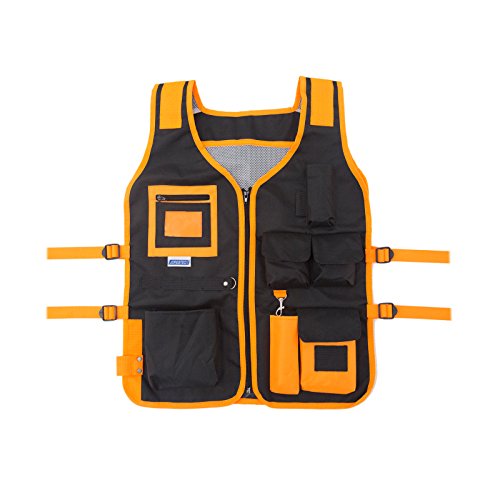 4. JORESTECH High Visibility Tool Vest |
| Check price on Amazon |
 5. Atlas 46 Saratoga Tool Vest |
| Check price on Amazon |
🛒 Best Price Today on Amazon
Prime members get fast, free shipping on everything above, plus member-only deals. New members get a 30-day free trial — cancel anytime.
A loaded tool belt hangs everything from your hips, and by mid-afternoon your lower back knows it. A tool vest moves that load onto your shoulders and spreads it across your torso, keeping pliers, drivers, tape and fasteners at chest height where both hands can reach them. For electricians on ladders, carpenters moving around a frame, and DIYers in the garage, that shift in balance makes a long day easier.
This guide compares five proven vests across the angles that matter: pocket count and layout, shoulder padding, adjustable side straps and sizing, mesh ventilation for hot work, zip versus buckle fronts, and hi-vis options for roadside or low-light jobs.
As an Amazon Associate, we earn from qualifying purchases.
Quick answer
For most tradespeople, the CLC Custom Leathercraft Tool Vest is the balanced pick, with reinforced pockets, mesh panels and wide shoulder straps. The Bucket Boss Canvas SuperVest suits carpenters who want a tough canvas vest with a zip front and a cool mesh back. The Stanley FATMAX Tool Vest adds breathable air mesh and reflective strips in a one-size fit. The JORESTECH High Visibility Tool Vest is the hi-vis choice, and the Atlas 46 Saratoga Tool Vest is the modular option for crews who like to build their own layout.
1. CLC Custom Leathercraft Tool Vest
- Model: U4250 tool vest
- Pockets: multiple front pouches and small tool slots
- Fabric: Cordura-reinforced pocket mouths
- Ventilation: mesh panels for airflow
CLC built its name on tool carriers, and this vest follows the same practical pattern: many pockets up front, reinforced where tools poke and drag, and a fit that adjusts at the shoulders and sides. The pocket layout mixes deep pouches for bulkier hand tools with smaller slots for bits, pencils and a tape, so an electrician can keep strippers, a meter and drivers separated instead of fishing through one big bag.
Mesh ventilation panels help on warm days, and the integrated inside expander gives the vest room to go over a hoodie or light jacket in cooler months. Wide adjustable shoulder straps spread the load, and an integrated belt helps keep the lower half from swinging when you climb or bend. Sizing runs in regular and larger cuts, so check the chest measurement before ordering.
2. Bucket Boss Canvas SuperVest
- Model: 80400 SuperVest, size small/medium
- Pockets: 14 total, front layout
- Fabric: Duckwear canvas body
- Back: full mesh panel for cooling
The SuperVest is the carpenter-friendly entry here: a full-coverage canvas vest that also shields your shirt from sawdust and flying debris on the saw station. Fourteen pockets cover the front, including room for a drill holster style carry and nail pouches, and the center zipper keeps loaded pockets from dangling open when you climb a ladder or lean into a cut.
Padded adjustable shoulder straps carry the weight, a full mesh back keeps air moving on hot framing days, and elastic sides flex as you reach and twist. This size is the small/medium cut; a large/extra-large version covers bigger frames. If your work is mostly bench and site carpentry with a moderate tool load, this is a comfortable, durable way to wear it.
3. Stanley FATMAX Tool Vest
- Model: FMST530201 FATMAX tool vest
- Pockets: 16 pockets and tool compartments
- Fabric: polyester with air mesh panels
- Visibility: reflective strips
Stanley’s FATMAX vest leans into airflow and visibility. Air mesh material runs through the body so the vest breathes on summer jobs, and reflective strips add a measure of presence around traffic or in dim mechanical rooms. Sixteen pockets and compartments give electricians and maintenance techs a place for hand tools, parts and a phone without stacking everything into two pouches.
The fit is one size with a universal waist, adjusted through the shoulder and side straps, which makes it easy to share between crew members or throw over different layers through the year. The gray, black and yellow colorway matches the rest of the FATMAX line. It is a sensible middle pick: lighter and cooler than canvas, with more structure than a plain safety vest.
4. JORESTECH High Visibility Tool Vest
- Build: heavy-duty nylon tool vest
- Visibility: neon trim, two reflective strips on the back
- Fit: three adjustable side straps, medium to 2XL
- Closure: front zipper
When the job sits near traffic, on a road crew, or in a busy warehouse, the JORESTECH vest puts visibility first without giving up tool storage. The black body carries neon trim and two reflective strips across the back, and the heavy-duty nylon build shrugs off the abrasion that quickly wears through thin mesh safety vests.
Three side straps adjust the fit from medium up to 2XL, which makes one vest work across a crew and across seasons of layered clothing. A front zipper keeps the vest closed and the load quiet while you move, and the pocket set covers the everyday hand tools of electricians, inspectors and maintenance staff. For hi-vis work, it is the natural pick of this group.
5. Atlas 46 Saratoga Tool Vest
- Platform: AIMS modular system with daisy-chain webbing
- Pouches: clip-on holders sold in the same system
- Fit: padded shoulder straps, adjustable side straps
- Compatibility: laid out for use with a fall harness
The Saratoga is the modular entry: instead of fixed pockets, its daisy-chain webbing lets you clip on pouches, holsters and holders from the Atlas 46 AIMS system and move them until the layout matches your trade. An electrician can run a meter pouch high on the chest and drivers low; a carpenter can swap in a nail pouch and a hammer loop in minutes.
Padded shoulders and adjustable side straps keep a heavy rig balanced, and the platform is laid out to work with a fall harness for elevated work. The build quality targets daily professional use, and the vest is made in the USA.
How to choose
Begin with the load. Count the tools you truly carry all day; a vest with fourteen to sixteen well-placed pockets beats a wall of pouches you never use, and every extra pound rides on your shoulders. Compare that with a belt honestly: vests spread weight across the torso and keep tools off your hips, which helps on ladders and in crawl spaces, while a belt still wins for very heavy framing loads that belong low.
Fit comes next. Look for adjustable side straps plus shoulder adjustment, and size for the bulkiest layer you work in. Padded shoulders matter once the vest passes a few pounds of steel. For hot work, mesh backs and air-mesh panels are worth real money in comfort; for roadside or dim sites, hi-vis trim and reflective strips are the priority. Finally, pick a front you like living with: zippers close fast and hold pockets shut on ladders, while buckle and strap fronts adjust more freely over bulky clothing.
FAQ
Is a tool vest better than a tool belt?
For moderate loads, yes for many people: the vest spreads weight across the shoulders and back, keeps tools at chest height, and stays put on ladders. Very heavy framing loads still ride better on a padded belt with suspenders.
How many pockets do I need?
Most electricians and carpenters do well with twelve to sixteen pockets: a few deep pouches for pliers and drivers, flat slots for bits and pencils, and one secure pocket for a phone or meter leads.
Can I wear a tool vest over a jacket?
Yes, if the side straps and expander panels give enough room. Size up or choose a model with generous side adjustment when winter layers are part of your normal work.
Are hi-vis tool vests allowed on regulated sites?
A hi-vis vest helps you be seen, but regulated sites may require a certified class of garment. Check your site rules; a tool vest can also be worn under or alongside certified gear where the rules allow.
Verdict
Pick the CLC vest for an all-round balance of pockets, ventilation and fit. Choose the Bucket Boss SuperVest for canvas toughness on carpentry work, the Stanley FATMAX for a cool, breathable one-size option, and the JORESTECH when visibility leads the list. If you want to design your own layout and keep it for years, the Atlas 46 Saratoga is the one to grow with.




Write Your Review
No reviews yet. Be the first to share your experience!