
🛒 Best Price Today on Amazon
Prime members get fast, free shipping on everything above, plus member-only deals. New members get a 30-day free trial — cancel anytime.
- Quick picks at a glance
- How we chose these generators
- What “tri fuel” actually means
- Derating: the numbers you should plan around
- What a natural gas hookup requires
- The generators, in detail
- Sizing: a worked example for a long outage
- Long outages and runtime
- Choosing by buyer criteria
- Safety essentials
- Common mistakes to avoid
- Frequently asked questions
- The bottom line
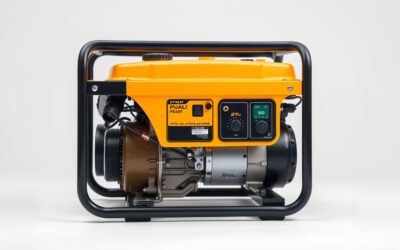
The best tri fuel generators for a natural gas hookup are the Westinghouse WGen9500TFc for balanced value, the Champion 201423 inverter for quieter premium use, and the DuroMax XP13000HXT or WEN TF1450X when you need the most raw wattage on a budget. All of them run on gasoline, propane and natural gas, but every one of them makes less power on natural gas than on gasoline, so you must size the generator against the natural gas rating, not the headline number on the box.
This guide explains what a tri fuel generator really is, what a natural gas hookup requires, how much power you lose on each fuel, and how to match a model to your outage needs. It is written from manufacturer specifications and published buyer comparisons, not from bench work. Model names and ratings change between production runs, so confirm figures on the data plate and in the owner’s manual before you buy or connect anything.

Westinghouse 13500 Peak Watt Tri-Fuel Home Backup Portable Generator, Remote Electric Start, Transfer Switch Ready, Gas, Propane, and Natural Gas Powered
Included for 'Best Tri Fuel Generators with Natural Gas Hookup' because the listing specifies Remote Electric Start and Transfer Switch Ready, details this guide uses to compare options.
View on Amazon
Westinghouse 14500 Peak Watt Tri-Fuel Home Backup Portable Generator, Remote Electric Start, Transfer Switch Ready, Gas, Propane, and Natural Gas Powered
Included for 'Best Tri Fuel Generators with Natural Gas Hookup' because the listing specifies Remote Electric Start and Transfer Switch Ready, details this guide uses to compare options.
View on Amazon
Generac 12,500 Starting Watt Tri-Fuel Portable Generator, Electric Start | Gas, Propane, Or Natural Gas Fuel Options, COsense CO Detection, 9.5 Hour Runtime, Emergency Home Backup, 49 State Compliant
Included for 'Best Tri Fuel Generators with Natural Gas Hookup' because the listing specifies 500 Starting Watt Tri-Fuel Portable Generator and Electric Start, details this guide uses to compare options.
View on Amazon
DuroStar DS13000MXT 13,000-Watt 500cc Tri Fuel Portable Generator - Gas, Propane & Natural Gas, Remote Electric Start, Whole Home Power Backup, Transfer Switch Ready, RV & Emergency Ready
Included for 'Best Tri Fuel Generators with Natural Gas Hookup' because the listing specifies 000-Watt 500cc Tri Fuel Portable Generator and Gas, details this guide uses to compare options.
View on AmazonQuick picks at a glance
- Best overall balance: Westinghouse WGen9500TFc
- Best premium inverter option: Champion 201423 (11,000-watt class)
- Best high-output open-frame value: DuroMax XP13000HXT
- Best budget wattage per tier: WEN TF1450X
- Best quiet-leaning inverter for a mid-size home: DuroMax XP11000iHT
- Best for whole-panel loads when you can afford the size: DuroMax XP16000iHT
- Best well-equipped alternative: Champion 12,500-watt tri fuel with CO shutoff and included hoses
How we chose these generators
This is a research-based shortlist. We compared manufacturer spec sheets, owner’s manual rating tables and several published buyer guides, then kept models that meet all of the following:
- Factory-built tri fuel capability (gasoline, propane and natural gas) rather than an aftermarket conversion kit.
- A published natural gas running-watt rating, because that is the number that matters for a hookup.
- Electric start with a 120/240 V outlet, usually a 30 A twist-lock, so the unit can feed a home through an interlock or transfer switch.
- Carbon monoxide shutoff or detection on newer production, which has become the safety baseline.
- Availability of a natural gas hose and regulator, either included or sold as a standard accessory.
Where a specific rating could not be confirmed, this article describes the generator by wattage class instead of quoting a number, and tells you to read the owner’s manual.
What “tri fuel” actually means
A tri fuel generator is a single engine with a fuel system that can burn three fuels. You switch between them with a selector lever or by connecting a different hose, depending on the model:
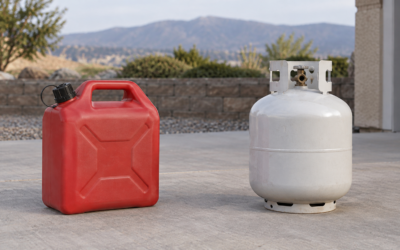
- Gasoline: stored in the onboard tank. Highest power, shortest shelf life.
- Propane (LP): usually from a 20 lb cylinder or a larger tank through a regulator. Slightly lower power, very long shelf life, no stale-fuel carburetor problems.
- Natural gas (NG): from the utility line through a regulator. Lowest power, but effectively unlimited runtime while the gas stays on.
Natural gas carries less energy by volume than gasoline or propane, and gaseous fuel displaces air in the intake. Both effects reduce the engine’s output. That is why every tri fuel spec sheet lists three different running-watt numbers.
Derating: the numbers you should plan around
Published figures for common tri fuel units show the pattern clearly. A typical mid-size model rated for 9,500 running watts on gasoline delivers about 8,500 on propane and about 7,500 on natural gas, a drop of roughly 10 percent for propane and 20 percent for natural gas. The Champion 201423 follows the same pattern, listing about 9,000 running watts on gasoline, about 8,100 on propane and about 7,290 on natural gas.
A simple rule works for planning: take the gasoline running rating and multiply by 0.9 for propane and by 0.8 for natural gas. Then compare that result with your load, not the starting watts.
| Generator | Class | Gasoline running | Propane running | Natural gas running |
|---|---|---|---|---|
| Westinghouse WGen9500TFc | Open frame, 9,500 W | 9,500 W | 8,500 W | 7,500 W |
| Champion 201423 | Inverter, 11,000 W class | About 9,000 W | About 8,100 W | About 7,290 W |
| DuroMax XP13000HXT | Open frame, 13,000 W peak class | Check manual (roughly 10,500 W class) | Check manual | Check manual |
| WEN TF1450X | Open frame, 14,500 W peak class | Check manual (roughly 11,500 W class) | Check manual | Check manual |
| DuroMax XP11000iHT | Inverter, 11,000 W class | Check manual | Check manual | Check manual |
Applying the 0.8 rule to the open-frame 10,500 to 11,500 watt gasoline class gives roughly 8,400 to 9,200 watts on natural gas. That is a planning estimate, not a rating. Use the number printed in the owner’s manual.
What a natural gas hookup requires
Connecting a generator to a natural gas line is the part buyers most often underestimate. The generator is only one piece of the system.
- A correctly sized gas supply. Natural gas generators burn a lot of fuel at full load. A 9,000 to 10,000 watt engine can draw well over 100 cubic feet of gas per hour at full load, which is a significant share of what a typical residential meter supplies once your furnace and water heater are also running. Check the generator’s gas consumption table in the manual and ask your utility or a licensed gas fitter whether the meter and line can deliver it.
- A regulator and low-pressure supply. Utility gas arrives at a very low pressure, measured in inches of water column. Use the regulator and hose the manufacturer specifies, and confirm the inlet pressure window in the manual.
- A connection done to code. Many buyers use a gas quick-connect outlet installed on the house line, then a listed hose to the generator. The outlet and shutoff valve should be installed by a licensed plumber or gas fitter, with a permit where your jurisdiction requires one.
- Outdoor placement away from openings. Generator exhaust contains carbon monoxide. Keep the unit outdoors on level ground, far from windows, doors and vents, following the distance in the manual.
- A safe way to feed the house. Back-feeding through a dryer outlet is dangerous and illegal. Use a manual transfer switch or an interlock kit installed by a licensed electrician, or run extension cords to individual appliances.
Some local codes limit how permanent a portable generator’s gas connection can be, and some utilities require notice. Ask your building department before you install the outlet.
The generators, in detail
Westinghouse WGen9500TFc
Spec line: 9,500 W gasoline running · 8,500 W propane · 7,500 W natural gas · electric start · 120/240 V · tri fuel selector
Best for: homeowners who want a mid-size open-frame unit that can carry a refrigerator, a gas furnace blower, lights, a sump pump and a few countertop appliances on natural gas.
Skip if: you want to run a 3-ton central air conditioner on natural gas. Its 7,500 W natural gas rating leaves little room once the compressor starts.
- Pros: widely named as a balanced pick, three published ratings so you can plan accurately, familiar open-frame design with parts support.
- Cons: loud compared with an inverter, heavy, and natural gas output is the lowest of the three fuels.
Champion 201423 (11,000-watt inverter class)
Spec line: about 9,000 W gasoline running · about 8,100 W propane · about 7,290 W natural gas · inverter output · wireless key-fob start · carbon monoxide shutoff
Best for: buyers who care about noise and clean power for electronics and who want a remote start from inside the house.
Skip if: you want the lowest cost per running watt. Inverter units cost more per watt than open-frame models.
- Pros: quieter operation, lower harmonic distortion for sensitive devices, key-fob start with a range described in the maker’s literature as roughly 80 feet.
- Cons: premium tier, bulkier than smaller inverters, natural gas output is under 7,500 W.
DuroMax XP13000HXT
Spec line: 13,000 W peak class · roughly 10,500 W gasoline running class · 500 cc-class OHV engine · tri fuel · carbon monoxide alert on current production
Best for: people who need to run a large share of a house on propane or natural gas and are comfortable with an open-frame noise level.
Skip if: your garage or storage space is tight. This is a large, heavy unit.
- Pros: high output for its price tier, commonly listed in tri fuel comparisons, strong choice for central air plus essentials on propane.
- Cons: noisy, large fuel appetite, and you must read the natural gas rating in the manual before sizing.
WEN TF1450X
Spec line: 14,500 W peak class · roughly 11,500 W gasoline running class · electric start · tri fuel · 120/240 V
Best for: budget-minded buyers who want the biggest peak wattage in the entry to mid-range tier.
Skip if: you want a long-established parts and service network. Compare warranty terms before you decide.
- Pros: high peak wattage for the tier, tri fuel at a lower cost than premium brands.
- Cons: the running ratings drop meaningfully on natural gas, and build refinement is below the premium tier.
DuroMax XP11000iHT
Spec line: 11,000 W class · inverter output · tri fuel · lower noise than open-frame peers
Best for: a mid-size home that wants quieter running than an open-frame unit, plus clean power for electronics.
Skip if: you want the most capacity possible. Inverter units give up some output per dollar.
- Pros: frequently described in published guides as a strong all-rounder for its mix of output, inverter power and noise control.
- Cons: natural gas output is meaningfully lower than the headline wattage and must be confirmed in the manual.
DuroMax XP16000iHT
Spec line: 16,000 W class · inverter · tri fuel · high-output inverter design
Best for: larger homes where central air, an electric range or a well pump must run with other loads.
Skip if: you only need to run a refrigerator and lights. It is oversized and costly for that job.
- Pros: the most capacity in this list, inverter-quality power at high output.
- Cons: premium tier, large and heavy, high gas consumption at load.
Champion 12,500-watt tri fuel model
Spec line: 12,500 W starting class · electric start · carbon monoxide shutoff · hoses included
Best for: buyers who want a complete package, with the gas hoses included, from a brand with strong dealer presence.
Skip if: you want a quiet inverter. This is an open-frame design.
- Pros: carbon monoxide shutoff, accessories in the box, easy to find parts.
- Cons: natural gas derating applies, loud, and exact running figures should be read from the manual.
Sizing: a worked example for a long outage
This worked calculation shows how derating changes the decision. Suppose your essential loads during a winter outage are:
| Load | Running watts | Starting watts |
|---|---|---|
| Refrigerator | 200 | 800 |
| Gas furnace blower | 600 | 1,800 |
| Sump pump (1/2 hp) | 1,000 | 2,200 |
| Lights and chargers | 400 | 400 |
| Microwave | 1,200 | 1,200 |
| Well pump (1 hp) | 1,500 | 4,500 |
- Add the running watts: 200 + 600 + 1,000 + 400 + 1,200 + 1,500 = 4,900 W.
- Find the largest extra starting surge. The well pump adds about 3,000 W above its running draw (4,500 minus 1,500), the biggest of the group. Add that to the running total: 4,900 + 3,000 = 7,900 W in the worst case where everything runs and the pump starts.
- Check the continuous load against the natural gas rating. 4,900 W is below the 7,290 to 7,500 W natural gas ratings above, leaving roughly a third of the capacity free.
- Check the peak. Surge ratings are usually quoted on gasoline, so be conservative. Stagger the starts so the pump starts alone, and keep the microwave off while it does. The peak then falls to about 6,700 W (4,900 minus 1,200 for the microwave, plus 3,000 for the pump surge), which fits within the natural gas rating.
Conclusion: a 9,500 W-class tri fuel unit such as the Westinghouse WGen9500TFc or the Champion 201423 handles this list on natural gas with some load management. Add a 3-ton central air conditioner, which can draw roughly 3,000 to 4,000 running watts with a much larger start, and you would need to step up to the 13,000 W class or larger, or fit a soft-start kit on the compressor.
Long outages and runtime
Natural gas is the reason many buyers choose tri fuel. A typical 9,000 to 10,000 W generator at half load can burn through a 20 lb propane cylinder in a matter of hours and a gasoline tank in about a day. On natural gas, the fuel supply is the utility line, so the engine can run until the line pressure fails, the generator needs service, or you stop it.
That does not mean you can ignore maintenance. During a long outage, plan for:
- Oil changes at the maker’s interval. Many engines call for the first change after a short break-in period and then at set run-hour intervals. Keep the oil and filter on hand.
- Daily checks. Look at oil level, listen for changes in sound, and inspect hoses for wear.
- Rest cycles. Some manufacturers recommend shutdown periods for cooling and checks. Follow the manual.
- A backup fuel. Natural gas service can be interrupted in some regional events. Keep a propane cylinder or stored gasoline with stabilizer as a fallback.
Choosing by buyer criteria
If you want to run a few essentials on natural gas
Choose a unit with a natural gas running rating of at least 6,000 W. The Westinghouse WGen9500TFc and Champion 201423 both clear that threshold on their published figures.
If you want to run central air
Look for a natural gas running rating of 9,000 W or more, or a gasoline running rating above 11,000 W. That points to the DuroMax XP13000HXT, WEN TF1450X or DuroMax XP16000iHT class. Confirm the exact natural gas figure in the manual and ask an electrician to check the air conditioner’s locked-rotor amps.
If noise is a concern
Choose an inverter model such as the Champion 201423 or DuroMax XP11000iHT. Neighbors, local ordinances and your own sleep may all matter during a long outage.
If your budget is tight
Open-frame tri fuel units such as the WEN TF1450X give you the most wattage per tier. Accept the extra noise and read the warranty carefully.
Safety essentials
- Run generators outdoors only, at least the distance from the house given in the manual, with the exhaust pointed away from the home and neighbors’ homes.
- Install battery-powered or battery-backup carbon monoxide alarms inside the home. A generator’s built-in CO sensor is an extra layer, not a replacement.
- Never back-feed through a wall outlet. Use a transfer switch or interlock installed by a licensed electrician.
- Shut off the generator and let it cool before refueling with gasoline. Store fuel in approved containers away from living areas.
- Check gas connections for leaks with a leak-detection solution, never with a flame. If you smell gas, leave, and call the gas utility from a safe location.
- Keep the generator dry, on level ground, and under a canopy designed for running units.
Common mistakes to avoid
- Sizing from the starting watts on the box. Always use the natural gas running rating.
- Skipping the gas supply check. A generator that cannot get enough gas will stall under load.
- Using the wrong regulator or hose. Use the parts the maker specifies, and inspect them for cracks.
- Never exercising the generator. Run it monthly under load, including on natural gas, so you know the connection works before the storm.
- Ignoring local rules. Permits and codes for gas connections and transfer switches exist for safety.
Frequently asked questions
How much power do I lose running a tri fuel generator on natural gas?
Expect about a 20 percent drop from the gasoline running rating, and about 10 percent on propane. Published figures for common models show exactly this pattern.
For example, a unit rated at 9,500 running watts on gasoline lists about 8,500 on propane and about 7,500 on natural gas. Always use the natural gas figure when sizing for a hookup.
Can I connect a tri fuel generator directly to my house gas line?
Yes, usually through a gas quick-connect outlet and the maker’s regulator and hose, installed to local code.
Have a licensed gas fitter install the outlet and shutoff valve, and confirm that your meter and pipe can supply the generator’s fuel consumption at full load along with your other gas appliances.
Is a tri fuel generator better than a dual fuel model?
It is better if you have a natural gas line and want unlimited runtime. A dual fuel unit only runs gasoline and propane.
Tri fuel adds the natural gas option for a modest cost increase. If you have no gas line and never plan to, dual fuel may be enough.
Can a tri fuel generator run a central air conditioner?
Only if its natural gas running rating and starting capability exceed the compressor’s needs. Smaller 9,500 W-class units usually struggle with a 3-ton unit.
Larger 13,000 W-class and up models can manage it, particularly with a soft-start kit on the air conditioner. Check the unit’s locked-rotor amps first.
Do I need a transfer switch?
You need either a transfer switch or an interlock kit to power a home panel safely. Extension cords to individual appliances are the alternative.
Never back-feed a house through a dryer or wall outlet. A licensed electrician can install the correct equipment for your panel and local code.
How long can a tri fuel generator run on natural gas?
As long as gas flows and the engine is maintained. There is no tank to refill.
In practice, you must still change oil and check the machine on the maker’s schedule, and a regional gas interruption is possible, so keep a backup propane cylinder or gasoline on hand.
Is an inverter tri fuel generator worth the extra cost?
It is worth it if noise and clean power matter. It costs more per running watt than an open-frame model.
Inverter units such as the Champion 201423 and DuroMax XP11000iHT run more quietly and suit sensitive electronics. Open-frame units give you more wattage for your budget.
What size tri fuel generator do I need for an average house?
Many households covering essentials need a natural gas running rating around 6,000 to 8,000 W. Adding central air pushes that toward 9,000 W or more.
Add up your running watts, then add the single largest surge. Compare that total with the natural gas rating, not the gasoline number.
The bottom line
For most buyers with a natural gas line, the Westinghouse WGen9500TFc is the sensible starting point because it publishes all three ratings and covers essential loads. Choose the Champion 201423 or DuroMax XP11000iHT if quiet running matters, and step up to the DuroMax XP13000HXT, WEN TF1450X or DuroMax XP16000iHT if you plan to run central air. Whatever you pick, size from the natural gas running rating, hire licensed professionals for the gas and electrical connections, and keep carbon monoxide alarms working inside the home.




Write Your Review
No reviews yet. Be the first to share your experience!