
🛒 Best Price Today on Amazon
Prime members get fast, free shipping on everything above, plus member-only deals. New members get a 30-day free trial — cancel anytime.
Van and RV owners face a recurring choice: install a permanent house battery with wiring, a charger, and an inverter, or buy a large portable station that does it all in one box. The Bluetti Elite 200 V2, a 2kWh-class LiFePO4 station, is pitched squarely at people weighing that decision. This review evaluates it from the road-trip perspective: daily energy budgets, charging while driving, and whether it is worth buying instead of a traditional install.
Portable station versus installed house battery
A DIY or professionally installed 200Ah 12V LiFePO4 bank, around 2.5kWh, with a quality inverter, DC-DC charger, solar controller, and wiring can cost anywhere from $1,500 to $4,000 installed, and it becomes part of the vehicle. A 2kWh-class station costs in a similar range but moves with you between the camper, the house, and a job site. The trade-off is usually lower solar and alternator charging flexibility compared with a purpose-built system, plus some efficiency loss running 12V loads through the station.

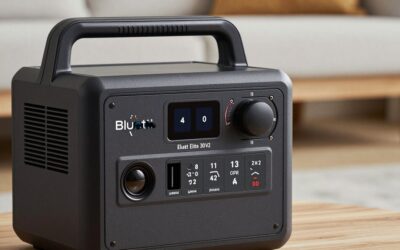
BLUETTI Elite 200 V2 Portable Power Station 2073.6Wh 2600W Solar Generator
Included for 'Bluetti Elite 200 V2 Review: Is It Worth Buying in 2026?' as a relevant option in this category; details come from the product listing.
View on Amazon
BLUETTI Elite 200 V2 Portable Power Station 2073.6Wh 2600W Solar Generator
Included for 'Bluetti Elite 200 V2 Review: Is It Worth Buying in 2026?' as a relevant option in this category; details come from the product listing.
View on Amazon
BLUETTI Elite 200 V2 Solar Generator & 2x200W Solar Panel Included 2073.6Wh
Included for 'Bluetti Elite 200 V2 Review: Is It Worth Buying in 2026?' as a relevant option in this category; details come from the product listing.
View on Amazon
BLUETTI Elite 100 V2 Portable Power Station for Camping 1024Wh 1800W
Included for 'Bluetti Elite 200 V2 Review: Is It Worth Buying in 2026?' as a relevant option in this category; details come from the product listing.
View on AmazonA realistic daily RV energy budget
| Load | Average draw | Hours per day | Daily energy |
|---|---|---|---|
| 12V compressor fridge | 45W average | 24 | ~1.1kWh |
| LED lights | 25W | 5 | ~0.13kWh |
| Water pump, intermittent | 60W | 0.5 | ~0.03kWh |
| Roof fan on medium | 25W | 8 | ~0.2kWh |
| Laptop + phones | 60W | 4 | ~0.24kWh |
| Induction cooktop, one meal | 1,200W | 0.4 | ~0.48kWh |
| Total | ~2.2kWh |
That budget slightly exceeds one charge, which is typical. Most road trippers rebalance with solar and driving, or skip the induction meal and cook on propane.
Charging on the road
Three sources keep a 2kWh unit topped up while traveling:
- Solar: 400 to 600W of rooftop or portable panels produce roughly 1.3 to 2kWh on a 4.5 peak-sun-hour day after losses.
- 12V socket: at 100 to 120W, a 4-hour driving day adds only about 0.4 to 0.5kWh.
- Dedicated alternator charger: if the station supports a high-current DC input or an add-on alternator charger, 400 to 800W of charging while driving can refill most of it in 3 to 4 hours.
The alternator path is the one that makes a portable station behave like an installed system; check compatibility before buying.
Air conditioning is the hard limit
A 13,500 BTU rooftop RV air conditioner runs at 1,200 to 1,800W, so 2kWh-class storage lasts only 1 to 1.5 hours. Even with a soft-start kit, it is an emergency cooling tool, not an overnight plan. People who need AC every night still need a generator or shore power.
Where it beats an installed system
For renters of vans, people who swap between several vehicles, or anyone who wants to use the same battery for home backup in winter, the station’s portability is worth real money. There is no permanent wiring to maintain, and resale value is easier to recover.
Mounting and safety in a vehicle
Secure the unit with ratchet straps or a mounting bracket so it cannot become a projectile in a hard stop; a 50-pound box is dangerous at highway speed. Leave clearance around cooling vents, keep it out of direct sun behind a windshield, and avoid charging below freezing.
Value compared with other 2kWh units
When cross-shopping, weigh solar input ceiling, DC charging options, 12V output current for fridges, and weight. A slightly heavier unit with twice the solar input is often better for full-time travelers than a lighter one with modest input.
Boondocking without running dry
The travelers who stretch 2kWh furthest share a few habits. They set the compressor fridge to 37 or 38 degrees Fahrenheit rather than its coldest setting, which can cut its daily draw by 15 to 20 percent. They park with panels facing south and tilt portable panels toward the sun at midday, often gaining 20 to 30 percent over flat mounting. They run 12V loads directly from the station’s DC ports instead of through AC adapters, avoiding inverter losses. And they watch the percentage every morning: finishing the day above 30 percent with sun in the forecast means you can stay put, while dropping below 20 percent on a cloudy stretch means it is time to drive and charge.
FAQ
Can the Elite 200 V2 run an RV air conditioner?
Briefly. Expect about an hour or so per full charge from a 13,500 BTU unit. For regular AC use you need shore power or a generator.
Is a portable station as good as a built-in house battery?
For part-time travelers, often yes, and it doubles as home backup. Full-timers with heavy daily loads usually get better efficiency and charging from an installed system.
Bottom line
The Elite 200 V2 is worth buying for weekend and seasonal RV and van travelers who want one battery for the road and the home. Full-time nomads who rely on alternator charging and daily heavy loads should compare it carefully against an installed house battery system before deciding.


Write Your Review
No reviews yet. Be the first to share your experience!