
🛒 Best Price Today on Amazon
Prime members get fast, free shipping on everything above, plus member-only deals. New members get a 30-day free trial — cancel anytime.
The Pioneer Na is not really a review about a power station so much as a review about a battery chemistry. It uses sodium-ion cells instead of the lithium iron phosphate found in nearly every other portable power station, and that choice brings a distinct set of strengths and compromises. The biggest strength is cold-weather performance. The biggest compromise is energy density. Whether it is worth buying depends almost entirely on where and when you plan to use it.
What sodium-ion changes
Sodium-ion cells use abundant sodium instead of lithium. Compared with LiFePO4, they generally tolerate low temperatures better, both for discharging and, depending on the design, for charging below freezing. They also typically carry lower energy density, so a sodium-ion station is heavier or larger for the same capacity. Check the current product page for rated charging temperature, capacity, and cycle life, since first-generation products vary.

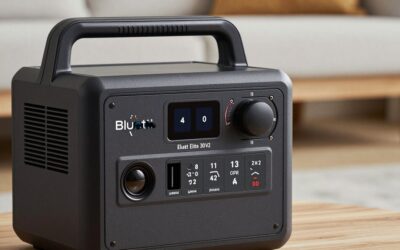
BLUETTI Pioneer 150 (AC240) Portable Power Station, 1536Wh Solar Generator
Included for 'Bluetti Pioneer Na Review: Is It Worth Buying in 2026?' because the listing specifies 1536Wh Solar Generator, details this guide uses to compare options.
View on AmazonTypical chemistry comparison
These are general industry ranges, not exact figures for this unit.
| Trait | LiFePO4 | Sodium-ion |
|---|---|---|
| Energy density (cell level) | ~140-180 Wh/kg | ~100-160 Wh/kg |
| Usable capacity at 0 degrees F | Often 60-75% | Often 80-90% |
| Charging below 32 degrees F | Usually blocked or heater required | Often permitted within limits |
| Cycle life rating | 3,000-6,000 cycles | 2,000-4,000+ cycles, still maturing |
| Thermal stability | Very high | Very high |
| Raw material supply | Lithium, iron, phosphate | Sodium, abundant |
Who benefits most from cold performance
The cold advantage matters to a specific set of people:
- Ice anglers and winter campers who need to charge heated gear, lights, and electronics in a shelter that sits well below freezing.
- Hunters using blinds or cabins in late season where overnight temperatures fall into single digits.
- Rural homeowners in northern climates who might store a station in an unheated garage or mudroom.
- Winter job sites where a lithium unit left in a truck overnight refuses to charge until warmed.
For these users, a lithium station’s cold behavior is a genuine operational problem, and sodium-ion’s tolerance can be worth the extra weight.
Who should stay with LiFePO4
If your power station lives indoors at room temperature for home backup, or you camp in spring through fall, sodium-ion gives you little advantage. LiFePO4 stations will be lighter, cheaper per watt-hour, and supported by a larger accessory ecosystem.
Weight and capacity trade-off
Because sodium-ion stores less energy per kilogram, expect a sodium-ion station to weigh more than a LiFePO4 station of equal capacity, sometimes by 15 to 30 percent. For a winter shelter that you drive or sled to, that is acceptable. For backpacking, it is not.
Runtime planning in the cold
Heated gear is power-hungry. A heated jacket at 15 to 25W, a heated blanket at 50 to 100W, and a small 12V electric heater pad at 40W can add up fast. With roughly 800Wh usable at freezing temperatures, a 60W heated blanket runs about 13 hours, enough for a full night with margin.
Early-adopter considerations
New chemistries carry uncertainty. Long-term aging data, service networks, and resale values are less established than for LiFePO4. A generous warranty helps; read the terms carefully and keep proof of purchase. Firmware updates through the app may also refine charging behavior in cold conditions over time.
Safety profile
Sodium-ion cells, like LiFePO4, have a strong thermal-stability reputation. Still follow basic rules: keep vents clear, avoid moisture, never run the station inside a closed tent with a fuel heater, and never use a fuel-burning heater indoors without proper CO protection.
A cold-weather field test worth doing
Before trusting any station on a winter trip, run a simple test at home. Leave the fully charged unit in an unheated garage or on a porch overnight when temperatures are forecast below 20 degrees Fahrenheit. In the morning, connect a known load, such as a 60W heated blanket or a lamp with a 60W equivalent draw, and note how long it runs and whether the display shows any temperature warnings. Then try plugging in a charger while it is still cold and see whether it accepts input. That single test tells you more about real-world cold behavior than any spec sheet, and it gives you a baseline to compare with a LiFePO4 station if you own one.
FAQ
Can the Pioneer Na charge below freezing?
Sodium-ion chemistry generally tolerates cold charging better than LiFePO4. Confirm the exact minimum charging temperature in the manual, since each product sets its own limits.
Is sodium-ion safer than lithium?
Both sodium-ion and LiFePO4 are considered very stable. The main difference is cold performance and energy density, not safety.
Bottom line
The Bluetti Pioneer Na is worth buying if you need reliable power in freezing conditions: ice fishing, winter hunting, unheated garages, or cold job sites. For indoor home backup or warm-season camping, a LiFePO4 station offers better weight and value per watt-hour.
Write Your Review
No reviews yet. Be the first to share your experience!