
🛒 Best Price Today on Amazon
Prime members get fast, free shipping on everything above, plus member-only deals. New members get a 30-day free trial — cancel anytime.
For people with sleep apnea, a CPAP machine is a medical necessity, and losing power in the middle of the night is a real concern. Fortunately, CPAP machines use relatively little electricity, especially without a heated humidifier. Knowing your machine’s actual wattage lets you choose a battery, power station or generator that keeps therapy uninterrupted. This guide covers typical CPAP wattage, the impact of humidifiers and heated tubing, and how to calculate energy for a full night.
Typical CPAP wattage
| Configuration | Typical draw | Energy for 8 hours |
|---|---|---|
| CPAP only, low pressure (5–8 cm H2O) | 20–40W | 160–320Wh |
| CPAP only, high pressure (12–20 cm H2O) | 40–60W | 320–480Wh |
| CPAP + heated humidifier | 60–110W | 480–880Wh |
| CPAP + humidifier + heated tubing | 80–130W | 640–1,040Wh |
| BiPAP / APAP at high pressures | 40–90W | 320–720Wh |
The power supply brick may be rated at 65–90W or more, but that is a maximum capacity rating, not typical consumption. Most machines draw far less during a normal night.
The humidifier effect
The heated humidifier is the largest variable. Heating water to prevent dryness can double or triple total consumption. In a cool bedroom, a humidifier set high may draw 50–70W alone. Turning the humidifier off or using a passive humidifier during outages extends battery runtime dramatically.
Heated tubing
Heated tubes prevent condensation (rainout) and add roughly 10–25W. Like humidifiers, they can be turned down or off during outages to conserve power.
AC versus DC power
Most CPAP machines run on a DC power supply that converts wall AC to 12V or 24V DC. Running from a battery through an inverter back to AC and then through the power supply wastes about 10–20% of energy. Using a manufacturer DC cable or a DC converter directly from a battery or power station’s 12V output is more efficient and extends runtime.
| Power path | Efficiency | 8-hour use at 40W needs |
|---|---|---|
| DC cable from battery (12V) | ~90–95% | ~340–355Wh |
| AC inverter to CPAP power brick | ~80–85% | ~375–400Wh |
Measuring your own machine
Many CPAP machines display or log usage data, but not power. The most practical method is a plug-in watt meter between the wall and the power supply. Record consumption over a full night with your normal settings, then again with the humidifier off. The difference tells you exactly how much the humidifier costs in energy.
Factors affecting consumption
- Pressure setting: higher pressures require more motor power.
- Mask leaks: leaks make the machine work harder to maintain pressure.
- Room temperature: colder rooms make humidifiers and heated tubes work harder.
- Auto-titrating modes: APAP may vary power through the night.
- Altitude: machines compensate for altitude, which may slightly increase draw.
Planning backup power
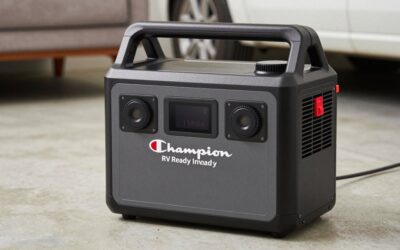
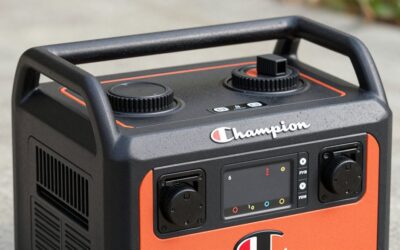
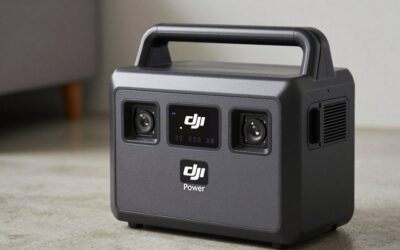
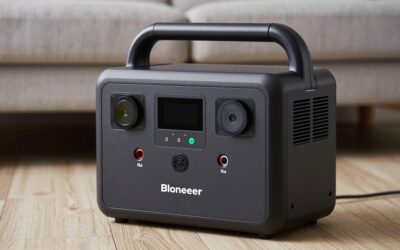
For an 8-hour night without humidification, a 300–500Wh battery is typically enough. With humidification, plan 800–1,200Wh. For multi-night outages, multiply by the number of nights or plan to recharge from solar panels or a generator during the day. Always keep backup charged and test it every few months.
Travel CPAPs and portable options
Travel-sized CPAP machines are designed for efficiency and often draw 10–30W at typical pressures, with waterless humidification that avoids heater draw. They pair well with small power stations or dedicated CPAP battery packs of 100–300Wh. If you experience frequent outages, a travel CPAP used as a backup can extend a modest battery through two or three nights. Keep in mind that therapy settings and comfort features differ between machines; confirm your prescribed pressure and mask setup work well on the backup unit before relying on it during an emergency.
Oxygen concentrators are different
Home oxygen concentrators often draw 300–600W continuously, many times a CPAP’s needs. If you use both, size backup power around the concentrator.
FAQ
How many watts does a CPAP use without a humidifier?
Usually 20–60W depending on pressure settings and machine model, which equals about 160–480Wh over an 8-hour night.
Can I run my CPAP on a car battery?
Yes with the right DC cable or converter, but avoid draining a starting battery below 50%. A dedicated deep-cycle battery or lithium power station is safer.
Bottom line
CPAP machines typically use 20–60W without humidification and 60–130W with heated humidifiers and tubing. Measure your own setup, use DC power when possible, and turn off heat during outages to stretch battery life.
Write Your Review
No reviews yet. Be the first to share your experience!