
🛒 Best Price Today on Amazon
Prime members get fast, free shipping on everything above, plus member-only deals. New members get a 30-day free trial — cancel anytime.
A portable generator and a portable power station can both keep your lights on, but they work in completely different ways. A generator burns fuel to produce electricity on demand; a power station is a large battery with a built-in inverter that stores electricity you charged earlier from the wall, a car or solar panels. Choosing the right one depends on how much power you need, for how long, and where you will use it. This guide compares them on capacity, runtime, cost, noise, safety and maintenance.
How each one works
Portable generator
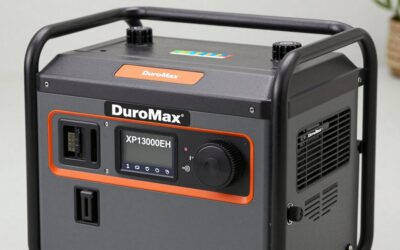
An engine drives an alternator to produce AC power. Output is limited by the engine size — typically 2,000 to 13,000 watts — and runtime is limited only by fuel supply. Refill the tank or swap a propane cylinder and it keeps going.

Jackery Explorer 300 Portable Power Station,292Wh
Included for 'Portable Generator vs Power Station: Which Is Right for You?' because the listing specifies 292Wh, details this guide uses to compare options.
View on Amazon
Jackery Explorer 1000 v2 Portable Power Station,1070Wh,1500W
Included for 'Portable Generator vs Power Station: Which Is Right for You?' because the listing specifies 1070Wh and 1500W, details this guide uses to compare options.
View on Amazon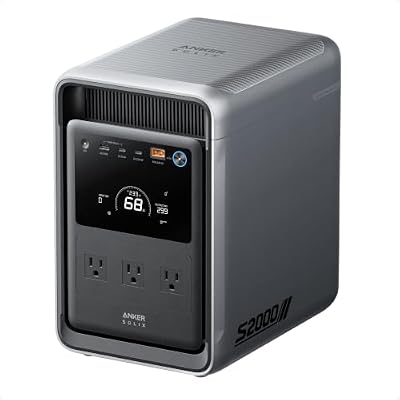
Anker SOLIX S2000 Portable Power Station, 2,010Wh, 1,500W
Included for 'Portable Generator vs Power Station: Which Is Right for You?' because the listing specifies 010Wh and 500W, details this guide uses to compare options.
View on Amazon
BLUETTI Portable Power Station AC180, 1152Wh LiFePO4 Battery Backup w/ 2 1800W (2700W peak) AC Outlets, 0-80% in 45Min, Solar Generator for Camping, Off-grid, Power Outage
Included for 'Portable Generator vs Power Station: Which Is Right for You?' because the listing specifies 0-80% in 45Min and Solar Generator for Camping, details this guide uses to compare options.
View on AmazonPortable power station
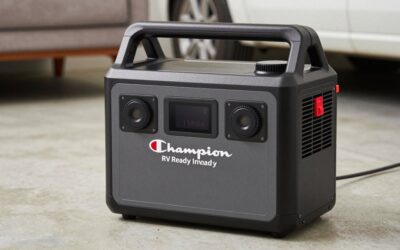
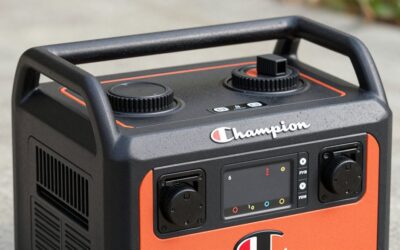
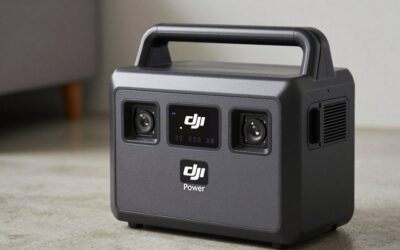
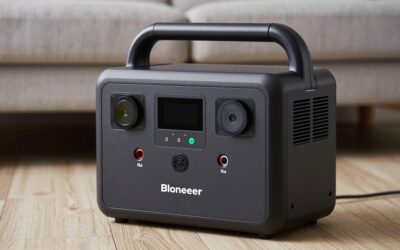
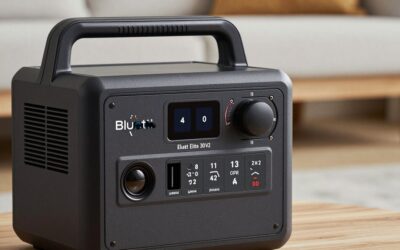
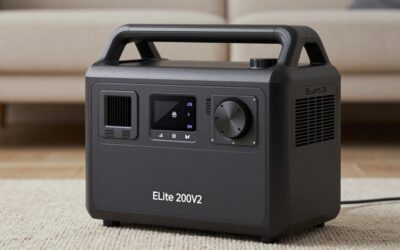
A lithium battery (often LiFePO4 in newer units) stores energy measured in watt-hours (Wh). The inverter’s rating, often 300 to 3,600 watts, limits how much you can draw at once. When the battery is empty, you must recharge before continuing.
Side-by-side comparison
| Factor | Portable generator | Power station |
|---|---|---|
| Typical output | 2,000–13,000W | 300–3,600W (some expandable) |
| Energy available | Unlimited with fuel | 256–6,000+ Wh per charge |
| Noise | 55–75 dBA | Near silent (fan only) |
| Indoor use | Never — CO hazard | Safe indoors |
| Maintenance | Oil, plugs, fuel care | Minimal; periodic charge cycles |
| Typical cost per 1,000W output | $150–600 | $500–1,000+ |
Runtime math
Runtime on a power station is simple: usable watt-hours divided by load. A 2,000Wh station with ~85% inverter efficiency provides about 1,700Wh usable. Running a 150W average refrigerator load gives roughly 11 hours. A generator using a gallon of gas per 4–10 hours depending on load delivers several kilowatt-hours per gallon and can be refueled in minutes.
| Load | Average watts | 2,000Wh station runtime | Generator fuel per 24h |
|---|---|---|---|
| Wi-Fi router + phone charging | 30W | ~55 hours | Overkill for a generator |
| CPAP without humidifier | 40–60W | ~28–40 hours | Overkill |
| Refrigerator | 100–200W avg | 8–17 hours | ~1–2 gallons (small inverter) |
| Space heater (1,500W) | 1,500W | ~1.1 hours | ~3–4 gallons |
The pattern is clear: power stations excel for low-wattage essentials and short outages; generators win for high-draw appliances and multi-day outages.
Cost over time
A generator costs less upfront per watt but requires fuel, oil and maintenance. A power station costs more upfront but has almost no running cost if charged from the grid or solar. Lithium iron phosphate batteries often last 3,000+ cycles to around 70–80% capacity, which is many years of occasional use.
Which should you choose?
- Choose a power station for apartments, indoor use, CPAP backup, electronics, quiet camping and short outages under a day.
- Choose a generator for well pumps, central furnaces, sump pumps during long storms, RV air conditioners and multi-day outages.
- Choose both for the most flexible setup: run the generator a few hours a day to recharge the power station, then run quietly overnight on battery.
Solar charging considerations
Solar is the power station’s secret weapon. A 400W panel array in good sun produces roughly 1.5–2.5kWh per day depending on season and location, enough to refill a 2,000Wh station daily for low-draw essentials. That means a power station plus panels can support a fridge, lights and communications indefinitely in summer. In winter or cloudy regions, output can drop by half or more, so pairing with a small generator for cloudy stretches is common. For generators, solar has no role, but dual-fuel models let you store propane indefinitely, which serves the same readiness goal.
Safety differences
Generators cause dozens of carbon-monoxide deaths every year when run in garages or near windows. Power stations eliminate that risk entirely, which is why they are the default for apartments and indoor medical devices.
FAQ
Can a power station replace a generator for home backup?
Only for small loads or short outages, unless you invest in a large expandable system with 5–10kWh of batteries and solar. For heavy loads over several days, a generator remains more practical.
Can I charge a power station with a generator?
Yes. Plugging a power station into a small inverter generator is an efficient hybrid strategy — the generator runs at a steady load while charging, and the station powers quiet overnight needs.
Bottom line
Power stations are quiet, safe indoors and nearly maintenance-free, but they run out of energy. Generators deliver high output indefinitely but must run outdoors and need upkeep. Match the tool to your largest load and the length of outage you expect — or combine both.
Write Your Review
No reviews yet. Be the first to share your experience!