
🛒 Best Price Today on Amazon
Prime members get fast, free shipping on everything above, plus member-only deals. New members get a 30-day free trial — cancel anytime.
Propane and gasoline are the two most common generator fuels, and many modern generators run on both. Each fuel has distinct strengths: gasoline delivers more power and is available at every station, while propane stores indefinitely, burns cleaner and keeps engines healthier during long storage. This guide compares propane and gas generators on output, runtime, storage, cost, cold-weather performance and safety.
Energy content and output
Gasoline contains roughly 114,000–120,000 BTU per gallon; propane contains about 91,500 BTU per gallon. As a result, a generator typically produces about 8–12% less output on propane and burns more gallons of propane per hour than gallons of gas.

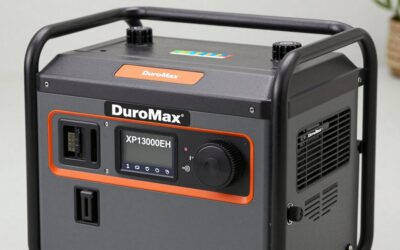
DuroMax XP13000EH 13,000-Watt Dual Fuel Portable Generator - Gas & Propane, Electric Start, Whole Home Backup Power, Transfer Switch Ready, RV & Emergency Ready
Included for 'Propane Generator vs Gas Generator: Which Is Right for You?' because the listing specifies 000-Watt Dual Fuel Portable Generator and Gas & Propane, details this guide uses to compare options.
View on Amazon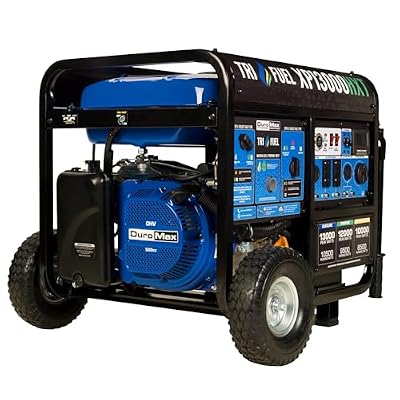
DuroMax XP13000HXT 13,000-Watt 500cc Tri Fuel Gas Propane Natural Gas Portable Generator with CO Alert, Black/Blue
Included for 'Propane Generator vs Gas Generator: Which Is Right for You?' because the listing specifies Black/Blue, details this guide uses to compare options.
View on Amazon
DuroMax XP5500HX 5,500-Watt Dual Fuel Portable Generator - Gas & Propane, Electric Start, RV & Emergency Ready
Included for 'Propane Generator vs Gas Generator: Which Is Right for You?' because the listing specifies 500-Watt Dual Fuel Portable Generator and Gas & Propane, details this guide uses to compare options.
View on Amazon
DuroMax XP2300iH 2,300-Watt Dual Fuel Portable Digital Inverter Generator - Gas & Propane, RV & Emergency Ready
Included for 'Propane Generator vs Gas Generator: Which Is Right for You?' because the listing specifies 300-Watt Dual Fuel Portable Digital Inverter Generator and Gas & Propane, details this guide uses to compare options.
View on Amazon| Factor | Propane | Gasoline |
|---|---|---|
| Energy per gallon | ~91,500 BTU | ~114,000–120,000 BTU |
| Generator output | ~88–92% of gas rating | 100% |
| Shelf life | Indefinite | 3–6 months (12+ with stabilizer) |
| Engine deposits | Very low | Higher; carburetor varnish risk |
| Availability in disasters | Exchange cages, refill stations, delivery | Stations may lack power or fuel |
| Emissions | Cleaner burning | Higher CO and hydrocarbons |
Runtime math
A 20 lb cylinder holds about 4.7 gallons of propane. On a 3,500W-class generator at half load, expect about 8–12 hours per 20 lb cylinder. On a 9,000W-class unit at half load, expect about 4–6 hours. A 100 lb cylinder holds roughly five times as much, and permanent 250–500-gallon tanks can supply days to weeks.
| Generator class at 50% load | Gasoline use per hour | Propane use per hour | 20 lb cylinder lasts |
|---|---|---|---|
| ~2,200W inverter | ~0.12–0.18 gal | ~0.35–0.5 lb | ~40+ hours at light load |
| ~3,500–4,500W | ~0.25–0.4 gal | ~1.5–2.2 lb | ~9–12 hours |
| ~7,000–9,000W | ~0.6–0.8 gal | ~3.5–4.5 lb | ~4.5–6 hours |
Storage and readiness
Propane’s indefinite shelf life is its biggest advantage for emergency backup. Gasoline stored for months can separate and form gums; a generator that was put away with gas in the carburetor is the most common no-start complaint. Propane-only or dual fuel generators stored on propane avoid that problem entirely.
Storage safety
Store propane cylinders outdoors, upright and away from ignition sources — never in a garage or basement. Store gasoline in approved containers, away from living spaces, and rotate it every few months.
Cold-weather performance
Propane pressure drops as temperatures fall. Below roughly 0°F, small cylinders may not vaporize fast enough to supply a large generator at full load. Larger tanks help, as does keeping cylinders sheltered from wind. Gasoline starts reliably in cold weather with the correct oil viscosity and fresh fuel.
Cost of running
Per unit of energy, propane is often similar to or somewhat more expensive than gasoline, depending on region and whether you exchange or refill cylinders. Refilling is typically cheaper than exchanging. Over a multi-day outage, the difference is usually tens of dollars rather than hundreds; readiness matters more than price.
Which should you choose?
- Propane: emergency backup that sits for long periods, households with an existing propane tank, anyone wanting cleaner exhaust and less engine maintenance.
- Gasoline: frequent users, job sites, cold climates with small cylinders, and buyers seeking maximum output per dollar.
- Dual fuel: the best of both for most homeowners at a small premium.
Fuel stockpile planning
A practical storm plan starts with how many hours per day you will run the generator. Most households running essentials operate 10–14 hours per day, shutting down overnight or running in intervals to preserve fuel. For a 3,500W-class generator at moderate load, gasoline use of roughly 0.3 gallons per hour means about 4 gallons per day, so a 3-day stockpile is 12 gallons — three 5-gallon cans, rotated into your car every few months. The same plan on propane needs about 20–25 lb per day, or three to four 20 lb cylinders for 3 days. Propane cylinders do not need rotation, which makes them easier to keep ready year after year. Whichever fuel you choose, write your plan down, label the containers with dates and keep them outside living spaces.
FAQ
Is a propane generator quieter than a gas generator?
Noise depends on engine and muffler design, not the fuel. A dual fuel generator sounds about the same on either fuel, though propane may run slightly smoother.
How many propane tanks do I need for a 3-day outage?
For a mid-size 7kW-class generator averaging around 3,500W for 12 hours daily, plan on roughly six to eight 20 lb cylinders, or one to two 100 lb cylinders.
Bottom line
Gasoline gives more power and easy availability; propane gives reliable starts after long storage, cleaner operation and safer stockpiling. For backup power, propane or dual fuel is usually the smarter choice; for frequent heavy use, gasoline still makes sense.



Write Your Review
No reviews yet. Be the first to share your experience!