
- Top Pick: Upgraded Watt Power Meter Plug Home Electrical Usage Monitor Consumption, Energy Voltage Amps Kill Tester with Backlight, Overload Protection, 7 Modes Display
- Best Value: Upgraded Watt Meter Power Meter Plug Home Energy Monitor Electricity Usage Monitor, Electrical Usage Monitor, Energy Voltage Amps Meter Tester with Backlight, Overload Protection, 8 Display Modes
- Premium Choice: Portable Power Station 192Wh Outdoor Generator with AC Outlet 100W(200W Surge) Power Bank for Home Backup Outdoor Emergency RV Van Hunting, 3.9lb, Music Player&LED Lights LiFePO4 Battery
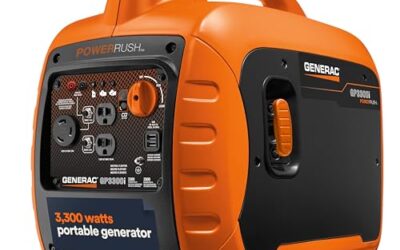
A 2,000-watt generator sits in a popular sweet spot — portable, affordable, and quiet, yet capable enough to run essential appliances during an outage or a camping trip. But knowing exactly what it can handle at once is the key to using it safely without tripping the overload protection.
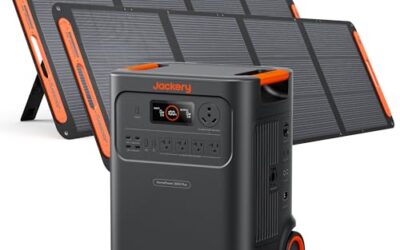
This guide explains what a 2,000-watt generator or power station can realistically power, how to account for startup surges, and how to prioritize your loads. We reference practical tools like a watt meter for measuring draw and compact power stations such as the Jackery Explorer 300 for smaller needs.
As an Amazon Associate we earn from qualifying purchases at no extra cost to you.


⚡ Save on Your Next PC — Amazon Prime
Prime members get fast free shipping on the systems above, plus early access to Prime Day & Black Friday PC deals. New members get a 30-day free trial.
Watch: What Appliances Can a 2000-Watt Generator Power? — Video Review
Understanding Running vs. Starting Watts
Every appliance has two numbers: running watts for steady operation and starting watts for the surge when a motor kicks on. A refrigerator may run at 150 watts but surge to 800 or more at startup. A 2,000-watt generator typically provides around 2,000 running watts and a brief higher peak, so you must leave headroom for those surges rather than loading it to the limit.
What a 2,000-Watt Generator Can Run
Within its budget, a 2,000-watt unit can comfortably power a combination of essentials: a refrigerator (around 150 to 800 watts with surge), several LED lights (10 watts each), a phone and laptop charger (under 100 watts), a Wi-Fi router (20 watts), and a small fan or TV. You can run many of these simultaneously as long as their combined running load plus the largest surge stays under 2,000 watts.
What It Cannot Handle
High-wattage appliances are out of reach for a 2,000-watt unit. Central air conditioners, electric water heaters, electric ranges, clothes dryers, and space heaters routinely draw 3,000 to 5,000 watts or more and will overload it. Even a large RV air conditioner needs more startup surge than most 2,000-watt generators can supply on their own.
Measure Your Loads to Stay Safe
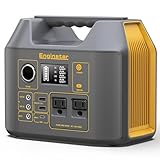
The safest way to plan is to measure. A plug-in watt meter shows the exact running and surge draw of each appliance, so you can add them up accurately instead of guessing. For lighter needs, a battery station like the Jackery Explorer 300 or an EnginStar 296Wh solar generator handles devices and small loads silently and indoors.
Tips
- Add up running watts first, then confirm your single largest starting surge fits within the remaining headroom.
- Start large appliances one at a time so their surges do not stack and trip the breaker.
- Use a watt meter to measure real draw rather than relying on nameplate estimates.
- Prioritize essentials like refrigeration, medical devices, and communication over comfort loads.
Frequently Asked Questions
Can a 2,000-watt generator run a refrigerator?
Yes, most household refrigerators run comfortably on a 2,000-watt generator, though you should leave headroom for the startup surge and avoid starting other large appliances at the same moment.
Will it power a space heater or air conditioner?
Generally no. Space heaters and most air conditioners draw well beyond 2,000 watts, so they will overload the generator. Stick to lower-wattage essentials.
Can I run a microwave on a 2,000-watt unit?
A small microwave around 1,000 watts can run, but it will use most of the generator’s capacity, so avoid running other large loads simultaneously.
How do I know the exact wattage my appliance uses?
Use a plug-in watt meter, which displays real-time running and surge draw. This is far more accurate than the nameplate rating for planning your loads.
Conclusion
A 2,000-watt generator is plenty for essentials — a fridge, lights, chargers, a router, and a fan or small TV — as long as you respect startup surges and avoid high-draw appliances like heaters and air conditioners. Measure your loads with a watt meter, prioritize what matters, and a compact 2,000-watt unit or power station will keep the important things running when you need them.
Top picks from this guide
 JackeryJackery Explorer 300 Portable Power Station,292Wh$239 \xc2\xb7 99/100
 WestinghouseWestinghouse iGen400s 400 Watt, 183Wh Portable Power Station and Solar…$139 \xc2\xb7 99/100
 EnginStarEnginStar 296Wh Portable Solar Generator, Pure Sine Wave Power Station$134 \xc2\xb7 98/100
 MECHEERUpgraded Watt Meter Power Meter Plug Home Energy Monitor 8…$8 \xc2\xb7 96/100
Write Your Review
No reviews yet. Be the first to share your experience!