
🛒 Best Price Today on Amazon
Prime members get fast, free shipping on everything above, plus member-only deals. New members get a 30-day free trial — cancel anytime.
The EcoFlow River 3 anchors the entry level of the LiFePO4 power station market, the small, affordable, ~250-300Wh units meant to keep essentials alive rather than run appliances. This review sets realistic expectations for what an entry station does, so you buy the right size instead of returning something too small or overpaying for capacity you will not use.
What the entry class is designed for
A ~300Wh station is a bridge between a phone power bank and a mid-size unit. It shines at keeping phones, tablets, a laptop, a CPAP, a router, and lights running during a short outage or a low-power camping trip. It is not built to run a fridge for long or power kitchen appliances, and that is fine, because most people overbuy in this category.
Runtime you can expect
| Device | Typical draw | Runtime (~300Wh, ~255Wh usable) |
|---|---|---|
| Smartphone charge | 15-20Wh each | 12-16 full charges |
| Wi-Fi router | 10-15W | 17-25 hours |
| CPAP without humidifier | 30-40W | 6-8 hours |
| Laptop | 40-65W | 4-6 hours |
| LED camp lights | 5-10W | 25-50 hours |
What to look for at this size
LFP chemistry even at the low end
Entry stations increasingly use LiFePO4, and it is worth insisting on. A 3000-cycle LFP pack used weekly still holds strong capacity a decade later, while a cheaper NMC unit may noticeably fade in a few years. Over the life of the product, LFP is the cheaper choice despite the higher sticker.
Recharge speed and pass-through
Fast AC recharge and UPS-style pass-through matter more here than raw capacity. If the unit refills in an hour and can charge devices while itself charging, a small battery covers intermittent outages far better than the capacity suggests.
Weight and portability
At around 8-9 pounds, this class is the one you actually carry to the couch, the car, or the tent. If a station is heavy enough that you leave it in a closet, it stops being useful. The entry class wins on grab-and-go convenience.
Where it fits versus stepping up
Choose the River 3 class if your outage plan is phones, internet, medical devices, and lights for a night. Step up to a 500-1000Wh unit if you want to keep a mini fridge cold, run a TV for the evening, or power tools. Do not buy this class expecting appliance-level output, the small inverter and pack are not designed for it.
FAQ
Can the River 3 run a refrigerator?
Not for meaningful time. A ~300Wh unit might power a mini fridge for a few hours, but a full-size fridge will drain it quickly and may exceed the inverter surge at startup. For refrigeration, choose at least a 1kWh station.
Is an entry power station worth it over a big USB power bank?
Yes if you need AC outlets, a CPAP, or want UPS pass-through. A power station provides real wall outlets and higher output than a USB bank, which only charges small electronics.
Squeezing maximum value from an entry unit
An entry station rewards discipline. Because you only have around 255Wh usable, prioritize the loads that matter most: communication and medical first, then lighting, then comfort. Charging from DC and USB-C rather than the AC inverter avoids losses, and turning the AC output off when not needed prevents idle drain from quietly eating your reserve overnight.
A weekend camping example
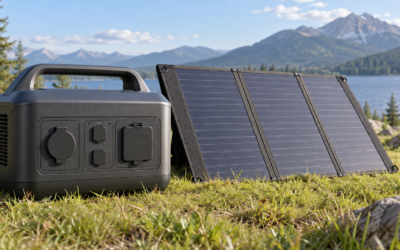
On a two-night campout, a 300Wh unit can top phones each morning, run a string of LED lights every evening, and keep a headlamp and speaker charged, with a 100W folding panel refilling it by lunch. Paired with sun, the small battery effectively never runs out for light loads, which is exactly the use case it was designed for.
As a home UPS for essentials
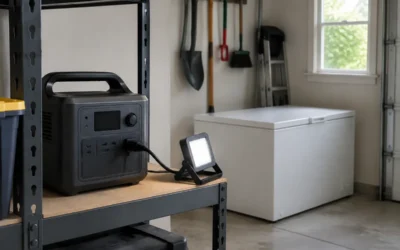
With pass-through charging, an entry station doubles as an uninterruptible supply for a Wi-Fi router and modem. Plugged into the wall normally, it keeps your internet alive the instant the grid drops, useful for remote workers who cannot afford even a brief disconnection. For that role, capacity matters less than seamless pass-through.
Knowing when you have outgrown it
If you find yourself constantly rationing power or wishing you could run a fan or a small cooler, that is the signal to step up to a 500-1000Wh unit. There is no shame in starting small; the entry class is an inexpensive way to learn your real needs before committing to a larger, pricier station.
Bottom line
The EcoFlow River 3 class is the honest essentials box: light, affordable, LFP-based, and fast-charging. Buy it to keep communication, medical, and lighting needs alive through a short outage or a mellow campout. Match your expectations to a 300Wh budget and it delivers; ask it to run appliances and you will be disappointed.

Write Your Review
No reviews yet. Be the first to share your experience!