
🛒 Best Price Today on Amazon
Prime members get fast, free shipping on everything above, plus member-only deals. New members get a 30-day free trial — cancel anytime.
- Top Picks at a Glance
- Comparison Table: Bladeless Fans and Their Power Draw
- How Dyson Bladeless Technology Works
- 1. Dyson Purifier Cool PC1 (TP11): Best Overall Dyson Bladeless Fan
- 2. Dyson Cool AM07: Best Classic Bladeless Tower
- 3. Dyson HushJet Mini Cool: Best Portable Dyson Bladeless Fan
- 4. Dyson Purifier Hot+Cool Gen1 (HP10): Best Year-Round Dyson
- 5. Shark TurboBlade TF202S: Best Non-Dyson Customizable Fan
- 6. Pelonis 40-Inch Bladeless Tower Fan: Best Low-Power Alternative
- Also Consider
- Worked Example: Running a Bladeless Fan on a Portable Power Station
- How We Chose
- Buying Guide: How to Choose a Bladeless Fan
- Common Mistakes With Bladeless Fans
- Frequently Asked Questions
- Which One Should You Buy?
- Sources
The best Dyson bladeless technology for most homes is the Dyson Purifier Cool PC1, a tower fan that uses Dyson’s Air Multiplier design, adds a sealed HEPA filter and draws a listed maximum of about 40 watts. If you want the classic bladeless tower without the air purifier, the runner-up is the Dyson Cool AM07, which lists around 56 watts at top speed. Both run comfortably from a portable power station, which matters on a site about backup power: a bladeless fan is one of the few cooling devices you can keep running through an outage without a large generator.
This guide ranks six bladeless fans: four from Dyson and two rivals, the Shark TurboBlade and the Pelonis 40-inch bladeless tower. Because the readers of this site care about power, we put the electrical numbers first: maximum draw, runtime on a typical battery and what changes when a model has a heater. We also explain how bladeless technology works, since the name is slightly misleading. We did not personally use these products; this guide is research-based, built from listing details, Dyson and other maker spec sheets and independent coverage named in the sources list. Where a spec is not stated, we say so.
Top Picks at a Glance
- Best Overall: Dyson Purifier Cool PC1 (TP11), HEPA purifier tower fan
- Best Classic Bladeless Tower: Dyson Cool AM07 Air Multiplier tower fan
- Best Portable Dyson: Dyson HushJet Mini Cool personal fan
- Best Year-Round Dyson: Dyson Purifier Hot+Cool Gen1 (HP10)
- Best Non-Dyson Customizable Fan: Shark TurboBlade Bladeless Tower Fan (TF202S)
- Best Low-Power Alternative: Pelonis 40-inch Bladeless Tower Fan
Comparison Table: Bladeless Fans and Their Power Draw
| Fan | Best for | Key specs from maker and listing | Max draw | Watch for | Price tier |
|---|---|---|---|---|---|
| Dyson Purifier Cool PC1 | Bedrooms, allergy season | HEPA H13 filter, 350 degree oscillation, 10 speeds, app and remote | 40 W (Dyson US sheet) | Third-party sources quote up to 50 W | Premium |
| Dyson Cool AM07 | Plain cooling, no filter | 70 degree oscillation, 10 speeds, remote | 56 W per retailer listings | Older listings quote 26 W; check the label | Premium |
| Dyson HushJet Mini Cool | Travel, desk and camping | 212 g, 5 speeds plus boost, up to 6 hours per charge, USB-C | Battery powered | Short battery life at higher speeds | Mid-range |
| Dyson Purifier Hot+Cool HP10 | Cooling plus heating | HEPA purifier, fan and heater, 350 degree oscillation, 10 levels | 40 W motor; heater draw not confirmed | Heating needs far more power | Premium |
| Shark TurboBlade TF202S | Customizable airflow | 180 degree oscillation, 10 speeds, 10 noise levels, up to 80 ft airflow | 92 W (Shark spec) | Heaviest at about 14.3 lb | Mid-range |
| Pelonis 40-inch Bladeless Tower | Quiet bedroom, tight budgets | DC motor, 6 speeds, 4 modes, 90 degree oscillation, 22 dB rating, remote, 7-hour timer | 33 W per listing | Dyson-style filtration not offered | Budget to mid-range |
Power numbers come from the sources named in each section and are shown at the highest speed. Real-world draw is lower at slower speeds; Dyson lists a minimum of about 6 W for the PC1.
How Dyson Bladeless Technology Works
Dyson’s bladeless design is called Air Multiplier technology. The fan is not literally empty: a motor and impeller sit in the base, draw air in through vents and push it up into a hollow loop or tower. The air then leaves through a narrow slit around the loop, and the shape of the loop causes surrounding air to be pulled along with it. The result is a smooth stream of air rather than the choppy pulses of a bladed fan, and the exposed loop has no spinning blades, which makes cleaning easier and is why parents and pet owners often prefer it.
For power planning, the point is that the electrical load is the small motor in the base, not the visible loop. That is why a tall tower fan can run at a listed 40 to 56 W while still moving a room’s worth of air. It is also why the quietest speeds can draw only a few watts, which is exactly the property you want from a fan that must run overnight on battery power.
1. Dyson Purifier Cool PC1 (TP11): Best Overall Dyson Bladeless Fan
- Type: bladeless tower fan with a sealed HEPA H13 and activated carbon filter
- Oscillation: 350 degrees, with a tilt of about 10 degrees, and 10 speed settings
- Power: maximum input of 40 W and under 0.5 W on standby per the Dyson US technical sheet
- Size and weight: about 105 cm tall and around 4.7 kg, per reviews
- Controls: remote, app and voice assistants
Best for: bedrooms and living rooms where you want cooling and air filtering in one device. Skip if: you only want a simple fan and do not need the filter.
The PC1 is the best balance in the group. It is the newest of the Dyson towers on this list, it keeps the power draw modest, and it adds filtration for dust and pollen. A 350 degree sweep means it can circulate air around a whole room rather than only in one direction, which is useful when a single fan must serve a living space during a heat wave.
Check power figures against your own unit. Dyson’s US sheet gives 40 W maximum, while some outside sources quote about 50 W, which could reflect another regional model or different operating conditions. For battery planning, use the higher figure to be safe. The filter is a consumable, so factor in a replacement about once a year, and note that reviewers report higher noise at top speed, with one listing a maximum of about 61 dB.
Pros: low listed power draw; HEPA filtration; wide oscillation; remote and app control. Cons: premium tier; filter replacement; loudest at top speed.
2. Dyson Cool AM07: Best Classic Bladeless Tower
- Type: Air Multiplier bladeless tower fan without a purifier
- Oscillation: 70 degrees, with 10 speed settings and a remote
- Power: about 56 W at the top speed per retailer listings; one listing quotes 26 W, probably an older revision
- Size and weight: about 100.7 cm tall and roughly 2.85 kg in UK listings, or about 7 lb in US listings
- Warranty: two years, per retailers
Best for: people who want the original bladeless look without a filter and filter costs. Skip if: you want a wide room sweep or air cleaning.
The AM07 is the model most people picture when they hear bladeless fan. It is slimmer and lighter than the PC1 and has no filter to replace, so the running cost is just the electricity. That simplicity makes it a good match for a backup power setup: nothing to maintain, no consumables and a remote for adjusting speed without leaving the couch.
The oscillation range is narrower than the PC1’s 70 degrees versus 350, so it works best when it can sit in a corner and sweep across a seating area. The conflicting power figures in listings are a reminder to read the rating label on the unit you receive. For planning, assume 56 W at top speed and much less at lower speeds.
Pros: simple design; light; no filter costs; remote included. Cons: narrower sweep; conflicting power numbers across listings; premium tier.
3. Dyson HushJet Mini Cool: Best Portable Dyson Bladeless Fan
- Type: handheld, desk or wearable bladeless personal fan
- Weight: about 212 g (7.5 oz), per Dyson
- Battery: up to 6 hours at the lowest speed, about 5,000 mAh, USB-C charging in roughly 3 hours
- Airflow: up to about 25 m/s (55 mph), with 5 speeds plus a boost mode
- Noise: about 52 dBA at speed 1 and 72.5 dBA in boost mode, per reviews
Best for: camping, travel, desks and power outages when you need a few hours of airflow near your face. Skip if: you want to cool an entire room.
The HushJet Mini is the only battery-powered fan here and the cheapest way to get a Dyson bladeless fan into your outage kit. A USB-C cable and a power bank or portable station recharge it, so it fits easily into an emergency bag. At 212 g it is light enough to wear on a lanyard, which is helpful when you are cooking by candlelight or sleeping in a hot room.
Realistic expectations matter. The six-hour figure is for the lowest speed, and the higher speeds and boost mode drain the battery faster. The nozzle blows a narrow, fast jet rather than a room-wide breeze. Reviewers also report much higher noise at boost than at speed 1, so use it on the lowest speed overnight. Dyson lists a two-year limited warranty.
Pros: portable; USB-C; light; useful as a backup fan. Cons: narrow airflow; battery life drops at higher speeds; loud in boost mode.
4. Dyson Purifier Hot+Cool Gen1 (HP10): Best Year-Round Dyson
- Type: bladeless HEPA purifier, fan and heater
- Oscillation: 350 degrees, 10 airflow levels
- Power: Dyson’s US answer lists a maximum of 40 W at 120 V and under 0.5 W standby; heating draw was not confirmed in the sources we checked
- European model: a 230 V version is listed at about 2,000 W with the heater on
- Controls: remote and app
Best for: homes on mains power that want a single device for cooling in summer and heating in winter. Skip if: you plan to run it from a portable power station.
The HP10 is the Dyson for people who want one appliance in the corner all year. In fan mode it behaves much like the PC1, with a 40 W maximum. In heat mode, however, the load is a different category: any heating element will draw far more than the motor, and the European listing shows about 2,000 W. A typical portable power station will not run that load for long, and a small inverter generator is a more realistic backup.
That is the key point for readers of a generator site: this model suits a grid-powered home, not an off-grid one. If you do want to use it on backup power, run it only in fan mode, and check the rating label for the heating load before connecting it to any inverter.
Pros: cooling, heating and filtering in one unit; 350 degree sweep; app control. Cons: heater needs a big power source; premium tier; heavy power draw in heat mode.
5. Shark TurboBlade TF202S: Best Non-Dyson Customizable Fan
- Type: bladeless tower fan that pivots vertically and horizontally
- Oscillation: 180 degrees, with settings of 45, 90 or 180 degrees
- Controls: 10 speeds, 10 noise levels, modes such as Sleep, BreezeBoost and Natural, magnetic remote
- Power: 92 W at 120 V (1.6 A), per Shark
- Size and weight: about 14.3 lb, with a 6 ft cord
Best for: people who want more airflow options than a standard tower. Skip if: battery runtime is your top concern.
The TurboBlade is Shark’s answer to Dyson’s design, and the pivoting body is the feature to compare. It can stand as a tower or lie flat in an air-blanket mode, and the vents twist to aim airflow. It also lets you trade speed for quiet using the 10 noise levels, which is useful when you want a gentle breeze without the hum.
The cost is power: at 92 W it draws more than twice the PC1’s listed maximum, which cuts battery runtime in half. A listed noise rating varies by source, so do not rely on one figure. If you run it from a power station, plan on a bigger battery, or run it on a lower speed. A two-year warranty is listed.
Pros: flexible aiming; many noise settings; magnetic remote. Cons: highest listed draw of the fans here; heavy; noise figures vary across sources.
6. Pelonis 40-Inch Bladeless Tower Fan: Best Low-Power Alternative
- Type: bladeless tower fan with a DC motor
- Controls: 6 speeds, 4 modes, remote, 7-hour timer
- Oscillation: 90 degrees
- Noise: rated at 22 dB, per the listing; one review reports 20 to 22 dB
- Power: about 33 W, per the Canada listing
Best for: bedrooms, home offices and anyone who wants a quiet bladeless fan at a lower tier. Skip if: you want filtration or app control.
The Pelonis is the cost-saving pick. It uses the same general idea as a Dyson tower, a slim column with no visible blades, but with a DC motor and a lower listed draw of 33 W. A smart version also exists with Alexa and Google support. Low power consumption makes it one of the easiest fans on the list to keep running on a battery.
Be careful with the claimed noise figure; 22 dB is quieter than a whisper in a library and is a rated minimum. At higher speeds, expect more sound. Weight and size vary by market, and the Canadian listing shows a 220 V rating, so check that the model matches your outlet before you buy.
Pros: low listed power draw; quiet at low speed; timer and remote. Cons: no filter; 90 degree sweep; specs differ between regions.
Also Consider
- Dyson Air Multiplier AM06 Table Fan, 10 inches: the table-top version of the Air Multiplier, for desks and bedside tables where a tower would be too large.
- Dyson Purifier Cool Gen1 (TP10): an earlier purifying tower fan that sits close to the PC1 in features.
- Dyson HushJet Compact Air Purifier: a smaller air purifier for rooms where you want filtration without a full-size tower.
- DREO Tower Fan for Bedroom: a bladed tower fan with a DC motor and 8 speeds that costs far less than a Dyson, for readers who care only about airflow.
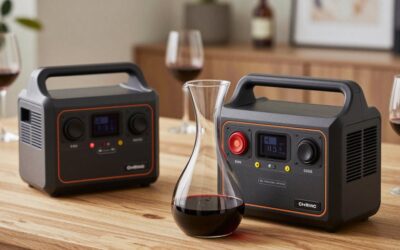
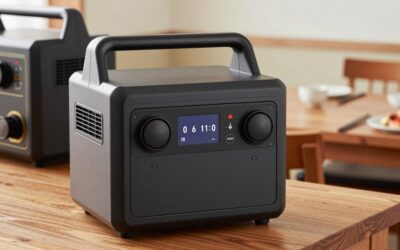
Worked Example: Running a Bladeless Fan on a Portable Power Station
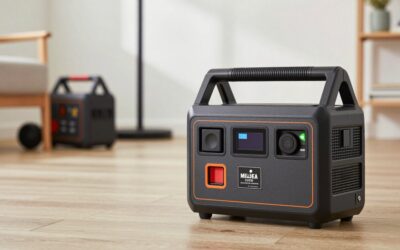
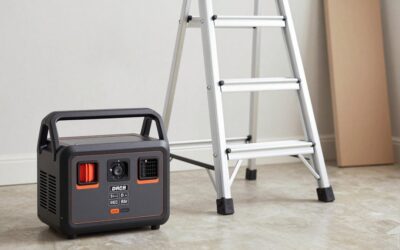
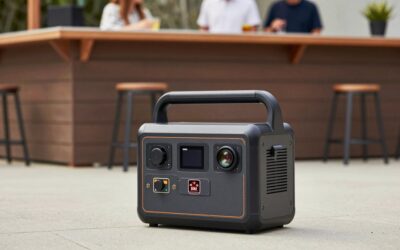
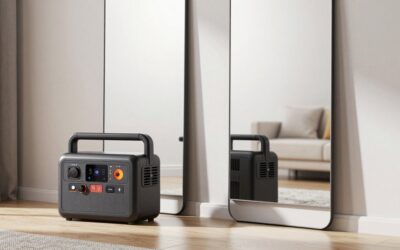
To size a battery, use this simple formula: runtime in hours is roughly the battery capacity in watt-hours, times about 0.85 to allow for inverter losses, divided by the fan’s watts. For a 500 Wh portable power station, that is about 425 usable watt-hours. At top speed the Pelonis (33 W) runs for about 12.9 hours, the Dyson PC1 (40 W) for about 10.6 hours, the AM07 (56 W) for about 7.6 hours and the Shark (92 W) for about 4.6 hours.
These are the worst-case numbers. A fan on a medium speed often draws well under half its maximum, so a PC1 on a low setting at an assumed 10 W could run more than 40 hours on the same battery. The HushJet Mini is simpler: its 5,000 mAh battery holds roughly 18 Wh, so a station can recharge it dozens of times. Always compare with the rating label on your own fan, include any other devices on the station, and leave a safety margin.
How We Chose
We started with the bladeless fans in the store connected to this site, including every current Dyson model that matches the search for Dyson bladeless technology. We kept four Dyson models that cover a tower, a purifier, a heater and a personal fan, and added two non-Dyson bladeless towers so readers can see how much power and money the design costs. We limited the number of non-Dyson picks because the search is specifically about Dyson.
For each fan we read the listing, compared it with the maker’s spec sheet or public support pages where we could find them, and recorded oscillation, speeds, weight and power draw. Where sources disagreed, we say so and recommend that you confirm the rating label on the unit. We did not personally use these fans, and we make no claims about cooling performance in your room. Prices appear as tiers because they change often.
Buying Guide: How to Choose a Bladeless Fan
Start with the watts
The wattage on the rating label tells you how big a battery or generator you need. Fans in this group range from a listed 33 W to 92 W at top speed. If you run on a 500 Wh station, aim for a fan under 60 W so you can get a full night of use. Remember the power station’s own inverter has standby losses, so a larger battery gives you more margin.
Decide whether you need filtration
Purifier models add a HEPA filter, which cleans the air but requires periodic replacement and increases the price. If your main goal is cooling, a plain tower like the AM07 or the Pelonis is simpler. If you have allergies, ask a doctor what is appropriate for your situation, because a fan with a filter is not a medical device.
Check oscillation and room size
A 350 degree sweep fills a whole room with air; a 70 or 90 degree sweep directs air at one seating area. For a bedroom of 150 to 200 sq ft, either works. For a larger open plan, a wider sweep or two fans may be better. Place the fan so that it blows across the room rather than at a wall.
Weigh noise against speed
Maker noise ratings are measured under controlled conditions and differ by source, so use them as a guide. Fans with more speed settings let you pick the quietest setting that still moves air. For sleeping, aim for a model with a timer and a sleep mode.
Mind the heating risk
Models with heaters draw ten or more times the power of a fan alone. Do not plug one into a small power station or an extension cord rated below the load. Follow the maker’s instructions, and consult a licensed electrician if you plan to run a heater from a backup generator.
Common Mistakes With Bladeless Fans
- Assuming a bladeless fan uses less power than a bladed one; the motor in the base still draws watts.
- Using a heater model on a small power station.
- Ignoring the filter replacement schedule on a purifier model.
- Placing the fan too close to a wall, which disrupts airflow.
- Trusting one noise or wattage figure from a listing without checking the rating label.
Frequently Asked Questions
Is a Dyson bladeless fan really bladeless?
The part you see has no blades, but a motor and impeller inside the base draw air in. The hollow loop or tower then shapes the air into a smooth stream. The result is a fan that is easier to clean and looks different, not one with no moving parts.
How much power does a Dyson bladeless fan use?
The Dyson Purifier Cool PC1 lists a maximum of 40 W, and the Cool AM07 lists about 56 W at top speed. Heater models draw much more in heat mode. Always check the rating label because listings sometimes disagree.
Can I run a Dyson fan on a portable power station?
Yes, fan-only models usually can. A 500 Wh station should run a 40 W fan for around ten hours at top speed and much longer at lower speeds. Avoid heating models unless the station is rated for the heater’s load.
Are Dyson bladeless fans worth the price?
They cost more than bladed fans, and you are paying for the design, the filtration on purifier models and the app control. If you want only airflow, an alternative such as the Pelonis lists lower power and a lower price. If you value easy cleaning and a smooth airflow, a Dyson can justify the cost.
Which is better, the Dyson PC1 or the Shark TurboBlade?
The PC1 lists lower power (40 W against 92 W) and includes a HEPA filter. The Shark offers more aiming options and noise settings. For battery use, the PC1 is the better match; for flexible placement in a living room, the Shark may suit you better.
Do bladeless fans cool a room better than bladed fans?
Not necessarily. Fans circulate air and do not lower the room temperature; they help you feel cooler through air movement. Airflow depends on the model and speed, not on whether the blades are visible.
How do I clean a bladeless fan?
Switch the fan off, unplug it and wipe the loop or tower with a soft, dry or lightly damp cloth. Without blades there is nothing to disassemble. Follow the maker’s instructions for filters and vents.
Which One Should You Buy?
Choose the Dyson Purifier Cool PC1 if you want the best all-round Dyson with a low listed draw and filtration. Choose the Dyson Cool AM07 if you want a simple bladeless tower with no filter. Choose the HushJet Mini Cool for a portable fan that charges over USB-C, and the Dyson Hot+Cool HP10 only if you have mains power and want heating too. Choose the Shark TurboBlade for flexible airflow and the Pelonis 40-inch for the lowest listed power and price.
Sources
- Dyson US technical specifications for the Purifier Cool PC1
- Dyson product pages and press materials for the HushJet Mini Cool
- Dyson support pages and retailer listings for the Cool AM07 and Purifier Hot+Cool HP10
- Shark manufacturer page for the TurboBlade TF202S
- Pelonis manufacturer page for the 40-inch Bladeless Tower Fan
Last updated: October 2026
Write Your Review
No reviews yet. Be the first to share your experience!